


More news on this day
Cape Town International Airport has reopened its main runway after a Kenya Airways aircraft experienced a tyre failure on landing earlier this week, disrupting traffic and forcing several international flights to divert while the jet was recovered.
Get the latest news straight to your inbox!
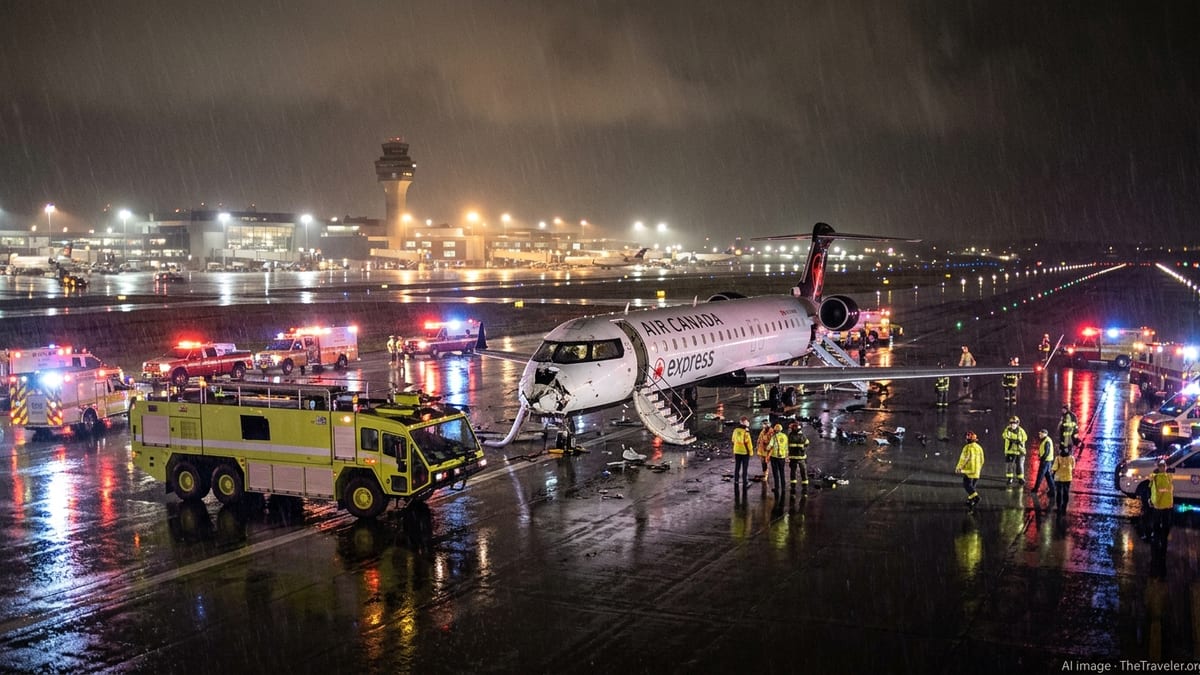
Runway back in service after temporary shutdown
According to published coverage, the runway at Cape Town International was closed for several hours on Tuesday after a Kenya Airways flight arriving from Nairobi via southern Africa suffered a tyre failure during the landing roll. The aircraft came to a stop on the main north–south runway, which handles the bulk of large jet traffic at the airport.
Publicly available information indicates that airport operations teams and emergency services moved in to secure the scene, inspect the runway surface and assess the condition of the jet’s landing gear. While smaller aircraft were able to use an alternate, shorter runway for limited movements, the incident effectively halted most international arrivals and departures.
Reports indicate that once engineers had removed the damaged wheel assembly and the aircraft was towed clear, runway inspections were completed and the main strip was returned to service. Normal operations were gradually restored later in the day as a backlog of delayed and diverted flights began to work through the system.
Early accounts shared by passengers and aviation observers described long queues at terminal check-in and security areas as airlines rebooked travellers whose flights were postponed or turned back. Local media coverage noted that some regional and long-haul services operated significantly behind schedule while crews and aircraft repositioned.
Flights diverted to other South African airports
While the main runway remained blocked, flight-tracking data and contemporaneous reports show that several inbound international services, including long-haul flights from Europe and North America, diverted to alternative airports. Johannesburg and George were among the primary diversion points for widebody traffic that could not safely use Cape Town’s shorter secondary runway.
Aviation enthusiasts monitoring traffic patterns reported that at least one transatlantic service from the United States diverted to Johannesburg rather than continuing to Cape Town. Other regional flights returned to their departure points or held in holding patterns before rerouting to airports with sufficient runway length and available capacity.
Travellers caught up in the disruption described extended ground times, missed onward connections and the need for overnight accommodation after diversion. Airlines began re-accommodating passengers on later flights once the Cape Town runway reopened, but tight crew scheduling and aircraft rotation requirements meant that knock-on delays continued into the following day.
Industry analysts note that disruptions of this kind underscore the operational challenges for airports that rely heavily on a single primary runway for large aircraft. When that runway is blocked for any length of time, diversion and delay costs rise quickly for both airlines and passengers.
Safety procedures followed after tyre failure
Information released through public channels indicates that the Kenya Airways flight involved in the incident completed its landing without injuries reported among passengers or crew. The tyre failure occurred during the rollout phase, a scenario for which commercial flight crews train and for which standard operating procedures are in place.
Aviation reference material highlights that modern airliners are designed with multiple tyres and redundant braking systems to ensure controllability even in the event of a single-wheel failure. In such cases, crews typically bring the aircraft to a controlled stop and remain on the runway until ground teams confirm that it is safe to move the jet.
In Cape Town, images shared on social media appeared to show the aircraft stationary on the runway while ground staff assessed the affected landing gear. Recovery crews later used specialized towing equipment to remove the jet, after which debris checks and surface inspections were carried out to ensure that fragments from the tyre or wheel assembly did not pose a risk to subsequent flights.
Published incident histories at other airports show that tyre failures on landing, while relatively uncommon, are a known operational hazard and can result in temporary runway closures, particularly where a single long runway handles most large-jet movements. In this case, the disruption was contained to several hours, and the airport subsequently resumed standard operations.
Knock-on impact for Cape Town’s growing air hub
The incident occurred against the backdrop of Cape Town International’s ongoing efforts to expand capacity and enhance its role as a long-haul and regional hub. Publicly available planning documents and recent coverage describe significant investment plans aimed at upgrading runway and terminal infrastructure to accommodate continued growth in international traffic.
Travel industry observers point out that Cape Town’s reliance on one main runway for widebody operations leaves it vulnerable when an aircraft becomes disabled on the strip. When the main runway is unavailable, only smaller jets and turboprops can use the secondary runway, limiting flexibility and putting pressure on airline schedules.
In recent months, local discussion has also focused on the development of additional regional airport capacity near Cape Town, which could serve as an alternate for diversions and help ease congestion during irregular operations. Proponents argue that the Kenya Airways tyre incident illustrates how quickly a single event can ripple through the network, affecting flights far beyond the Western Cape.
For passengers, the episode serves as a reminder of the importance of contingency time in itineraries, particularly when connecting from long-haul flights to regional services. Travel advisers frequently recommend allowing generous layovers at single-runway airports, where incidents, weather or air-traffic constraints can have an outsized effect on reliability.
What passengers can expect in the coming days
With the main runway back in service, airlines are working through the residual effects of the disruption. Schedules published in reservation systems show most carriers operating their regular patterns, although some flights have been retimed or consolidated to accommodate repositioned aircraft and crew duty limits.
Travellers due to pass through Cape Town International in the days following the incident are being advised, through airline and airport public channels, to check the latest status of their flights before leaving for the airport. Industry practice after such events typically includes closer coordination among airlines, ground handlers and air traffic management to smooth peak periods while backlogs clear.
For Kenya Airways, the focus turns to engineering inspections of the affected aircraft and any follow-up required by regulators. Publicly available safety records indicate that tyre incidents are routinely subject to internal review in order to confirm maintenance standards and operating procedures.
As Cape Town heads into the latter part of the Southern Hemisphere winter, the airport’s response to the tyre failure will likely form part of broader discussions about resilience, recovery capability and infrastructure upgrades. For now, the reopening of the runway has restored a vital link in South Africa’s aviation network, allowing international and domestic traffic to flow again after an unexpected interruption.