


More news on this day
Roads in Mesa have reopened after a freight train derailment temporarily blocked key routes near rail corridors serving the East Valley, restoring vehicle access for residents, commuters, and travelers passing through one of Arizona’s busiest suburban hubs.
Get the latest news straight to your inbox!
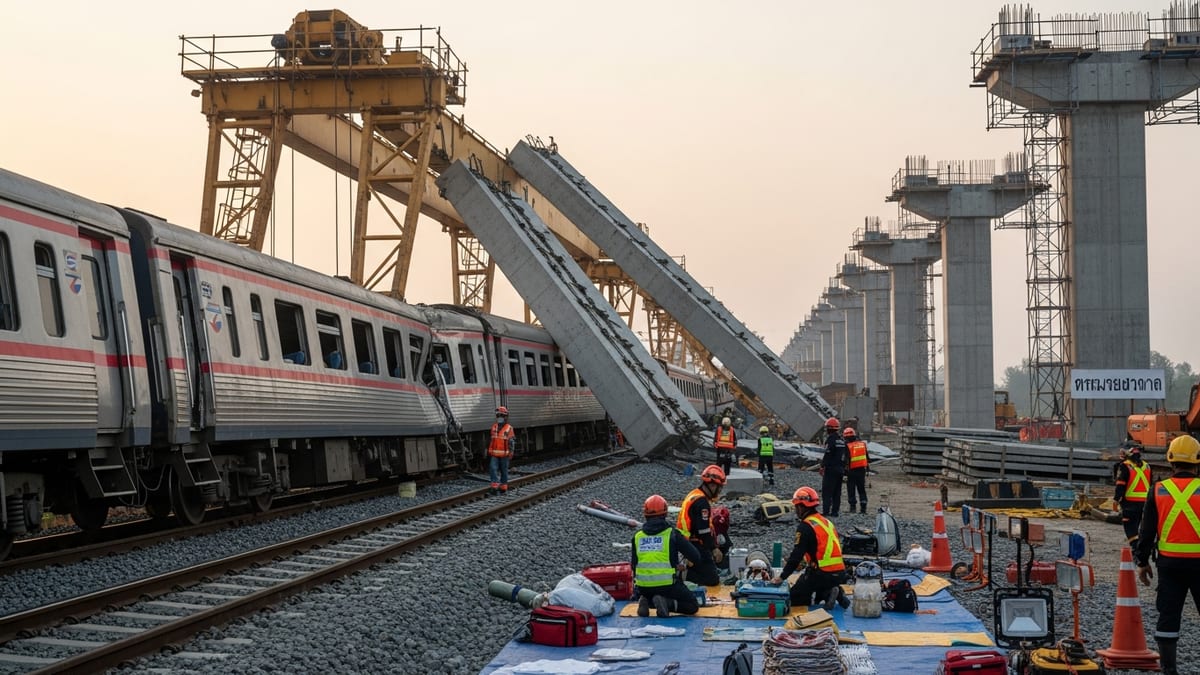
Rail incident briefly severs a key Mesa corridor
Publicly available information indicates that a freight consist derailed near a road-rail crossing in Mesa, forcing the temporary closure of nearby streets while rail and roadway crews worked to stabilize cars and clear debris from the right of way. The incident added fresh disruption to a city already managing extensive construction and lane restrictions on major arterials.
Early assessments released through transportation and rail safety channels describe a limited derailment in which several cars left the tracks but remained close to the corridor, creating a localized obstacle for nearby roads rather than a widespread hazard to surrounding neighborhoods. The closure affected access for local traffic and prompted detours that rippled across adjacent surface streets.
According to published coverage of recent rail incidents in Arizona and across the Southwest, similar derailments have in many cases resulted in multi‑hour closures as teams coordinate heavy equipment, safety inspections, and infrastructure checks before allowing vehicles to pass. The Mesa disruption followed a comparable pattern, with roads held closed until rail, pavement, and bridge elements were reviewed.
Reports indicate that no major structural damage to roadways was identified in Mesa, which allowed transportation agencies and local partners to move more quickly toward reopening than in some higher‑impact derailments where overpass supports and bridge decks were compromised.
Roads reopen as cleanup and track work advance
With the immediate obstruction removed, traffic has resumed on the affected Mesa roads, although drivers may still encounter intermittent lane restrictions as crews complete follow‑up work along the rail corridor. Public traveler‑information tools maintained by Arizona agencies show normal traffic flow restored in the area, with no ongoing full closures tied to the derailment.
Published reports on comparable events across Arizona highlight a now‑familiar sequence: rapid deployment to secure derailed cars, assessment of any hazardous materials, removal of wreckage, and phased reopening of nearby roads even while rail repair continues. In Mesa, that sequence allowed the road network to return to operation while track specialists remain focused on repairing ballast, rail ties, and signaling components.
For drivers, the reopening means a return to more predictable routing through a part of the East Valley that funnels traffic between residential neighborhoods, commercial centers, and connections to regional freeways. Temporary detours during the closure had added distance and travel time for commuters and delivery operators, especially during peak hours.
Rail service along the line is expected to normalize more gradually as inspections and test movements proceed. Based on patterns seen in other freight derailments, partial rail operations can resume even as adjacent roadways remain open, provided safety thresholds for speed and axle loads are met.
Impacts on East Valley mobility and visitor travel
The derailment and resulting closures came at a time when Mesa is already balancing significant roadway construction, utility upgrades, and transit enhancements across the city. Residents have recently described an environment of frequent work zones on major arterials, which magnified the disruption when a rail‑related closure intersected with existing orange‑cone corridors.
For visitors, the brief shutdown reinforced how rail infrastructure intersects closely with access to downtown Mesa, nearby light‑rail stations, and routes toward Phoenix Sky Harbor International Airport and Arizona State University. Even short‑term closures near crossings can complicate airport transfers, game‑day traffic, and leisure travel for those unfamiliar with the grid of alternative east‑west and north‑south streets.
According to regional traffic updates and travel‑advisory services, the swift reopening of roads limited the length of the disruption window for hotel guests, out‑of‑town drivers, and rideshare services. Many travelers experienced only minor re‑routing as navigation apps and roadside message boards updated to reflect reopened intersections.
In the wider context of Arizona travel, rail‑related closures join wildfires, monsoon storms, and freeway crashes as episodic disruptions that can temporarily affect itineraries. Published guidance from transportation agencies consistently encourages drivers to check real‑time traffic tools and be prepared for sudden closures in areas that combine rail lines, bridges, and high‑volume commuter routes.
Safety reviews and infrastructure resilience in rail corridors
Information from national rail safety databases and recent technical literature on derailment risk underscores that even non‑catastrophic incidents often prompt detailed reviews of track conditions, roadbeds, and bridge structures. In Mesa’s case, rail operators and engineers are expected to examine whether factors such as track geometry, ballast stability, or equipment failures contributed to cars leaving the rails.
In recent years, transportation agencies and railroads have placed greater emphasis on predictive maintenance along shared corridors where tracks parallel or overcross major roads. Studies of derailments across North America note that early detection of rail breaks, settlement, or other anomalies can reduce the chance of incidents affecting adjacent streets, overpasses, or grade crossings.
For road users, these behind‑the‑scenes inspections are largely invisible, but they influence how quickly roads can reopen after an incident. Where damage is limited to the tracks and ballast, surface streets often return to normal soon after debris is cleared. Where bridges and supports are compromised, closures can stretch far longer as structural engineers design and implement repairs.
Mesa’s experience aligns with a broader push in the rail industry toward using data analysis, remote sensors, and frequent physical inspections to identify risk before it results in service disruptions. As travel demand continues to grow in the Phoenix metropolitan area, coordination between railroads and roadway agencies will play an increasingly important role in keeping both freight and passenger movements flowing.
What drivers and visitors should watch for next
Although the affected roads in Mesa have reopened, travelers can expect occasional short‑term lane changes or flagging operations near the derailment site if additional work is scheduled on fences, drainage, or signaling equipment. Publicly accessible traffic advisories typically post such restrictions only a few days in advance, so conditions may vary from one trip to the next.
Drivers moving between Mesa, Tempe, and central Phoenix are encouraged by regional travel guidance to allow extra time, particularly during weekday peaks or special events. Rail‑adjacent routes can be more vulnerable to sudden closures when maintenance or incident response requires additional space for heavy equipment and support vehicles.
For visitors planning East Valley stays, travel experts often recommend keeping itineraries flexible and saving offline maps in case mobile coverage or navigation updates are delayed. While the Mesa derailment has transitioned into a cleanup and review phase, the incident serves as a reminder that rail and road networks are closely intertwined in many parts of the metro area.
As freight and passenger movements continue to increase through Arizona’s urban corridors, transportation planners, rail operators, and city engineers are likely to keep refining incident‑response protocols so that, when disruptions occur, roads can be reopened quickly and safely, minimizing the impact on both daily commuters and travelers discovering the region.