


Compact, walkable and packed with history, Cardiff is an easy city-break choice and a natural starting point for a wider trip around Wales. As the country’s capital and main transport hub, it combines a storybook castle and grand civic centre with a modern waterfront at Cardiff Bay, major sporting venues and plenty of nightlife. This guide focuses on how to get the best out of 1 to 3 days in the city, where to base yourself, and how to move around without a car.
Get the latest updates straight to your inbox!
Why Cardiff Works for a Short Break
Cardiff is the political and cultural capital of Wales but feels manageable even on a first visit. The historic core around Cardiff Castle, the pedestrianised shopping streets and the green expanse of Bute Park all sit within a short walk of Cardiff Central and Queen Street stations. The redeveloped Cardiff Bay, home to the Senedd and the Wales Millennium Centre, sits a couple of kilometres to the south and is easily reached by train, bus or a pleasant walk or cycle along marked routes.
For a weekend or 1 to 3 days, the city offers a clear set of headline sights. Cardiff Castle delivers layered Roman, medieval and Victorian history in the very centre. The National Museum in the civic centre showcases Welsh art, natural history and changing exhibitions. Bute Park offers quiet riverside paths and views of the castle walls. Down in the Bay, striking contemporary architecture and a maritime setting provide a strong contrast to the city centre. You can comfortably cover these areas without rushing if you plan your time.
Cardiff is also a practical base. Fast intercity trains connect it with London Paddington in roughly 1 hour 45 minutes to just under 2 hours on the quickest services, with slower options taking closer to 2 hours 20 minutes depending on stops. Services run frequently through the day. There are also direct or easy one-change rail links to Bristol, Birmingham, Manchester and many Welsh towns, making it straightforward to combine Cardiff with a wider itinerary.
In terms of value, accommodation and eating out are often a little cheaper than in many English cities of similar size. That said, prices can jump significantly on major event days, especially when the Principality Stadium hosts international rugby or large concerts. If you are not visiting specifically for an event, it is wise to check the city’s events calendar for your dates before you commit to accommodation.
Essential Sights in the City Centre
For most first-time visitors, Cardiff Castle is the obvious starting point. Sitting inside the old town walls but right on the edge of the modern shopping district, it brings together exposed sections of Roman fort, a medieval keep on a motte, atmospheric wartime tunnels and lavishly decorated 19th‑century interiors. Official information indicates that opening hours vary between a longer summer season and a shorter winter schedule, with occasional changes on event days, so you should always confirm times shortly before visiting. Allow at least two hours if you plan to explore both the grounds and the house interiors.
A short walk north from the castle gates brings you to the civic centre. Here, broad avenues and white-stone buildings frame the National Museum and adjacent City Hall. The National Museum is part of the Amgueddfa Cymru network and typically offers free entry, although some special exhibitions may charge. Its galleries cover Welsh and European art, geology, natural history and themed temporary shows. Recent information from the museum notes that opening hours can be adjusted seasonally and on certain days, so checking the current schedule and any need to pre-book time slots is essential, especially during school holidays and major exhibitions.
Behind the castle walls lies Bute Park, a large green space following the River Taff. There are riverside walking and cycling paths, ornamental gardens and views back towards the castle and the Principality Stadium. The park is open daily, with daylight hours varying by season. It is an easy place to step away from the busy streets for half an hour, or you can follow the riverside path further north to residential districts and local pubs if you have more time.
Cardiff’s compact size means you can thread these cultural stops into a relaxed lap of the city centre. Pedestrianised shopping streets run east from the castle towards Queen Street, with Victorian and Edwardian arcades branching off and providing shelter on rainy days. Even a one-day visit can combine a castle tour, a museum stop and time in the park with coffee or lunch in one of the arcades.
Cardiff Bay and the Waterfront
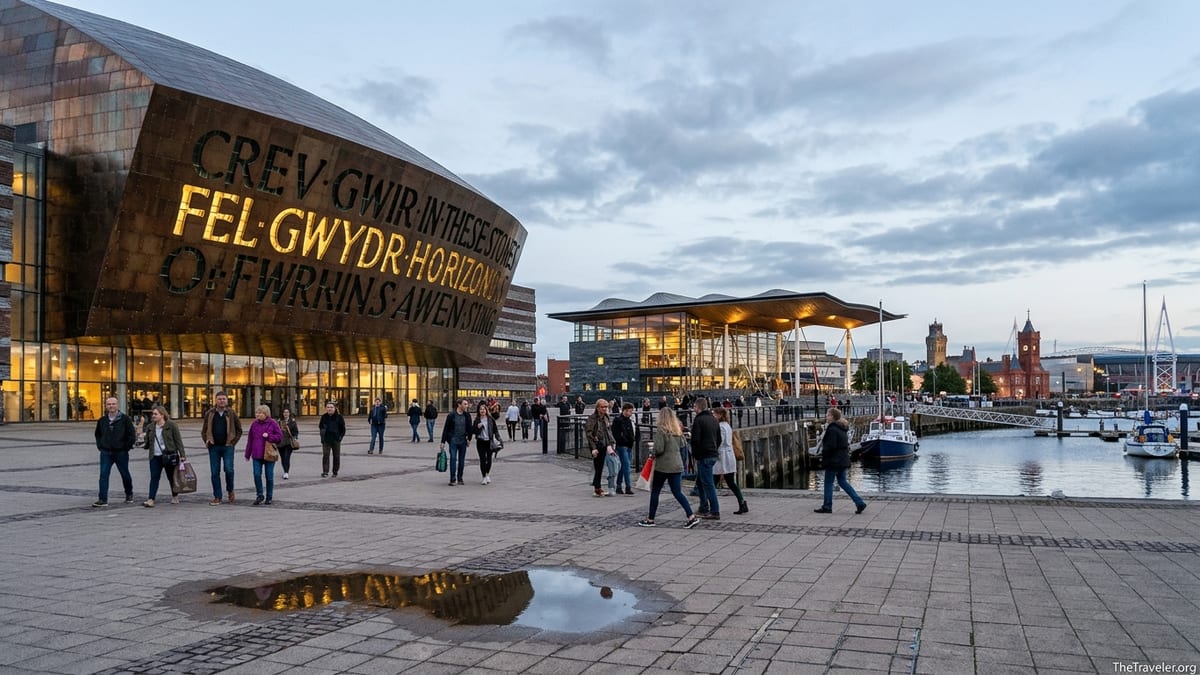
Cardiff Bay, about 25 to 30 minutes on foot or a short bus or train ride from the centre, showcases the city’s modern face. The waterfront is framed by the copper-coloured Wales Millennium Centre and the contemporary glass-and-timber Senedd building, home to the Welsh Parliament. The Senedd visitor information emphasises security procedures, opening hours that typically differ between weekdays and weekends, and guided tour availability, so you should confirm details ahead of time, particularly outside the main tourist season.
The Wales Millennium Centre is the city’s main performing arts venue, hosting touring West End musicals, opera, dance and concerts. Its public spaces are usually open through the day, with the most activity in the evenings when performances are scheduled. The official venue guidance indicates that it is well served by buses and is a short walk from Cardiff Bay rail station, with step-free access available. Even if you do not attend a performance, the building and surrounding plaza are worth a look.
Around the Bay, the redeveloped former docks now offer a mixture of restaurants, casual bars and family-friendly attractions. Boat trips operate seasonally on the freshwater lake and out towards the Bristol Channel, although schedules can vary with weather and time of year. Walking paths loop around sections of the waterfront, giving views of the barrage and back towards the city centre skyline.
Reaching the Bay is straightforward without a car. Local trains between Cardiff Queen Street and Cardiff Bay typically take only a few minutes and run regularly at busy times of day, with replacement bus services operating during any upgrade works. Several city bus routes link the centre and the Bay, often stopping near the Principality Stadium or along Bute Terrace and terminating near the Wales Millennium Centre. A taxi or app-based car from the central station area to the Bay usually takes around 10 minutes in light traffic, though this can lengthen at peak times or when large events are taking place.
Day Trips: Caerphilly, Castell Coch and Beyond
If you have more than one full day, Cardiff works well as a base for exploring nearby castles and landscapes. Caerphilly, to the north, is known for its vast concentric medieval fortress and extensive water defenses. Regular local trains connect Cardiff Central or Queen Street with Caerphilly in roughly 20 minutes, from where it is a short walk uphill to the castle. Opening hours and any special events are managed by the national heritage authorities, so it is wise to check for seasonal closures, partial access and ticketing details in advance.
Closer to Cardiff, Castell Coch sits above the village of Tongwynlais, north of the city. This 19th‑century fantasy castle, built on medieval foundations and surrounded by woodland, is especially appealing to visitors interested in architecture and fairy-tale aesthetics. Access is usually by local bus from the city centre or by taxi. The approach from the main road involves a fairly steep walk, and interior spaces can be compact with some staircases, so visitors with limited mobility should consult official accessibility information beforehand.
Other options for short trips include coastal towns such as Penarth, reached by frequent local trains from Cardiff Central in around 10 minutes, with a restored pier and cliff-top walks. Valleys towns to the north are connected by regular commuter rail services, making it easy to sample post-industrial landscapes and smaller communities without driving. These trips are best for travellers who have at least two full days in Cardiff, allowing one day for the city centre and the Bay and another day devoted to an excursion.
When planning any day trip, remember that train frequencies can reduce in the evenings and on Sundays, and engineering works sometimes affect services, particularly at weekends. Check live timetables close to your travel date and pay attention to advice on replacement buses or altered routes.
Where to Stay: Neighbourhoods for Different Travellers
Most first-time visitors will find it simplest to stay in or very close to the city centre. The blocks surrounding Cardiff Central and Queen Street stations provide the broadest choice, from modern chain hotels to smaller guesthouses and serviced apartments. This area suits travellers arriving by train, those with limited time and visitors planning to sample nightlife, as many bars, clubs and late-opening venues cluster near St Mary Street and Greyfriars Road. The trade-off is that weekends can be noisy, particularly on Friday and Saturday nights, so if you value quiet, look carefully at recent guest reviews and check whether your chosen property faces a main street or a quieter back road.
The immediate vicinity of Cardiff Central station is particularly convenient if you are catching early trains or travelling with luggage. When comparing options, prioritise walking distance to the station entrance, 24-hour reception if you expect late arrival, and information on luggage storage. Some hotels in this area operate on or above busy roads; double glazing reduces noise, but very light sleepers may prefer upper floors facing away from traffic.
Cardiff Bay offers a different atmosphere, with waterside views and easier evening access to restaurants by the waterfront and performances at the Wales Millennium Centre. This area suits conference delegates attending events at the Bay venues, couples seeking a quieter base away from the busiest nightlife streets and families who like having level promenades for strolling with children. The trade-off is that you will usually rely on public transport or taxis to reach the castle and civic centre quickly, although confident walkers may enjoy the 25 to 30 minute walk via marked routes.
For a greener feel while remaining accessible, consider districts just beyond the core centre, such as the residential areas north of Bute Park or towards Roath. These neighbourhoods are leafier, with local cafés and independent shops. They typically involve a 20 to 30 minute walk or a short bus ride into the centre. They can work well for longer city breaks, budget-conscious travellers willing to exchange absolute centrality for lower prices, or visitors who prefer a quieter residential atmosphere, especially on weekend evenings.
Getting To and Around Cardiff Without a Car
Cardiff is one of the easier UK cities to visit without driving. Intercity trains from London Paddington, operated by Great Western Railway, usually run at least twice per hour during the day. The average journey time is around 1 hour 50 minutes, with the fastest direct services advertised at roughly 1 hour 45 minutes and slower stopping services taking closer to 2 hours 20 minutes depending on the timetable. Direct trains or simple one-change journeys also connect Cardiff with Bristol, Bath, Birmingham, Manchester, Swansea and other Welsh centres. Coach companies link the city with London Victoria Coach Station and major airports, often taking around 3 to 3.5 hours from London depending on traffic.
Once in the city, you are unlikely to need a car. The historic core is flat and walkable, with the castle, main shopping streets, civic centre, National Museum and Principality Stadium all within a compact area. Local buses cover the rest of the city, including frequent services between the centre and Cardiff Bay. Fares and ticket types change periodically, but day tickets and contactless payment options are common; always check the current information from local transport operators shortly before your trip.
Cardiff Central station is the main rail hub, while Cardiff Queen Street handles many of the local valley and city services. Trains run from the central area to nearby destinations such as Cardiff Bay, Penarth and the valleys. For many visitors, a combination of walking, local trains and occasional bus or taxi rides is sufficient even for a 2 or 3 day stay. App-based taxi services and traditional cabs are widely used and can be practical late at night or when travelling with luggage.
Driving in central Cardiff can be more of a hindrance than a help. One-way systems, bus lanes and event-related road closures around the Principality Stadium can make navigation and journey times unpredictable if you do not know the city. Parking in central multi-storey car parks and hotel car parks typically incurs daily charges that can add significantly to the cost of a short break. Public guidance on parking tariffs, park-and-ride sites and event-day restrictions is updated regularly, so if you must bring a car, check the council’s current information for your dates and factor likely parking charges into your budget.
Events, Sport, Safety and Accessibility
Cardiff’s role as the national capital and a major sporting centre means that big events can transform the feel of the city. The Principality Stadium hosts international rugby, domestic finals and stadium concerts. Cardiff City Stadium stages football matches and occasional large events, while the Wales Millennium Centre and other venues draw big audiences for concerts and shows. On days when tens of thousands of people are in town, accommodation can sell out or rise sharply in price, trains become very busy and central streets, particularly around the stadium and St Mary Street, are much more crowded.
If you want to avoid crowds and higher prices, it is worth consulting fixture lists and events calendars for your intended dates before booking. Conversely, if you are travelling specifically to attend a match or concert, book both tickets and accommodation as early as possible and allow extra time for travel, including walking between the station and the venue. On major event days, additional trains and special traffic arrangements are often put in place, but crowd management can mean longer walks or temporary diversions.
Official crime statistics and national travel advisories generally describe Cardiff as having a safety profile similar to many other UK cities of comparable size. The central streets, Bay area and main attractions are well used through the day. As in any city, standard precautions apply: keep valuables secure, be cautious with late-night drinking areas and plan your route back to your accommodation in advance if you are out late. On weekends, some streets lining the main nightlife strips can feel rowdy in the small hours; if you prefer quieter evenings, choose accommodation a short walk away from the busiest bar clusters.
Many of Cardiff’s main attractions have made efforts to improve accessibility. Cardiff Castle provides detailed access information, including routes that avoid steep staircases where possible and guidance for wheelchair users. The National Museum offers step-free access, lifts to upper floors and facilities such as accessible toilets and assistance for visitors with visual or hearing impairments, including provision for assistance dogs. The Senedd highlights level access, security screening adapted for visitors with mobility aids and information for neurodivergent visitors. Opening hours and access arrangements can vary on certain days or when special events, maintenance or private functions are scheduled, so anyone with specific access needs should review the latest information from each venue close to the date of travel.
Sample 1 and 2 Day Itineraries
If you only have one full day in Cardiff and want a classic overview, start at Cardiff Castle when it opens, giving yourself at least two hours to explore the grounds and interiors. Leave through the main gate and walk into the civic centre, stopping at the National Museum for art and natural history. After a café lunch either near the museum or in one of the Victorian arcades, spend the afternoon strolling through Bute Park and along the River Taff, looping back via the shopping streets for a final look at the castle walls before dinner in the city centre.
For visitors with a strong interest in contemporary architecture and the waterfront, a one-day plan might instead combine the city centre and Cardiff Bay. Begin at the castle for a shorter visit, then walk or take a bus or train down to the Bay by late morning. Explore the Senedd’s public spaces and the plaza around the Wales Millennium Centre, then follow the waterfront paths and, if weather and schedules permit, consider a short boat trip. Dine in one of the Bay restaurants before returning to the city centre or staying nearby.
With two full days, you can add a nearby castle or coastal town. For a history-focused second day, take a morning train to Caerphilly, visiting the castle and exploring the town before returning to Cardiff in the afternoon. Alternatively, choose Castell Coch and combine it with a walk in the surrounding woodland. A more relaxed second day could focus on Penarth and the coastal edge of Cardiff, with a short train ride, pier walk and clifftop paths, before returning to the centre for an evening show at the Wales Millennium Centre or another city venue.
Across all these options, the key advantage of Cardiff is how straightforward it is to navigate. You can arrive by train, reach your accommodation on foot or by a short taxi journey, and spend the next day or two exploring on foot and by local public transport. Whether you stay one night or three, the city is compact enough that you can leave feeling you have seen its main faces, yet connected enough that you can easily extend your trip into the rest of Wales.