


Northwest St Lucia offers two very different but equally tempting day trips within the same sweeping bay. On one side, Pigeon Island National Landmark delivers ruined forts, hiking trails and panoramic Caribbean views. On the other, Reduit Beach stretches in a long golden curve in front of Rodney Bay’s hotels, restaurants and bars. Choosing between the two often comes down to a simple question: do you want a history hike or a resort-style beach day? This guide compares both in detail, from swimming conditions and facilities to costs, food, family appeal and overall atmosphere, so you can match your day to your travel style and budget.
Get the latest updates straight to your inbox!
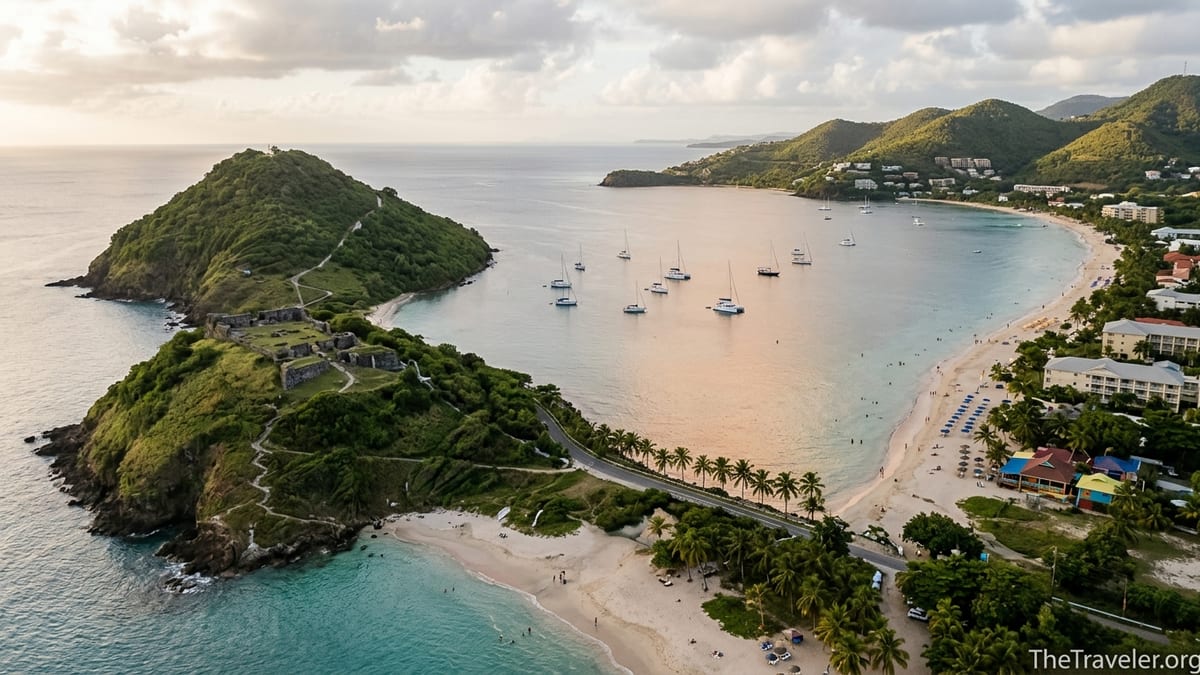
Overview: Two Very Different Sides of Rodney Bay
Pigeon Island and Reduit Beach face each other across Rodney Bay in northern St Lucia, but the experiences could not feel more different. Pigeon Island, managed by the Saint Lucia National Trust as a national landmark, is a 44-acre historic park connected to the mainland by a man-made causeway. Visitors come for hiking trails, 18th-century ruins and elevated views toward Martinique, plus a pair of sheltered beaches tucked beneath grassy hills.
Reduit Beach, by contrast, is a long, public beach backed by low-rise hotels, casual beach bars and the shopping and dining hub of Rodney Bay Village. It is the classic Caribbean resort strand, where you can step from your sun lounger to grab a cold Piton beer, jump on a jet ski, or wander off for sushi, pizza or a coffee in air-conditioned comfort within a few minutes’ walk.
In practical terms, Pigeon Island tends to suit travelers who are happy to pay a modest entry fee for hiking, history and quieter coves, while Reduit Beach is the instinctive choice for those who want a low-effort, all-day beach hangout close to a wide mix of restaurants and services. Both are easy half-day or full-day outings if you are staying in the north, and each can be combined with the other on different days if you have time.
Deciding between them means looking beyond the postcard views and understanding what the day will actually look like: how much walking is involved, what you will spend, how easy it is to find shade and toilets, and whether you can get a proper meal without leaving the sand.
History and Scenery: Forts vs Open Bay Views
If you are drawn to places with a story, Pigeon Island has the clear edge. Once a separate islet, it was used as a lookout and naval base from the 18th century, most famously by Admiral George Rodney, who built Fort Rodney on the lower of two peaks to watch French movements in nearby Martinique. Today, visitors can wander among stone barracks, cannon platforms and walls, then climb higher to Signal Peak for a 360-degree panorama that takes in the length of St Lucia’s north coast and, on a clear day, the outline of Martinique to the north.
The hiking paths at Pigeon Island are short but steep in places, with some sections of rocky steps and slopes exposed to the sun. Most visitors allow around 20 to 30 minutes to walk from the entrance up to Fort Rodney, and another 10 to 20 minutes to climb to the top of Signal Peak above it, depending on fitness and how often they stop for photos. Benches and interpretation signs along the way explain how the island featured in the long British-French struggle for control of the Caribbean, which helps the ruins feel more than just scenic backdrops.
Reduit Beach has no comparable historic sites. Its appeal is visual and atmospheric rather than narrative. From the sand you look across the bay toward Pigeon Island’s green hills, with anchored yachts and catamarans bobbing in the foreground. The sunsets can be particularly striking, with the last light dropping behind the silhouette of Pigeon Island and the masts in Rodney Bay Marina. For some visitors, that open, wide-water view from a lounger is exactly what they want on a beach day, even if there is no fort to climb.
If your group mixes history lovers and those who simply want pretty views, Pigeon Island can serve both. History enthusiasts can follow the main paths and read the displays, while others may head straight for the beaches and look back at the ruined fort as part of the scenery. Reduit Beach, by comparison, is almost purely about sea, sand and people-watching.
Beach and Swimming Experience
Pigeon Island offers two compact but attractive beaches within the park boundaries, plus another small stretch just outside the gate near the causeway. The main internal beach, often lined with palms and sea grapes, has views back across to Gros Islet and Rodney Bay. Sand here is pale and soft but the shoreline can feel narrower than on Reduit, especially at higher tide. Water is usually calm, sheltered by the top of the bay, making it a good choice for relaxed swimming and floating. Because of the limited space, these beaches feel pleasantly quiet on many weekdays, but they can get busier on local holidays and during events held in the park.
Reduit Beach runs for roughly a mile along Rodney Bay. Its width and length give it a more expansive feeling, with lots of room to walk, swim or simply choose a patch of sand that suits you. The water on this west-facing Caribbean coast is typically gentle with small waves, especially appealing for leisurely swims. Families often praise Reduit for an easy entry and a forgiving sandy bottom, though there can be some variation depending on recent weather and any nearshore sand movement.
If you enjoy water sports, Reduit Beach has far more activity. Depending on current operators, you are likely to see jet ski rentals, banana boat rides, stand-up paddleboards and occasional small catamarans just off the sand. Prices fluctuate, but visitors recently report paying in the region of 50 to 70 US dollars for a half-hour jet ski rental for two, and lower amounts for shorter banana boat rides shared with other guests. On Pigeon Island’s internal beaches, the focus is more on swimming, snorkeling near the rocks and relaxing. Organized motorized water sports are limited or absent inside the landmark area, although independent operators sometimes work from beaches just outside the gate.
Snorkeling quality varies year to year and day to day. Shallow coral and rock areas near the edges of Pigeon Island’s beaches can hold small tropical fish and sea fans, especially along the more sheltered sides where boat traffic is lighter. At Reduit Beach, snorkelers tend to swim toward small rocky patches near either end of the bay or rely on boat trips to offshore reefs, as the central sandy stretch is better for swimming than for marine life.
Access, Transport and Practical Logistics
Both Pigeon Island and Reduit Beach are in the far north of St Lucia, around 75 to 90 minutes by road from Hewanorra International Airport in the south. If you are staying in Rodney Bay, Gros Islet or Cap Estate, reaching either spot is relatively straightforward. Many visitors walk to Reduit Beach from hotels or villas around Rodney Bay Village in 5 to 15 minutes, either along the main road or side streets. The beach has several public access points between properties, so you do not need to be staying in a beachfront resort to visit.
Getting to Pigeon Island usually involves a short drive. From central Rodney Bay, typical taxi quotes run around 10 to 20 US dollars each way for the vehicle, depending on your exact starting point and number of passengers. Shared among a small group, the cost per person can be quite modest. Some visitors choose to walk most of the way by following the main road past the marina and continuing along the causeway, which can take 30 to 45 minutes in the heat. Public minibuses run between Castries and Gros Islet, and some travelers ride to the Gros Islet terminus then walk the final section to Pigeon Island, but this approach suits only those comfortable with basic local transport and longer walks in the sun.
Entry to Pigeon Island National Landmark is charged per person, unlike free-to-access Reduit Beach. Recent guidance from the Saint Lucia National Trust and local tourism boards indicates adult visitors typically pay around 8 US dollars to enter, with a reduced fee for children and a lower local-resident rate paid in Eastern Caribbean dollars. The fee grants access to the hiking trails, beaches, picnic areas and basic facilities during opening hours, which usually run from morning into late afternoon. Reduit Beach itself does not have an entrance fee, though you will pay for extras such as parking (if not provided by your accommodation), loungers, umbrellas and any water sports you choose.
For drivers, parking at Reduit Beach can be tight on busy weekends and holidays, but several lots exist behind the beach and near the Rodney Bay commercial area. At Pigeon Island, there is dedicated parking close to the entrance gate, which many rental car users find easier to navigate than denser village streets. In both cases, road conditions approaching from the south involve winding, hilly stretches, so some visitors still prefer to rely on licensed taxis or organized tours rather than driving themselves.
Food, Drinks and Facilities
The most obvious difference between Pigeon Island and Reduit Beach for many visitors is the breadth of food and drink options. On Pigeon Island, choices are relatively limited but atmospheric. There is usually at least one on-site restaurant or bar operating inside or right next to the landmark, serving typical island fare like grilled fish, burgers, salads and local dishes such as green fig and saltfish. Prices often sit around 15 to 25 US dollars for a main course, with local beer and rum punches available. Opening days and hours can vary outside peak season, so it is smart to carry some snacks and water, and not assume that a full-service menu will be available late in the afternoon.
Reduit Beach, by contrast, benefits from the entire Rodney Bay dining scene behind it. Simple beach shacks sell grilled chicken, burgers and rum drinks; mid-range hotel restaurants step directly onto the sand; and within a 5 to 10 minute walk you can reach everything from ice cream parlors, bakeries and coffee shops to Indian, Chinese and Italian restaurants in the Rodney Bay and Baywalk areas. It is realistic to spend a full day on Reduit without repeating a venue: grab a casual roti for lunch from a nearby takeaway, then later enjoy an early-evening cocktail at a beachfront hotel bar while watching the sunset.
In terms of facilities, Pigeon Island has public restrooms maintained by the National Trust, some picnic tables, historical information signs and designated paths. Showers are simple or absent, depending on current maintenance. Shade is available under trees and in some roofed structures, but to secure a particularly comfortable spot you may want to arrive earlier in the day. Reduit Beach has a looser mix of facilities, with restrooms associated with particular restaurants and bars, occasional paid showers and more commercial beach infrastructure. Sun loungers and umbrellas are widely rented by independent vendors or hotels, at prices visitors commonly mention in the range of 10 to 20 US dollars per lounger and similar for a large umbrella for the day.
One practical note: if you prefer to keep costs low by bringing your own food or drinks, check current rules. Pigeon Island, as a managed park, sometimes has restrictions on glass bottles, open fires and large coolers. On Reduit Beach, informal picnicking is common, but some hotel-front areas may prefer that only guests use their loungers if consuming outside food.
Costs, Time Commitment and Value for Money
When budgeting a day at Pigeon Island, it helps to break down the likely expenses. Start with the per-person entrance fee, then add transport if you are taking a taxi, plus any food and drink at the park or brought from your accommodation. Because the landmark’s attractions are mostly self-guided, you can keep costs predictable: after paying to get in, you can hike as much as you like, relax on the beach and use the facilities without further mandatory charges. Many visitors report that three to five hours feels about right: time to climb both peaks at an unhurried pace, stop for photos, then cool off with a swim and a drink before returning to their hotel or heading elsewhere for dinner.
Reduit Beach can be either inexpensive or surprisingly pricey, depending on how you approach it. At the bare minimum, you might spend only on bus fare or a short taxi ride from your hotel, then sit on a towel on the public sand and buy a snack from a local food stand. On the other hand, a full-service day with rented loungers, multiple rounds of cocktails, a sizable lunch at a mid-range restaurant and a couple of water sports sessions can easily add up to 100 US dollars or more per person. Since there is no entry fee that forces a minimum spend, the key is setting your own budget and choosing how many paid extras to add.
In terms of value, Pigeon Island stands out for travelers who appreciate that their entry fee supports conservation and the upkeep of a historic site, while also providing access to hiking viewpoints that would normally require a guided excursion elsewhere. For many, it feels like a compact combination of a light hike, small open-air museum and beach day in one. Reduit Beach, while free to access, delivers value in convenience: you can adjust your day hour by hour without committing to a structured activity, which is particularly attractive if you are traveling with a group that has mixed energy levels or changing plans.
Time of day also plays into perceived value. Pigeon Island closes by late afternoon, so if you arrive too late you may feel rushed on the trails and beaches. Planning to enter by late morning ensures plenty of time before closing. Reduit Beach stays accessible into the evening, and beach bars often remain open after sunset, so you can stretch your visit into nightfall, perhaps pairing a daytime swim with an early dinner or sunset drink on the sand.
Families, Couples and Atmosphere
For families, both locations offer strengths but different rhythms. Pigeon Island can be a fun, educational outing, especially for school-age children who enjoy exploring ruins and climbing to viewpoints. Parents should, however, be prepared for some steep, uneven sections of trail and supervise children near old stone walls and drops. The beaches inside the landmark feel fairly contained, which some families like, but shade can be limited at peak midday sun, making hats, sunscreen and perhaps a small sun shelter important if visiting with younger kids.
Reduit Beach, in contrast, is built for low-effort family fun. Children can play for hours in the shallow water and soft sand, and there are usually plenty of casual food options nearby for quick snacks or simple meals. The trade-off is that the atmosphere can become lively and crowded on cruise ship days, weekends and local holidays, with music from beach bars and water sports buzzing offshore. Families who prefer a quieter environment may want to visit early in the morning or on weekdays outside the busiest season, while those who do not mind background noise may enjoy the festive feel.
Couples often gravitate to Pigeon Island for personalized experiences: a mid-morning hike to the fort followed by a picnic in a shaded corner, or a quiet swim in one of the smaller coves with Pigeon Island’s grassy hills behind them. The sense of being in a protected, relatively undeveloped space, with sweeping views and historic ruins, can feel more intimate and distinctive than a standard resort beach. On the other hand, couples who are celebrating and want easy access to cocktails, spas and nightlife may find that a base in Rodney Bay with relaxed days on Reduit Beach fits their style better.
Overall atmosphere is where the contrast is clearest. Pigeon Island often feels calm, slightly removed and reflective, especially on non-event days. Birds call in the trees, the wind picks up as you climb, and small groups spread out across the trails and picnic lawns. Reduit Beach is more social and energetic, with vendors offering aloe massages or souvenirs, families and groups chatting on loungers, and a steady flow of visitors walking along the shore. Neither is inherently better; it simply depends whether you want your day to feel like a national park visit that happens to include beach time, or a classic Caribbean beach scene that happens to look across to a historic hilltop fort.
The Takeaway
Choosing between Pigeon Island and Reduit Beach is less about which is objectively better and more about what you want your northern St Lucia day to feel like. If your ideal outing includes a modest hike, tangible history, sweeping views and a quieter beach experience in a protected landscape, Pigeon Island National Landmark is the stronger choice. You will pay an entrance fee and likely a short taxi ride, but in return you get a compact, varied day that combines light activity, culture and swimming in one place.
If, instead, you imagine dropping your towel or lounger on a long curve of sand, wandering between bars and cafes, sampling water sports and people-watching without committing to a schedule, then Reduit Beach is hard to beat. The lack of entry fee and proximity to Rodney Bay’s restaurants and shops make it flexible and appealing for families, groups and anyone who wants a resort-style scene with easy access to amenities.
For many visitors with several days in the north, the best answer is to do both: one day exploring Pigeon Island’s trails and fortifications, and another devoting unhurried hours to Reduit’s broad bay and sunset colors. If you have to choose just one, ask yourself whether you are more excited by the idea of standing on a historic lookout point scanning the horizon, or by the thought of sinking into a lounger with a cold drink and the sound of gentle waves along a lively resort beach. Your instinct will probably tell you which side of Rodney Bay is your perfect fit.
FAQ
Q1. Which is better for a full beach day: Pigeon Island or Reduit Beach?
Pigeon Island is better if you want a mix of hiking, history and smaller coves, while Reduit Beach is better for an all-day, resort-style beach experience with more bars, restaurants and water sports.
Q2. How much does it cost to visit Pigeon Island compared with Reduit Beach?
Pigeon Island charges a per-person entrance fee, typically around the cost of a modest restaurant main course, plus any taxi fare. Reduit Beach itself is free to access, but you may spend more on loungers, drinks, meals and water activities if you choose them.
Q3. Is Pigeon Island suitable for young children or less mobile visitors?
The lower areas and beaches of Pigeon Island are manageable for many visitors, but the hikes to Fort Rodney and Signal Peak involve uneven steps and steep sections. Families with very young children or anyone with mobility challenges may prefer to stay near the lower paths and beach, or choose Reduit Beach, which has flatter access to the sand.
Q4. Can I find good food and drinks at both locations?
Yes, but in different ways. Pigeon Island usually has at least one restaurant or bar with island-style dishes and drinks, though choice is limited. Reduit Beach connects directly to Rodney Bay’s wider dining scene, so you will find everything from beach shacks to sit-down international restaurants within a short walk.
Q5. Which place is calmer and less crowded?
Pigeon Island is generally calmer, especially on weekdays outside major events, with visitors spread across trails, lawns and smaller beaches. Reduit Beach can be busier and more energetic, particularly on weekends, holidays and cruise ship days when many people head straight to this long, central bay.
Q6. Is snorkeling better at Pigeon Island or Reduit Beach?
Neither is among St Lucia’s top dedicated snorkel sites, but Pigeon Island often has slightly better opportunities near rocky edges, where you may see small fish and corals in shallow water. Reduit’s central sandy stretch is great for swimming but less interesting for snorkeling, so many snorkelers book boat trips to offshore reefs instead.
Q7. How long should I plan to spend at Pigeon Island?
Many travelers find three to five hours ideal. That allows time to hike up to Fort Rodney and Signal Peak, explore the ruins, pause for photos and history boards, then relax on the beach and swim before the park closes in the late afternoon.
Q8. Is it easy to combine Pigeon Island and Reduit Beach in one day?
It is possible, especially if you start early at Pigeon Island, complete the hikes and a swim by early afternoon, then take a short taxi ride or drive to Reduit Beach for a late-afternoon swim and sunset. However, most visitors prefer to dedicate separate days so they do not feel rushed.
Q9. Which spot is better for sunset?
Sunsets from Reduit Beach are particularly popular, as the sun sinks over the bay with Pigeon Island’s silhouette and anchored boats in the foreground. Pigeon Island, which usually closes by late afternoon, is more of a daytime experience, although occasional special events may extend hours.
Q10. If I only have one free day in the north, which should I choose?
If you love light hiking, viewpoints and history with a quieter beach backdrop, choose Pigeon Island. If your priority is a classic, easy-going beach day with lots of dining and activity options right behind the sand, choose Reduit Beach.