


Pigeon Island, at the northern tip of Saint Lucia, combines calm Caribbean beaches with one of the island’s most atmospheric historic sites. Whether you are walking over from Rodney Bay, staying at a nearby resort, or arriving by taxi for the day, it is one of the easiest places in Saint Lucia to pair relaxed swimming with light hiking, history and good food. This guide explains how the beaches work inside and beside Pigeon Island National Landmark, what to expect in the water, and how to plan a seamless day that balances sun, shade and sightseeing.
Get the latest updates straight to your inbox!
Getting Oriented: Where the Beaches Are
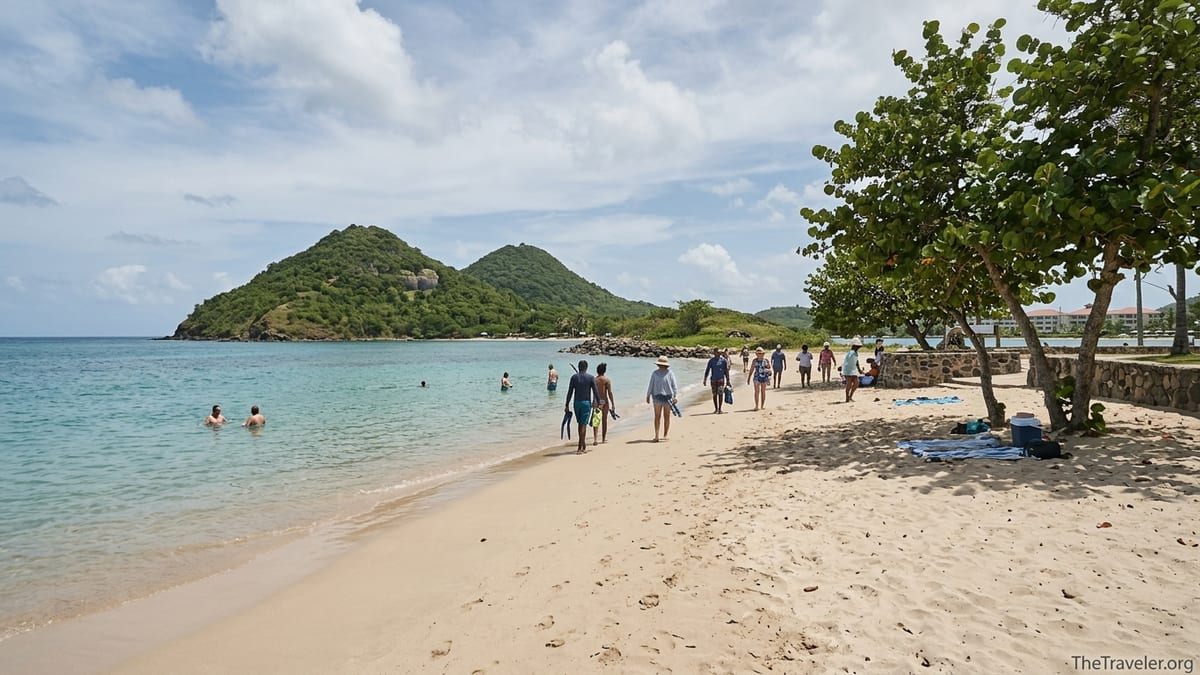
Pigeon Island sits at the northern end of Rodney Bay, joined to mainland Saint Lucia by a man-made causeway. On one side of this narrow strip you have calm, sheltered Caribbean water, and on the other the rougher Atlantic. The beaches visitors talk about as “Pigeon Island beach” are all on the Caribbean side, looking back toward Rodney Bay and the resort skyline.
There are three main areas to understand. First is the small sand cove inside the Pigeon Island National Landmark itself, just below the main lawns and picnic tables. Second is the public beach immediately outside the park entrance, a short strip of sand between the park gate and the all-inclusive Sandals Grande St Lucian resort. Third is the longer resort beach that runs along Sandals’ peninsula toward The Landings resort. All Saint Lucian beaches are public up to the high-water line, but loungers and facilities on resort grounds remain for guests only, so it helps to know where you can sit and what you can use.
If you arrive by taxi, your driver will typically drop you near the national park gate on the causeway road. From there it is less than a two-minute walk to the small public beach and about the same into the park itself. Guests at Sandals Grande or The Landings can simply walk along the sand, following the curve of the bay toward the low green hills of Pigeon Island.
Swimming Conditions & Calm-Water Areas
The appeal of Pigeon Island for swimmers is the generally protected water. The bay is semi-enclosed by the causeway and surrounding headlands, so you usually get gentle waves and a sandy bottom close to shore. On a typical calm day, you can wade out from the public beach or the park cove and still be only waist to chest-deep at 20 to 30 meters from shore, which feels comfortable for casual swimmers and families.
The calmest water is often found along the Sandals Grande side of the bay, where the resort’s peninsula shelters the shoreline. Even if you are not a guest, you can swim in the sea in front of the resort area, though you will need to keep to your own towel on the sand rather than using resort loungers. Near the public beach directly beside Pigeon Island, the water stays pretty manageable as well, although boat traffic to and from the small jetty by the park means you should keep an eye out and avoid venturing too far into the sailing and water sports area.
Inside the park, the tiny cove below the lawn has a slightly more rustic feel, but the water is usually clear and inviting. Because the shore shelves a little more quickly here, less confident swimmers may prefer to stay closer to the edge. Snorkeling right off the beaches is possible and you will see some small fish and occasionally sea fans or soft coral, but most reviews suggest that the more colorful reef life is on organized snorkeling trips elsewhere on the island. If you want an easy saltwater soak with minimal swell, however, Pigeon Island’s Rodney Bay side is one of the more dependable options in the north.
Shade, Loungers and Where to Spread Your Towel
Shade is one of the main considerations on this relatively exposed coastline. The public beach between Sandals Grande and the park has only a few natural shade spots from sea grape and almond trees, and these are often claimed early by locals who pop up for a lunchtime swim. Many visitors bring a lightweight beach umbrella from their hotel, or ask their taxi driver to stop at a small supermarket in Rodney Bay where inexpensive fold-out umbrellas and mats are sometimes sold.
Inside Pigeon Island National Landmark, the main grassy area behind the small cove is dotted with mature trees that provide broad patches of shade. This is the best option if you want to spend several hours by the sea without baking in full sun. You can spread a towel, picnic blanket or compact folding chairs under the trees, then walk down to the water for a dip when you feel warm. Because the park is managed as a heritage site, you will not find dense lines of rental loungers like on some commercial beaches; the feel is more like a historic park that happens to have a beach.
If you are staying at Sandals Grande St Lucian, you will have access to the resort’s loungers, palapas and drink service along the main stretch of sand. Non-guests need to plan to be self-sufficient: bring your own towel, hat and possibly a portable shade if you are sensitive to the sun. On cruise ship days, the public beach can feel busier, but the lawns inside the park usually still have space to spread out if you prefer a quieter setting.
Food, Drinks, Toilets and Practical Facilities
One of Pigeon Island’s advantages over more remote coves is the availability of food and basic facilities close to the beach. Within the national landmark, there is typically a small restaurant and bar near the waterfront that serves grilled fish, burgers, local dishes like chicken with rice and peas, and ice-cold Piton beer or rum punch. Menus change, but visitors often describe prices as moderate by Saint Lucian standards, with a simple lunch for two with drinks coming in at a reasonable mid-range total rather than a budget option or high-end splurge.
The park also has basic restroom facilities that are a short walk from the lawn and beach area. These are functional rather than fancy, so it makes sense to carry a small pack of tissues or wet wipes, hand sanitizer and a bit of cash in local currency for any incidental purchases. Showers are not always available or may be very simple rinse-off points, so do not expect full changing-room style amenities.
Outside the park, options are more informal. Along the public beach toward Sandals Grande, you may encounter independent vendors selling fresh coconuts, cold drinks or snacks from coolers, especially on weekends and public holidays when local families make more use of the shoreline. At times there has been a wood-fired pizza vendor operating a small brick oven near the public section of beach, which can be a pleasant surprise if you happen upon it mid-day. For a wider choice of meals, you can head back into Rodney Bay, where you will find everything from casual beach bars on Reduit Beach to sit-down restaurants around the marina.
Entry Requirements, Fees and Park Opening Hours
The stretch of sand outside Pigeon Island National Landmark is fully public and free to use. You can arrive by taxi, ask to be dropped near the causeway end, and walk straight onto the beach with no fee. If you only want a quick swim with views of the green headland and the resort peninsula, this is a cost-effective option, and it also means you can come and go at any time of day.
To use the beach inside the landmark and access the historic trails and viewpoints, you need to pay the Pigeon Island National Landmark entry fee. As of mid-2026, visitors report paying the equivalent of around 10 to 15 US dollars per adult in Eastern Caribbean currency, with slightly reduced rates for children and local residents. Pricing can change, and there may be occasional variations for special events or holidays, so it is sensible to carry a bit of extra cash or check the latest information with your hotel before you go.
Park opening hours are generally daytime, often from around 9 am to 5 pm, with last entry mid-afternoon to allow visitors time to explore before closing. Cruise ship schedules, private events and occasional concerts can affect access to certain areas, so if you are visiting on a day when a major festival or music event is scheduled on Pigeon Island, expect sections of lawn or the main stage area to be off-limits or busier than usual. The public beach outside the gates, however, remains available for swimming, even when park operations adjust for events.
Combining the Beach with the Historic Park
For many travelers, the best way to experience Pigeon Island is to combine a morning hike around the historic landmark with a relaxed afternoon swim. Once you have paid your entry fee and passed through the small visitor center, a network of paths leads uphill toward the ruins of Fort Rodney and a higher lookout point with wide views over Rodney Bay, the Caribbean Sea and, on clear days, even across to Martinique. The trails are short but can be steep and exposed, so sturdy sandals or trainers and plenty of water are advisable.
A practical routine is to arrive soon after the park opens, when temperatures are still relatively cool. Climb first to the main fort and then to the higher viewpoint, pausing to read the interpretive signs about the island’s colonial military history, its role in battles between the British and French, and its later use by the United States during the Second World War. By late morning, when the sun starts to feel strong, you can descend to the shade of the lawns, claim a spot under a tree, order a light lunch, and then wander down for an unhurried swim in the cove.
This combination is especially appealing for mixed groups where some people like to be active and others prefer to relax. Children who are old enough to manage the short climbs often enjoy the sense of exploring “castle ruins,” then cooling off in the sea afterward. Couples can linger on the viewpoints for photos and then retreat to the quieter parts of the park for an afternoon of reading and swimming before closing time.
Nearby Alternatives: Linking Pigeon Island with Other Beaches
If you are in the Rodney Bay area for several days, it makes sense to treat Pigeon Island as part of a loose circuit of beaches rather than a single isolated outing. Reduit Beach, lining the main tourist strip of Rodney Bay, is only a short taxi ride away and offers a different atmosphere: a longer curve of sand, more bars and restaurants right on the waterfront, and a slightly livelier feel with water sports such as jet skis and stand-up paddleboarding. The water here is also generally calm, so it works as a fallback if the park is closed for a private event.
To the other side of Pigeon Island’s causeway, toward The Landings resort and the northern mouth of Rodney Bay, the beach feel becomes quieter and more residential, with views across the bay rather than directly at the headland. Confident walkers sometimes stroll this whole arc of sand in the early morning, using Pigeon Island’s hills as a visual anchor. If you enjoy longer beach walks and are staying in the area, heading out just after sunrise lets you see the bay in softer light before the midday heat builds.
Boat-based excursions from Rodney Bay Marina, such as day sails along the west coast or snorkeling trips toward Anse Cochon and Anse Chastanet, also pair well with a land-based day at Pigeon Island. One day you can focus on history and an easy beach, the next on reef snorkeling and dramatic Piton views further south, giving a balanced impression of Saint Lucia’s coastline without too many long drives.
The Takeaway
Pigeon Island’s beaches are not the longest or most dramatically wild in Saint Lucia, but they are among the most versatile. Few places on the island allow you to move so easily between light hiking, historic ruins, shaded lawns and calm, swimmable water within a compact, walkable area. For visitors staying in Rodney Bay or at nearby resorts, it is straightforward to plan a day that fits your pace, whether that means a quick dip at the public beach, a full exploration of the national landmark, or a slow afternoon under the trees followed by a swim at sunset.
By understanding the difference between the public beach and the park cove, arriving early for the cooler hours on the trails, and bringing your own shade if you are not attached to a resort, you can make Pigeon Island feel less like a quick photo stop and more like a place to linger. Pair it with a meal in Rodney Bay, or with a boat trip on another day, and it becomes a highlight in a northern Saint Lucia itinerary, especially for travelers who value both gentle sea conditions and a strong sense of place.
FAQ
Q1. Do I have to pay to use the beach at Pigeon Island?
The small public beach just outside the Pigeon Island National Landmark gate is free to use, while the beach cove inside the park requires paying the landmark’s entry fee.
Q2. Is the water at Pigeon Island calm enough for children and less confident swimmers?
Most days the Rodney Bay side of Pigeon Island is sheltered, with gentle waves and a mostly sandy bottom, making it suitable for children and cautious swimmers under normal conditions.
Q3. Are there sun loungers and umbrellas for rent on the public beach?
There are no consistent lounger rental operations on the public strip between Sandals Grande and the park, so visitors typically bring their own towels and portable shade.
Q4. What should I wear for combining the beach with the historic park hike?
Wear a swimsuit under light clothing, plus sturdy sandals or trainers for the short but steep trails, and bring a hat, sunscreen and plenty of water for the exposed sections.
Q5. Are there food and drinks available right by the beach?
Inside the national landmark a small restaurant-bar usually serves lunches and drinks near the waterfront, and outside you may find casual vendors selling snacks and cold beverages.
Q6. Can I visit Pigeon Island if I am staying at a different resort in Rodney Bay?
Yes, it is a short taxi ride from most Rodney Bay hotels; drivers are familiar with dropping guests at the Pigeon Island causeway and arranging pick-ups later in the day.
Q7. Is snorkeling good from the beach at Pigeon Island?
There is some casual snorkeling with small fish near the rocks and jetty, but many travelers find better coral and marine life on dedicated boat trips to other west coast coves.
Q8. What time of day is best to visit Pigeon Island?
Morning is ideal for hiking the historic trails in cooler temperatures, followed by swimming and relaxing in the shaded lawn and beach areas through the hotter afternoon hours.
Q9. Are there toilets and changing facilities near the beach?
Within the national landmark there are basic restrooms a short walk from the lawns and beach cove, but facilities on the free public beach outside are minimal.
Q10. Can I walk from Pigeon Island to other beaches nearby?
You can walk along the sand past the public beach toward Sandals Grande and, in the other direction, toward The Landings and the wider Rodney Bay shoreline, though resort loungers are for guests only.