


Cedar Run, deep in Virginia’s Shenandoah National Park, is one of those rare trails that feels wild, refreshing, and slightly intimidating all at once. Sheer rock walls, cold mountain pools and a famous natural waterslide make it a summer magnet for hikers from Washington DC, Charlottesville and beyond. Yet the same steep grades, slick rocks and confusing junctions that make Cedar Run exciting can also make getting back to the car the hardest part of the day. Choosing the right route for the views you want and the safest possible return is the single most important decision you will make before you lace up your boots.
Get the latest updates straight to your inbox!
Understanding the Cedar Run Area and Its Waterfalls
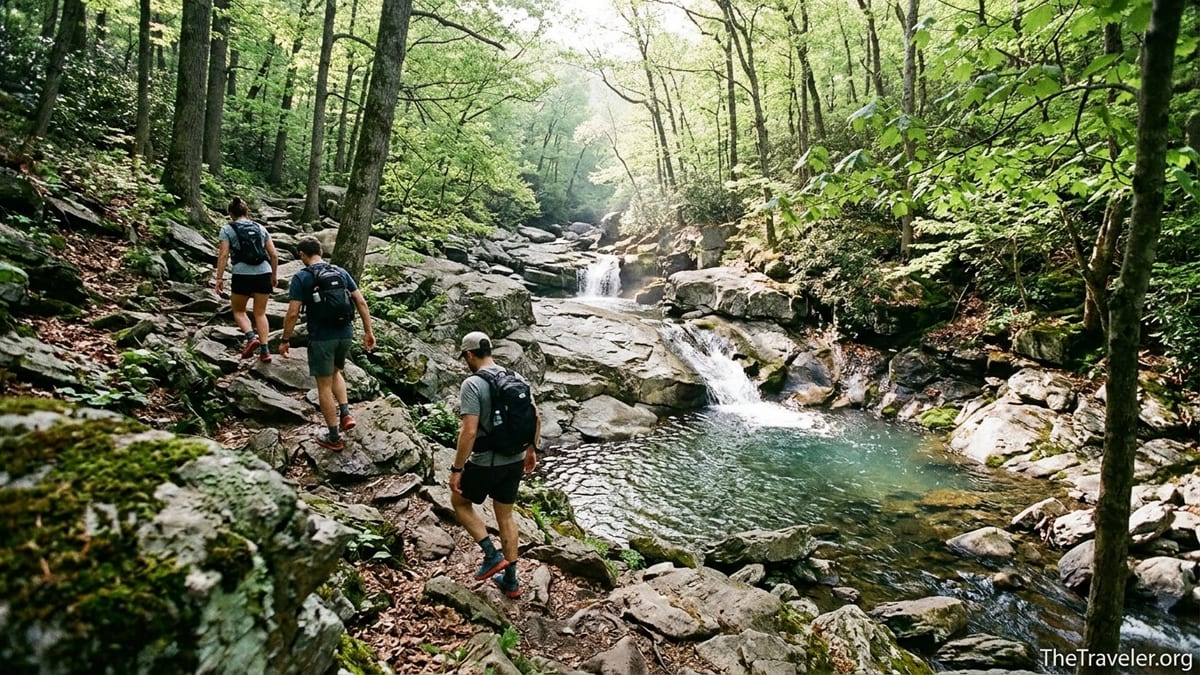
Cedar Run sits on the central stretch of Skyline Drive in Shenandoah National Park, with the main trail leaving from Hawksbill Gap parking at mile 45.6. From here, the Cedar Run Trail drops quickly down the mountainside into a tight, forested ravine. The payoff is big: intimate waterfalls, chutes and a well-known natural rock slide that empties into a small pool. Compared with showpiece falls like Dark Hollow or Overall Run, Cedar Run feels more like a rugged, locals’ favorite than a groomed postcard viewpoint.
The classic Cedar Run experience is the out and back hike to the waterfalls and waterslide. Hikers descend for roughly 1.7 to 2 miles, losing close to 1,500 feet of elevation, before reaching the slide and nearby pools. The main drop in this section is around 30 to 35 feet, but the trail passes numerous smaller cascades, ledges and plunge pools that tempt you to stop and explore. In early spring or after heavy rain, the whole ravine roars; by late summer during dry spells, some side flows shrink to trickles, though the larger falls and pools usually remain.
Because Cedar Run is tucked below the highway, route-finding is straightforward at first: you simply follow the blue-blazed trail downhill to the creek. The complexity comes from how you choose to connect Cedar Run with neighboring trails like Whiteoak Canyon and the Skyland–Big Meadows Horse Trail, and which direction you travel those loops. That choice determines not only how many waterfalls you will see, but also how punishing and safe your ascent and descent will feel.
Most visitors pair Cedar Run with Whiteoak Canyon, home to six headline waterfalls including a fall of roughly 80 to 90 feet. The National Park Service describes the Cedar Run – Whiteoak Circuit as “very strenuous,” roughly 8 miles and almost 2,800 feet of elevation gain, often taking up to 7 hours for the average hiker. Those numbers alone hint at why route choice matters: what looks like a simple loop on a paper map can feel dramatically different depending on whether you end your day climbing slick boulders or walking a gentle fire road.
The Main Route Options: Out-and-Back vs Full Circuit
For most travelers, Cedar Run hiking choices fall into three practical categories: a Cedar Run out-and-back from Skyline Drive; a Cedar Run and Whiteoak Canyon circuit from Skyline Drive; or a lower-mountain loop starting near Syria, Virginia, at the Whiteoak Canyon lower lot. Each option offers a different balance of waterfalls, crowds and safety on the return leg.
The simplest choice is the Cedar Run out and back from Hawksbill Gap. You drive Skyline Drive, park at the designated lot, and descend Cedar Run Trail until you reach the waterslide, main falls and nearby pools. After a long break, you return the way you came. This route is usually around 3.5 to 4 miles total, with a steep climb back. It is a strong choice for hikers who want to focus on Cedar Run’s intimate cascades without committing to an all-day, 8-mile loop or juggling shuttle logistics between trailheads.
The full Cedar Run – Whiteoak Canyon circuit from Skyline Drive is a different experience. Starting at Hawksbill Gap, you can descend Cedar Run, turn left along the creek at the bottom, climb through all six Whiteoak Canyon waterfalls, and then follow the fire road and horse trail back to your car. This route delivers almost all the major waterfalls of both ravines in a single push: multiple falls on Cedar Run plus Whiteoak’s cascade series that many visitors consider the park’s finest. In exchange, you commit to hours of steep, rocky terrain and a long, steady uphill back to Skyline Drive.
A third option, popular with hikers staying outside the park in cabins or campgrounds near Syria, is to start from the Whiteoak Canyon lower trailhead. From this boundary lot you climb up beside the Robinson River into Whiteoak Canyon, then continue up onto the ridge and eventually descend Cedar Run back toward the bottom. Depending on your exact connections, this can become an 8 to 11 mile day. It is rewarding but demanding, better suited to experienced hikers who are comfortable with route planning, long climbs and a potentially hot road walk or shuttle back to the car.
Picking the Best Direction: Clockwise vs Counterclockwise
If you decide on the Cedar Run – Whiteoak Canyon loop from Skyline Drive, direction matters. Many guidebooks and recent trip reports recommend hiking the circuit clockwise: descending Cedar Run first, traversing the lower connector, then climbing Whiteoak Canyon and using the fire road and horse trail for an easier-angled walk back to Hawksbill Gap. This sequence puts the steepest rock hopping and stream-side scrambling at the start of the day, when your legs are fresh and your balance sharp.
Traveling clockwise also means you tackle the majority of Whiteoak Canyon’s waterfalls while ascending. For safety, this is an advantage. Climbing up rock steps beside wet slabs often feels more stable than picking your way down, especially if afternoon thunderstorms have dampened the trail. Standing below each falls as you climb, you get better views into the amphitheaters and plunge pools, and you can decide at each viewpoint whether to approach the water or stay on the main track.
Hiking the loop counterclockwise, by contrast, typically means descending Whiteoak Canyon’s steeper sections and finishing your day with a long, sustained climb up Cedar Run. On paper this might appeal to hikers who prefer to “get the uphill over with” at the end against a backdrop of quieter falls. In reality, tired legs and wet stone are a poor combination. If you lose focus on a slick step near the bottom falls, a slip could result in more than a bruised ego. The Park Service repeatedly cautions that both ravines include rocky, uneven footing, and that hikers should be prepared to turn around if conditions deteriorate.
One practical way to decide your direction is to think about where you want your mental energy in the afternoon. If you are content to spend your last hour of the day on a wide, graded path through the trees, then clockwise is the safer bet. If you are an experienced, sure-footed hiker who moves slowly and deliberately on rock, you might accept a counterclockwise loop. For most travelers, especially those visiting from flat cities like Washington or Norfolk, choosing the direction that stacks the trickiest terrain at the beginning is the more conservative approach.
When a Cedar Run Out-and-Back Is the Smarter Choice
Not every visit needs to be an 8-mile epic. In many real-world situations, an out and back on Cedar Run alone is the more responsible call. Families traveling with tweens, visitors arriving late after a long drive from Richmond, or anyone recovering from a minor injury often underestimate how long a full loop will take. The Park Service suggests planning up to seven hours for the circuit. On a July weekend, when trailhead parking at Hawksbill Gap may already be full by mid-morning, it is easy to start later than planned and find yourself racing fading daylight.
Imagine a couple staying at a lodge near Big Meadows who decide after breakfast to “squeeze in” the Whiteoak–Cedar loop before dinner. They leave Skyline Drive at 11 a.m. on a humid August day, descend Cedar Run, swim at the slide, linger at several photo spots, and reach the lower junction in mid-afternoon. At that point, continuing up through all six Whiteoak waterfalls and walking the horse trail back could keep them out until early evening. If one of them turns an ankle or a thunderstorm builds, the margin for error evaporates. In that scenario, having chosen a shorter out-and-back to the main falls would have been safer and more relaxing.
An out-and-back is also ideal in shoulder seasons when daylight is shorter. In October and November, Cedar Run and neighboring canyons blaze with color, but sunset can arrive before 6 p.m. If you start after lunch from Skyline Drive, reaching only the main Cedar Run falls and then climbing back the way you came will still deliver classic waterfall views framed by yellow oaks and red maples while keeping you close to the trailhead. You can always add a stop at an easier viewpoint like Dark Hollow Falls or a Skyline Drive overlook on your drive back down into the valley.
From a safety standpoint, staying on a single, well-marked trail also simplifies navigation. Cedar Run is still strenuous and rocky, but it has fewer junctions than the full circuit. If fog rolls in or you misjudge your pace, you avoid the risk of missing a turn on the horse trail or connector and fighting confusion late in the day. For newer hikers using apps on their phone, fewer intersections also mean less reliance on batteries in an area where cold weather or constant photography can quickly drain power.
Water Levels, Seasons and Crowd Patterns
The Cedar Run experience varies dramatically by season and water level, and that variation should influence which route you choose. In early spring, snowmelt and frequent rain usually swell the creek, turning small ledges into graceful curtains of water and deepening the turquoise pools. The waterfalls and slide feel most dramatic in this shoulder season, but rocks are at their slickest. If you visit in March or April, a Cedar Run out-and-back or a clockwise loop that tackles the trickiest footing first offers more control over timing and risk.
By late May and June, the park’s waterfall trails usually shift into summer mode. Water volume is still good in typical years, but temperatures climb and the lower trailheads near Syria attract more families and groups. On hot weekends it is common to find a lively scene at the Whiteoak Canyon pools on the park boundary: kids wading, day hikers picnicking on flat boulders, and dogs splashing in eddies where allowed on leash. Starting from Skyline Drive and hiking the loop clockwise can help you reach the upper falls earlier in the day, ahead of the heaviest crowds working up from the bottom.
Late summer can be a mixed bag. After a dry July or August, minor cascades on Cedar Run and Whiteoak Canyon may be reduced to trickles, even as deeper pools remain swimmable. At the same time, thunderstorms are more frequent. A downpour can turn parts of the Cedar Run Trail into a temporary stream, and water levels may briefly spike. When afternoon storms are in the forecast, hikers who still want waterfall views often switch to a shorter route: for example, descending Cedar Run just to the main falls, keeping a careful eye on the clock, and leaving the full loop for a drier, more predictable day.
Autumn brings cooler air and some of the best photography conditions. The softer light, lower humidity and colorful leaves make Cedar Run and Whiteoak Canyon especially photogenic. However, the combination of leaf-covered rocks and lingering moisture can create treacherous footing, particularly on downhills. This is one more argument for tackling the more technical stretches on the way up, not down. If you or someone in your group lacks aggressive traction on their boots, consider focusing on Cedar Run alone or combining Whiteoak Canyon with a less technical return via fire road instead of descending the steepest sections.
Reading the Map and Planning a Safer Return
Regardless of the route you choose, the single most effective safety step is to study an official trail map before you arrive. Shenandoah National Park distributes free maps at entrance stations and visitor centers, and its website hosts detailed PDFs for the Whiteoak Canyon and Cedar Run area, including options labeled as “short” waterfall circuits and longer backcountry variations. Spending ten minutes with these diagrams at home pays dividends on the trail, where cell coverage is patchy and junctions sometimes appear sooner or later than expected.
On the map, note the vertical spacing of contour lines between Cedar Run, the connector to Whiteoak Canyon, and the fire road. Closely packed lines mean steep grades. By tracing your finger along different hypothetical routes, you can visualize which sections will feel like stair climbs and which will resemble gradual ramps. A route that looks similar in mileage to another can have nearly double the elevation gain, which is the difference between a half-day family outing and a serious workout that tests knees and lungs.
Next, estimate your party’s pace based on previous hikes. Many moderately fit hikers in the Mid-Atlantic cover about 2 miles per hour on easy terrain, but that can drop to 1 mile per hour or less on steep, rocky ground with many photo stops. If you know you usually take four hours to complete a 6-mile loop in a nearby state park, expect Cedar Run and Whiteoak Canyon to demand at least that long, if not more. Add in generous extra time for breaks at the most scenic waterfalls, where it is easy to lose track of minutes while wading, filtering water or simply watching the flow.
Finally, plan a turnaround time and commit to it. For instance, you might decide that no matter where you are, you will begin heading back toward Hawksbill Gap by 2:30 p.m. on a shoulder-season day. If you reach your planned junction by the cutoff, you can evaluate whether the full circuit still makes sense. If you do not, turning back on Cedar Run or Whiteoak rather than pushing into unfamiliar sections late in the day is the smarter choice. Many incidents in steep water-filled ravines occur not because terrain is unusually dangerous, but because hikers press on after their original timeline has clearly slipped.
Real-World Gear and Skills for a Safer Descent
Route choice and timing are only part of the safety equation. On Cedar Run, every decision plays out on wet rock and uneven surfaces where proper gear, footwear and basic movement skills matter. In practical terms, that starts with shoes. Trail runners or hiking boots with sticky rubber soles and decent tread are almost essential; lightweight sneakers with worn lugs turn slick when they meet algae-coated stone beside the falls. Many rescues in waterfall canyons involve slips on exactly this kind of surface.
For most visitors, carrying trekking poles is another simple upgrade that pays off on both the descent and the climb. On the way down Cedar Run, poles can help you lower yourself step by step over short ledges and brace during shallow stream crossings. On the way up Whiteoak or the horse trail, they shift some of the effort from aching quads to your arms and core. A basic, adjustable aluminum pair from a mainstream outdoor retailer is sufficient; there is no need for premium carbon poles unless you hike regularly.
Daypacks should always include more water and snacks than you think you will need. On a typical summer visit, many hikers aim for at least 1.5 to 2 liters of water per person for the out-and-back, and more for the full loop. Some experienced hikers supplement this with a simple water filter so they can top up from Cedar Run or the Robinson River if needed. Add a light insulating layer, a rain shell, a basic first-aid kit, and either a paper map or an offline map downloaded to your phone beforehand. Portable battery packs are inexpensive and can prevent navigation problems if you spend all day shooting photos and video.
Equally important is an honest assessment of your group’s comfort on uneven terrain. If someone is nervous around drop-offs, start with easier Shenandoah waterfall hikes such as Dark Hollow Falls Trail or the Rose River Loop before attempting Cedar Run. Practice using three points of contact on rock, stepping on dry surfaces whenever possible, and communicating when you need a hand. On the trail, this translates into small habits, like facing uphill when stepping down taller ledges or checking the depth and current of a pool before jumping in. Those seemingly minor behaviors matter far more than any single piece of high-end gear.
The Takeaway
Cedar Run’s gorge is one of Shenandoah’s most rewarding corners, but it demands respect. Every decision you make about route, direction, timing and gear is really a decision about how much risk you will carry into a steep, wet environment that can be unforgiving of shortcuts. A thoughtful plan can turn the same terrain from intimidating to exhilarating.
If waterfall quantity is your top priority and you are comfortable with long, strenuous days, a clockwise Cedar Run – Whiteoak Canyon loop from Skyline Drive usually delivers the best blend of scenery and safety on the return. If your energy, group experience or schedule are more limited, a Cedar Run out-and-back from Hawksbill Gap is a perfectly satisfying alternative that still showcases the gorge’s signature waterslide, pools and cascades. There is no prize for doing the biggest loop; there is only the quiet satisfaction of walking back into the parking lot with tired legs, full memory cards and everyone in your party feeling strong.
Approach Cedar Run the way you would a mountain river crossing: stop, study the options, and choose the line that matches your skills and the day’s conditions, not your social media ambitions. Do that, and you will give yourself the best chance of enjoying both the face-full-of-mist waterfall moments and the simple relief of seeing your car again at the end of the trail.
FAQ
Q1. Is Cedar Run suitable for beginners or children?
Cedar Run is steep, rocky and physically demanding. Older children with trail experience and proper footwear may enjoy the out-and-back to the main falls, but the full loop with Whiteoak Canyon is better kept for fit adults and teens who are used to hiking several hours at a time.
Q2. Which direction is safer for the Cedar Run – Whiteoak Canyon loop?
Most hikers find a clockwise loop safer and more enjoyable. You descend Cedar Run first while fresh, then climb past the Whiteoak waterfalls and finish on the more gradual fire road and horse trail back toward Skyline Drive.
Q3. How long does the typical Cedar Run hike take?
The shorter out-and-back from Hawksbill Gap to the main Cedar Run falls usually takes 3 to 4 hours for most visitors. The full Cedar Run – Whiteoak Canyon circuit can take 6 to 7 hours or more, depending on fitness, water levels and how many stops you make.
Q4. Do I need special permits or reservations to hike Cedar Run?
As of mid-2026, Cedar Run and Whiteoak Canyon do not require separate day-use tickets, but you must pay the standard Shenandoah National Park entrance fee or hold an appropriate park pass. Always check the National Park Service website or visitor center on the day of your trip in case policies change.
Q5. When is the best season to hike Cedar Run for waterfall views?
Early spring through early summer generally offers the strongest flows, with March through June often providing the best combination of water volume and mild temperatures. Autumn brings beautiful foliage but somewhat lower water levels and more slippery leaf-covered rocks.
Q6. Are there good swimming spots on Cedar Run?
Yes. Below the natural rock slide and near several smaller cascades, you will find pools deep enough for wading and cautious swimming when water levels allow. Remember that the water is cold, currents can be unpredictable after rain, and cliff jumping carries significant risk.
Q7. What kind of footwear is recommended for Cedar Run?
Sturdy trail runners or hiking boots with good tread and grippy rubber soles are strongly recommended. Lightweight casual sneakers and worn-out running shoes tend to slip on the smooth, wet rocks common along the creek and near waterfalls.
Q8. How early should I arrive to find parking?
On peak-season weekends, arriving at Hawksbill Gap or the Whiteoak Canyon lower lot before 9 a.m. greatly improves your chances of finding a legal space and hiking in cooler, less crowded conditions. Midweek and shoulder seasons are usually less hectic but can still fill up during holiday periods.
Q9. Can I hike Cedar Run in bad weather?
It is possible but not advisable during thunderstorms, heavy rain, or icy conditions. Slick rocks, rising water levels and limited visibility increase the chance of accidents. If the forecast calls for storms, consider an easier forest or ridge hike and save Cedar Run for a drier day.
Q10. Is camping allowed along Cedar Run and Whiteoak Canyon?
Backcountry camping is permitted in much of Shenandoah but subject to specific rules, including distance from trails and waterways, and restrictions in heavily used areas. Day hikers on Cedar Run usually do not camp, and anyone considering an overnight trip should review current backcountry regulations and obtain any required permits from the park.