


Choosing the right cabin on Celebrity Eclipse can make the difference between a deeply relaxing holiday and a week of small frustrations. The ship’s layout is not complicated, but details such as lifeboat positions on Deck 6, pool and buffet noise above Deck 11, and a few vibration-prone aft spots mean that taking any random balcony or guarantee fare is not always wise. Based on current 2025–2027 deck plans, recent passenger reports and photo and video evidence, this guide focuses on how Celebrity Eclipse actually behaves at sea, cabin by cabin, rather than how the brochure presents her.
Get the latest updates straight to your inbox!
Quick recommendations: where to book for sleep, views and value
For the quietest sleep with minimal motion and no serious noise risks, the safest starting point on Celebrity Eclipse is a standard veranda cabin on Deck 7, roughly between the forward and midship elevator banks on either side. On the current 2026 deck plans this band of cabins sits between two all-cabin decks, with no major public venues above or below, so there is little structure-borne noise from theaters, lounges or pools. Midship cabins on Deck 8 and Deck 9 offer a very similar experience and are just as good for most travelers.
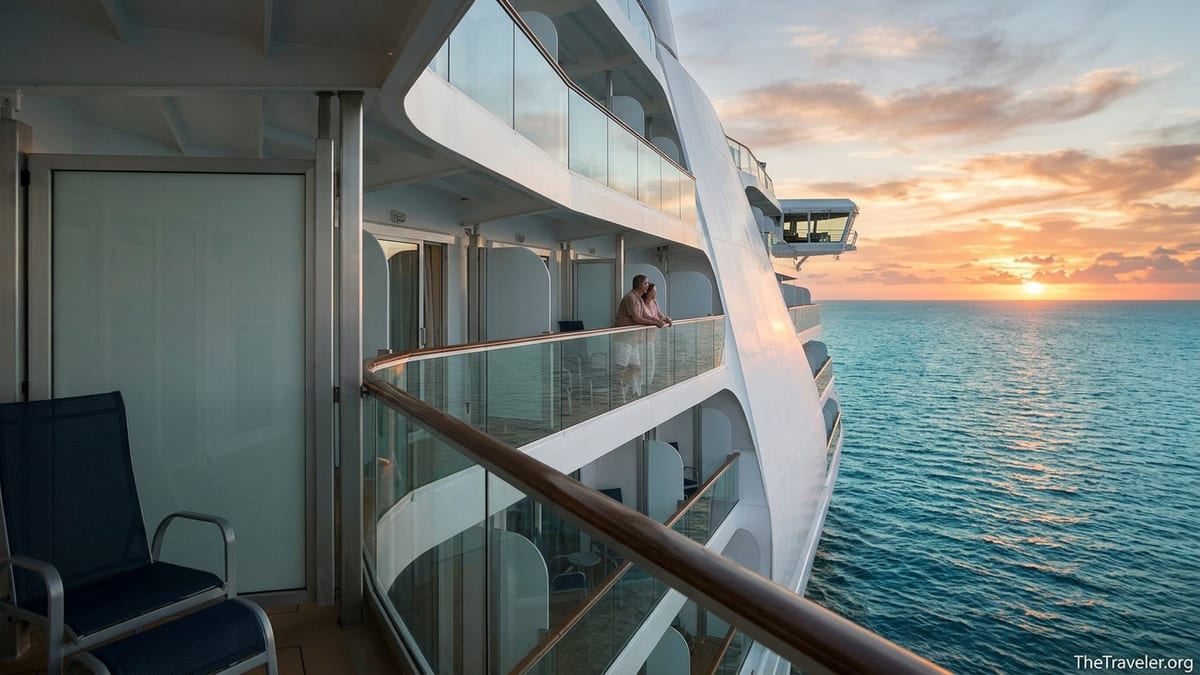
Passengers who value balcony views most should look first at non-obstructed verandas on Decks 7 and 8, then at the “hump” cabins where the ship’s superstructure juts outward near the central elevators. At these humps the angle of the hull gives a slightly widened view both forward and aft. On recent deck plans and photo sets, these hump cabins sit around the 6200s and 7200s on port side and the 6300s and 7300s on starboard, with the best of them on Decks 7 to 9 so they clear the Deck 5 lifeboat hardware below.
For motion-sensitive first-time cruisers, a midship location on Deck 6, 7 or 8 usually feels most stable in rougher seas. Compared with high forward decks, these cabins are closer to the ship’s center of gravity, which means less pitching and rolling. Many travel agents quietly steer nervous cruisers to midship verandas on Deck 7 because they split the difference between stability, quiet and price without running into the pool and buffet noise that can sometimes be heard in a slice of Deck 11.
If budget is tight, the best value cabins are often standard verandas or lower-category Concierge Class cabins on Decks 7 to 9, away from elevators. These give you the core benefits of Eclipse: a real balcony with open ocean views, enough buffer from public decks to avoid most noise, and no structural compromises. Spending more than this only starts to make sense when you specifically want AquaClass dining and spa access or the much larger space and butler service of the true suites.
Understanding Deck 6 lifeboat obstructions in detail
Deck 6 on Eclipse is where many passengers are surprised by lifeboat and tender hardware sitting just below their balcony. Current post-2025 deck plans show the lifeboats lining Deck 5, directly beneath much of Deck 6’s veranda cabins. The practical effect is that for many Deck 6 balconies, you will see orange lifeboat roofs and davits when you look straight down, even though your outward horizontal view to the sea and horizon is open. For some travelers this is a non-issue, but it matters if you expect to watch the wake right under your balcony or take unobstructed downward photos of the water.
Passenger photo sets and long-running forum discussions indicate that on Celebrity Eclipse and her sisters the largest lifeboats are positioned roughly under cabins 6188 to 6206 on the starboard side and 6187 to 6205 on the port side. In these cabins, the lifeboat or its lifting gear rises closer to balcony-rail height, especially near 6187–6206, so it can partially interrupt your seated sightline to the horizon. Standing at the rail you still see open ocean, but when you sit in a deck chair, the top of the boat may cut through the lower part of the view.
Elsewhere along Deck 6, many veranda cabins are affected only by what could be called a “downward obstruction.” You look out through the glass and see sea and sky, but if you lean over and look directly down, a lifeboat roof fills the bottom of the frame. Reports from cabins just outside the heavily obstructed zone suggest that from balcony numbers roughly in the 6170s through low 6200s the difference between “partially obstructed” and “unobstructed” is mainly about how much boat roof appears at the bottom outside the railing rather than a solid wall blocking everything.
Forward on Deck 6 there are a handful of veranda and oceanview cabins where lifeboats stop short, so the area underneath your cabin is more open. These forward exceptions tend to have cleaner downward sightlines, but because the bow narrows here it is also where motion becomes more noticeable, especially on longer itineraries with open-ocean stretches. When choosing between a forward Deck 6 cabin with a clearer downward view and a more central one above lifeboats, travelers prone to seasickness may still be happier with the slightly more obstructed but more stable midship location.
Midship hump balconies and genuinely unobstructed verandas
The most sought-after standard balconies on Eclipse are often the so-called “hump” cabins, where the ship’s hull widens around the central elevator lobbies. On current deck plans, these humps sit amidships on both port and starboard between the forward and midship elevator cores. Because the balcony rail here sits a little farther outboard, passengers report a wider angle of view that includes more of the ship’s forward or aft quarters, which is especially nice when entering scenic ports such as Vancouver or sailing Alaska fjords.
Photo libraries for Eclipse and her sisters show that many hump cabins on Decks 7, 8 and 9 have balconies that are a touch deeper or at least feel roomier because of the angle of the hull. These cabins also sit above the lifeboat structure without the heavier machinery that intrudes at the most obstructed spots of Deck 6. For cruisers who want an affordable but view-forward balcony, a midship hump veranda on Deck 7 or 8 is often a better use of money than a more expensive Concierge Class cabin squeezed near elevators or under a busy public space.
Genuinely unobstructed verandas are easiest to find on Decks 7 through 9, especially outside the short stretches directly above major venues such as the theater or dining rooms. Comparing public deck diagrams with the cabin decks, you can pick lines of staterooms that have only other cabins above and below. For example, on many 2024–2026 sailings, verandas in the central sections of Deck 8 between the stair towers have effectively no structural deck overhang directly above the railing, which keeps the balcony sunnier and improves upward sky views.
At the same time, some higher-deck balconies toward Deck 12 sit under significant overhangs that create deep shade for much of the day. Commenters on recent Celebrity and Solstice-class sailings note that such overhangs make balconies more private and cooler in strong sun but also less ideal if you want to sunbathe or take bright, reflection-free photos. If sun on the balcony matters to you, the mid-level decks 7 to 9 are a safer middle ground than the very top veranda decks.
Deck 11 noise: pools, public areas and dining above
Deck 11 on Eclipse is attractive because it is high enough for sweeping views and close to the outdoor action, yet it is here that cabin location under Deck 12 starts to matter. The current official deck plans place the main pools, hot tubs, wet zone and much of the open-air deck furniture on Deck 12, directly above portions of Deck 11’s staterooms. Travelers who have sailed the Solstice class describe early-morning scraping and thumps as crew set out loungers, move heavy chairs and hose down the teak above, especially on sea days when deck preparation starts well before breakfast service.
Recent third-party cabin guides that were updated in 2026 flag bands of Deck 11 cabins located directly under the busiest parts of the pool deck and the outdoor section of the buffet. While they generally stop short of calling these cabin numbers “guaranteed noisy,” they mark them as potential risks for light sleepers and emphasize that noise transmission depends heavily on the specific section. Cabins tucked under walkways or quieter corners of the pool complex tend to be better than those under clusters of sun loungers, live music staging or the main wet zone.
There are also Deck 11 areas beneath indoor spaces such as the forward part of the spa and the covered solarium. Passengers who have sailed in spa-proximity cabins on Eclipse and her sisters often report that these areas are quieter than expected because spa facilities keep more limited hours and do not host late-night parties. One reviewer who stayed in a Deck 11 AquaClass cabin under spa facilities described it as one of the quietest cruise cabins they had experienced, despite initial worries from reading generic warnings about “never book under a public deck.”
The overall pattern that emerges from recent reviews is that Deck 11 is not a deck to avoid outright. Instead it is a deck where you must match specific cabin numbers against the Deck 12 plan. If your chosen cabin sits under pools, buffet seating or the busiest part of the open deck, consider treating the noise flag as a potential rather than guaranteed problem. For early-to-bed travelers or those on long repositioning cruises where rest matters, moving down to Deck 8 or 9 often removes that uncertainty for the same or lower fare.
Other noise and location risks near lounges, theaters and service zones
Beyond the vertical relationship with the pool deck, the other significant noise variables on Eclipse come from the main theater, secondary lounges, the central atrium and various service and crew corridors. The main theater occupies much of the bow on Decks 3 and 4, with its backstage and technical areas reaching into parts of Deck 5. Cabins immediately above these spaces on Deck 6 can sometimes pick up muffled rehearsal bass or microphone checks, typically in the early evening. However, current 2026 cabin guides based on Eclipse’s plans emphasize that this is a localized risk, not a deck-wide problem.
Midship lounges and music venues are another factor. On recent plans and review compilations, guests in balcony cabins in the midship 6200s and low 6300s on some sailings have reported occasional music bleed in the early evening from lounges a deck or two below, especially on itineraries where late-night dance parties are popular. These reports are not consistent enough to designate specific cabin numbers as “bad,” but they support the notion that cabins directly over multi-purpose lounges can be slightly riskier for ultra-light sleepers than those stacked only over dining rooms or shops.
Elevator lobbies and fire doors also create localized sounds that do not show up on marketing diagrams. Several experienced Eclipse passengers note that cabins facing directly onto an elevator foyer can experience intermittent corridor chatter and the ding of arriving lifts during peak times such as just before late seating in the main dining room. Likewise, where heavy fire doors separate public areas from cabin corridors, the repeated closing of these doors can be noticeable in the closest staterooms. In both cases the disturbance is usually mild and short-lived but worth considering if you are particularly sensitive to intermittent noise.
Finally, connecting-door cabins need a brief mention. On Eclipse, as on most ships, many balcony and inside cabins feature a connecting door to the adjacent stateroom. Structurally these are solid core, but multiple passengers remark that they transmit more conversation noise than a solid wall. If privacy matters, solo travelers, couples on honeymoon or anyone worried about a potentially noisy neighbor may prefer a non-connecting cabin, especially outside school holiday periods when families booking connecting rooms are more common.
Forward motion, aft wake views and balcony privacy
The way Eclipse moves at sea is predictable enough that cabin location has clear consequences. Forward cabins on higher decks feel the most motion. During shoulder-season North Atlantic crossings or early-season Alaska cruises, guests in forward balconies on Decks 10–12 describe noticeable pitching on rougher days and more sensation of wind on the balcony. For passengers prone to motion sickness, booking forward on Deck 10 or above should be a deliberate choice made for the view rather than an accident of price. Those who simply want to feel less movement are better off in midship cabins on Decks 6 to 8, where motion is still present but less dramatic.
Aft-facing cabins tell a different story. They are prized for their wake views, which on Eclipse can be spectacular when sailing away from ports or watching sunsets at sea. Recent comments from guests who stayed in aft veranda cabins on a sister ship noted slightly more vibration and low-frequency rumble, especially when the ship accelerates away from port or works harder in heavy seas. On Eclipse, equivalent aft balconies on Decks 6 to 9 can occasionally pick up this engine vibration, but reports emphasize that it is typically noticeable rather than intolerable. Travelers who are noise-sensitive but dream of that wake view might aim for mid-level aft decks like 7 or 8 instead of the very lowest or highest aft cabins.
Balcony privacy and shade vary noticeably along the ship. Cabins set far under the overhang of the pool and buffet decks enjoy substantial shade and protection from rain, which is an asset on sunny South Pacific runs or very hot Mediterranean summers. On the other hand, passengers on recent Celebrity sailings have commented that deep overhangs allow guests on the higher decks to look down onto the balconies below, which reduces the sense of seclusion. Conversely, on the lower balcony decks with little overhang, you may be more visible from decks above but enjoy better sun and sky views.
Smoky residue and soot are occasional concerns at the very aft, especially on older ships, but for Eclipse the vast majority of contemporary reviews do not report consistent soot problems on standard aft balconies. When they do appear, they tend to describe light specks on balcony furniture after long periods at sea. If this is a worry, consider choosing an aft-facing cabin a deck or two below the very top veranda level so that any exhaust drift is less likely to land directly on your rail.
Comparing interiors, oceanviews, verandas, Concierge, Aqua and suites
Inside cabins remain the most affordable way to sail Celebrity Eclipse, particularly on longer repositioning or shoulder-season sailings. After the 2025 mini-refit, several new interior cabins were carved from spaces that previously held an internet café, card room and video arcade. These newer interiors often have more modern finishes and charging options than some of the older insides, but they remain compact and windowless. For travelers who plan to spend most of their time in public spaces or on deck, these cabins can represent hundreds or even thousands of dollars in savings on a two-week voyage compared with verandas.
Oceanview cabins on Eclipse are relatively limited compared with verandas, located mostly on lower decks at the bow and a few midship sections. They offer real daylight through a picture window without balcony space. On some itineraries, the price difference between an oceanview and a low-category veranda may be small. In those cases, it often makes sense to pay for the ability to step outside, particularly on scenic routes like New Zealand or Alaska where private balcony viewing can be a major part of the experience.
Standard veranda cabins are the workhorse category and generally where the best value lies. Paying extra for a Concierge Class veranda mainly buys you a better cabin location, priority check-in, a few in-room amenities and access to a dedicated embarkation-day lunch rather than a fundamentally different cabin structure. For example, on sample 10-night Eclipse sailings in 2026, mid-season pricing often shows Concierge verandas perhaps a few hundred dollars per person above the lowest veranda guarantee. That extra money is worthwhile when the Concierge cabin is on a clearly superior deck or hump location and the guarantee cabins left are under the pool or over the theater. It is less compelling when both categories are in quiet midship zones on similar decks.
AquaClass and the true suites are the categories where paying more can produce a genuinely different experience. AquaClass cabins sit near the spa and include access to the Blu restaurant and thermal facilities. For couples focused on fitness and spa time, the additional cost may be justified even though the cabins themselves are similar in size to standard verandas. Suites, including Sky Suites and above, deliver larger living spaces, bigger balconies and butler service, along with access to the Retreat Lounge and private sundeck introduced during the ship’s recent updates. Here you are paying both for the room and an upgrade in onboard ambiance, so the value depends heavily on how much you use those private spaces.
Deck by deck: recommended zones and specific cabin examples
On Deck 3 and Deck 4, cabin inventory is limited and closely mingled with the main dining room, theater and embarkation facilities. For a first Eclipse sailing focused on rest, it usually makes more sense to choose a higher cabin deck than to save a small amount by booking here. The lower decks can be practical for travelers with mobility challenges who want fewer stairs or shorter elevator rides to the restaurants but may experience more hallway traffic on port days and during theater shows.
Deck 5 and Deck 6 form the transition from public spaces to the main block of cabins. On Deck 6, as discussed earlier, choose veranda cabins away from the heaviest lifeboat hardware if you care about downward and seated views. For example, experienced Celebrity cruisers often steer friends who are sensitive to obstructions toward midship Deck 7 veranda cabins between the 7200 and 7300 ranges instead of taking a cheaper but heavily obstructed Deck 6 cabin in the 6187–6206 band. Within Deck 6 itself, cabins closer to the middle of the ship, but outside the worst lifeboat zones, offer a reasonable compromise between cost and view.
Decks 7, 8 and 9 are the sweet spot for many travelers. A couple in their 40s on a recent Eclipse sailing to South America, for instance, reported that their midship Deck 8 veranda felt almost apartment-like in its quiet, with barely any hint that thousands of people were onboard. Similarly, repeat Celebrity passengers often request the same bands of cabins in the 8200s and 8300s or their port-side equivalents on each sailing because they sit between cabin decks and away from major service trunks. Families with children tend to appreciate Deck 7 because it provides one quick elevator ride down to public areas yet is insulated from most late-night bar music.
Deck 10 and Deck 11 require more selective booking. On Deck 10, many cabins remain excellent, but you should glance at what sits on Deck 11 above. If the cabin is under another cabin, it is likely fine. If it is under a busy area such as the library or spa relaxation lounge, mild daytime footfall is possible. On Deck 11, scrutinize what is above on Deck 12. For instance, a traveler booking an AquaClass cabin under the covered solarium near the forward spa complex can expect a calmer soundscape than someone under the open pool deck’s main sunbathing zone.
Deck 12 and Deck 14 (where applicable for suites and public areas) are the highest practical choices for most passengers. Suites at these levels, especially near the front where the new Retreat sundeck and associated areas are located, tend to be priced and treated as premium experiences, and Celebrity is careful to avoid glaring design mistakes that would compromise them with noise. However, ordinary balcony cabins or spa staterooms located hard under the outdoor running track, buffet terrace or high-traffic pool zones can encounter early-morning chair scraping and occasional late-night activity. Guests who prize absolute quiet should either accept this as a trade for convenience or choose a deck or two below.
Accessible cabins and special needs considerations
Accessible and mobility-impaired cabins on Celebrity Eclipse are spread across several decks and categories, including interior, oceanview, veranda and suite grades. They typically feature wider doors, more open floor space, roll-in showers with seats, grab bars and lowered closet rails. In some cases, balconies are deeper to allow wheelchair maneuvering and have ramped thresholds rather than step-overs. While deck plans mark these cabins with an accessibility symbol, the exact features can vary even within the same category and deck.
Because accessibility needs are so individual, it is essential to confirm details directly with Celebrity or a specialist travel agent before finalizing a booking. Passengers who recently sailed in accessible cabins on Eclipse and sister ships report that the cruise line will answer specific questions about bed height, shower configuration and turning radius if asked, and in some cases can provide photos. This is especially important post-refurbishment, as a few former public spaces were converted into new interior cabins and some layouts differ from original brochure diagrams.
Another key point is that accessible cabins are meant for guests who genuinely need their features. Some cruisers book these staterooms solely because they appear larger on deck plans, then find their assignment changed close to sailing when a passenger with documented mobility needs requires the space. Celebrity has, on multiple occasions, moved guests out of accessible cabins for this reason, even when the original booking was months old. For travelers who do not need an accessible cabin, it is safer and more ethical to select a standard layout and avoid the risk of last-minute reassignment.
Families traveling with a wheelchair user or someone with limited mobility should also look carefully at the route from cabin to elevators and from elevators to key venues like the main dining room and theater. A midship accessible veranda on Deck 7 or Deck 8, for example, can minimize journey time to both dining and entertainment while still avoiding proximity to loud venues. When in doubt, ask Celebrity to describe or map that route step by step so you can judge whether it suits your daily routine.
Who should book what: couples, families, light sleepers and first-timers
Couples seeking a romantic trip with plenty of balcony time will often be happiest in a midship or hump veranda on Deck 7 to 9. These cabins offer good views without motion extremes and sit far enough from kids’ facilities and late-night bars to stay quiet. For honeymooners or those marking a significant anniversary, paying extra for an AquaClass or entry-level Sky Suite can be worthwhile if you value access to Blu, spa facilities and the Retreat spaces that give a more boutique-hotel feel than the main ship.
Families, especially those traveling with school-aged children, might prioritize cabins that cluster together around mid-level decks near elevators. Two connecting verandas or an interior across the hall from a balcony on Deck 7 or 8 can work well. One parent can nap a toddler in the interior while another relaxes on the balcony, and older children have an easy path between rooms. Just be aware that connecting doors transmit more sound, so agree on quiet hours within your group and understand that neighbors might hear amplified noise if your party becomes boisterous.
Light sleepers and passengers prone to seasickness should combine several pieces of advice. A midship veranda on Deck 7 or 8 above and below other cabins provides the best baseline for both motion and noise. Avoid cabins directly under the pool deck on Deck 11 if early-morning scraping sounds will disturb you, and think twice about the most forward balconies on the very top decks. If you cannot avoid a potential noise risk location because of price or availability, simple aids such as quality foam earplugs or a smartphone white-noise app can help moderate intermittent sounds.
First-time cruisers on Eclipse who are still unsure what to book might approach their cabin choice in stages. Start with a standard veranda rather than an interior, so you can experience having your own outdoor space. Place it midship on Deck 7 or 8, away from elevators and not on the list of clearly lifeboat-obstructed cabins such as the heavier obstruction zone around 6187–6206. After that first sailing, you will know whether you want to upgrade to AquaClass for spa privileges, to a suite for space, or whether you would be equally happy saving money in a well-chosen interior on your next trip.
Practical booking checklist and Eclipse cabin FAQs
When you are ready to book Celebrity Eclipse, begin by opening the latest official deck plan alongside a trusted third-party cabin tool or recent review site. First, identify your preferred deck range using the principles above: mid-level decks like 7 to 9 for quiet balance, or 10 to 11 if you want to be close to pool and spa areas. Next, trace what sits directly above and below any candidate cabin. If it is cabins on both sides, that is usually ideal. If it is a pool, buffet terrace, theater or music lounge, treat that as a potential noise risk, not an automatic deal-breaker.
Then look laterally along the corridor. Avoid being directly opposite large service doors or crew-only areas, and step back a few cabin numbers from the main elevator banks to cut down on foot traffic and lift dings. Check whether your chosen cabin has a connecting door. If privacy and noise isolation matter, choose a non-connecting cabin where possible. For Deck 6 verandas, cross-reference cabin numbers against lifeboat positions, keeping in mind that the heaviest reported obstructions are around 6187 to 6206 and their direct counterparts, where lifeboat roofs rise closest to the railing.
Finally, consider your own priorities honestly. If you know you will be up late at the Martini Bar most nights, you may care less about early-morning deck noise on Deck 11 and more about minimizing your walking distance. If you are traveling with small children, a calm mid-level deck with quick elevator access to the buffet might matter more than having the absolute largest balcony. And if you are celebrating a once-in-a-decade event, the extra space and service in a suite or AquaClass cabin may provide more lasting memories than the cost difference would suggest.
Common questions about Eclipse cabins center on view obstructions, quietest locations and which rooms to avoid. On Deck 6, lifeboat obstructions mostly affect the downward and seated view rather than the entire horizon, with the most significant issues reported around cabins 6187–6206 where the larger boats sit. The quietest decks are generally 7, 8 and 9 in the midship zones, sandwiched between other cabin decks. The largest standard balconies tend to be at the midship humps and certain aft-facing cabins, though suites far exceed them. Rooms worth avoiding are not entire decks but specific positions: cabins directly under high-activity sections of the pool deck, directly over major lounges or theaters, and the heavily lifeboat-obstructed bands of Deck 6. Treat each of these as a potential concern, verify against the most recent plans and reviews, and you will be well on your way to choosing a Celebrity Eclipse cabin that matches how you actually like to travel.