


Chicago O’Hare International Airport (ORD) is one of the busiest hubs in the United States, and it can feel overwhelming if you have never flown through it before. With four passenger terminals, dozens of airlines, multiple train and bus connections, and an ever-changing lineup of lounges and services, planning ahead can turn a stressful first visit into a smooth one. This guide walks you through the essentials of arriving, departing, changing terminals, finding transportation, choosing parking, accessing lounges, and picking nearby hotels, with real-world examples tailored to first-time ORD travelers.
Get the latest updates straight to your inbox!
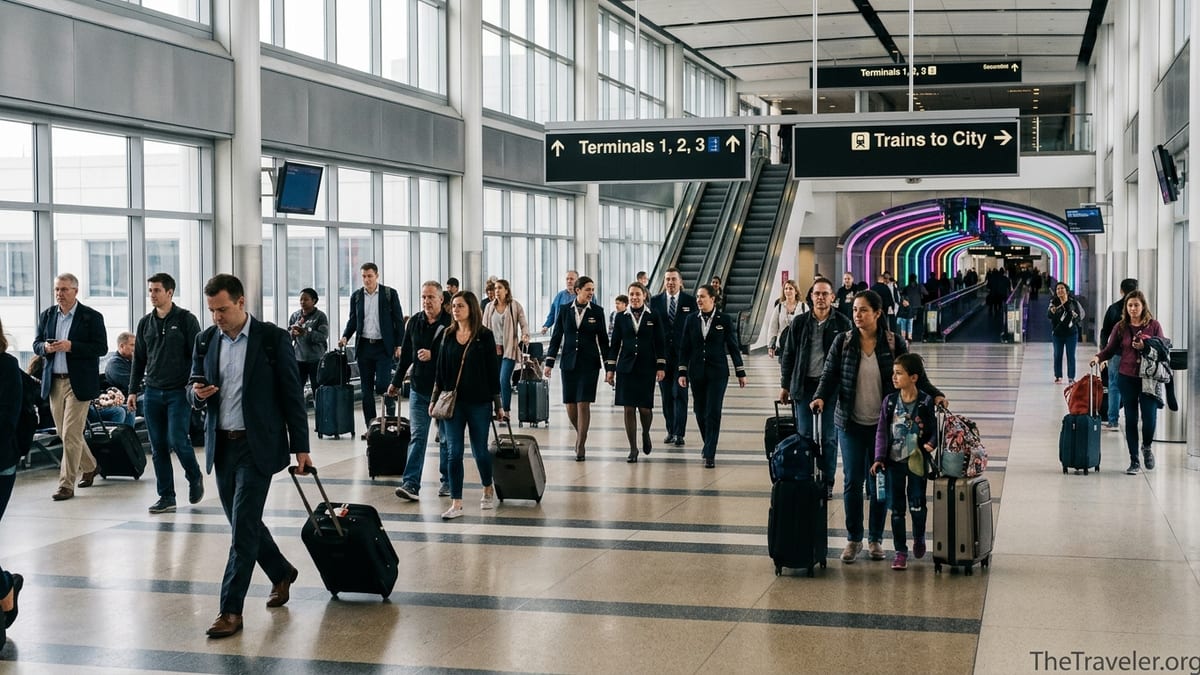
Understanding O’Hare’s Terminals and Layout
O’Hare has four passenger terminals: Terminals 1, 2, and 3 arranged in a horseshoe, and Terminal 5 set slightly apart and reached by the Airport Transit System people mover. Terminals 1 to 3 handle most domestic flights and some international routes, while Terminal 5 is the main international terminal for many non-US carriers. The core of the airport is compact but busy, so build in extra time simply to follow signs, especially during peak hours.
United Airlines and its regional partners are primarily based in Terminal 1, using Concourses B and C, while American Airlines dominates Terminal 3. Other US carriers such as Delta and Alaska typically operate from Terminals 2 and 3, and many international airlines including Air France, British Airways, Lufthansa and others use Terminal 5. Gate assignments can vary, so always confirm your terminal and gate in your airline app or on the airport monitors before you set off walking.
Inside Terminals 1, 2, and 3 you can walk between concourses without exiting security, which is valuable if you are connecting between United and some partner flights or between American and its domestic partners. Terminal 5, however, is on its own security system, so moving between Terminal 5 and Terminals 1 to 3 requires you to go outside the secure area and be re-screened. The ATS train links all terminals and the main parking and rental car center, and runs regularly day and night, making it the default way to change terminals if you are outside security.
For a first-time visitor, one practical strategy is to screenshot the official terminal map before you fly, then use the colored concourse letters and large overhead signs to orient yourself once you arrive. For example, if your boarding pass shows “Gate C18,” you can follow signs to Terminal 1, then on to Concourse C via the underground tunnel from Concourse B, instead of stopping at the first security line you see.
Arriving at ORD: From Gate to Ground Transport
On arrival at O’Hare, follow the overhead signs for Baggage Claim or Connecting Flights. If Chicago is your final destination and you have checked bags, you will be routed down to the baggage claim level beneath your terminal. Domestic bags at O’Hare often begin arriving within 15 to 30 minutes after landing, but delays are common during storms and peak evening banks, so plan a flexible pickup time if someone is meeting you by car.
Customs and immigration for most international arrivals take place in Terminal 5. If you land there from overseas, you will clear US border formalities, collect your checked luggage, pass customs, and then choose either to exit into the public arrivals hall or re-check bags with your airline for a connecting domestic flight. Travelers with Global Entry can often complete immigration in a few minutes, while regular passport lines can fluctuate from 15 minutes to an hour during busy afternoon transatlantic arrival waves.
Once you are in the public arrivals area, look for the colored signs directing you to taxis, rideshare pickups, hotel shuttles, and public transit. For example, if you are in Terminal 3, signs for “Trains to City” lead you through an underground walkway toward the CTA Blue Line station beneath the main parking garage, while signs for “Airport Transit System” guide you to the ATS platform for transfers to Terminal 5, remote parking, and the rental car center. The signage is dense, so walking slowly and pausing to confirm arrows at intersections helps you avoid backtracking.
If a friend is picking you up by car, agree on a specific door number and level in advance, such as “Terminal 2, lower level, Door 2B,” which is how the curbside lanes are labeled. During peak times, police will often move cars along quickly, so travelers commonly wait inside by baggage claim until they receive a text that their ride is at the curb, then step outside to load up and depart.
Departures and Security: Timing, Check-in, and TSA PreCheck
O’Hare departures are busiest early in the morning and late afternoon, when banked waves of flights leave for other hubs and major cities. For domestic flights, arriving around 2 hours before departure is generally adequate, while for international flights many airlines recommend 3 hours or more, especially if you are checking bags. If you are traveling during holidays, major events, or after a weather disruption, adding an extra 30 minutes can make a big difference in comfort.
Each terminal has its own ticketing hall and security checkpoints. United check-in counters are concentrated in Terminal 1, American’s main check-in is in Terminal 3, and many international carriers use Terminal 5. Kiosks for bag tags are readily available in the larger halls. For example, if you are flying United to Denver, you can check in online, print your bag tag at a United kiosk in Terminal 1, and then drop your baggage at the clearly marked Bag Drop lanes before heading upstairs to security.
Security wait times at O’Hare vary by hour and terminal. Travelers with TSA PreCheck or CLEAR often experience faster screening in Terminals 1, 2, and 3, though lines can still form in the early morning business rush. Terminal 5 has its own TSA area, which can feel more congested around the midday and evening long-haul departures. You can use the official airport app or your airline’s app to check approximate real-time security waits and choose a shorter checkpoint within the same terminal when possible.
After security, concourses spread out like fingers, with restaurants, shops, and restrooms lining the walkways. A first-time traveler tip is to walk directly to your gate first to confirm it on the monitor and gauge the walking distance, then double back to pick up food or drinks. For instance, if you depart from Terminal 3’s Concourse H, you might note your gate, then stop at a nearby coffee bar or fast-casual restaurant within sight of your boarding area so you can monitor boarding announcements easily.
Getting To and From O’Hare: Trains, Buses, Rideshares, and Taxis
O’Hare is linked to downtown Chicago and the suburbs by a mix of public transit and road options. The Chicago Transit Authority Blue Line train runs 24 hours a day between O’Hare and the city, with a station beneath the airport’s main parking garage connected via underground walkways to Terminals 1, 2, and 3. The ride to downtown stations like Washington or Jackson typically takes about 45 minutes, and the fare is usually higher from the airport than from in-town stations, so expect a modest airport surcharge built into the standard CTA fare.
For many first-time visitors, the Blue Line is the most predictable and budget-friendly option into the city, especially during the afternoon and evening when road traffic into downtown can be heavy. As a concrete example, a solo traveler arriving at 5 p.m. might pay significantly less to ride the Blue Line into the Loop than to take a taxi in rush-hour traffic, even though the travel times are similar. The trains are frequent, but they can be crowded during commuter peaks, so keeping valuables close and luggage compact makes the ride easier.
Several regional bus services and hotel shuttles operate from the lower levels near the terminals and the Multi-Modal Facility, connecting O’Hare with nearby suburbs and other Illinois cities. If you have booked a park-and-fly hotel, you will usually meet your shuttle outside the arrivals level at a marked hotel shuttle center area, where branded buses circulate roughly every 15 to 30 minutes. Local public transit buses operated by Pace also serve the airport and nearby CTA stations, though most first-time visitors find the Blue Line or a direct rideshare more straightforward into central Chicago.
Taxis and rideshares like Uber and Lyft are widely available. Official city taxis queue outside each terminal on the lower level, with meter-based fares to central Chicago that vary based on traffic and route. Rideshare pickups generally occur in designated areas, often in the upper or lower roadway depending on the terminal. As an example, if you request a rideshare from Terminal 2, the app will direct you to a specific numbered pickup zone, which might require crossing a pedestrian island or taking an elevator up one level. Because curb space is busy, build in 10 minutes of walking and waiting time after you request your car.
Parking Options and Rental Cars
O’Hare offers a range of parking options, from short-term hourly garages closest to the terminals to more economical daily and economy lots farther away. The main multi-level parking garage opposite Terminals 1, 2, and 3 is convenient for short stays, drop-offs, and pickups, but the hourly rates add up quickly if you leave your car there for several days. Travelers who park there for a long weekend often do so for convenience, accepting a higher total cost in exchange for being able to walk right into the terminals without using a shuttle.
For longer trips, many travelers choose the official economy lots or off-airport private parking facilities. Economy lots are served by frequent shuttle buses that connect to all terminals, with rates that are typically much lower than the terminal garage. Off-airport garages and lots in nearby suburbs such as Rosemont or Schiller Park often advertise discounted multi-day parking that includes a shuttle to the terminals. For example, a traveler leaving for a week might compare the cost of an economy lot with a private garage near the Blue Line’s Cumberland station, then choose the option that balances price against the need to transfer via shuttle or train.
Rental cars at O’Hare are concentrated at the Multi-Modal Facility, reached by the Airport Transit System from all terminals. Major brands like Hertz, Avis, Enterprise, National, and others operate here, along with several smaller companies. After landing and collecting your bags, you follow signs for the ATS, ride the train to the rental car stop, and then proceed to the counters or garage for your company. Returning a rental car before departure involves following highway signs for “Rental Car Return” that lead to the Multi-Modal Facility, after which you take the ATS back to your terminal.
If you plan to stay in downtown Chicago, many travelers skip rental cars entirely and rely on trains, rideshares, and taxis instead, because hotel parking in the city center can be expensive and traffic is often congested. Renting a car makes more sense if you are continuing to the suburbs or planning road trips to other Midwestern destinations, such as Milwaukee or the Indiana Dunes, directly from the airport.
Lounges, Food, and Amenities
As one of the country’s largest hubs, O’Hare hosts a substantial number of airline and independent lounges across its terminals. United operates multiple United Club locations and a Polaris Lounge in Terminal 1 for eligible international premium passengers, while American Airlines offers Admirals Clubs and premium Flagship facilities in Terminal 3. Terminal 5 has lounges associated with several international carriers, as well as independent lounges that may be accessible through Priority Pass or paid day passes, such as an Air France-branded lounge used by multiple airlines.
Access rules vary by lounge. Some require a same-day boarding pass on the operating airline plus a membership or premium cabin ticket, while others accept certain credit cards or paid entry. For instance, a traveler with a qualifying premium travel credit card linked to a lounge network might be able to enter an independent lounge in Terminal 5 before an evening flight to Europe, while a domestic economy passenger on United could purchase a one-time pass to a United Club in Terminal 1 to enjoy Wi-Fi, snacks, and a quieter workspace ahead of a long connection.
Beyond lounges, each terminal offers a mix of restaurants, cafes, and quick-service options. In Terminal 1, you might find sit-down restaurants and well-known coffee chains near Concourse B, while Terminal 3’s concourses often feature Chicago-themed eateries that serve local-style hot dogs or deep-dish pizza slices. Terminal 5, which handles many long-haul international flights, has been gradually upgraded with newer bars, cafes, and duty-free shopping so passengers can relax during longer pre-boarding waits.
Other amenities at O’Hare include currency exchange counters in international areas, nursing rooms, kids’ play spaces in select concourses, and service-animal relief areas both pre- and post-security. Free Wi-Fi is available throughout the airport, and charging outlets are increasingly common along the gate seating. For a quieter break, some travelers choose to walk the length of a concourse to less-used gates or sit near art installations such as the famous neon-lit pedestrian tunnel linking Concourses B and C in Terminal 1.
Hotels Onsite and Nearby
O’Hare has one hotel directly on airport property, the Hilton Chicago O’Hare Airport, located between the main parking garage and the core terminals. It is reachable on foot via indoor walkways from Terminals 1, 2, and 3, making it a practical choice if you have a very early flight or an unexpected overnight due to cancellations. Although rooms are often priced higher than off-airport options, many travelers find the ability to walk to and from their gate without shuttles or taxis worth the premium, especially in winter weather.
Just outside the airport boundaries, the nearby suburb of Rosemont hosts multiple full-service properties, including brands such as Hyatt, Marriott, and Crowne Plaza, many of which offer free airport shuttles. For example, a traveler attending a convention at the Donald E. Stephens Convention Center might stay at a Rosemont hotel with a complimentary shuttle that runs every 20 to 30 minutes to all terminals, reducing transportation costs compared with multiple taxi rides. These hotels often bundle park-and-fly packages, where a one-night stay includes up to a week or more of parking while you travel.
Budget-conscious travelers can look to properties in Schiller Park and other neighboring communities, where chain motels typically cost less per night than the on-airport Hilton or the big convention hotels in Rosemont. Many of these motels run smaller shuttles to the terminals or to the Multi-Modal Facility, though schedules can be less frequent, so confirming shuttle times that align with your flight is important. If you arrive late in the evening, calling the hotel from the baggage claim area can ensure the next shuttle includes you on its pickup list.
If your main goal is sightseeing in Chicago rather than staying near the airport, consider booking a hotel in the Loop, River North, or other central neighborhoods and using the Blue Line to travel between downtown and O’Hare. This approach allows you to step out of your hotel directly into the city’s restaurant, museum, and lakefront districts, then ride a single train back to the airport when it is time to depart.
First-Time ORD Tips and Common Pitfalls
For first-time visitors, the sheer size and busyness of O’Hare can be surprising. One of the most helpful habits is to build generous connection times between flights. If you are connecting from an international arrival in Terminal 5 to a domestic departure in Terminal 1, for example, you must clear immigration, collect and re-check luggage, travel on the ATS, and pass security again. In practice, this can easily take 90 minutes or more during busy periods, so choosing a two- to three-hour layover is often wiser than booking the minimum possible connection.
Another common pitfall is underestimating walking distances between gates. While Terminals 1, 2, and 3 are connected airside, walking from the far end of a concourse in Terminal 1 to a distant gate in Terminal 3 can take 20 minutes at a relaxed pace, especially during crowds. If your arriving flight is delayed and your connection looks tight, inform a flight attendant before landing; airlines sometimes provide updated gate information or suggest faster routes through the terminals.
Weather is a major factor in Chicago, especially in winter, when snow and ice can trigger cascading delays, and in summer, when thunderstorms often roll across the region in the afternoon. When bad weather is forecast, many experienced travelers choose earlier flights in the day, since those are more likely to depart before delays accumulate. For example, booking a 7 a.m. departure to the East Coast instead of a 5 p.m. one can reduce the risk of being caught by late-day disruptions.
Finally, have a backup plan for food and essentials during irregular operations. If a storm has caused widespread delays, lines at restaurants and shops can lengthen quickly. Keeping a refillable water bottle, a small snack, and essential medications in your carry-on ensures you are not dependent on a single vendor that may be closed or overwhelmed. Downloading your airline’s app, enabling notifications, and checking gate screens regularly are also simple but powerful ways to stay ahead of last-minute changes at O’Hare.
FAQ
Q1. How early should I arrive at O’Hare before my flight?
For most domestic flights, aim to arrive about 2 hours before departure, and around 3 hours for international flights, adding extra time during holidays or severe weather.
Q2. Which terminal does United Airlines use at O’Hare?
United Airlines and most of its regional partners primarily operate from Terminal 1, using Concourses B and C, though some codeshare or overflow flights may use other terminals.
Q3. How do I get from Terminal 1 to Terminal 5 at O’Hare?
To travel between Terminal 1 and Terminal 5, exit the secure area, follow signs for the Airport Transit System, ride the ATS train to Terminal 5, and then pass through security again.
Q4. What is the cheapest way to get from O’Hare to downtown Chicago?
The CTA Blue Line train is usually the most budget-friendly option, running 24 hours a day from the airport to downtown, with a typical ride of about 45 minutes.
Q5. Is there a hotel inside Chicago O’Hare Airport?
Yes. The Hilton Chicago O’Hare Airport is located on airport property between the main parking garage and the terminals, reachable by enclosed walkways.
Q6. Can I walk between O’Hare’s terminals without leaving security?
You can walk airside between Terminals 1, 2, and 3 after security, but Terminal 5 is separate, so moving to or from Terminal 5 requires exiting and re-clearing security.
Q7. Are there lounges I can access with a day pass at O’Hare?
Several airline and independent lounges at O’Hare offer paid day passes or accept select credit cards and membership programs, though access depends on your airline, terminal, and ticket type.
Q8. Where do rideshares like Uber and Lyft pick up at O’Hare?
Rideshare pickups occur at designated zones near each terminal, usually on a specific level and curb area that your app will show after you request a ride.
Q9. Is parking available for several days at O’Hare?
Yes. O’Hare offers official daily and economy lots for multi-day parking, and there are also off-airport garages and park-and-fly hotel packages with shuttle service to the terminals.
Q10. What should I do if I have a tight connection at O’Hare?
If your connection is tight, check your onward gate on arrival, walk directly there without stopping, and let airline staff know if your incoming flight was delayed so they can advise on options.