


When I first started comparing travel insurance for a long-haul trip from Los Angeles to Singapore with a side stop in Sydney, I expected Cover-More to be just another big-brand policy: glossy promises, complicated fine print, and claims that might or might not come through when it mattered. After a week of digging into Product Disclosure Statements, speaking with agents, and reading through recent customer stories, I walked away with a more nuanced view. Some parts of Cover-More’s coverage genuinely impressed me. Others were more limited than the marketing suggests. Most surprising of all was how different the real-world experience looks depending on where you buy your policy (USA, Australia, UK) and how carefully you match the cover level to your trip.
Get the latest updates straight to your inbox!
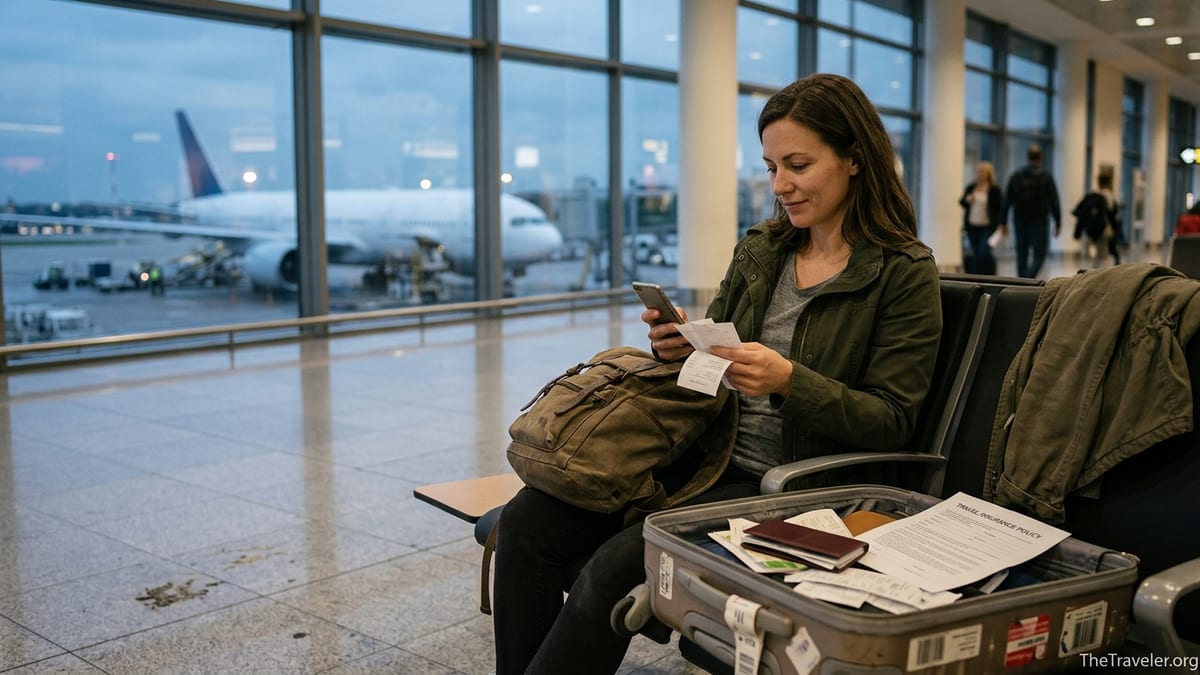
Cover-More at First Glance: Big Brand, Uneven Expectations
For many travelers, Cover-More appears in the background of airline checkout pages, travel agency bookings, and comparison sites. It is a global brand under the Zurich group, with dedicated operations in markets such as the United States, Australia, New Zealand and the United Kingdom. On paper, it offers what most travelers say they want: trip cancellation, emergency medical, baggage, and 24/7 assistance. Looking only at the marketing pages, Cover-More looks interchangeable with rivals like Allianz, Travel Guard, or World Nomads.
The reality starts to diverge as soon as you compare actual cover levels side by side. In Australia, for example, Cover-More’s top Comprehensive Plus plan advertises unlimited overseas medical cover and high trip cancellation limits, while the mid-range Comprehensive plan pares those benefits back to figures that will feel tight on a five-figure European vacation. In the US, policies are structured a little differently, with emergency medical and evacuation framed in dollar amounts rather than the headline-grabbing “unlimited,” but still generally competitive for mainstream leisure trips.
The first surprise when I compared Cover-More with other brands was not about price. For a 12-day Europe trip from Sydney in shoulder season, quotes I tested for a couple in their late 30s were within 10 to 15 percent of similar cover from competitors. The real difference emerged in how specifically Cover-More defines what is and is not covered, especially for COVID-19, trip disruption and high-risk activities. Those details do not show up in quick comparison tables, but they define what your policy is actually worth when your trip goes wrong.
Equally unexpected was how much emphasis Cover-More places on its assistance network rather than just reimbursement. If you read through its US and Australian sites, the messaging repeatedly circles back to help with finding doctors overseas, coordinating evacuations, or guiding you through a quarantine situation, not only refunding receipts later. Several recent customer stories back this up, describing late-night calls from cruise ships, small hospitals in Vietnam or Indonesia, and rapid coordination of care rather than a distant, paperwork-heavy response.
Where Cover-More’s Coverage Quietly Exceeds Expectations
One area where Cover-More stood out in my comparisons was emergency medical and evacuation, particularly in the Australian Comprehensive Plus tier. For travelers heading to destinations with expensive private healthcare, such as the United States or Japan, having effectively unlimited overseas medical cover is a meaningful advantage. It can be the difference between hesitating to see a doctor in New York because you fear a five-figure bill and walking into an urgent care clinic knowing that, within reason, your insurer will back you up.
In practice, this matters on mundane days as much as in disasters. Picture a family from Melbourne on a three-week California road trip: the 9-year-old slips at a Lake Tahoe lodge and fractures a wrist. The nearest hospital is private, and the initial ER bill runs into several thousand US dollars. Under a lean policy with a modest medical limit, the family might end up arguing over what portion is covered and worrying about hitting the cap if complications arise. Under Cover-More’s higher-tier Australian plan, those medical bills fall clearly inside the core benefit, and assistance staff can help the family ensure the hospital bills the right way.
COVID-19 cover is another quietly strong point, though it comes with caveats. In multiple markets, Cover-More offers some protection if you or a traveling companion test positive before departure and must cancel, or if you test positive during the trip and need to quarantine or receive medical care. That can mean reimbursement for lost, nonrefundable hotel nights in Paris or Bangkok, plus additional accommodation costs if you are ordered into isolation. While the benefits are not unique in the market, they are relatively clearly explained on COVID-specific information pages and in updated policy documents compared with some rivals whose pandemic-era language remains vague.
Finally, when I drilled into the fine print and also read through guidance articles that Cover-More publishes about claims, I was struck by how often the company explicitly coaches travelers on how to avoid denial. An example from its US site walks customers through common mistakes like providing incomplete documentation or lodging a claim under the wrong benefit type. The tone is self-serving, of course, but it also acknowledges that claims can be lost in the maze of codes, receipts and trip categories, and it gives practical steps to improve your odds of a smooth payout.
Where the Fine Print Bites: Limits, Exclusions and Frustrations
Just as I was warming to Cover-More’s strengths, I hit the first reality check: customer review patterns. On Australian review platforms, Cover-More typically sits in the mid-range of user scores, with ratings often hovering between 3 and 4 stars out of 5. Some travelers describe fast payouts for straightforward claims: delayed luggage, cancelled tours in Europe after a broken leg, or reimbursements after flight disruptions. Others recount frustrating battles over technicalities, from pre-existing conditions to cruise-related COVID costs and missed connections.
One recurring surprise is how tightly Cover-More, especially in Australia, defines COVID-19 benefits. Some travelers assume that any pandemic-related disruption is covered. In reality, the wording often excludes claims arising from government border closures, general lockdowns, quarantine requirements that apply to entire regions, and mandated testing costs. In practice, this means that if your November trip to Tokyo is cancelled because Japan tightens entry rules for all tourists, you might not be covered. But if you personally test positive two days before your departure and a doctor certifies that you must isolate, you are more likely to fall under the policy’s cancellation benefits. That nuance can be the difference between a refunded $3,000 in nonrefundable flights and a painful personal loss.
Another area where travelers report disappointment is travel disruption that sits between simple delay and total cancellation. For instance, on a European river cruise last year, low water levels forced passengers off the ship halfway through the itinerary. One New Zealand couple with Cover-More cover shared publicly that they were left organizing hotels and trains on their own once the cruise operator stopped providing alternatives. Their insurer eventually covered some costs but not all, and the process took months. Scenarios like this often fall into grey zones in policy wording, where caps on “additional accommodation and transport” or requirements to seek refunds from suppliers first reduce what the insurer pays.
I also noticed that Cover-More, like many travel insurers, expects a high level of documentation. Lost baggage claims may require airline Property Irregularity Reports and receipts; medical claims can be delayed if doctors’ reports are incomplete; and trip disruption claims often require written proof from airlines, cruise lines or hotels that they will not refund your costs. Travelers used to minimalist digital banks and frictionless apps can find this process old-fashioned and stressful, especially when they are still on the road.
Comparing Cover-More to Key Competitors in Real Trips
To see how Cover-More stacks up, it helps to compare real-world trip profiles. Take a 10-day New York and Boston city break for a couple flying from London, with flights, hotels and prepaid tours totaling roughly 4,000 pounds. On UK comparison sites, Cover-More’s mid to top-tier policies typically price in the same band as well-known brands like Aviva, AXA or Staysure. Where Cover-More may edge ahead is in evacuation and medical support, but some rivals offer higher baggage limits or more generous provisions for missed connections and schedule changes as standard.
For backpackers and digital nomads, the comparison looks different. A 6-month multi-country trip through Southeast Asia from Sydney, with time in Thailand, Vietnam, and Indonesia, brings up questions about motorbike accidents, adventure sports and long stays in one region. Cover-More’s Australian policies allow you to add higher-risk activities and gadgets as optional extras, but those add-ons can push the premium noticeably above no-frills competitors marketed directly to younger travelers. On the other hand, if an accident in Chiang Mai results in hospital stays, early repatriation and follow-up care, Cover-More’s comprehensive medical support may turn out to be significantly more robust than that of a rock-bottom policy bought primarily on price.
Another instructive example is a domestic US ski trip, such as a week in Colorado or Utah for a family of four. A Cover-More USA policy might sit alongside American competitors like Travel Guard or Generali in price. Where the differences emerge is in cancellation reasons and winter-sports coverage. If you need to cancel because your child comes down with strep throat the day before departure and a doctor certifies they are unfit to travel, Cover-More’s trip cancellation benefit can work much like its competitors. But if you want cover for lack of snow, resort closure, or voluntary cancellation due to poor conditions, you may find that dozens of assumed scenarios are excluded or require a more expensive Cancel For Any Reason upgrade, similar to most US insurers.
In short, when I lined up quotes and wording across several itineraries, Cover-More rarely emerged as the cheapest option. It also was not the most expensive. What surprised me was that the value proposition hinged more on travelers making smart choices about add-ons, cover levels and destination-specific risks than on headline price. Travelers who treat travel insurance as a commodity and tick the cheapest box at checkout are the ones most likely to be upset later, regardless of brand.
Real Claim Experiences: What Actually Happens When Things Go Wrong
No assessment of an insurer is complete without looking at how claims pan out on the ground. As with most large travel insurers, Cover-More’s publicly available claim stories are mixed but revealing. Positive experiences often involve unexpected medical events where the traveler followed the rules closely. Examples include a traveler on a guided tour in Italy who fractured a hip on a cobblestone street, or a business traveler who developed appendicitis in Singapore. In both patterns, customers reported that Cover-More’s assistance team helped them find hospitals, guaranteed payments in some cases, and coordinated ongoing flights and accommodation while recovery plans were made.
On the opposite end, many of the negative experiences cluster around misunderstood exclusions and documentation gaps. Some Australian customers describe claims refused because the medical condition was treated as pre-existing and not properly disclosed when buying the policy. Others complain that they were not covered for cruise-related COVID-19 cabin confinement, believing that all pandemic complications would fall under their policy. In several widely shared stories, travelers discovered after the fact that government-imposed quarantine or border closures were specifically excluded from COVID-related benefits, leaving them out of pocket for extended stays in hotel quarantine on the way back from Europe or Southeast Asia.
A subtler category of complaints involves the pace and complexity of the claims process itself. Travelers often expect reimbursement within a few weeks, especially when they have already paid medical bills or replacement flights out of pocket. In reality, cross-border claims involving hospitals in Europe or Asia can take months to resolve as Cover-More verifies medical records, seeks translations and negotiates with providers. When claims staff ask for additional documents several times, frustrated travelers sometimes interpret this as stalling rather than due diligence, which colors their perception of the entire brand.
Yet I also came across cases where travelers successfully appealed an initial denial by supplying clearer documentation or linking their claim more explicitly to specific wording in the policy. For instance, one traveler whose luggage was delayed en route to a ski holiday initially received only partial reimbursement for replacement gear. After providing itemized receipts and clarifying that their purchases were in line with the policy’s “essential items” wording, they received an additional payment. Stories like this underline the importance of treating the initial outcome as the beginning of a conversation rather than a final verdict when you genuinely believe your interpretation of the policy is reasonable.
How to Make Cover-More Work for You: Practical Steps
After parsing through policy documents and real-world experiences, the clearest lesson is that Cover-More rewards travelers who are methodical up front and organized later. The first step is matching your plan tier to the true value and risk profile of your trip. If you are flying from San Francisco to Tokyo with nonrefundable business-class flights and prepaid ryokan stays worth more than 8,000 dollars, a top-tier plan makes more sense than a budget policy with tight caps. On the other hand, a long-weekend domestic hop from Chicago to Miami with a modest Airbnb booking might justify a leaner plan, perhaps focused on emergency medical and luggage more than on large cancellation limits.
Next, be brutally honest and thorough about pre-existing medical conditions when buying the policy. If you are traveling from Brisbane to Europe with a history of cardiac issues, asthma or recent surgery, take the time to complete the medical assessment accurately. Understating or failing to declare conditions to save a little on the premium is the single most common thread in severe claim disputes across the travel insurance industry, and Cover-More is no exception. Paying a bit more up front for properly assessed cover is cheaper than facing a five-figure hospital bill in Berlin or Boston that the insurer can legitimately decline.
When trouble strikes, contact the assistance line early, ideally before making major decisions about treatment or alternative travel. If a Bangkok hospital suggests an expensive MRI or a private evacuation flight, having Cover-More’s medical team in the loop can clarify what is covered and what alternatives exist. Likewise, if a missed connection means you may not make the start of a Galapagos cruise, call before rebooking expensive flights on your own. Insurers tend to view policyholders more favorably when they see them trying to coordinate in good faith rather than presenting a large, fait-accompli bill later.
Finally, document everything. Save boarding passes, airline emails about delays, hotel invoices, restaurant receipts during an enforced stay, and medical reports. When you later file your claim, organize these chronologically and explicitly link them to each part of the policy wording you are relying on. Cover-More’s own claims advice driving home points like filing under the correct benefit category and providing a clear narrative is not simply self-protection; it is a practical roadmap to avoid misunderstandings and speed up assessment.
The Takeaway
When I started comparing travel insurance, I expected Cover-More to be either a clear hero or an obvious villain, especially given some of the passionate online reviews. The truth is more complex. On balance, Cover-More offers robust medical and evacuation support, straightforward cancellation benefits for clearly defined covered reasons, and a genuinely useful assistance network that has helped many travelers in difficult circumstances. At the same time, it enforces its exclusions and documentation requirements firmly, particularly around COVID-19, pre-existing conditions and gray-area disruptions like government border changes or partial cruise cancellations.
The biggest surprise was not that some claims are denied, but that the gap between traveler expectations and policy wording is often wider than people realize. Many of the saddest stories came from travelers who assumed that any loss connected to travel problems would be covered, while many of the success stories involved travelers who had read their documents carefully, asked questions before departure and kept meticulous records. Cover-More is neither the most generous nor the most restrictive insurer on the market. It sits in the middle, rewarding those who use it thoughtfully and frustrating those who treat it as a black-box safety net.
If you are considering Cover-More for your next trip, approach it the way you would a complex itinerary. Invest an hour up front to read the relevant Product Disclosure Statement or policy wording, compare cover levels for your actual destinations and activities, and be honest about your health profile. Doing this work before you click “buy” is the best way to ensure that, if you ever need to rely on Cover-More from a hospital bed in Rome or a quarantined hotel room in Seoul, your experience will be one of helpful support rather than unexpected disappointment.
FAQ
Q1. Is Cover-More travel insurance worth it compared with cheaper options?
For many mainstream trips, Cover-More can be worth it if you value strong medical and evacuation support and are willing to read and follow the policy conditions. It is rarely the very cheapest option, but its higher-tier plans are competitive for complex or high-value itineraries where medical costs and cancellation risks are significant.
Q2. Does Cover-More cover COVID-19 related cancellations and medical costs?
Cover-More generally offers some COVID-19 cover, such as cancellation if you personally test positive or medical benefits if you get sick during the trip, but it typically excludes broad events like government border closures, general lockdowns and mandated testing for entry. The exact benefits differ by country, so you should always check the COVID-19 section of the most recent policy wording for your region.
Q3. Why do some people say their Cover-More claim was denied unexpectedly?
Most disputed denials come down to exclusions, pre-existing medical conditions that were not properly declared, or lack of documentation. Travelers sometimes assume that any travel disruption is covered, but policies are designed to cover specific, listed events and require evidence like medical reports, airline letters and receipts.
Q4. How does Cover-More compare to brands like Allianz or World Nomads?
In many cases, Cover-More sits in the same price and benefit band as large global brands. It often emphasizes strong medical and evacuation support and 24/7 assistance, while some competitors may offer different strengths such as higher standard baggage limits or more flexible adventure sports coverage. The best choice depends on your itinerary and priorities.
Q5. Are pre-existing medical conditions covered by Cover-More?
Some pre-existing conditions may be covered, sometimes automatically and sometimes only after assessment or payment of a higher premium, depending on the region and plan. Serious or unstable conditions may be excluded. Accurately declaring your history during purchase is essential; otherwise, related claims can be legitimately declined.
Q6. How fast does Cover-More usually pay out claims?
Simple claims with clear documentation, like baggage delay or straightforward cancellation, can sometimes be processed within a few weeks. More complex cases involving overseas hospitals, translations or disputes about what is covered may take several months. Providing complete documentation up front and responding quickly to follow-up questions helps speed things up.
Q7. Does Cover-More cover cruises and adventure activities?
Cover-More often covers cruises and many adventure activities, but certain higher-risk pursuits or cruise-specific risks may require optional extras or higher-tier plans. For example, motorcycling, skiing off-piste or scuba diving beyond set limits can be restricted unless you add the appropriate cover. Always confirm your specific activities are listed as covered before you buy.
Q8. Will Cover-More reimburse me if my airline or tour operator goes bankrupt?
Coverage for insolvency of travel providers varies by country and plan and is sometimes limited or excluded. In some markets, there may be specific benefits for trip cancellation or additional expenses if a travel supplier fails, while in others you may be directed first to seek refunds through chargebacks or local consumer protections.
Q9. What should I do first if something goes wrong on my trip?
Contact Cover-More’s assistance line as soon as reasonably possible, especially in a medical emergency, serious delay or disruption. They can guide you on approved hospitals, necessary documentation and what expenses are likely to be covered. At the same time, start collecting evidence such as medical notes, receipts and written confirmations from airlines or hotels.
Q10. How can I reduce the chance that my Cover-More claim will be denied?
Read your policy wording carefully before travel, choose the right plan and add-ons, declare all relevant medical conditions honestly, and keep detailed records if something goes wrong. When you file a claim, organize your documents clearly, submit under the correct benefit type and be prepared to explain how your situation fits the specific covered events described in the policy.