


Indira Gandhi International Airport in Delhi is one of South Asia’s busiest hubs, and long layovers or awkward overnight connections are common. If you are facing six, ten or even fourteen hours between flights, your two main options are to sleep inside Terminal 3 at the transit hotel or head a short drive away to the purpose-built Aerocity hotel district. This guide explains how the Terminal 3 transit hotel works, who can actually use it, what to expect from the domestic and international wings, and when it makes more sense to book a regular hotel in Aerocity instead.
Get the latest updates straight to your inbox!
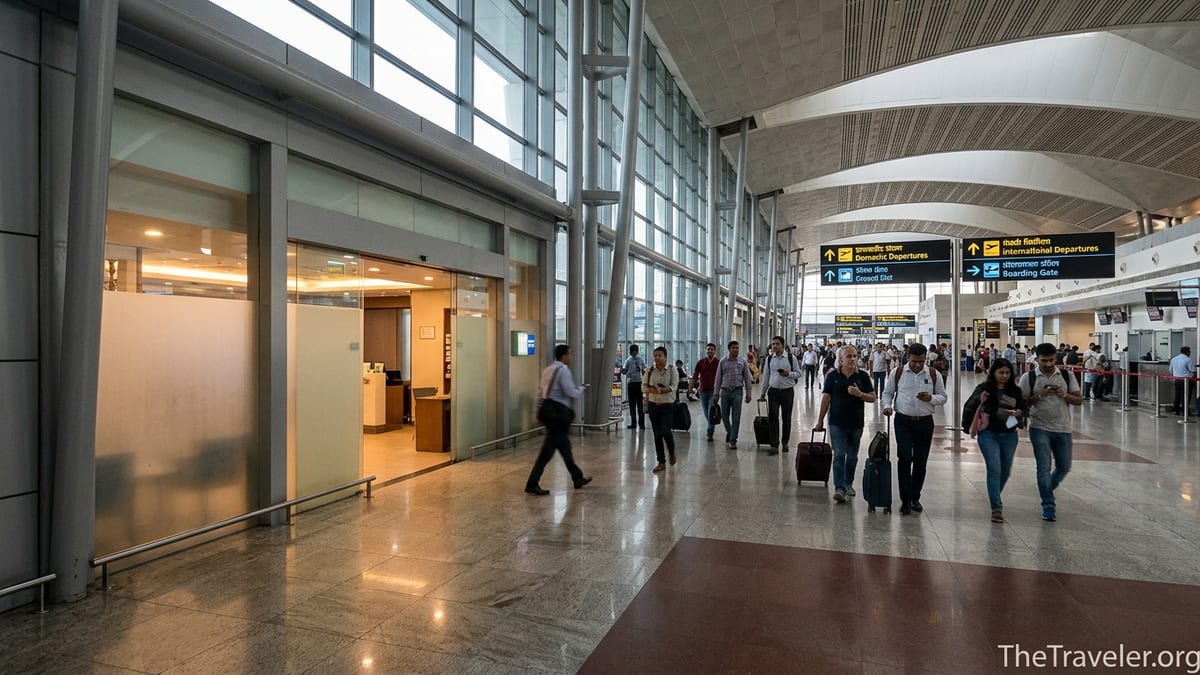
Understanding Delhi Airport’s Terminal 3 Transit Hotel
The primary in-terminal hotel at Delhi Airport is the Holiday Inn Express New Delhi International Airport T3, located airside within Terminal 3. It is designed specifically for passengers in transit who want a real bed, hot shower and quiet room without having to clear immigration or leave the secure zone. The hotel is split into two sections: an International Wing on the international departures side and a Domestic Wing serving passengers on domestic itineraries within India.
Rooms are compact but functional, generally with modern soundproofing, a small work desk, shower bathrooms and basic amenities like tea and coffee facilities. The airport environment outside is noisy and bright 24 hours a day, so the ability to lower blackout blinds and sleep horizontally is a significant upgrade from dozing in a lounge chair. Travelers report that even a short 4 to 6 hour stay can make a long-haul connection far more bearable, especially on overnight itineraries through Delhi.
The hotel typically sells both overnight stays and day-use blocks, for example 6, 8 or 12 hours. Rates vary by date and demand, but many travelers find that a mid-range Aerocity hotel and the T3 transit hotel often end up within the same general price band for an overnight. The advantage of the transit hotel is convenience: no taxis, no traffic and no need to re-clear security in the middle of the night.
Because the hotel sits airside, you cannot simply walk in from the city or arrivals hall. You must have a valid boarding pass for an upcoming flight and meet Delhi Airport’s rules on when you can enter the departures area. This is the single biggest point of confusion for travelers planning to use the transit hotel, so it is crucial to understand the access rules before you book.
Who Can Use the Transit Hotel and How Access Works
Your ability to use the Holiday Inn Express inside Terminal 3 depends on your ticket type and where you physically are in the airport. In broad terms, you must be checked in for your onward flight and already inside the departures or transit area to access the hotel’s domestic or international wing. For example, if you are flying London to Delhi to Chennai on one through ticket, you would typically arrive in the international arrivals corridor, follow the signs for “International Transfer” or “Domestic Connections,” clear the appropriate security checks, and then access the hotel airside before your domestic connection.
In practice, experiences differ by airline and time of day. Some passengers on a domestic to international connection have been allowed to stay airside and walk directly across from the domestic arrivals section of T3 to the departures and transit area. Others, particularly when arriving at Terminal 2 or Terminal 1, have been required to exit to landside, collect bags and transfer by shuttle or on foot to T3. In that case, you usually cannot enter the airside area or the transit hotel until your check-in counters open, which for many international flights may be around three to four hours before departure.
The key practical rule: the transit hotel is easiest to use when you remain within Terminal 3 on a single through ticket and can follow the official transfer route without passing immigration. A typical example is a Toronto to Delhi to Madurai itinerary issued on one reservation. You land late evening in T3, show your onward boarding pass, complete transfer security in the international area and then follow signs to the Holiday Inn Express international or domestic wing, depending on where your next flight departs.
If you arrive on a separate domestic ticket into T2 at night and your international flight from T3 leaves the next morning, you should expect to exit T2, walk or shuttle to T3, and then wait landside until check-in opens before you can re-enter security and reach the hotel. In that scenario many travelers decide instead to book a nearby Aerocity hotel because it gives them guaranteed access to a bed as soon as they clear customs, instead of sitting in the public arrivals hall for several hours.
Domestic vs International Wings: Choosing the Right Side
The Terminal 3 transit hotel is physically split into two wings, one serving international departures and one serving domestic departures. The International Wing is for passengers whose next flight departs the international side of T3, such as routes to Europe, North America or the Middle East. The Domestic Wing is for passengers connecting onto Indian cities like Bengaluru, Goa, Kochi or Guwahati from the domestic pier of Terminal 3.
When booking online, you will usually be asked to choose either the domestic or international section. The practical rule is to choose the wing that matches your next flight, not the one you have just arrived on. For example, if you are flying from Mumbai to Delhi to Frankfurt on a single international ticket and you plan to sleep between flights, you should generally book the International Wing because your onward flight is international and you will end up on that side of security once your airline checks you in.
By contrast, a traveler arriving from London on an evening flight and connecting to Kolkata early the next morning would likely route through the domestic transfer area and then enter the Domestic Wing of the hotel, since their onward flight is domestic and leaves from the domestic side of T3. Passengers who mistakenly book the wrong wing sometimes find that the two sections cannot be accessed from each other without passing through restricted security zones, which is why choosing the correct side in advance is important.
Because transfer procedures and terminal usage patterns can change, particularly with airlines shifting some domestic services to Terminals 1 or 2, travelers should always double-check their actual departure terminal and whether they will be processed as domestic or international on the final leg before locking in a nonrefundable booking. When in doubt for mixed itineraries, it is often safer to wait to book until you are physically in T3 and can confirm where your onward flight departs.
How Long Layovers and Overnight Connections Typically Play Out
Long layovers at Delhi often fall into two broad categories: awkward daytime waits of 6 to 10 hours, and extended overnight gaps of 10 to 18 hours. For a mid-length daytime layover where you do not intend to leave the airport, the T3 transit hotel is usually the most efficient option. For instance, someone arriving from Dubai at 10:00 in the morning and connecting to a domestic flight at 19:00 can book a 6 or 8 hour day-use slot, have an early lunch, sleep for several hours and shower before heading back to the gate area.
Overnight connections require more thought. Imagine you land at 23:30 from Singapore and your next flight to Europe leaves at 11:00 the next morning. If your itinerary is on one ticket and you can stay airside, booking the transit hotel means you avoid stepping out into night-time traffic, and you simply walk from your arrival gate to the hotel and then back to check-in or the gate in the morning. On a typical night like this, many passengers choose the transit hotel for simplicity, even if they could save some money by going out to a budget guesthouse in Mahipalpur or other nearby areas.
However, if you are on separate tickets or have to move between terminals, the transit hotel may not be available for the first half of your layover. For example, a traveler arriving domestically at 20:00 in Terminal 2 and connecting to an international flight from T3 at 09:00 the next morning may find that the international check-in desk does not open until shortly after midnight or later. In these cases, a practical pattern is to book a hotel in Aerocity for the first six or seven hours, sleep there, and then return to T3 a few hours before departure to check in and clear security.
Another real-world pattern involves long daytime gaps where travelers decide to leave the airport for a few hours. Someone arriving from Europe at 06:00 and not departing domestically until 17:00 may choose a compromise: a short rest period at the transit hotel or an Aerocity property in the morning, then a quick trip by Airport Express metro into central Delhi around midday, returning in the afternoon for their onward flight. In all these examples, the decision is less about one hotel being “better” and more about how predictable your access is and how comfortable you want your layover to feel.
Booking the T3 Transit Hotel: Practical Tips and Caveats
Because rooms at the T3 transit hotel are limited and demand spikes at certain times, booking in advance is strongly recommended for overnight layovers and peak travel periods. During winter holiday seasons, major festivals, and long weekends, flights arriving late at night into Delhi can almost simultaneously feed hundreds of connecting passengers into the same terminal. On those nights, travelers without a reservation sometimes find that the hotel is sold out and end up trying to nap in crowded gate areas or queue for over-subscribed lounges.
When searching for availability, focus on options that clearly specify “New Delhi International Airport T3” and mention that the property is located inside the terminal or airside. There are other Holiday Inn or IHG-branded hotels in and around Delhi, including in Aerocity, which are excellent in their own right but do not offer airside access. For layovers where you intend to avoid immigration, double checking that the booking is for the actual transit hotel rather than an airport-area property is vital.
Most booking channels will ask for your incoming and outgoing flight details, and many will specify approximate check-in windows, such as 6, 8 or 12 hour blocks. If your layover is unusually long, such as 16 to 20 hours, you may need to contact the hotel or booking platform directly to clarify whether back-to-back day-use and overnight blocks are possible, or whether airport rules on maximum airside stay durations might apply in your situation.
Travelers should also build in a buffer when estimating how long they will actually be able to use the room. Passport control, baggage transfer procedures and security lines at Delhi can be unpredictable during peak hours. If your inbound flight is scheduled to arrive at 23:00 but often runs late, it may be safer to book your hotel block to start at midnight and run into the morning, rather than assuming you will be able to walk into the room at 23:15. Thinking through these timings before you pay can prevent frustration at check-in.
Aerocity: The Main Alternative to the Transit Hotel
Aerocity is a dedicated hotel and commercial district located a short drive from Delhi Airport, built specifically to serve air travelers. The area clusters a range of international brands and Indian chains, from luxury options like JW Marriott, Andaz and Pullman to mid-range choices such as Novotel, Ibis, Lemon Tree and Red Fox. For travelers who are comfortable clearing immigration and stepping outside the secure zone, Aerocity provides a more traditional hotel experience with larger rooms, extensive dining options and easier access to the Airport Express metro.
A typical scenario where Aerocity shines is an overnight layover on separate tickets, or any connection where you know you will land in the arrivals hall and cannot access the transit hotel immediately. For example, someone arriving from Bengaluru at 21:00 and flying out to Europe on a different booking at 11:00 the next morning can book a room at a mid-range Aerocity hotel like Ibis or Lemon Tree. After collecting luggage and exiting customs, they can take a short taxi ride of around 10 to 15 minutes, check in to a normal hotel room, enjoy a late dinner at the attached restaurant or nearby Worldmark complex, sleep a full night, then return to the terminal after breakfast.
Rates in Aerocity cover a wide spectrum, from premium five-star pricing at properties like JW Marriott and Andaz to more budget-conscious hotels and guesthouses just outside the main complex. Some hotels periodically offer day-use or half-day packages, which can be attractive for daytime layovers where you want a proper room but not a full overnight stay. Travelers on moderate budgets often target hotels like Novotel, Aloft or Red Fox, which balance proximity, comfort and cost.
For those considering a quick trip into Delhi city during a long layover, Aerocity’s biggest advantage is its direct connection to the Airport Express metro line. The Aerocity station is within walking distance of most branded hotels, and fast trains run to New Delhi station in roughly 20 minutes in normal conditions. This allows an early-morning arrival to check into an Aerocity hotel, shower and rest, then head into the city for a few hours of sightseeing or meetings before returning to catch an onward evening flight.
Transit Hotel vs Aerocity: How to Decide
Choosing between the Terminal 3 transit hotel and an Aerocity property primarily comes down to three variables: whether you stay airside or must go landside, how long your layover is, and how much hassle you are willing to tolerate to save money or gain space. If you are on a single ticket with a neat 8 to 12 hour overnight connection entirely inside T3, the airside transit hotel is usually the easiest and most predictable option. You walk from your gate to your room and back again, without dealing with immigration queues or city traffic.
Aerocity becomes more attractive as your layover lengthens or your itinerary gets more complicated. On very long connections of 14 hours or more, even some passengers with through tickets prefer the extra space, hotel facilities and potential cost savings of Aerocity. A typical example would be a family landing from North America early in the morning and not departing domestically until late evening. Spending the day in Aerocity allows the children to nap in a larger room, use the pool where available, and eat in a full-service restaurant, which can be less claustrophobic than staying airside for the entire stretch.
Safety and comfort are also part of the equation. Aerocity is a modern, planned district with wide roads, hotel security and a steady flow of airport traffic at all hours, which many solo travelers find reassuring for night-time arrivals. By contrast, budget guesthouses in older neighborhoods a bit further away can be cheaper but may feel less comfortable to some visitors. If you land after midnight and have a 7 a.m. departure, paying for a four or six-hour block at the transit hotel or a mid-range Aerocity property is often a worthwhile investment in rest and peace of mind.
A useful decision rule is to start with your ticket structure. If both flights are on one booking and you remain at Terminal 3, first check availability and price at the transit hotel. If flights are on separate tickets, involve different terminals, or your layover crosses a time of day when check-in counters are likely closed, consider Aerocity as your default and treat the transit hotel as an optional add-on only if you are certain you can reach it.
The Takeaway
Delhi’s Terminal 3 transit hotel provides one of the most convenient solutions for passengers facing long layovers or overnight gaps, especially when their entire journey remains within T3 on a single through ticket. The split between domestic and international wings can be confusing at first glance, but once you match your booking to your outbound flight, the experience is straightforward: walk off your plane, clear transfer formalities and collapse into a bed a short distance from your gate.
For many travelers, however, especially those on separate tickets or switching terminals, Aerocity’s cluster of hotels is a more flexible and sometimes more comfortable alternative. A short taxi or rideshare ride opens access to a full range of hotel categories, larger rooms, restaurants and direct metro links into the city. It also avoids the uncertainty of waiting for check-in counters to open or for security staff to allow early access to the departures area.
The practical way to plan is to map your actual flight numbers, terminals and ticket structure before booking any room. Consider whether you will arrive airside or landside, what time your onward check-in opens, and how many hours you truly need a bed. With that information in hand, you can choose between the pure convenience of sleeping inside Terminal 3 or the broader facilities of Aerocity, and turn an exhausting layover into a manageable, even restful, pause in your journey.
FAQ
Q1. Can I use the Delhi Airport transit hotel if I arrive on one ticket and depart on a separate ticket?
Yes, but only if you can reach the airside departures or transfer area for your onward flight. If separate tickets require you to exit through immigration and check in again, you may not be allowed into the secure zone or the transit hotel until your second airline’s check-in opens. In that case, many travelers find it easier to book an Aerocity hotel instead.
Q2. How early can I access Terminal 3 and the transit hotel before my flight?
Access rules vary by airline and security practice, but many international carriers at Delhi open check-in counters around three to four hours before departure. If you are coming from landside, you typically cannot go through security and reach the transit hotel until your airline’s counters are open and you hold a valid boarding pass. Passengers who arrive airside on a through connection usually have more flexibility.
Q3. Should I book the domestic or international wing of the transit hotel?
You should match the wing to your onward flight from Terminal 3. If your next flight is international, choose the International Wing; if it is domestic within India, choose the Domestic Wing. This usually aligns with which side of the terminal you will be processed through after transfer security.
Q4. Is it cheaper to stay at the T3 transit hotel or in Aerocity?
Prices overlap and change frequently. The transit hotel tends to charge a premium for airside convenience, especially during busy seasons or overnight peaks. Mid-range Aerocity hotels like Ibis, Lemon Tree or Novotel can sometimes be similar in price or slightly cheaper for a full night, while budget guesthouses near the airport may be significantly less expensive for travelers who do not mind leaving the terminal.
Q5. How long does it take to get from Terminal 3 to Aerocity hotels?
In normal traffic, it usually takes around 10 to 15 minutes by taxi or rideshare from the T3 arrivals area to most Aerocity hotels. The distance is short, and the route is straightforward, which is why Aerocity is often recommended for overnight layovers where the transit hotel is unavailable or too costly.
Q6. Can I leave the airport, stay in Aerocity and then re-enter for my next flight without issues?
Yes. You simply clear immigration and customs on arrival, travel to your Aerocity hotel, and then return to the appropriate terminal in time for your next departure. On your outbound leg you will follow the standard process: check in with your airline, clear security and immigration if required, and proceed to your gate.
Q7. Are there shower facilities at Delhi Airport if I do not book a hotel?
Yes, some lounges and paid rest facilities inside Terminal 3 offer showers. However, they may be crowded at peak times, and access usually depends on your class of travel, lounge membership or payment of a walk-in fee. A short day-use booking at the transit hotel or an Aerocity property can provide a more private and predictable option for freshening up.
Q8. Is Aerocity safe for solo travelers arriving late at night?
Aerocity is a modern, planned commercial district adjacent to the airport with a strong hotel presence, security staff and steady movement of airport traffic. Many solo travelers, including women, report feeling comfortable arriving late at night and taking a licensed taxi or rideshare directly to a branded hotel entrance. As always, it is wise to use official transport options and confirm vehicle details before boarding.
Q9. Can I store luggage at Delhi Airport while I stay at a hotel?
Delhi Airport has left-luggage and baggage storage services at or near Terminal 3, though operating hours and fees can change. Some Aerocity hotels also offer luggage storage for their guests. If you are on a through ticket, your checked bags may be tagged through to your final destination, allowing you to travel between the terminal and your hotel with only hand luggage.
Q10. Is it realistic to visit central Delhi during a long layover?
Yes, if your layover is at least eight to ten hours and your visas and entry permissions are in order. From Aerocity, the Airport Express metro can reach New Delhi station in around 20 minutes in typical conditions, making a brief visit to areas like Connaught Place or Old Delhi possible. You must still budget time for immigration, security and potential delays, so very tight layovers are better spent resting at the transit hotel or in Aerocity.