


More news on this day
Delhi and its surrounding National Capital Region are braced for another spell of rain on September 5, with forecasts pointing to renewed risks of waterlogging, traffic disruptions and delays at the city’s busy airport after back-to-back downpours.
Get the latest news straight to your inbox!
Fresh alerts after overnight downpours
After continuous rain on September 4 led to widespread waterlogging and slow-moving traffic across key corridors in Delhi-NCR, forecasts indicate that the unsettled conditions will persist through September 5. Urban meteorological bulletins for the capital point to a generally cloudy sky with moderate to heavy rain and embedded thunderstorms through the day, keeping the region on alert for further disruption.
According to publicly available forecast data for New Delhi, the India Meteorological Department (IMD) expects thunderstorms accompanied by lightning and light to moderate rainfall at several points on Saturday, with heavier bursts possible in the afternoon and evening. Short periods of intense rain are seen as the main trigger for renewed urban flooding in low-lying neighbourhoods and underpasses.
National-level bulletins and city-focused advisories show that while the overall monsoon system influencing north India has started to weaken, residual moisture and local atmospheric instability remain sufficient to generate strong convective clouds over the capital region. As a result, IMD products signal that showers and storms are likely to flare up intermittently through the day rather than as a single continuous spell.
Forecast charts for the following 24 hours suggest a gradual easing of rain intensity over Delhi from September 6 onward, with light showers and partly cloudy skies expected to replace the more vigorous activity now affecting the city. However, given the extent of saturation from earlier downpours, even moderate rainfall on September 5 may be enough to aggravate waterlogging already reported in several pockets.
Waterlogging and urban flooding concerns across NCR
Reports and images from multiple news outlets show that large stretches of Delhi-NCR struggled with standing water after back-to-back rain events, including on key stretches connecting the national capital with Gurugram, Noida and Ghaziabad. Areas around underpasses, major intersections and residential colonies experienced slow drainage, raising renewed concerns over the resilience of storm-water infrastructure during intense monsoon bursts.
Coverage from Delhi-based media highlights water accumulation on arterial roads, service lanes and important junctions, with some locations remaining submerged for hours after the heaviest showers. Commuters described long detours and delays as vehicles navigated knee-deep water, particularly in parts of south and west Delhi, as well as near major office clusters in Gurugram and Noida, where drains struggled to cope with short but forceful cloudbursts.
Urban weather advisories for the capital stress the likelihood of similar conditions recurring on September 5 should another round of moderate to heavy rain coincide with peak traffic periods. Hydrology risk assessments linked to IMD forecast products routinely flag waterlogging, disruption of traffic in major city corridors and slower travel times as key impacts whenever intense monsoon showers line up over densely built-up neighbourhoods.
Local authorities have already been seen deploying pumps and clearing drains in some of the worst-affected pockets after Friday’s downpour, but the scale and pace of rain remain critical variables. If the heaviest cells materialise during a short window, existing drainage upgrades can still be rapidly overwhelmed, especially in older parts of the city where outfalls and nullahs are constrained by encroachment and siltation.
Flight delays likely as rain affects airport access
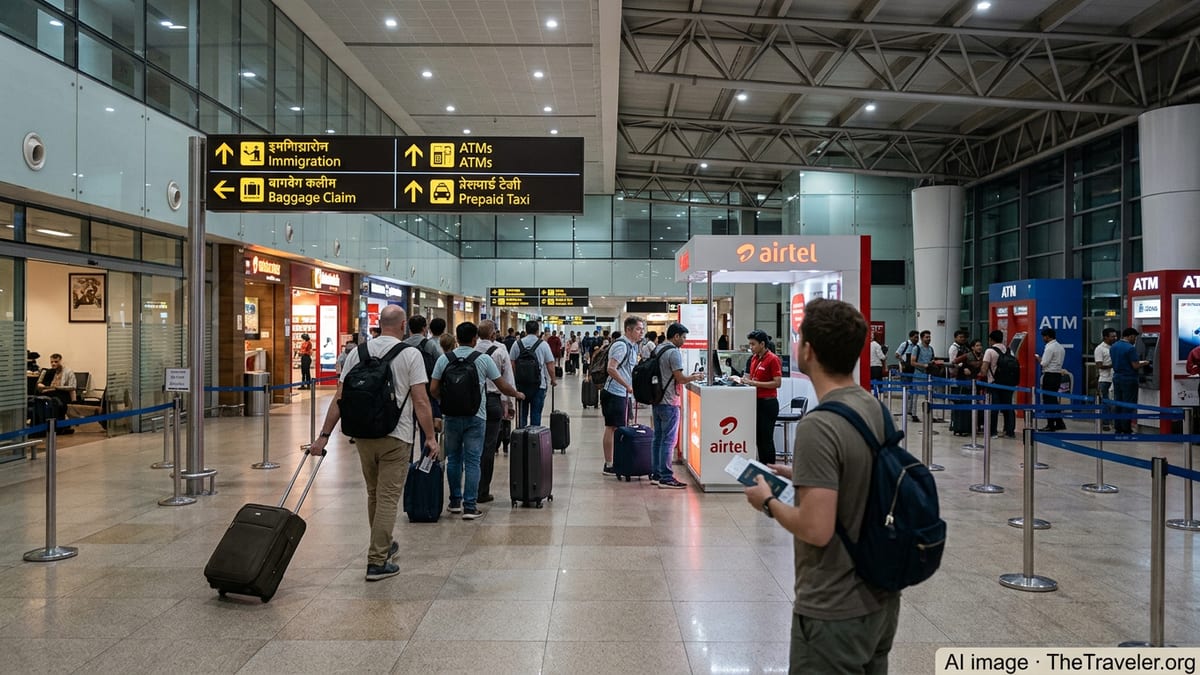
The weather disruption has extended to air travel, with news reports pointing to delays and operational challenges at Delhi’s Indira Gandhi International Airport (IGI) after heavy rain and waterlogging around the complex. Images widely shared by local outlets show waterlogged access roads and pooling near certain airport zones as the drainage system coped with intense precipitation in a short span.
Major carriers operating out of Delhi have issued public advisories warning that adverse weather and congestion on city roads may lead to longer travel times and potential delays in departures and arrivals. One of the country’s largest airlines has urged passengers to allow extra time for travel to the airport and to stay updated on flight status through official digital channels before leaving home, citing the combination of poor visibility, wet runways and traffic snarls in the approach corridors.
While airport operators have reported that core flight and runway operations remain functional, the knock-on effects of heavy rain on landside logistics are significant. Taxis and app-based cabs have been moving more slowly because of waterlogged stretches on arterial routes such as the Delhi-Gurugram Expressway, and intermittent congestion near terminal entry points has added to overall journey times.
Publicly available information from recent episodes of heavy rain over Delhi-NCR underscores that even when aviation infrastructure is designed to cope with monsoon downpours, the broader urban exposure to flooding can still disrupt passenger movement, baggage handling schedules and aircraft rotations. The alerts for September 5 therefore place particular emphasis on flexible travel planning for those flying in and out of the capital.
Traffic snarls and commuter safety under spotlight
Beyond the airport, daily commuters across Delhi, Gurugram, Noida and Ghaziabad are once again preparing for slower journeys as more rain coincides with office and school timings. Traffic updates carried in local media describe long queues of vehicles on key radial and ring roads after previous spells, with bottlenecks aggravated by stalled vehicles in flooded underpasses and reduced lane availability at choke points.
For Saturday, police and civic advisories reported in the public domain encourage road users to check live traffic updates, avoid chronically waterlogged stretches where feasible and maintain slower speeds while driving through standing water. Urban planners and transport analysts frequently highlight that even a few centimetres of water over worn road surfaces can hide potholes, open manholes or debris, raising safety risks for two-wheeler riders in particular.
In several NCR cities, ongoing drainage and roadwork projects have interacted with the heavy rain to create additional pinch points. Construction barricades, narrowed carriageways and temporary diversions reduce redundancy in the road network, leaving little room for traffic to redistribute when a major intersection floods. As a result, relatively localised waterlogging can cascade into citywide congestion within an hour of intense rain.
For public transport users, bus delays and diversions have also been reported, with some routes forced to skip flooded stops. Metro services across Delhi-NCR are generally less affected by surface flooding, but high passenger volumes during wet weather and the challenge of reaching stations through waterlogged streets still contribute to longer overall commute times.
Short-term outlook and advisory for residents
IMD’s short-term outlook for Delhi-NCR indicates that September 5 is likely to mark the peak of this particular wet spell, with several bulletins projecting light to moderate rain and thunderstorms through the day followed by a tapering trend on September 6. Forecast tables for central Delhi list maximum temperatures in the upper 20s to low 30s Celsius during the episode, noticeably cooler than recent days but accompanied by very high humidity.
From September 7 onward, model guidance and city-specific forecasts suggest a return to partly cloudy skies, with only isolated light showers possible as the broader monsoon circulation weakens over northwest India. Even so, forecasters routinely caution that localised storm cells can still form quickly during the transition, prompting brief but intense downpours that may not always show up clearly in earlier outlooks.
For residents, publicly available planning advice linked to IMD risk bulletins emphasises a few practical measures when heavy rain and waterlogging are anticipated. These include avoiding non-essential travel during the most intense rainfall periods, securing vehicles in safe, elevated locations, keeping mobile devices charged in case of localised power interruptions and monitoring official weather and traffic channels for updated alerts.
Travel and hospitality operators in the region are also monitoring the evolving situation closely, as weekend leisure trips, business meetings and arrivals into Delhi may all be reshaped by the pace and pattern of showers on September 5. With the latest forecasts pointing to at least another day of unsettled weather, the capital’s residents and visitors are adjusting their plans around the monsoon’s final flourish over the city.
NDTV: Waterlogging in Delhi, red alert for heavy rain, flight delays expected
Hindustan Times: Delhi-NCR’s rain woes continue as more showers forecast today
Times of India: Delhi-NCR battered by heavy rain, IMD warns of more showers