


More news on this day
Flights at London Gatwick are operating again on Saturday, September 5, but travellers continue to face delays and scattered cancellations after a Friday afternoon runway shutdown triggered by a departing aircraft’s technical issue.
Get the latest news straight to your inbox!
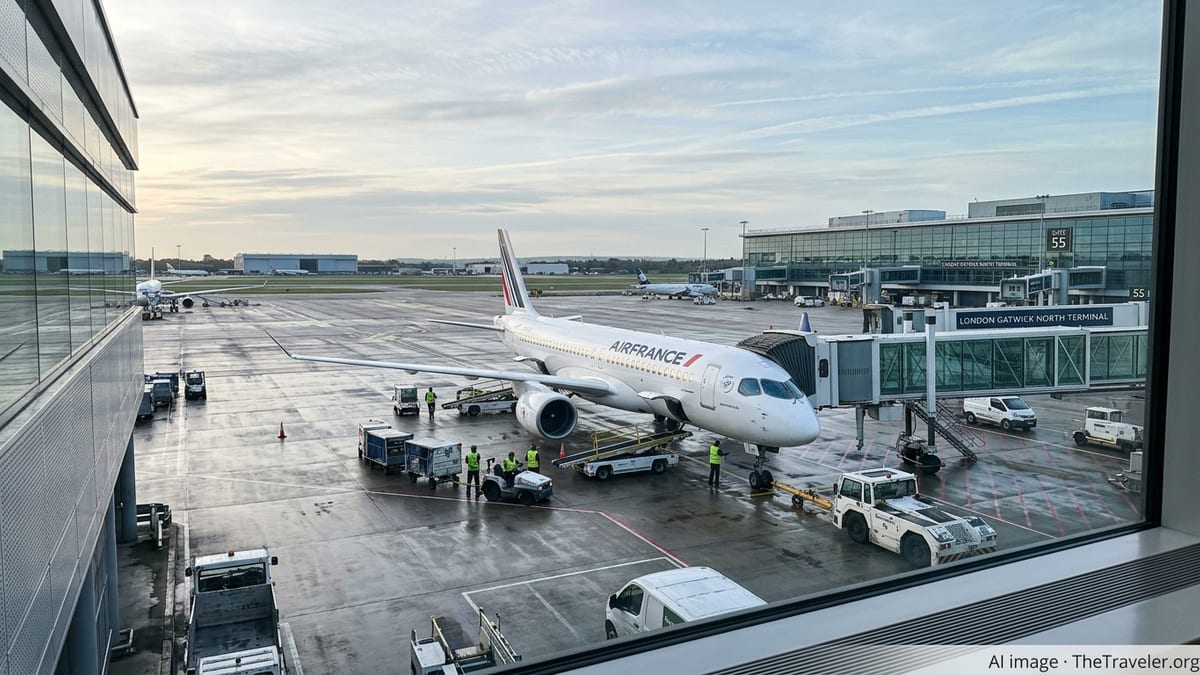
Knock on disruption from Friday’s runway closure
Publicly available information shows that operations at London Gatwick were brought to a halt for nearly an hour on Friday, September 4, when a long haul aircraft suffered a technical problem during its take off roll and came to a stop on the airport’s single main runway. The incident led to a temporary closure that grounded departures and forced inbound flights into holding patterns or diversions while the jet was recovered from the runway.([thetraveler.org](https://www.thetraveler.org/london-gatwick-delays-ease-after-friday-runway-shutdown/?utm_source=openai))
Coverage in aviation and regional news outlets indicates that the affected aircraft was a Norse Atlantic Airways service to New York JFK, which experienced what was described as a high speed rejected take off. Social media and forum posts from individuals on board reference a technical issue that could not be quickly fixed, with the aircraft eventually towed clear so normal runway operations could resume.([thetraveler.org](https://www.thetraveler.org/london-gatwick-delays-ease-after-friday-runway-shutdown/?utm_source=openai))
The runway was reported closed for around 50 minutes on Friday afternoon, a relatively brief period in operational terms, but the timing at the height of a busy departure wave meant dozens of flights fell out of sequence. With Gatwick operating close to capacity on a single runway during the late summer peak, the closure left airlines with limited flexibility to recover delays before the end of the day.([caa.co.uk](https://www.caa.co.uk/commercial-industry/economic-regulation-and-competition-policy/competition/traffic-distribution-rules/?utm_source=openai))
By Friday evening, live flight tracking boards still showed extended delays on a range of short and medium haul services, and some rotations were cancelled entirely where aircraft and crews could not be re positioned within duty time limits. This created the conditions for residual disruption to carry over into Saturday’s schedules even after the immediate technical problem had been resolved.([avionio.com](https://www.avionio.com/en/airport/LGW/departures?utm_source=openai))
Saturday schedule: flights operating but delays remain
On Saturday, September 5, Gatwick’s departure boards showed the bulk of flights operating, but with a noticeable number of services departing behind schedule compared with their planned slots. Live departure listings from independent flight data aggregators highlighted multiple departures leaving 30 to 60 minutes late, particularly on leisure routes to Mediterranean and Red Sea destinations.([avionio.com](https://www.avionio.com/en/airport/LGW/departures?utm_source=openai))
Examples include an easyJet service from Gatwick to Sharm el Sheikh that departed almost an hour late and arrived more than half an hour behind schedule on Saturday, alongside additional northbound services on the same route that also showed prolonged delays. Similar patterns were visible on some Antalya flights operated by European leisure carriers, with departure times pushed back relative to the published timetable.([aviability.com](https://aviability.com/en/flight/u28739-easyjet/lgw-ssh?utm_source=openai))
While many later evening departures on Saturday appeared closer to their scheduled times, the day’s data still reflected a system working to absorb the previous day’s shock. Gatwick’s role as a tightly scheduled single runway airport means that even a short closure can leave airlines juggling aircraft rotations and crew hours for several cycles afterward, affecting some passengers well into the following day.([thetraveler.org](https://www.thetraveler.org/london-gatwick-delays-ease-after-friday-runway-shutdown/?utm_source=openai))
Arrivals also showed pockets of delay, particularly where inbound aircraft were operating late after having been held, diverted or rescheduled on Friday. For affected travellers, this translated into missed connections, rebooked accommodation and altered ground transport plans, even though the airport’s infrastructure itself was fully available again by Saturday morning.([thetraveler.org](https://www.thetraveler.org/london-gatwick-delays-ease-after-friday-runway-shutdown/?utm_source=openai))
Why a brief runway shutdown causes lasting impacts
Published material on Gatwick’s operating patterns underscores how exposed the airport is to even short interruptions. With a single main runway and declared peak congestion periods stretching across much of the day during the summer season, there is limited slack in the system to absorb an unexpected stoppage during busy waves of departures and arrivals.([caa.co.uk](https://www.caa.co.uk/commercial-industry/economic-regulation-and-competition-policy/competition/traffic-distribution-rules/?utm_source=openai))
When the runway closed on Friday afternoon, the disruption did not end when the technical issue was cleared. Aircraft already in the air needed to be sequenced back into constrained arrival slots, while planes on the ground waited for new departure times that would not conflict with other traffic. Once sufficient delays accumulate, individual rotations can no longer be completed within crew duty limits or airport curfews at destination airports, leading some flights to be cancelled or rerouted.([thetraveler.org](https://www.thetraveler.org/london-gatwick-delays-ease-after-friday-runway-shutdown/?utm_source=openai))
Gatwick’s position as one of Europe’s busiest airports for leisure and low cost operations adds another layer of complexity. Many airlines operate tight turnarounds with little buffer between flights, so an hour lost in the afternoon can cascade into multi hour delays on subsequent sectors. The result, as seen on Saturday, is a mix of largely normal operations interspersed with significantly delayed departures and arrivals.([thetraveler.org](https://www.thetraveler.org/london-gatwick-delays-ease-after-friday-runway-shutdown/?utm_source=openai))
Industry wide analysis also points to broader systemic pressures, from congested European airspace to weather related constraints, that can amplify the effect of local incidents. While Friday’s problem at Gatwick was linked to a single aircraft’s technical issue, it occurred in a wider environment where high traffic volumes and tight schedules leave airports and airlines with little resilience to unplanned events.([currently.att.yahoo.com](https://currently.att.yahoo.com/att/aviation-faces-hotter-stormier-skies-232008196.html?utm_source=openai))
Advice for travellers using Gatwick after the incident
Airline guidance materials and airport travel advice generally urge passengers to monitor their flight status closely after any significant interruption, and that recommendation clearly applied at Gatwick across Friday night and into Saturday. With some services still running late or subject to late changes, checking airline apps, text alerts or official flight status pages shortly before leaving for the airport remained important for travellers hoping to avoid unnecessary waiting time in the terminals.([thetraveler.org](https://www.thetraveler.org/london-gatwick-delays-ease-after-friday-runway-shutdown/?utm_source=openai))
For those already affected by delays or cancellations, published passenger rights information under UK and European regulations outlines when travellers may be entitled to meals, hotel accommodation or rebooking options. The precise support available varies by airline, cause of the disruption and whether alternative flights are offered the same day, but the combination of residual delays and high seasonal demand meant re accommodation could be challenging on certain busy routes.([airlines.einnews.com](https://airlines.einnews.com/news/gatwick-airport?utm_source=openai))
Travel planners also suggest that passengers with time sensitive plans build additional margin into onward rail or road connections when flying during peak periods at heavily used hubs such as Gatwick. As illustrated by this latest incident, the effects of a single technical problem can extend into the following day and beyond, even once airports declare their infrastructure fully operational again.([thetraveler.org](https://www.thetraveler.org/london-gatwick-delays-ease-after-friday-runway-shutdown/?utm_source=openai))
Although operations at London Gatwick were broadly stabilising by late Saturday, September 5, the episode added to a season of frequent disruption across European aviation. Observers note that passengers traveling in coming weeks may continue to face occasional knock on effects when isolated technical, weather or airspace events intersect with tightly packed schedules at major hubs.([currently.att.yahoo.com](https://currently.att.yahoo.com/att/aviation-faces-hotter-stormier-skies-232008196.html?utm_source=openai))
Gatwick runway shut for nearly an hour due to technical issue with departing aircraft
Gatwick Airport disruption coverage on Airline Industry Today