


More news on this day
Delta Air Lines flight DL2307, an Airbus A220-100 service from Minneapolis to Bismarck, diverted back to Minneapolis St Paul International Airport on August 8 after a midflight disruption prompted the crew to abandon the short hop to North Dakota.
Get the latest news straight to your inbox!
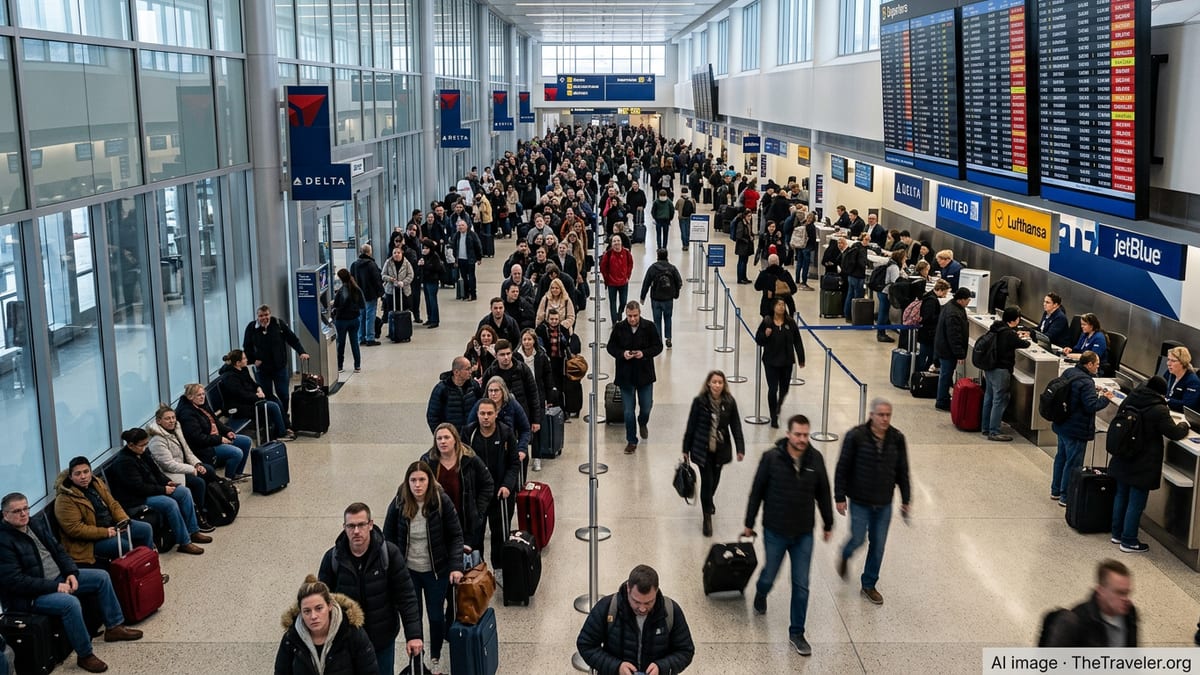
Evening Service to Bismarck Aborts Route
Publicly available flight information shows that DL2307 departed Minneapolis St Paul International Airport on the evening of August 8, bound for Bismarck Municipal Airport in North Dakota. The flight is a regularly scheduled regional service and is typically operated by an Airbus A220-100, one of Delta’s newer narrowbody aircraft types on domestic routes.
Tracking data for the sector indicates that shortly after takeoff, the aircraft leveled off and turned back toward Minneapolis rather than continuing along its usual northwest track toward Bismarck. Instead of landing at its intended destination, the aircraft returned to Minneapolis St Paul International Airport, where it landed without further incident.
The flight segment, which normally takes less than 90 minutes gate to gate, appeared significantly shorter on August 8, consistent with a precautionary diversion. Available data does not indicate any subsequent attempt to resume the flight to Bismarck that same aircraft cycle.
Operational Diversion and Ground Handling
Based on standard operating practices and the timing recorded by flight tracking services, the diversion unfolded relatively early in the cruise portion of the journey. The aircraft remained within a manageable distance of Minneapolis, allowing the crew to return to the departure airport rather than seek an alternate airfield along the route.
On arrival back at Minneapolis St Paul International Airport, the aircraft taxied to a gate where passengers were able to disembark. Publicly available information does not show significant ground delays after landing, suggesting that airport operations were able to accommodate the unexpected return within normal evening traffic.
Subsequent schedule data for Delta services between Minneapolis and Bismarck indicates that the route continued to operate after August 8, which suggests that the diversion was contained to this individual flight rather than triggering a prolonged suspension of the city pair.
Passenger Impact on a Short-Haul Route
The diversion affected passengers on one of the Upper Midwest’s key short-haul links, connecting the large Minneapolis hub with Bismarck, a regional center for business and government travel. For many travelers on DL2307, the change of plans would likely have meant missed connections in Bismarck or disrupted same-day arrivals.
Travel industry experience indicates that, in such situations, passengers are typically rebooked on later flights to their destination, re-accommodated via other hubs, or offered overnight options if same-day onward travel is no longer feasible. Given the relatively limited number of nonstop evening services into Bismarck, some travelers may have faced overnight stays in Minneapolis or alternative routings through other regional airports.
While diversions on short domestic routes can be frustrating for those on board, aviation safety practices prioritize a conservative approach whenever technical, operational, or weather-related concerns arise. The decision to return to the departure airport aligns with the general industry emphasis on risk management, especially when a major hub such as Minneapolis offers robust maintenance and passenger-handling capabilities.
A220-100 Role in Delta’s Domestic Network
The Airbus A220-100 operating DL2307 reflects Delta’s broader move toward more fuel-efficient narrowbody aircraft in its domestic network. The type is commonly deployed on medium and shorter-haul routes out of Minneapolis, taking over from older regional and mainline jets on many city pairs.
The A220 family has been widely promoted for its modern cabin, lower fuel burn, and improved range relative to earlier-generation aircraft in similar seating categories. Delta has incorporated the A220-100 on routes where demand supports a mainline product but the market size does not require a larger narrowbody such as the Airbus A321 or Boeing 737.
Within this context, the DL2307 diversion underscores how even newer-generation aircraft are subject to the same operational contingencies as the rest of the fleet. Airlines may opt for a precautionary return if onboard indications or external conditions raise concerns, regardless of aircraft age or type.
Context of Recent Operational Disruptions
The return of DL2307 to Minneapolis on August 8 occurred against a backdrop of occasional operational disruptions impacting Upper Midwest air traffic during the summer travel period. Regional weather patterns, temporary air traffic control constraints, and high seasonal demand can all contribute to irregular operations for flights into and out of Minneapolis.
While available public information specific to DL2307 on August 8 does not identify a single confirmed cause for the diversion, the event fits into a broader pattern in which carriers periodically adjust or curtail flights in response to safety checks, technical alerts, or airspace management issues. In such cases, flight tracking services often show abrupt route changes, early turnbacks, or unplanned intermediate stops.
For travelers, the episode serves as a reminder that even relatively short, routine flights within the United States can be subject to sudden changes as airlines and crews respond to evolving conditions. As carriers continue to operate dense schedules through major hubs like Minneapolis, occasional diversions such as that involving DL2307 remain a feature of modern air travel rather than an exception.