


More news on this day
Fremantle Dockers supporters trying to fly home to Perth after the AFL grand final have been caught in a fresh wave of frustration, as multiple Melbourne–Perth services were cancelled or heavily delayed, prompting some fans to describe the situation as a “disgrace”.
Get the latest news straight to your inbox!
Grand final heartbreak followed by airport chaos
On Sunday 27 September 2026, the morning after Fremantle’s loss to the Brisbane Lions in the AFL grand final at the MCG, outbound traffic from Melbourne to Western Australia quickly turned from celebration or commiseration into logistical chaos. Published coverage from Perth-based outlets indicates that a Virgin Australia flight due to depart Melbourne early for Perth was cancelled, with reports of significant flow-on disruption to the day’s schedule.
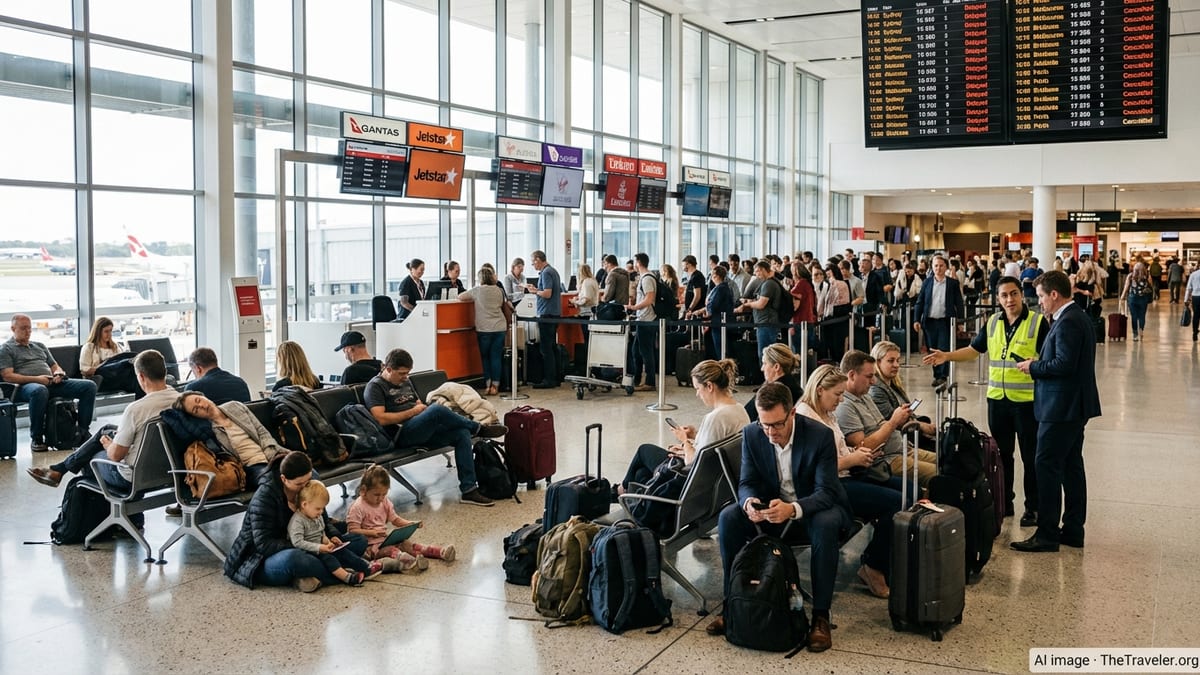
Accounts compiled across local media describe long queues at check-in and customer-service desks at Melbourne Airport as Dockers fans realised their flights had vanished from departure boards. With thousands of Western Australians in town for the season decider, a single early cancellation on the high-demand Melbourne–Perth corridor put additional strain on later services and connecting routes.
News reports describe some frustrated passengers, including Fremantle supporters, as labelling the experience an “absolute disgrace”, saying they received little real-time information about alternative options. Images published by Perth-based newspapers show travellers in Dockers colours sitting on terminal floors with luggage, waiting for clarification on whether they would reach Perth that day.
Mass cancellations hit multiple routes
According to summaries of airline operations published on Sunday, more than a dozen services involving Melbourne were cancelled across Virgin Australia, Jetstar and Qantas schedules. The disruption did not only affect Western Australians: flights to Sydney, Adelaide and Brisbane were also reported among the cancellations, though the impact felt particularly acute for Dockers fans hoping to return to Perth after a long and emotionally charged weekend.
Several reports indicate that at least one early-morning Virgin Australia departure from Melbourne to Perth was cancelled outright, forcing hundreds of passengers to seek seats later in the day or on different airlines. Coverage on national and Perth-focused news platforms notes that the knock-on effect included the cancellation of at least two Perth–Melbourne morning services, as aircraft and crews were repositioned.
Weather-related delays were also cited in some national reporting on Sunday’s operations, with publicly available arrival boards at Perth Airport showing that almost every Melbourne–Perth flight arriving by mid-afternoon was running late. One Virgin flight on the route was confirmed as cancelled, adding to the backlog of passengers needing accommodation, meal vouchers or rebooked tickets.
Soaring airfares add to fans’ frustration
The cancellations came on top of already controversial fare levels on the Perth–Melbourne route in the lead-up to the grand final. In the week before the decider, national broadcasters reported return fares between Perth and Melbourne climbing as high as about $6,000 once Fremantle and Brisbane secured their places in the premiership match. Some supporters interviewed in earlier coverage spoke of one-way economy tickets from Perth to Melbourne costing around $1,900.
These elevated prices pushed many Dockers fans to make alternative travel plans even before the final siren, with public reports highlighting supporters who chose to drive the more than 3,300 kilometres across the Nullarbor rather than pay peak airfares. Others combined commercial flights with road trips or regional connections in search of more affordable seats.
Sunday’s disruptions magnified resentment about pricing, with Perth media outlining the case of one Fremantle supporter who had already spent many thousands of dollars on Virgin flights and accommodation, then paid more than $3,000 for replacement Qantas tickets after her original Melbourne–Perth flight was cancelled. Publicly available information indicates that some travellers were offered rerouting days later via east coast hubs, an option many fans rejected due to work and family commitments at home.
Knock-on effects for Perth tourism and events
The episode has also drawn attention to how vulnerable major events travel can be on long-haul domestic routes such as Perth–Melbourne. Western Australia relies heavily on air links for interstate tourism, and the AFL grand final is one of the country’s marquee sporting occasions, drawing tens of thousands of visitors and generating significant spending on hotels, hospitality and attractions.
City tourism operators in Perth and Fremantle had anticipated a busy shoulder period as Dockers fans returned home and interstate visitors transited through Western Australia in the days after the match. While many of those travellers will still arrive, the Sunday disruption illustrates how quickly a single operational issue can ripple through tightly packed timetables on Australia’s longest mainstream domestic trunk route.
Industry commentary gathered in previous weeks around the grand final highlighted that airline revenue-management systems are designed to respond quickly to surges in demand around major sporting and cultural events. Analysts quoted in national coverage suggested that better integration of major-event calendars, combined with contingency capacity and clearer communication, could ease the strain on passengers when things go wrong.
Calls for clearer communication and better planning
In the wake of Sunday’s cancellations, public reaction across social media and supporter forums has centred less on the fact that flights can be disrupted and more on how the situation was handled. Many Dockers fans posting online said that receiving cancellation notifications close to departure time left them scrambling in crowded terminals, competing for scarce seats on alternative services.
Travel and consumer commentators contacted by Australian media in recent years have often pointed to communication as the key pain point during airline disruptions, particularly when passengers are travelling for once-in-a-lifetime events. With Fremantle chasing a first premiership and many fans stretching budgets to be at the MCG, the combination of high fares, defeat on the field and confusion at the airport has intensified calls for clearer policies when mass cancellations affect supporters.
For future grand finals involving interstate clubs, discussion in public forums is already turning to potential remedies, including more transparent event pricing, reserve capacity on key routes, and better coordination between leagues, governments and carriers when large supporter contingents are on the move. For now, many Dockers fans are simply focused on getting home to Perth, reflecting on a painful weekend in which disappointment in Melbourne extended from the stadium concourse to the departure gate.