


For years, Eurail and Interrail marketing promised unlimited freedom across Europe by train. In 2026 the brands were merged into a single Interrail Global Pass, but one question has not changed: on a specific two week itinerary, does a Global Pass actually save money compared with buying point to point tickets? This article uses current 2026 prices, real routes and transparent calculations to show where the pass wins, where it quietly leaks cash in reservation fees and when you are better off booking ordinary tickets instead.
Get the latest updates straight to your inbox!
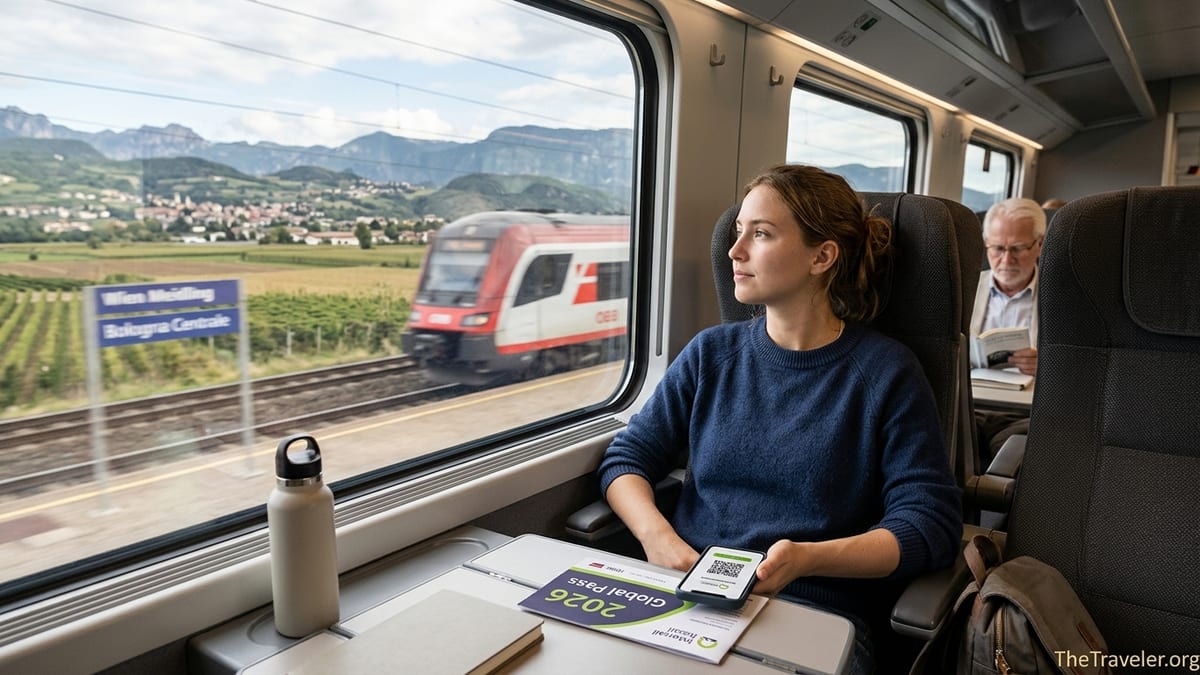
Eurail vs Interrail in 2026: one brand, same product, different rules
Until September 2026 there were two parallel products: Eurail Global Passes for non European residents and Interrail Global Passes for European residents. According to the latest information published in 2026, these were gradually aligned in pricing and conditions, and on 10 September 2026 the Eurail name was folded into Interrail so that everyone now buys an Interrail Global Pass regardless of residence. In practice, the key difference that remains is about residency rules, not price: you qualify for a Global Pass if you are a legal resident of an eligible country and you still cannot use the pass for unlimited travel within your country of residence beyond the specific outbound and inbound journeys that are allowed.
Global Passes are sold in two main structures. Flexi passes give a certain number of travel days within a validity window, such as 4, 7, 10 or 15 days within one or two months. Continuous passes cover every day in a given period, such as 15 days, 22 days, one month, two months or three months. The official 2026 Interrail Global Pass tariff used by railways such as Deutsche Bahn shows second class prices starting at about 212 euros for a four day in one month youth pass and around 283 euros for an equivalent adult pass, rising to just under 700 euros for an adult one month continuous Global Pass in second class.
Age based categories matter because they shift the economics of any comparison. The 2026 price lists distinguish youth travellers aged roughly 12 to 27, standard adults from 28 to 59, and seniors aged 60 and over, with seniors usually paying slightly less than standard adults. First class versions of each pass type cost roughly 25 to 35 percent more than the equivalent second class product. Children under 12 can often travel for free with a paying adult, although exact conditions vary and need to be checked against the current Interrail rules at the time of booking.
Several official and partner outlets now sell the single Interrail Global Pass, including the Interrail website itself, some national rail operators such as Deutsche Bahn and a few travel agencies. Prices are broadly aligned, though service fees and delivery options differ. Temporary promotions also change the calculation. For example, in late 2026 there was a widely advertised sale that discounted continuous 1, 2 and 3 month passes by about 50 percent and gave around 15 percent off many flexi passes, which could significantly alter whether the pass beats individual tickets on a given itinerary.
Refund rules, mobile passes and why travel days are the real currency
The merged Interrail product is now sold predominantly as a mobile pass that lives inside the official Rail Planner app. After purchase you typically have up to 11 months to activate the pass. Activation sets the overall validity window, and each time you travel you must add a journey to the pass and confirm a travel day. For a two week trip using a 7 or 10 day flexi pass, those travel days become your core currency, not the calendar days of your holiday.
Refund and exchange rules changed several times in recent years, so it is important to rely on the current Interrail policy at the moment of purchase. The latest version for 2026 distinguishes between unused passes, partially used passes and passes bought in promotional sales. As a rule, unused standard passes can usually be refunded or exchanged with a fee if they have not been activated yet, while discounted promotional passes are often non refundable. Once a pass has been activated and used for at least one travel day, most refunds are no longer possible, though an exchange to a different start date may sometimes be offered before activation.
Travel days can easily be wasted if short local trips are added to the pass instead of being paid separately. For example, attaching a 6 euro regional hop between Florence and Pisa or a 5 euro S Bahn ride in Munich to your Global Pass uses up one of your finite travel days, which could otherwise cover a far more expensive high speed or international journey. A rigorous cost comparison should always strip these local segments out and assume they are paid with separate regional tickets or local passes, then allocate Global Pass travel days only to longer or more expensive legs.
Mobile passes require your phone to be charged and capable of displaying QR codes offline. The Rail Planner app stores journeys locally, but train staff may ask to see identification matching the name on the pass. Seat selection itself is usually handled through either the Rail Planner app, national railway websites that support pass reservations or in station ticket offices. Missed connections on non mandatory reservation trains simply mean you board the next allowed service, but for high speed or overnight trains with reservations you must speak to staff as soon as possible, because reservation changes are governed by the individual train operator’s fare rules rather than by Interrail.
Reservation rules on TGV, Eurostar, Italian and Spanish high speed and night trains
The Interrail Global Pass covers the basic rail fare on participating operators, but on many French, Italian, Spanish and cross channel trains you still need a separate reservation or passholder supplement. A reservations overview published in early 2026 shows that French TGV services carry compulsory reservations, with passholder fees that typically range between about 9 and 35 euros depending on route, demand and whether a special passholder quota is still available. When that discounted quota sells out on busy departures, passholders may need to pay a higher reservation fee or choose a slower alternative route.
Eurostar services linking London to Paris, Brussels and Amsterdam require all passengers, including passholders, to book a seat. Interrail passholder reservations on Eurostar are sold in specific passholder classes and are subject to quotas, so popular morning and Sunday afternoon trains can sell their passholder seats out weeks in advance. Reservation prices for passholders are usually lower than full flexible fares but can still add around 30 to 40 euros each way in addition to the cost of the Global Pass, so a trip that crosses the Channel twice can add 60 to 80 euros in compulsory supplements per person.
In Italy, high speed Frecciarossa and Frecciargento trains operated by Trenitalia require reservations, but passholder fees are typically more modest, often in the region of 10 to 13 euros per journey in second class. Italian Intercity services can also require inexpensive seat reservations that cost only a few euros. On many regional Italian trains no reservation is required at all, and passholders can simply board, which is one reason why Italy focused itineraries can be good value for a pass if they involve several medium or long distance high speed journeys within a short period.
Spain remains one of the more complex countries for passholders. Selected AVE and other long distance services require compulsory reservations and sometimes special passholder fares sold only at staffed ticket counters or through specific online channels. Fees per journey can run from around 10 euros on shorter routes to 25 euros or more on premium services, and passholder quotas can be tight on busy holiday dates. Night trains across Europe, such as those operated by Austrian Federal Railways on routes like Vienna to Zurich or Budapest, require both a reservation and an accommodation supplement, which can range from a small surcharge for a reclining seat to significantly higher fees for couchettes or private sleepers.
Route 1: two week high speed loop via Paris, Amsterdam, Brussels and London
Consider a 14 day trip in May for one adult aged 30 travelling in second class, starting in Paris and then visiting Amsterdam, Brussels and London before returning to Paris. The core long distance segments might be Paris to Amsterdam on a high speed Thalys style service, Amsterdam to Brussels by intercity or high speed, Brussels to London on Eurostar, and London back to Paris on Eurostar. With a Global Pass, you would likely choose a 7 day in one month flexi Global Pass, using four travel days for these main intercity legs and possibly keeping three travel days for additional side trips.
Using the current 2026 Interrail Global Pass adult second class price list, a 7 day in one month adult pass costs roughly 381 euros. Based on recent passholder reservation information, you might then add about 25 to 35 euros for each Paris to Amsterdam or similar French Belgian high speed reservation, approximately 15 to 20 euros for Amsterdam to Brussels if using high speed services that require a reservation, and roughly 30 to 40 euros per leg on Eurostar for Brussels to London and London to Paris. Adding conservative mid range values, this itinerary could generate about 100 to 120 euros in reservation fees, bringing the effective cost of the pass option close to 480 to 500 euros for the main intercity travel.
To compare fairly, you must then look up real point to point ticket quotes for the same routes and dates. Searches carried out for midweek departures about eight weeks in advance in spring 2026 show that non flexible advance tickets on Paris to Amsterdam high speed services can often be found in the 70 to 110 euro range in second class, Brussels to London on Eurostar around 65 to 110 euros and London to Paris around 60 to 120 euros, with Amsterdam to Brussels sometimes available from about 35 to 60 euros depending on whether you choose intercity or high speed trains. Taking mid range figures, the total for four one way advance purchase tickets could easily sit between 260 and 350 euros.
If the same tickets are purchased only a few days before departure in busy weeks, observed prices in 2026 often climb sharply, with Paris to Amsterdam and Eurostar legs each sometimes reaching or exceeding 150 euros one way in second class. In that last minute scenario the four tickets might cost 450 to 550 euros or more, which can make the 7 day Global Pass plus reservation fees competitive or slightly cheaper while also giving you three spare travel days for additional day trips from your base cities. For a solo adult booking early with fixed dates and no need for extra trips, individual tickets are likely cheaper on this high speed loop. For a flexible backpacker deciding routes closer to the day of travel, the Global Pass begins to look more attractive.
Route 2: Italy focused Rome, Florence, Venice and Milan itinerary
Next, imagine a 14 day Italy focused trip for a 24 year old youth traveller in second class, flying into Rome and out of Milan in October. The main long distance rail legs might be Rome to Florence, Florence to Venice and Venice to Milan, each on high speed Frecciarossa trains, plus perhaps one extra long day trip such as Milan to Lake Como or Venice to Verona. A 4 day in one month Global Pass could cover four substantial travel days, but given the density of travel in two weeks a 5 or 7 day pass might also be considered if the traveller plans more excursions.
The 2026 Interrail Global Pass youth price list shows that a 4 day in one month youth pass in second class costs about 212 euros, a 5 day pass about 239 euros and a 7 day pass about 286 euros. Italian high speed passholder reservation fees of roughly 10 to 13 euros per leg would likely apply to the three core high speed routes and perhaps to one additional trip, adding about 40 to 50 euros. The combined cost of a 4 day youth pass plus these reservations would therefore be in the region of 250 to 260 euros, with the flexibility to change train times on the day subject to seat availability and Trenitalia’s reservation rules.
When checking non pass ticket prices on Trenitalia and other mainstream booking channels eight weeks ahead for shoulder season in 2026, advance economy fares on Rome to Florence and Florence to Venice high speed trains frequently appear around 25 to 40 euros per leg in second class, while Venice to Milan can often be booked for about 20 to 40 euros if purchased early and tied to specific trains. A realistic basket of advance purchase fares for the three main legs might therefore cost between 70 and 110 euros, and adding one further day trip might bring the total to about 110 to 150 euros, clearly undercutting the pass plus reservation combination for a traveller who can commit to specific trains in advance.
Closer to departure the picture changes. Walk up or near departure fares for the same Italian high speed routes can climb into the 60 to 90 euro range on busy days, particularly for popular mid morning departures. If all three long legs were bought at higher last minute prices the total could reach 180 to 240 euros or more, narrowing the gap with a youth Global Pass package. However, even then the Global Pass only breaks even or pulls ahead if the traveller uses it for additional longer trips during the 14 day window. For a budget conscious youth who is willing to commit to advance trains and does not plan many spontaneous long distance excursions, separate tickets remain better value in Italy, especially because many regional connections can be bought cheaply on the day without using pass travel days.
Route 3: Germany, Austria, Switzerland and Central Europe loop
The third scenario is a 14 day cross border itinerary for a couple in their early 60s prioritising comfort, travelling in first class but not needing luxury. They start in Munich, then travel to Vienna, on to Budapest, across to Prague and finally through Zurich and back to Munich. The main long distance legs are Munich to Vienna, Vienna to Budapest, Budapest to Prague, Prague to Zurich via a scenic daytime connection and Zurich back to Munich. Much of this network consists of long distance trains that do not require compulsory reservations, although seat bookings can be optionally added.
For this couple, a 10 day in two months Global Pass in first class could be considered, allowing several travel days for scenic detours. The 2026 Interrail Global Pass senior price table shows that a 10 day in two months pass for seniors in first class sits a little above 500 euros, while the standard adult price is around 581 euros. If both travellers are over 60, two senior first class passes might therefore cost slightly over 1,000 euros altogether. On most German, Austrian and Swiss long distance services no compulsory reservation fees would be added, though a modest supplement might be required on selected night trains or private operators. Optional reservations, where desired, tend to cost only a few euros per leg.
Real ticket searches for spring and early summer 2026 suggest that advance purchase first class fares between Munich and Vienna can often be found in the 40 to 70 euro range per person when booked several weeks ahead, Vienna to Budapest around 30 to 50 euros, Budapest to Prague from about 30 to 55 euros and longer scenic daytime trips such as Prague to Zurich via Germany or Austria around 70 to 120 euros per person, depending on the route and lead time. Zurich to Munich might add another 40 to 70 euros. Adding mid range sample prices, one traveller buying all these as advance first class tickets eight weeks out might spend around 220 to 300 euros, so the couple might pay roughly 440 to 600 euros in total, substantially less than the 1,000 euros plus represented by two first class Global Passes.
The main role of a Global Pass in this Central Europe loop is therefore not pure savings but flexibility. If the couple wants the freedom to hop on and off regional routes in Austria, take extra scenic day trips in Switzerland or change international trains on the day without worrying about yield managed fares, the pass offers peace of mind at a premium. However, in this specific 14 day scenario, advance purchase first class tickets are more economical for travellers with stable plans. Paying for a Global Pass here would only be justified if they intensively used additional travel days on more expensive international or panoramic routes that take advantage of Switzerland’s high normal fares.
How timing, class and traveller profile change the break even point
Across these three itineraries, a pattern emerges. A solo adult or couple who can book high speed point to point tickets around eight weeks before departure usually beat the Global Pass on total cost, especially in countries with competitive early bird fares like Germany, Austria and much of Central Europe. In contrast, travellers who buy tickets only a few days in advance or who make frequent long distance hops within a short period, as many backpackers do, can often match or slightly undercut last minute ticket prices with a Global Pass, even after adding mandatory reservation fees in countries like France and Italy.
Youth and senior discounts on the pass narrow the gap slightly but do not overturn the underlying arithmetic: what matters most is how many expensive, long distance or high speed journeys you fit onto a limited number of travel days and how close to departure you would otherwise book your tickets. For short hops, regional segments and local transport within cities, the Global Pass is usually poor value compared with cheap regional tickets or local passes. Using a valuable travel day for a 20 kilometre regional train ride effectively costs you one fourteenth or one seventh of the entire pass price, which can be significantly more than the underlying ticket for that segment.
Class of travel is another lever. First class passes cost roughly a third more than second class passes, but on some routes the price gap between first and second class point to point fares is higher or lower than that ratio. On busy high speed services where first class tickets are only slightly more expensive than second class, a second class Global Pass might not save much compared with flexible first class tickets if you value comfort highly. Conversely, on routes where first class is much pricier, a first class Global Pass used intensively on long journeys can deliver better relative value, though usually still not outright savings compared with advance point to point fares.
Three sketches illustrate these profiles. A solo adult booking early can often find advance fares that undercut pass plus reservations on neat four city itineraries, though a pass could become worthwhile if a promotion halves the cost of a continuous pass that they plan to use for intense daily travel. A flexible backpacker moving every couple of days, deciding routes at short notice and combining high speed corridors like Paris to Amsterdam with sleeper trains and cross border legs is closer to the sweet spot where a Global Pass provides both flexibility and competitive pricing. A comfort seeking couple on a structured loop through Central Europe rarely needs a pass for savings, but might still buy one in first class if they value open ended spontaneity more than pure cost.
Transparent break even math, decision checklist and recommendations
The core economic question can be summarised with a simple break even formula. First, estimate the sum of the non promotional cost of point to point tickets for all long distance and high speed legs on your itinerary, using real quotes for your planned travel dates in both advance purchase and near departure scenarios. Second, calculate the total cost of the appropriate Global Pass for your age and class, then add realistic reservation fees for each segment that requires them. Finally, divide the pass plus reservation total by the number of travel days you will actually use for significant journeys. If the resulting cost per travel day is higher than the average of your advance point to point fares, the pass is unlikely to save money unless you plan to travel more spontaneously and closer to departure.
An auditable calculation table for the Paris, Amsterdam, Brussels and London loop might show, for example, a 7 day adult second class Global Pass at roughly 381 euros, plus around 110 euros in reservations across four high speed and Eurostar segments, producing a total of about 491 euros for four substantial travel days and three unused days. The effective cost per used travel day is therefore about 123 euros. On the same routes, advance purchase second class fares could be around 80 euros for Paris to Amsterdam, 40 euros for Amsterdam to Brussels and 90 euros for each Eurostar leg, totalling about 300 euros or 75 euros per travel day. In that early booking case, point to point tickets clearly win. If late booking pushes the four tickets to 500 euros or more, the pass plus reservations becomes cost competitive, and any additional long journeys you add with the remaining travel days tilt the scales further.
A practical decision checklist then follows. First, map your exact routes and count how many medium and long distance days you really have in your two week window. Second, look up real point to point fares for your chosen dates at two lead times, such as eight weeks and one week before departure. Third, price the exact Global Pass option that matches your itinerary and age, careful to distinguish flexi and continuous products, and add realistic reservation and supplement costs by consulting current tables for TGV, Eurostar, Italian and Spanish high speed trains and any night trains you plan to use. Fourth, compare totals in both early booking and late purchase scenarios for your own traveller profile.
For most targeted two week trips in 2026 that visit three or four cities and are booked more than a month in advance, especially in Central Europe, individual tickets still win on price, sometimes by a wide margin. A Eurail style Interrail Global Pass begins to pay off when you plan to move frequently across borders, expect to travel at short notice, intend to ride multiple expensive high speed or overnight services, or can access a temporary promotion that substantially cuts pass prices. Travellers who enjoy detailed planning and can commit to specific trains should usually book point to point, while those who value being able to decide routes on the fly and are willing to learn the reservation rules will find that a carefully chosen Global Pass can still be a powerful and sometimes economical tool for a dense, freedom filled two week European rail adventure.