


More news on this day
Travelers passing through Sydney Airport are being urged to check their flight status after air traffic restrictions and windy conditions combined to delay departures for dozens of domestic and international services, creating knock-on disruption across the Australian network.
Get the latest news straight to your inbox!
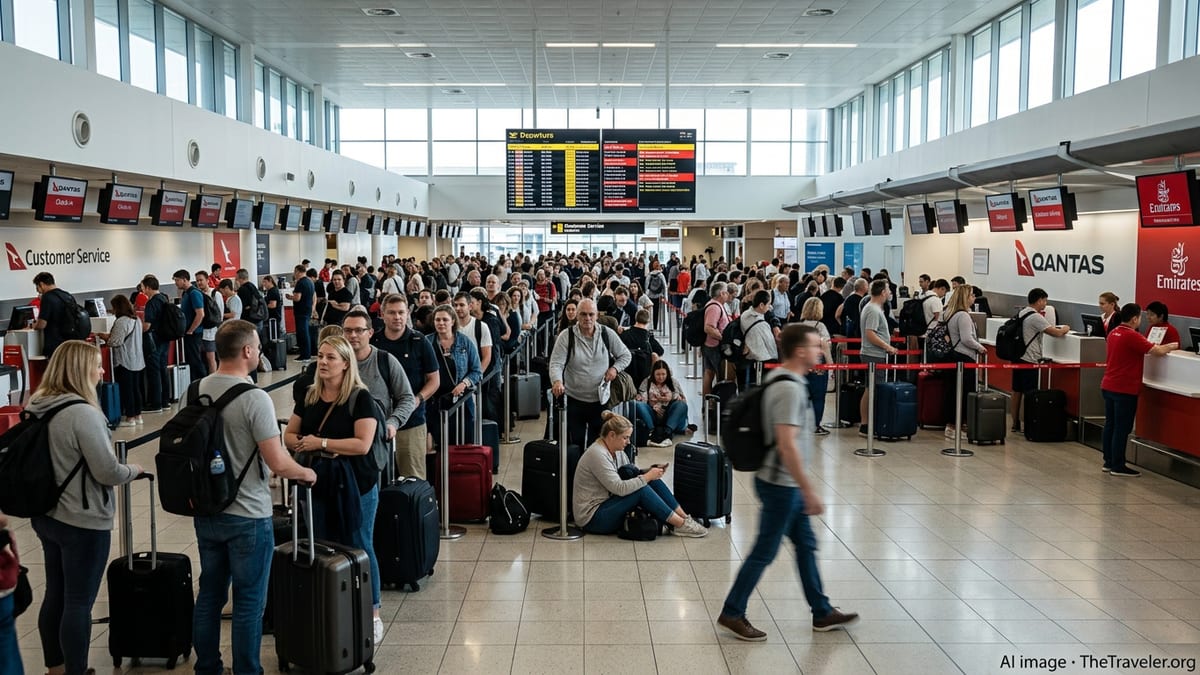
Weather and air traffic controls slow morning departures
Published coverage from Australian media and aviation tracking services indicates that departure delays began building in the early part of the day, as strong crosswinds and low cloud reduced the number of aircraft that could safely take off and land at Sydney Airport.
Operational summaries show that when wind conditions force Sydney to rely on a single runway configuration instead of using parallel runways, the flow of aircraft can be cut significantly. That reduction quickly translates into longer queues at the end of the runway and late pushbacks from departure gates.
Data from live flight-tracking boards on Thursday showed dozens of services running behind schedule by 30 minutes or more, with some departures pushed back by over an hour. The disruptions affected a mix of domestic trunk routes to Melbourne, Brisbane and Adelaide, as well as regional links and several long-haul international departures.
Weather-related capacity constraints at Sydney are a familiar challenge for airlines. Industry reports note that the airport operates close to its regulated hourly movement cap under normal conditions, leaving little slack to absorb sudden slowdowns when winds, low visibility or storms roll through.
Dozens of services delayed across multiple airlines
According to publicly available departure boards, the latest disruption saw a broad spread of delays rather than problems isolated to a single carrier. Services operated by Qantas, Jetstar, Virgin Australia and Rex all showed late departures from both the domestic and international terminals.
High-frequency shuttle routes between Sydney and Melbourne and between Sydney and Brisbane were among the most heavily affected, with clusters of flights leaving well behind schedule during the mid-morning and early afternoon peaks. Several regional services to New South Wales and Queensland communities also departed late, increasing the risk that travelers on tight connections would miss onward flights.
Operational analysts point out that once a morning departure wave runs late out of Sydney, aircraft and crew often fail to arrive on time for their next rotations. That effect can extend delays throughout the day and spread disruption to airports around the country as late-running aircraft eventually cycle through their schedules.
Some long-haul international flights appeared to hold on the ground while crews waited for connecting passengers and luggage from delayed domestic feeders. While these waits can help consolidate disrupted itineraries, they also add to overall delay statistics and further compress the airport’s already busy departure banks.
Flow-on impacts for connections and regional travelers
Travel industry commentators warn that Sydney’s role as Australia’s busiest hub amplifies the impact of any local disruption. Even a relatively modest slowdown in departure rates can reverberate through the network, particularly for travelers connecting from regional centers that have only one or two Sydney services each day.
Recent public discussions among frequent flyers highlight how regional passengers are especially vulnerable when Sydney runs late. With limited daily frequencies, a missed connection can mean a much longer wait or even an overnight stay if no alternative same-day flights are available.
Business travelers and holidaymakers flying onward to Asia, North America and Europe from Sydney also face tighter margins when domestic feeder flights arrive behind schedule. If an international service cannot wait for all late connections without breaching crew duty limits or curfew windows at overseas airports, some passengers may be rebooked onto later departures.
Aviation experts note that delays can accumulate even after the weather improves. Once aircraft and crews are out of position, it can take several waves of flights for operations to normalize, especially when runways remain busy and there is limited opportunity to add recovery flights.
Advice for passengers flying through Sydney
Airlines and airport operators routinely advise travelers to monitor their flight status closely on days when weather and air traffic limitations converge, as has been the case during the latest disruption at Sydney. Same-day schedule changes are usually communicated through airline apps, text alerts and departure boards inside the terminals.
Travel planners recommend arriving at the airport with extra time, particularly for morning and late-afternoon departures that coincide with peak traffic periods. For those connecting from regional services or flying onwards internationally, building in a longer layover can reduce the risk of misconnecting when delays start to stack up.
Passengers whose flights are significantly delayed or rescheduled may be offered alternative itineraries, including rerouting through Melbourne or Brisbane when space is available. Consumer advocates suggest keeping receipts for any out-of-pocket expenses in case airlines provide reimbursements or travel credits under their disruption policies.
With forecasts indicating that changeable winter weather could continue to affect operations in the coming days, travelers using Sydney Airport are being encouraged to check flight information regularly and stay flexible with their plans where possible.
Broader questions about resilience at a capacity-constrained hub
The latest episode of widespread delays has also revived debate about how fragile operations can be at major hubs that run close to their maximum hourly movement limits. Sydney’s combination of a strict slot regime, frequent weather variability and curfew rules leaves airlines with limited room to catch up once the schedule slips.
Policy papers and government reviews released in recent years have highlighted how even short disruptions at Sydney can cascade into hundreds of delayed or cancelled flights nationwide. Those analyses argue that a mix of infrastructure upgrades, demand-management reform and technological improvements to air traffic control could help increase resilience.
In the meantime, aviation observers expect intermittent bouts of disruption to remain a feature of travel through Sydney, particularly during the peak winter and summer travel periods when the airport is at its busiest. For passengers, that makes real-time information, generous connection buffers and flexible tickets increasingly important parts of travel planning.