


More news on this day
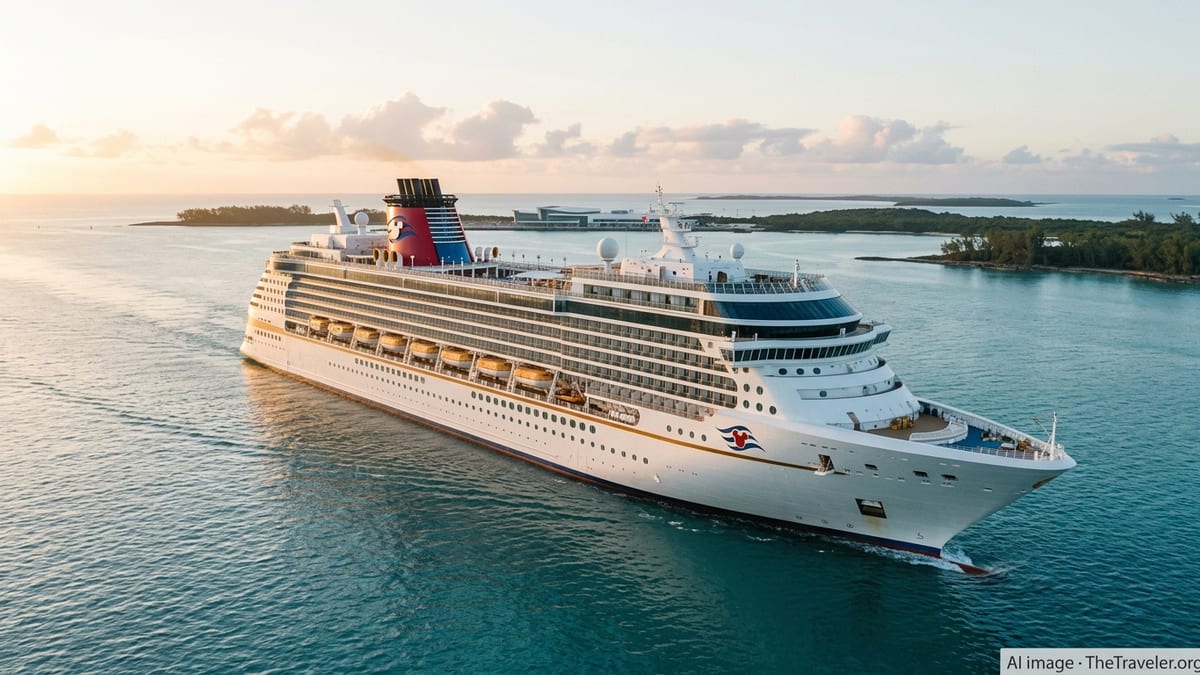
The Disney Wish cruise ship returned to Port Canaveral within hours of departing on a Bahamas itinerary this week, after a reported onboard medical emergency required the vessel to turn back shortly after setting sail.
Get the latest news straight to your inbox!
Early Return to Port Canaveral Disrupts Bahamas Sailing
According to published coverage from cruise news outlets, the Disney Wish departed Port Canaveral on Monday, July 27, for a short Bahamas cruise but was observed returning to the Central Florida port only a few hours later. Ship-tracking data and photos shared by passengers and local observers indicate that the vessel reversed course while still relatively close to the Florida coast and proceeded back to its home terminal.
Reports indicate that the unscheduled return was linked to a medical emergency involving a guest, although no official details about the person’s condition or identity have been released publicly. Publicly available information shows that the ship remained alongside at Port Canaveral for a period while the individual was transferred ashore for further care.
After the return and disembarkation related to the incident, the Disney Wish resumed its sailing. However, passengers reported that the revised timetable meant the ship would no longer be able to complete the original port sequence, reflecting the knock-on effect that even a few hours of schedule disruption can have on short three- and four-night cruises.
The situation unfolded against the backdrop of a busy midsummer schedule at Port Canaveral, one of the world’s largest cruise homeports and the primary base for the Disney Wish. The ship typically operates regular sailings to Nassau and Disney’s private island, Castaway Cay, with tight turnaround times between voyages.
Passenger Accounts Describe Itinerary Changes
Travelers sharing their experiences on cruise forums and social media platforms described hearing announcements that the ship would be returning to Port Canaveral shortly after departure. Several accounts state that the updated plan involved dropping a scheduled call in Nassau, with the voyage instead continuing as a modified itinerary featuring additional time at sea and a call at Castaway Cay.
Some guests reported initial confusion as the ship slowed and altered course soon after passing the harbor breakwater, before communications clarified that the deviation was linked to a medical situation. Others noted that crew members worked to keep planned onboard programming running while operational teams coordinated the turnback and subsequent return to the port.
Available posts from passengers suggest that, once back at the dock, medical teams and shoreside transport were ready to receive the affected guest. While precise timelines differ among individual accounts, most place the total delay at several hours, long enough to require a reworking of the cruise’s port schedule but not to cancel the sailing entirely.
Despite disappointment from some travelers about losing a port of call, many online comments emphasized understanding that rapid medical access takes priority when serious health concerns arise at sea. Several contributors with prior cruise experience pointed out that unscheduled returns or diversions for medical reasons, while relatively rare, are a known possibility on ocean voyages.
Medical Care at Sea and Cruise Line Protocols
Publicly available information from Disney Cruise Line and other operators indicates that large cruise ships are equipped with onboard medical centers staffed with physicians and nurses to handle routine issues and stabilize emergencies. These facilities typically provide clinic hours for non-urgent care as well as round-the-clock response capability for urgent situations.
When a condition requires treatment beyond what the shipboard team can provide, common responses include coordinating with shoreside emergency services, arranging helicopter evacuations in certain regions, or diverting to the nearest suitable port. Turning back to the embarkation port, as reported in the Disney Wish incident, is one of several options depending on the ship’s position and the nature of the emergency.
Disney Cruise Line’s published materials on safety and health emphasize that guests are encouraged to carry relevant medical information and to obtain travel insurance that includes coverage for emergency medical care and evacuation. Cruise contracts and guest guides generally outline that the cruise line may adjust course or schedules when needed for health, safety, or security reasons, sometimes with limited advance notice.
Industry observers note that such responses are consistent with broader maritime practices, in which passenger welfare and timely access to advanced medical care are prioritized over maintaining a planned itinerary. Although these decisions can affect thousands of guests, they are typically made with input from shipboard medical staff, shoreside operations teams, and local port authorities.
Impact on Guests and Growing Awareness of Travel Risks
The abrupt return of the Disney Wish has renewed discussion among travelers about the potential for medical events to disrupt cruise vacations, even on short itineraries close to major ports. Commenters on cruise message boards cited the case as a reminder that, while rare, serious health incidents can occur shortly after embarkation and lead to significant schedule changes.
Some guests affected by the altered sailing reported adjusting plans for shore excursions and onboard activities once it became clear that Nassau would be removed from the itinerary. Others highlighted that the ship’s entertainment, dining, and family programming continued as scheduled after departure from Port Canaveral for the second time, helping to preserve much of the onboard vacation experience.
Travel-planning resources commonly advise cruise passengers to consider comprehensive travel insurance that includes medical coverage and trip interruption benefits, noting that last-minute changes due to health emergencies can affect air connections, hotel stays, and pre-booked excursions. The Disney Wish incident, shared widely online, has added a recent example to discussions about why such coverage can be valuable even for relatively short cruises.
For Port Canaveral and the surrounding tourism region, the episode represents another instance of how tightly scheduled cruise operations can be reshaped by unplanned events. Local businesses that serve cruise travelers, from hotels to transportation providers, often monitor ship movements closely, as sudden changes in arrival and departure times can affect guest flow and same-day spending.
Pattern of Recent Medical-Related Diversions in the Region
The Disney Wish’s early return follows several recent instances involving cruise ships in the Caribbean and Florida region altering course for medical reasons, as documented in public reports and traveler accounts. In some cases, ships have turned back to their departure ports shortly after sailing; in others, they have diverted to the nearest available harbor or coordinated air evacuations.
Cruise commentators point out that these events are not unique to any one brand and can affect vessels across the industry, particularly during peak travel seasons when ships operate at or near full capacity. With thousands of guests on board, the likelihood of a significant medical issue arising during a voyage, while still low on any given day, becomes an operational factor that lines must plan for in detail.
Analysts observing ship-tracking data note that modern monitoring tools allow enthusiasts and local residents to see course changes in real time, leading to faster public awareness when a vessel unexpectedly slows, turns, or returns to port. In the case of the Disney Wish, online tracking and photographs taken from the shoreline helped confirm the vessel’s rapid return to Port Canaveral long before the cruise concluded.
As the investigation into the latest incident remains centered on protecting guest privacy, public discussion has largely focused on operational lessons and traveler preparedness rather than specific medical details. For many would-be cruisers, the episode serves as a reminder to factor flexibility, insurance, and an understanding of emergency protocols into trip planning, even for family-focused sailings on well-known lines.