


More news on this day
Pegasus Airlines briefly halted several overnight services between Turkey and Moscow after intensified drone activity around the Russian capital triggered new concerns over airspace safety and operational risk.
Get the latest news straight to your inbox!
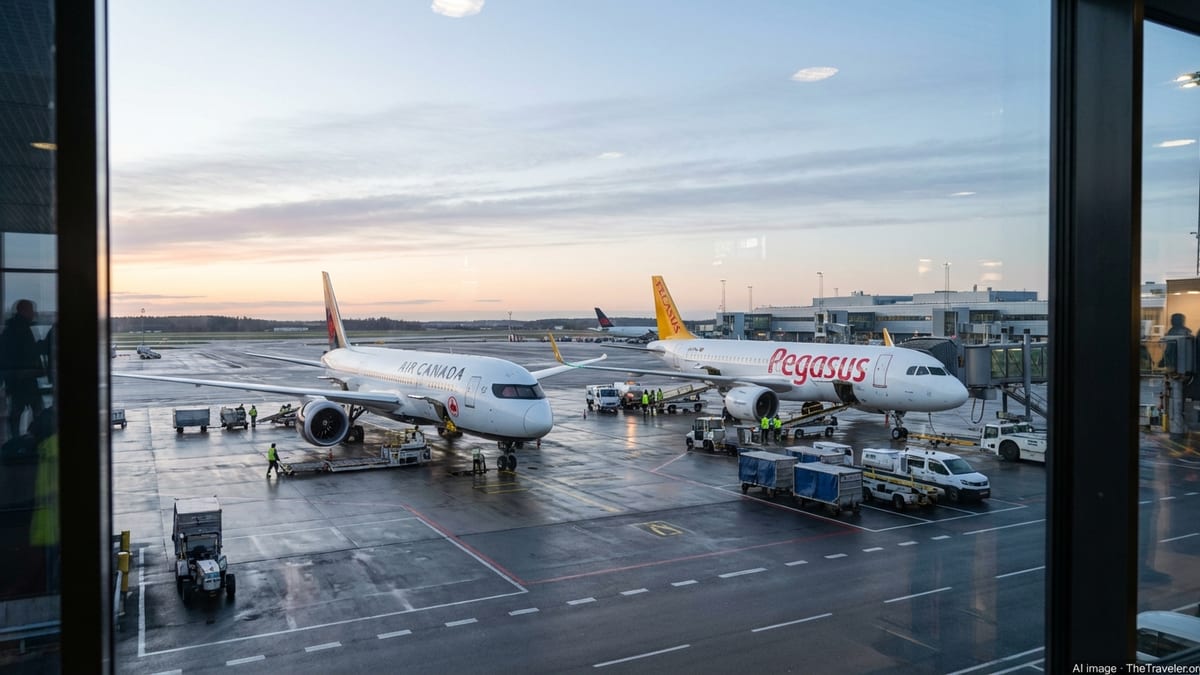
Overnight Cancellations on Russia Routes
Publicly available information indicates that Pegasus Airlines suspended a number of overnight flights between Turkey and Russia on the night of September 1 to 2, 2026, citing technical and operational reasons on its Russia routes. A notice distributed via investor and regulatory platforms on September 2 states that flights scheduled for the night connecting September 1 to 2 were cancelled, while services from September 2 onward were planned to operate as normal.
The company’s statement explains that affected customers on cancelled Russia services would be accommodated on additional flights, suggesting that the disruption was intended to be temporary and focused on specific departures rather than a long-term suspension of the route network. The wording of the notice does not explicitly reference drones, but the timing coincides with an escalation in drone incidents around Moscow and related restrictions on the capital’s airspace.
Independent flight-tracking data for Pegasus services on the Istanbul Sabiha Gökçen to Moscow Vnukovo corridor shows that the daytime schedule around mid to late August continued to operate broadly as planned, with aircraft departing and arriving near their usual slots. This pattern supports indications that the most recent disruptions were concentrated in the overnight window and followed particular security developments rather than representing a broader collapse of connectivity.
Drone Activity Triggers Airspace Restrictions Around Moscow
In the weeks leading up to the Pegasus cancellations, Moscow and its surrounding region experienced some of the heaviest drone activity since the start of the conflict in Ukraine. Reports from Russian and international outlets describe multiple large-scale strikes directed at the capital region during August, with hundreds of unmanned aerial vehicles reportedly intercepted or downed in a single night.
Coverage from Russian authorities and regional media notes that air defense responses to these drone incidents periodically prompted short-term closures or restrictions at Moscow’s main airports, including Vnukovo, Sheremetyevo and Domodedovo. One August incident, for example, led to a temporary shutdown of Vnukovo Airport and the diversion or delay of a series of flights, before airspace was reopened and operations normalized later the same morning.
Additional reporting from state-linked aviation agencies confirms that dozens of flights on certain days in August were unable to land in Moscow and were rerouted to other Russian cities such as Nizhny Novgorod, Kazan and Saint Petersburg. These diversions were attributed to temporary restrictions on the use of Moscow’s airspace while drone threats were being addressed. Together, these episodes illustrate how unpredictable drone activity over or near the capital can ripple quickly through the civil aviation network.
Turkish Carriers React to Perceived Risks
Regional media focused on the Russia–Turkey market report that Pegasus was not alone in adjusting its operations in response to the perceived risk. Russian-language coverage on September 2 points to at least one Pegasus flight from Bodrum to Moscow scheduled shortly after midnight that was cancelled, with passengers told that Turkish carriers faced restrictions on departures because of the situation in Russian airspace.
The same reporting notes that other airlines operating between Turkey and Russia, including Turkish Airlines and several leisure-focused carriers, also saw early-morning flights to Moscow or other Russian destinations cancelled or removed from departure boards. These actions appear to have unfolded shortly after public warnings from Ukrainian and international figures about the safety of Russian skies, heightening concerns among operators serving the market.
While official documentation from the airlines has primarily used neutral terms such as technical, operational or airspace-related reasons, the clustering of cancellations around periods of intensified drone activity suggests that carriers are actively recalibrating their risk assessments on a day-by-day basis. For low-cost operators like Pegasus, which depend on tight aircraft utilization and overnight rotations, the need to preserve safety margins can quickly translate into the temporary grounding of specific flights.
Continuity of the Turkey–Moscow Air Corridor
Despite the overnight disruptions, available data indicates that the broader air corridor linking Turkey and Moscow remains active. Pegasus route maps continue to list Moscow Vnukovo among its Russian destinations, and schedules for daytime flights between Istanbul Sabiha Gökçen and the Russian capital show ongoing service during August and into early September.
These patterns align with a wider regional picture in which airlines adjust timings, routings or specific frequencies while maintaining core links that remain commercially and diplomatically important. The Russia–Turkey market, which includes substantial flows of leisure travelers, migrant workers and transfer passengers, has been notably resilient throughout the conflict period, even as other international carriers suspended or sharply reduced their Russian operations.
For passengers, the main impact of the latest drone-related disruptions has been uncertainty around late-night and early-morning departures. Travelers on affected Pegasus services have been offered rebooking, refunds or placement on additional flights, according to the airline’s public notices and standard passenger rights frameworks. However, those relying on tight connections or fixed check-in times at resorts and tour groups have still faced delays and itinerary changes.
Ongoing Security Concerns for Regional Aviation
The Pegasus cancellations highlight the broader challenge drone warfare poses for civil aviation in Eastern Europe and the Black Sea region. Even when drones do not directly target airports or aircraft, intensified activity in key air corridors can prompt precautionary airspace closures, diversions and last-minute schedule changes as authorities balance security needs with the imperative to keep traffic flowing.
In Russia, officials have described recent waves of drones directed at infrastructure and logistics hubs around Moscow and other cities, sometimes damaging warehouses and industrial facilities. Although most civilian airports have resumed operations quickly after each incident, the recurring need to suspend or restrict flights underscores the vulnerability of dense urban airspace to relatively low-cost unmanned threats.
For airlines based in neighboring countries such as Turkey, the fluid situation demands constant monitoring of notices to airmen and security advisories, as well as close coordination with regulators on both sides of the border. Carriers that rely heavily on Russia-bound traffic, including Pegasus, appear to be treading a narrow line between maintaining commercially important links and reacting swiftly when evolving drone risks make specific time slots or routings less tenable, at least temporarily.
As drone technology and tactics continue to evolve, industry observers expect further episodes in which airspace around major cities is briefly closed or constrained. The recent disruptions to Pegasus flights between Turkey and Moscow are a reminder that in contested regions, passenger itineraries can be shaped not only by demand and weather, but increasingly by events unfolding far above and beyond the control of travelers and airlines alike.
Pegasus notice on Russia flights, September 2, 2026
Coverage of recent large-scale drone attacks on Moscow
Report on Moscow airspace restrictions and flight diversions
Regional coverage of Pegasus cancellations on Russia–Turkey routes