


More news on this day
Etihad Airways is adding Saudi Arabia’s Red Sea International Airport to its network with a new year-round route from Abu Dhabi, a move expected to accelerate the kingdom’s ambitions to position its west coast as a global luxury tourism hotspot.
Get the latest news straight to your inbox!
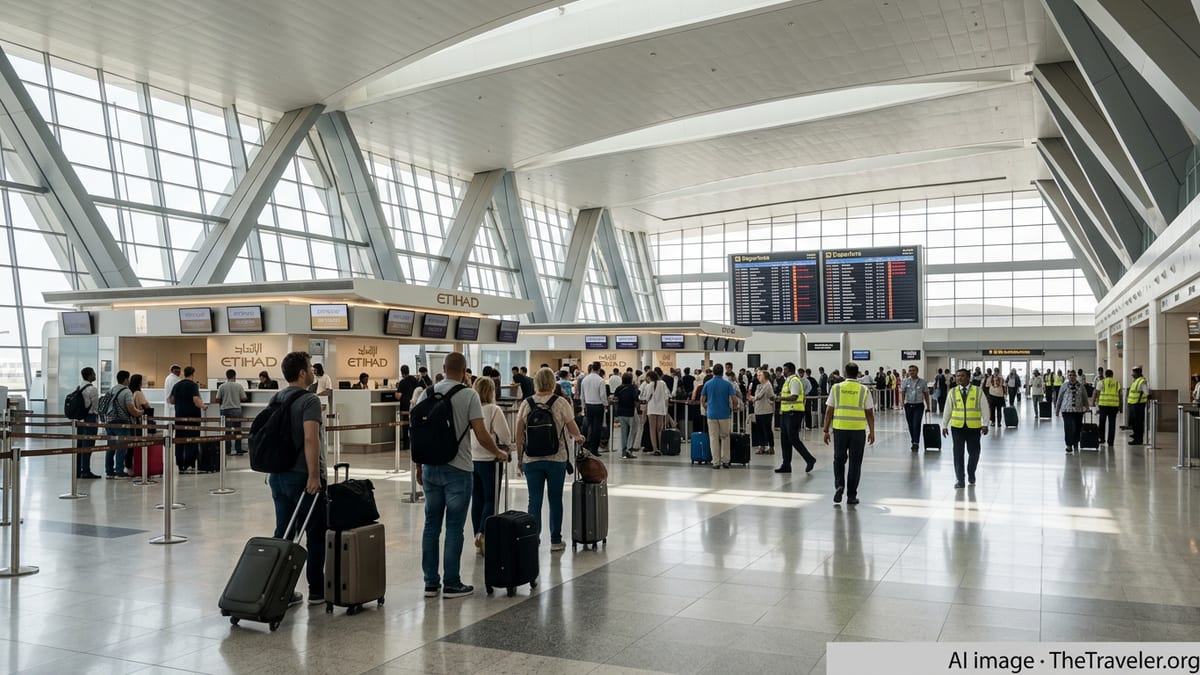
New Abu Dhabi–Red Sea Link Targets High-End Travelers
According to the airline’s latest network update, Etihad will begin flights between Abu Dhabi’s Zayed International Airport and Saudi Arabia’s Red Sea International Airport (RSI) on 4 October 2026. The service is planned as a year-round connection, launching with one weekly frequency before increasing to two flights per week from 25 October 2026. Publicly available schedules show the route operating on narrowbody aircraft, aligning capacity with the early ramp-up of resorts along the Red Sea coast.
The addition of RSI deepens Etihad’s presence in Saudi Arabia, where the carrier has steadily expanded in recent years with services to destinations such as Medina and Al Qassim. Industry data and previous route announcements indicate that the airline views the kingdom as a key growth market, reflecting both strong outbound demand and Saudi Arabia’s push to attract international visitors.
The Abu Dhabi–Red Sea link arrives at a time when Etihad is entering its busiest summer seasons on record, with the carrier reporting double-digit capacity growth versus the previous year and more than 300 daily flights across its network. The decision to add a niche, high-yield leisure destination amid this expansion underscores the strategic importance placed on premium tourism flows into the Red Sea.
Timetables published by the airline indicate that the relatively short sector length between Abu Dhabi and the Red Sea also positions the flight well for same-day connections from key long-haul markets in Europe, Asia and North America, enhancing the appeal of the route for international travelers seeking seamless access to new luxury coastal resorts.
Red Sea International Airport Emerges as Luxury Gateway
Red Sea International Airport, developed by Saudi developer Red Sea Global and designed by Foster + Partners, has been conceived as the primary aviation gateway to The Red Sea destination. Project information indicates that the airport opened to domestic operations in 2023, initially welcoming flights from Saudi flag carrier Saudia, before adding its first international services in 2024 with flydubai from Dubai and, later, Qatar Airways from Doha.
The dune-inspired terminal has been promoted as a statement piece for the wider mega-project, intended to echo the surrounding desert landscapes while providing an upscale arrival experience for guests heading to ultra-luxury resorts on nearby islands and along the coast. Red Sea Global’s published plans describe a multi-phase tourism development featuring high-end hotels, signature golf facilities and marine experiences, positioned for environmentally sensitive, low-density growth.
With Etihad’s new service, RSI gains a direct link to a major global hub beyond the Gulf carriers already operating there, broadening the range of one-stop itineraries for travelers from long-haul source markets. Network maps and tourism marketing materials suggest that this connectivity is particularly significant for affluent visitors from Europe, North America and Asia who may be combining the Red Sea with longer regional trips.
Industry observers note that as more resorts open along the Red Sea over the next few years, the airport’s role will shift from serving predominantly early-stage, invitation-only properties to operating as a mainstream premium leisure gateway, comparable in positioning to airports that serve other curated resort clusters.
Abu Dhabi’s Hub Strategy Aligns with Saudi Tourism Vision
Abu Dhabi’s Zayed International Airport, which serves as Etihad’s home base, has been steadily repositioned as an advanced global hub, supported by a new terminal complex and upgraded transfer infrastructure. Airport operator information shows the facility connects the UAE capital to more than 100 international destinations, leveraging biometrics and streamlined transit processes to support growing sixth-freedom traffic.
Etihad’s partnership with local tourism authorities has focused on promoting Abu Dhabi stopovers and extending visitor stays in the emirate. Public campaigns highlight complimentary or discounted hotel nights for transfer passengers, signaling a dual objective for the new Red Sea route: feeding high-spend visitors directly into Saudi Arabia’s luxury resorts while also encouraging some to sample Abu Dhabi’s own cultural and beach attractions on the same trip.
For Saudi Arabia, the enhanced connectivity supports the kingdom’s broader tourism diversification agenda, commonly referred to in official strategies as part of Vision 2030. The Red Sea project is one of several giga-developments intended to draw new visitor segments, including luxury leisure travelers who might previously have gravitated toward established Indian Ocean or Mediterranean destinations.
By linking RSI with a major Gulf hub, the new route also complements existing services from Dubai and Doha, gradually weaving the Red Sea coast into the wider network of premium Middle East tourism circuits. This triangulation gives travelers greater flexibility in how they combine stays across multiple countries within a single itinerary.
Competitive Gulf Carriers Eye Red Sea Demand
The entry of Etihad at Red Sea International adds another Gulf carrier to what is rapidly becoming a competitive premium leisure market. The first international scheduled service into RSI arrived from Dubai via flydubai in 2024, followed by Qatar Airways from Doha in 2025, according to project and airline disclosures. Each airline has positioned its service as a fast, convenient link from its home hub to Saudi Arabia’s new west-coast resorts.
Analysts following the region’s aviation sector point to the Red Sea as an area where Gulf airlines can differentiate through schedule design, cabin product and partnerships with luxury hotel brands. With frequency still limited and capacity carefully calibrated to resort openings, competition is currently centered on attracting high-yield passengers rather than large volumes of budget travelers.
Etihad’s move aligns with its broader strategy of adding targeted point-to-point leisure destinations alongside core trunk routes, as seen in recent seasonal launches to island and beach markets. Network announcements over the past two years have highlighted a shift toward routes that can support premium cabins filled with holidaymakers as much as business travelers.
As more resort keys come online across the Red Sea project, industry forecasts suggest that airlines serving RSI are likely to increase frequencies and possibly upgauge aircraft. The presence of multiple Gulf carriers, each funnelling traffic from distinct global catchment areas, may help the destination achieve the international reach required to sustain its ultra-luxury positioning.
Luxury Tourism Corridor Extends Across the Region
Travel trade sources describe the new Abu Dhabi–Red Sea service as part of a broader evolution of the Middle East into an interconnected luxury tourism corridor. Abu Dhabi, Dubai, Doha and now the Red Sea coast are increasingly marketed together in itineraries that combine city breaks with high-end beach and desert stays.
Etihad’s decision to commit to year-round operations at RSI from launch signals confidence that demand for luxury experiences in Saudi Arabia is not confined to a short peak season. The Red Sea’s positioning as a sustainable, low-density destination may also appeal to travelers seeking alternatives to more crowded tropical hotspots.
For travelers, the practical effect of the new route is a shorter overall journey to the Red Sea from many long-haul origins, with a single connection in Abu Dhabi rather than a more circuitous routing. As visa processes and on-the-ground services continue to mature, the combination of improved air access and high-profile resort openings is expected to make the Red Sea a more prominent fixture on global luxury travel maps.
With Etihad joining other Gulf players at Red Sea International Airport, Saudi Arabia’s latest coastal gateway is set to become an important node in regional aviation networks, while offering travelers another entry point into the Middle East’s expanding world of high-end tourism experiences.
Sources: Etihad Airways route announcement; Red Sea International Airport project overview; Etihad summer network expansion coverage; Zayed International Airport background