


More news on this day
The United States is urging its citizens across the Middle East to brace for sudden travel disruption as tensions with Iran and allied groups intensify, warning that a rapidly shifting security environment could trigger flight cancellations, airspace closures and the need to depart at short notice.
Get the latest news straight to your inbox!
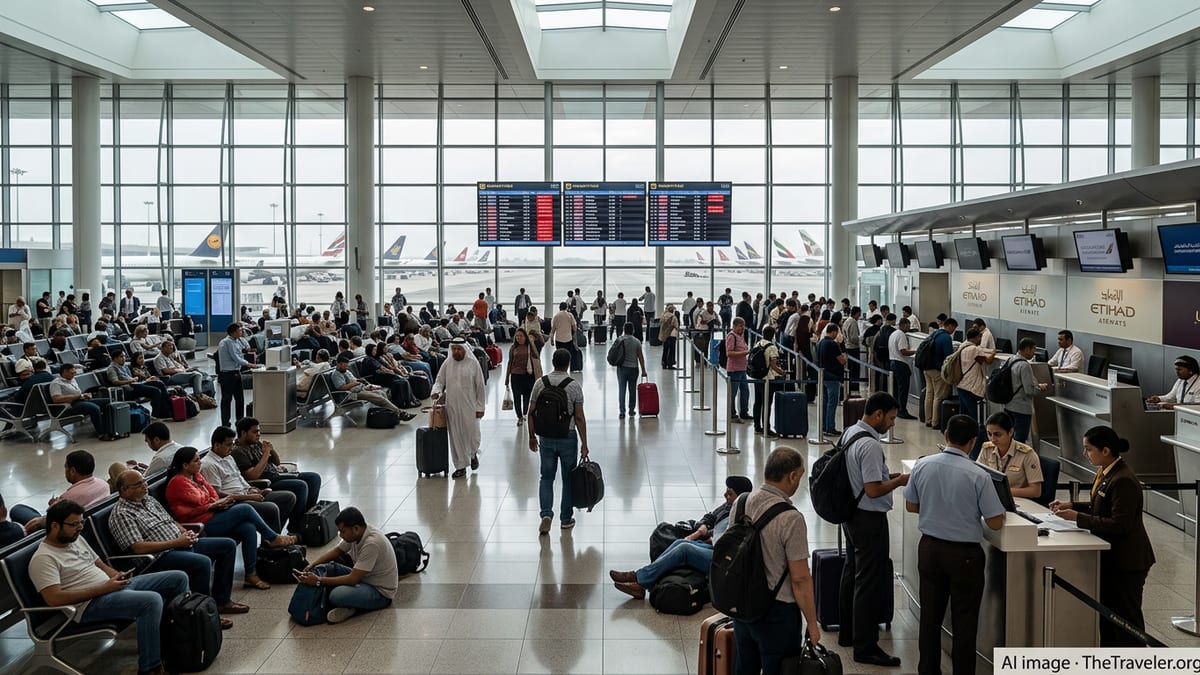
Regionwide alert as conflict risk rises
Recent security alerts shared by U.S. embassies across the Middle East describe a complex and volatile environment, citing an increased risk of unforeseen escalation in the wake of renewed hostilities involving Iran. According to published advisories, Americans currently in the region are encouraged to maintain a high level of vigilance and to be ready for abrupt changes that could affect both safety and mobility.
A blanket security message circulated by regional posts and referenced in travel-industry and media coverage notes that Americans in the Middle East should be prepared for flight cancellations, periodic airspace closures and wider travel disruptions as tensions evolve. Publicly available information highlights concern that any military uptick or retaliatory action could quickly narrow options for commercial travel in and out of key hubs.
The latest alert comes on top of existing country-level travel advisories that already urge travelers to reconsider or avoid nonessential trips to parts of the region. Coverage of the State Department’s guidance indicates that several Gulf and Levant destinations remain at elevated advisory levels, reflecting a mix of armed conflict, terrorism risks and the threat of missile and drone activity tied to the confrontation with Iran.
Flight schedules, airspace and transit routes under strain
Air connectivity across the Middle East has been under intermittent strain since large-scale hostilities with Iran began earlier in 2026, with reports of rerouted flights, lengthened journey times and, in some cases, temporary suspensions of service. The newest security messages emphasize that additional disruptions are possible, particularly if airspace closures are imposed with little warning.
According to recent coverage of the State Department’s security posture, Americans are being advised to closely monitor airline notifications and local news, and to factor in the possibility that flights could be delayed, diverted or canceled altogether. Travelers transiting the region are also being urged to consider whether itineraries can be adjusted to avoid the most affected air corridors.
Travel advisories for countries such as Saudi Arabia and Bahrain specifically reference the risk of Iranian drone and missile activity and note that attacks or intercepts could impact civil aviation. Industry and consumer reports indicate that carriers have already made routing changes to reduce exposure to higher-risk areas, adding to journey times between North America, Europe and Asia.
Heightened caution for Americans on the ground
Beyond aviation concerns, the guidance to Americans in the Middle East stresses broader personal-security measures. Publicly available information on current alerts encourages U.S. citizens to stay aware of their surroundings, avoid large gatherings where possible, and review contingency plans should local conditions deteriorate.
Embassy and consular notices highlighted in recent reporting reiterate that Iran and groups supportive of Iran may seek to target U.S. interests or locations associated with the United States and Americans, including businesses, hotels and other public venues. Travelers are being urged to limit time in places that are clearly identifiable as U.S.-linked and to follow the security information posted by local missions.
Guidance also underscores the importance of maintaining valid travel documents, ensuring access to funds and keeping communication devices charged and functional. For Americans residing long term in the region, analysts note that the latest alerts serve as a reminder to check evacuation plans and to consider how quickly they could leave a country if commercial options narrow.
Existing advisories and evolving risk levels
The wider advisory landscape in the Middle East has been tightening since early 2026, when the United States and Iran entered into open conflict. According to official travel-advisory pages, several states including Bahrain, Israel, Jordan, Kuwait, Oman, Qatar, Saudi Arabia and the United Arab Emirates are currently listed at a level that urges travelers to reconsider nonessential trips due to security concerns.
Other locations, including Iran, Iraq, Lebanon, Syria, Gaza and Yemen, remain under the strongest warning level, which recommends that U.S. citizens avoid travel entirely. These designations reflect a combination of active conflict, terrorism, civil unrest and limited capacity for the U.S. government to provide emergency assistance in the event of crisis.
Travel media analysis notes that while some destinations in the Gulf continue to function as major transit hubs, the elevated advisory levels signal that conditions could shift rapidly if the conflict widens. Experts tracking the situation emphasize that Americans who choose to remain or travel in the region now face a higher baseline of risk than in previous years.
What travelers are being urged to do now
Current guidance compiled from State Department resources and travel-industry reporting encourages Americans in the Middle East to take several immediate steps. Enrolling in the Smart Traveler Enrollment Program, or STEP, is repeatedly highlighted as a priority, since it allows embassies and consulates to push out real-time security updates and to locate citizens more easily during emergencies.
Americans are also being advised to review the detailed country pages on the U.S. government’s travel site before departure, paying close attention to sections on terrorism, armed conflict and local laws. Travel planners note that flexible tickets, comprehensive insurance that covers security-related disruption, and backup routing options can all help reduce exposure to last-minute changes.
For those already in affected countries, reports recommend having a basic “go now” plan, including a packed bag with essential documents, medication and chargers, and a clear idea of the nearest airport or land exit routes. While there is no indication that mass evacuations are imminent, the tone of recent alerts suggests that Americans in the Middle East should be ready to move quickly if the security picture worsens or if commercial flights become scarce.
U.S. Department of State Worldwide Caution
U.S. State Department Middle East Security and Travel Information
ABC7 coverage of worldwide caution tied to Middle East conflict