


Anse La Raye is one of Saint Lucia’s most atmospheric fishing villages, a small crescent of pastel houses and wooden boats framed by forested hills on the island’s west coast. Travelers often pass through on the way between Castries and Soufrière, but it is worth slowing down: the waterfront comes alive with fishing boats and music, the market stalls are rich with seasonal fruit and catch of the day, and jungle-clad valleys hide cool river pools and waterfalls a short drive inland. Whether you are stopping for two hours on a coastal drive or planning a slower village stay, Anse La Raye offers a relaxed, very local slice of Saint Lucian life.
Get the latest updates straight to your inbox!
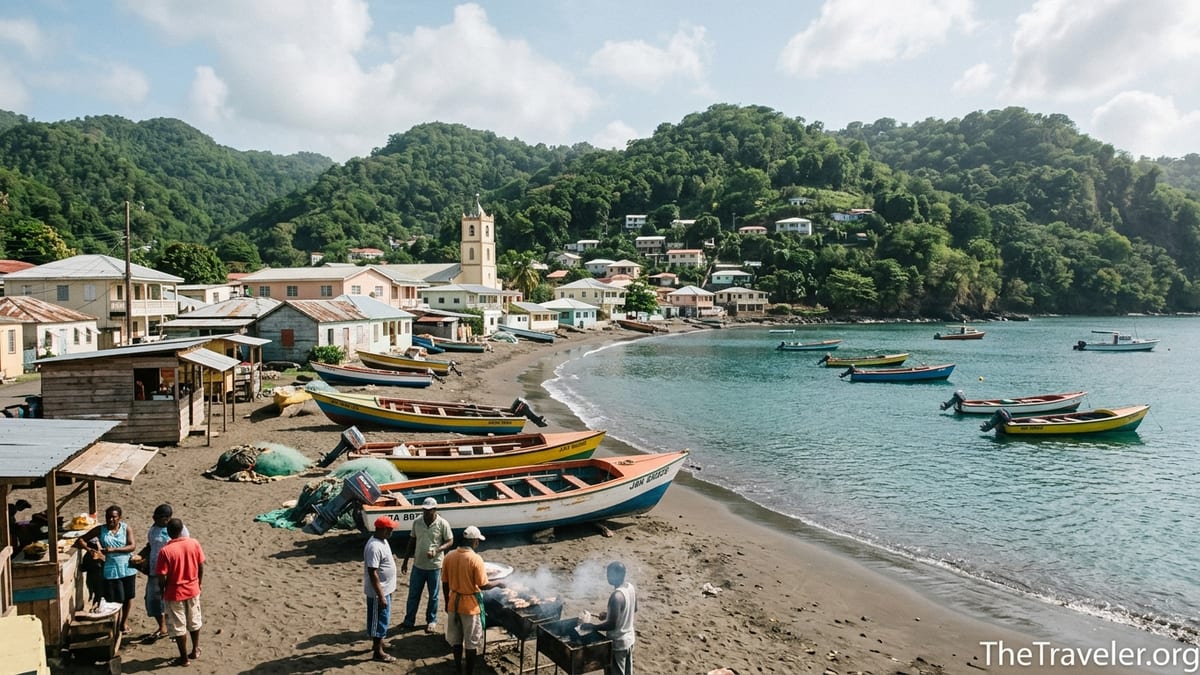
Strolling the Waterfront and Village Streets
The heart of Anse La Raye is its compact waterfront, a gently curving bay where painted pirogue fishing boats pull up on the sand and nets dry in the sun. Front Street runs parallel to the beach, and you can easily walk the main strip in ten minutes, pausing to watch fishermen mend lines or children playing football in the late afternoon light. The vibe is informal and authentic, with low-rise buildings, small rum shops, and the sound of reggae or soca drifting from doorways.
Most visitors arrive by car or minibus along the coastal highway between Castries and Soufrière and park close to the seafront. From here, it is easy to explore on foot: wander along the seawall where simple murals by local artists brighten the concrete, then cut inland for a couple of blocks to see residential streets lined with wooden houses, bougainvillea, and breadfruit trees. Side streets are narrow and sometimes uneven, so comfortable sandals work better than beach flip-flops.
Midday can feel quiet, with much of village life happening in the early morning and again toward late afternoon, when the heat softens and locals gather along the bay. This is a good time to bring a camera: the light turns warmer, the slopes above the village glow green-gold, and the fishing boats bob gently in the water. It is perfectly acceptable to take photos of street scenes, but always ask before photographing people directly, especially elders and children.
Traffic on the main road can be brisk, including local buses that connect Anse La Raye with Castries and Soufrière. When walking, stay aware near blind curves and use the seaward side of the road where possible. Solo travelers and couples generally find the village friendly in daylight hours; as in any small community, keeping valuables tucked away and avoiding flashy jewelry helps you blend in and feel more at ease.
The Village Church and Market Life
One of Anse La Raye’s most striking buildings is its Roman Catholic church, set just inland from the waterfront. The current church dates from the early 20th century, although a chapel has stood on this site since the 1700s. Inside, travelers will find a high timber roof, stained glass, and murals associated with the St Omer family, whose artwork appears in churches and public spaces across Saint Lucia. The church is usually open during the day, so visitors dressed respectfully can step inside for a quiet look.
Sunday services often draw residents from surrounding hills, and listening discreetly from the back pew can be a moving way to experience local life. Expect hymns and prayers in English and Saint Lucian Creole, along with a relaxed but respectful dress code: covered shoulders and knees are appreciated. Avoid walking in and out during the sermon, and switch phones to silent mode.
Just a short stroll away, informal produce stalls appear along the roadside and near the village square, especially on Friday and Saturday mornings. You are likely to see heaps of green bananas, christophene, plantains, mangoes in season, and fresh herbs bundled in small bunches. Prices are usually given in Eastern Caribbean dollars, and visitors can expect to pay the equivalent of a few US dollars for a bag of seasonal fruit, depending on supply and time of year.
Haggling is low-key here. Rounding up the price or buying from several stalls is a simple way to support the local economy. Many vendors are happy to explain how they prepare cassava bread, saltfish, or callaloo at home. A short, friendly conversation often leads to tips on which snack stand is best that day or when the fishermen are due back into the bay.
Seafood, Beach Time and the Famous Friday Night Fish Fry
Seafood is central to Anse La Raye’s identity, from small daytime eateries to the weekly Friday night fish event that has become one of the village’s main draws. The beach here is a curve of dark volcanic sand backed by palms and sea grapes, not as manicured as resort beaches farther north but atmospheric and usually quiet during the day. Travelers can swim in calm conditions, though there are no lifeguards, so it is sensible to stay close to shore and avoid the water if the sea looks rough.
A few rustic beachside grills and local restaurants operate near the waterfront, focusing on freshly caught fish. Depending on the day’s catch, you might find snapper, mahi-mahi, or tuna served grilled with lime, green seasoning, and sides like rice and peas, breadfruit, or cucumber salad. Simple plates at local spots typically cost the equivalent of 10 to 20 US dollars, with cold local beers or soft drinks a few dollars more. Menus can be flexible; asking what is freshest that day usually leads to the best meal.
On Friday evenings, Anse La Raye’s waterfront shifts into a street party vibe for its seafood-focused fish fry. Stalls and tents line Front Street and the seafront, with charcoal grills sending up smoke as vendors prepare fish, lobster in season, lambi (conch), and skewers of shrimp. Music ranges from Caribbean hits to gospel and old-school reggae, and lines of locals, expat residents, and visitors move slowly between food stands and coolers of drinks. The event tends to start around early evening and build up as the night goes on.
For travelers, the fish fry is a lively but still community-rooted experience, more about sharing food than high-octane nightlife. It is wise to arrive with small bills in local or widely accepted currency, wear comfortable clothes and flat shoes, and keep valuables secure. Some travelers choose to visit with a local guide or driver who waits nearby, especially if they are staying in a different part of the island, so they can enjoy the atmosphere without worrying about navigating the coastal road late at night.
Nearby Waterfalls, Rivers and Cooling Off in Nature
Behind Anse La Raye, steep green valleys hold rivers that tumble out of the island’s interior, creating natural pools, rapids, and small waterfalls. One of the best known is River Rock Waterfall, often simply called River Rock, reachable on organized excursions that may include segments by ATV, 4x4, or short hikes. The falls sit in the Anse La Raye district’s forested hills, where boulders in the river form a series of cascades and clear pools suitable for a cool dip when conditions are right.
Several tour operators based near Marigot Bay and on Saint Lucia’s west coast now include an Anse La Raye waterfall stop in half-day ATV or off-road tours. These trips typically start with a safety briefing and helmet fitting, then follow estate tracks and quiet backroads through old plantations and small communities before dropping into the valley near the falls. Along the way, guides point out crops like cocoa, bananas, and breadfruit, as well as medicinal plants used in bush teas.
The walk from the vehicle drop-off to the river is usually short but can be slippery. Water shoes or sturdy sandals with good grip, plus a small towel, make the experience more comfortable. Visitors should be prepared to get splashed, and in the rainy season guides sometimes adjust access depending on water levels. As with many natural sites on the island, conditions can change quickly after heavy rain, so following guide instructions is important for safety.
For those who prefer less adrenaline, bamboo river rafting experiences on nearby waterways, as well as guided river-to-ocean kayaking tours near Marigot Bay, provide a calmer immersion in the same lush landscape. These activities are often combined with a short stop or scenic viewpoint in the Anse La Raye quarter, allowing travelers to sample village life, coastal views, and inland rainforest scenery in a single outing.
Viewpoints, Coastal Drives and Easy Side Trips
Anse La Raye lies roughly midway between Castries and Soufrière on one of Saint Lucia’s most scenic coastal roads. Drivers and passengers are rewarded with frequent viewpoints where the road climbs above the sea and looks back over the bay, boats, and clustered houses of the village. Several simple pull-outs and lay-bys between Anse La Raye and nearby Canaries provide safe places to stop, stretch legs, and take photographs of the coastline and, on clear days, the distant outline of the Pitons farther south.
Many visitors experience Anse La Raye as part of a wider west-coast circuit. A classic route runs from Castries or Rodney Bay down to Marigot Bay, then to Anse La Raye, Canaries, and on to Soufrière for views of the Pitons and perhaps a visit to the drive-in volcano and hot springs. On such a route, Anse La Raye works well as a late-morning coffee stop, a lunchtime seafood break, or an early evening pause timed for the fish fry on Fridays.
Closer to Soufrière, the Tet Paul Nature Trail offers a short but rewarding ridge walk with sweeping views of the Pitons and the coast, which can be paired with a slower coastal return via Anse La Raye for sunset. Travelers who want to minimize time on winding roads often hire a local driver for the day; this allows everyone to enjoy the scenery and makes it easier to stop in small villages and at viewpoints that can be difficult to access from large tour buses.
Public minibuses also serve Anse La Raye, typically running between Castries and Soufrière with variable schedules. These are a budget-friendly way to experience local life, but they do require patience and flexibility. It is best not to rely on the last bus of the day if you have fixed dinner or hotel commitments elsewhere. For a quick visit focused on village exploration and photos, arranging a private taxi from Castries or Marigot Bay and agreeing on a waiting time or a pick-up point often proves more efficient.
Cultural Encounters and Everyday Village Life
Part of Anse La Raye’s appeal lies in how unhurried and everyday it feels compared with the island’s more resort-focused areas. Fishermen still push wooden boats into the water at dawn, and older residents gather on doorsteps to talk as children head to school. There is no large shopping district here; instead, you find tiny groceries, barbershops, rum shops, and a few small craft stalls that appear on busy days or during special events.
Travelers interested in culture rather than souvenirs can look for signs of Saint Lucian creativity tucked around the village. Murals near the waterfront and along some walls reflect the island’s artistic traditions, while music drifting from houses and bars might range from contemporary soca to older calypso and reggae. On evenings when there is no organized fish fry, you may still find a few food stalls or barbecues set up for locals, especially around paydays or holidays.
Respectful interaction is key. A simple “bonjou” or “bonswè” in Saint Lucian Creole is usually met with a smile, and asking before entering courtyards or photographing private homes shows good manners. If you are invited to taste something from a grill or sample a homemade rum, it is polite to reciprocate by buying a drink or plate of food where possible. Spending even a modest amount on local goods has an outsized impact in a small community.
Village tourism projects and upgrades to the waterfront have been discussed and gradually implemented, with the aim of improving facilities such as small restaurants and moorings while keeping control in local hands. Travelers who choose locally owned guesthouses, hire village-based guides, or take part in community events like church fundraisers or school performances help reinforce this approach. The experience remains informal rather than curated, which is exactly what appeals to many visitors.
Short-Stop Itineraries: How to Use Anse La Raye in Your Day
Because of its location on the coastal highway, Anse La Raye is easy to fold into a varied Saint Lucia itinerary. For a quick two-hour stop on a driving day between Castries and Soufrière, one simple plan is to arrive mid-morning, walk the waterfront and a couple of backstreets, step into the church for a quiet look, then finish with a fresh juice or cold drink at a small bar facing the bay. This leaves time for photographs of the fishing boats and a few relaxed conversations with vendors before moving on.
If you can spare half a day, you might pair the village with a nearby waterfall or river experience. One option is to book an ATV or 4x4 tour that starts near Marigot Bay, rides inland to the Anse La Raye waterfall, allows for a swim in the river pools, then returns to the coast in time for a late seafood lunch in the village. Another half-day idea is to spend the morning exploring the Tet Paul Nature Trail or Soufrière’s hot springs, then drive north to Anse La Raye for a quieter beach walk and simple dinner.
Travelers keen on the Friday fish fry can design their day around it. From resorts in the north, it often makes sense to leave mid-afternoon, stopping at a viewpoint above Marigot Bay on the way, then reaching Anse La Raye around sunset. That gives enough time to walk the beach in the softer light, find a comfortable corner near the food stalls, and sample grilled fish, bakes, and perhaps a rum punch while the music ramps up. Having a pre-arranged ride back, whether through a hotel, local taxi, or private tour, keeps the return journey straightforward.
For those staying in or near the village, slow mornings can be among the most rewarding. Watch the fishing boats come and go, have a simple breakfast of fresh fruit and bakes from a local stand, then decide whether to spend the day swimming, joining a coastal boat tour, or heading inland to explore. Anse La Raye’s small scale means you never need a formal checklist, yet with a bit of planning you can connect its beach, seafood, culture, and nearby rainforest in a single relaxed day.
The Takeaway
Anse La Raye is not a resort showpiece but a living coastal community where tourism fits around fishing, church, and everyday routines. That is exactly what makes it memorable. Travelers who approach the village with curiosity and respect are rewarded with easy conversations, honest food, and a glimpse of Saint Lucian life that can be harder to find in larger centers.
From its Friday night seafood celebrations and mural-lined waterfront to the cool river pools hidden in the interior hills, the area offers more than a quick roadside photo stop. It invites you to slow down: to wander unhurried streets, taste what just came off the boat, and listen to the rhythms of a village shaped by the sea. Used as a short-stop highlight on a coastal drive or as a gentle base for exploring nearby nature, Anse La Raye adds both flavor and depth to any Saint Lucia itinerary.
FAQ
Q1. Is Anse La Raye worth visiting if I am only in Saint Lucia for a few days?
Yes, Anse La Raye can fit easily into a short stay because it lies on the main west-coast road between Castries and Soufrière. Even a one or two-hour visit lets you walk the waterfront, see the fishing boats, step into the village church, and enjoy a drink or quick meal, making it a worthwhile stop on a day trip that also includes Marigot Bay or the Pitons.
Q2. What is the best time of day to visit the waterfront and village streets?
Early morning and late afternoon are usually the most atmospheric times. Mornings often bring fishing activity and cooler temperatures, while late afternoon and early evening add warm light, more people along the bay, and, on Fridays, preparations for the fish fry. Midday can be hot and quieter, though it is still good for photographs of the bay and hills.
Q3. How do I get to Anse La Raye without renting a car?
You can reach Anse La Raye by public minibus running between Castries and Soufrière, which is affordable but can be crowded and loosely scheduled, or by hiring a private taxi or driver through your hotel. Organized tours that combine Anse La Raye with waterfalls, Marigot Bay, or Soufrière are another option, especially if you prefer not to navigate winding coastal roads on your own.
Q4. Is it safe to swim at Anse La Raye beach?
The beach is generally calm and used by locals for swimming, but there are no lifeguards or resort facilities. Visitors should check the sea conditions, avoid swimming after heavy rains or if the water looks rough, and stay within their comfort level. As on any natural beach, keeping an eye on currents, avoiding isolated night swimming, and watching children closely are basic precautions.
Q5. What should I expect at the Friday night fish fry?
On Friday evenings, the waterfront and Front Street fill with food stalls, grills, and music. Expect grilled fish, lobster in season, lambi, and sides like rice and peas or bakes, along with beer, soft drinks, and simple cocktails. The atmosphere is lively but friendly, with a mix of locals and visitors; bring small bills, wear comfortable shoes, and arrange safe transport back to your accommodation, especially if you plan to stay late.
Q6. Are there ATMs, pharmacies, or large supermarkets in Anse La Raye?
Anse La Raye has small shops and mini-marts for basic items, but it does not offer the full range of services you might find in Castries or Rodney Bay. It is wise to arrive with enough cash for food, drinks, and small purchases, as card acceptance can be limited. For banking, larger grocery shopping, and medical supplies, plan to use facilities in the bigger towns before or after your visit.
Q7. How difficult are the nearby waterfall and river excursions?
Difficulty varies by tour. ATV or 4x4 trips to the Anse La Raye waterfall typically include bumpy tracks and a short but sometimes slippery walk to the river pools, suitable for reasonably fit adults and older children. Bamboo rafting and river-to-ocean kayaking excursions are more relaxed but still involve some balance and basic mobility. If you have concerns, ask your operator about terrain, footwear, and fitness requirements before booking.
Q8. Can Anse La Raye be combined with a visit to the Pitons in one day?
Yes, many travelers combine both areas in a single day. A common pattern is to travel from the north down to Soufrière in the morning for Piton viewpoints, hot springs, or a short hike, then drive back north in the afternoon, stopping at Anse La Raye for a late lunch, beach stroll, or, on Fridays, the evening fish fry. Hiring a driver makes this combination more comfortable, especially if you are not used to narrow, curving coastal roads.
Q9. What should I wear when visiting the village and church?
Light, breathable clothing works best in the tropical heat, along with comfortable walking sandals. Swimwear is fine on the beach but should be covered when walking through the village or entering shops. For the church, modest dress with covered shoulders and shorts or skirts at least to mid-thigh is recommended, particularly if you plan to enter during a service or spend time inside.
Q10. How can I support the local community while visiting Anse La Raye?
The simplest ways are to spend money with locally owned businesses and treat people and places with respect. Buying fruit from market stalls, eating at small eateries, hiring local guides for waterfall trips, and purchasing handmade crafts all help keep income in the village. Being mindful about litter, asking before taking close-up photos of people, and following any guidance from community leaders or tour hosts also show that you value Anse La Raye as more than just a photo stop.