


More news on this day
More than 100 flights into Austin-Bergstrom International Airport faced delays on Friday, September 11, 2026, after the Federal Aviation Administration initiated a ground delay program to accommodate intensive runway and taxiway construction on the airport’s central airfield.
Get the latest news straight to your inbox!
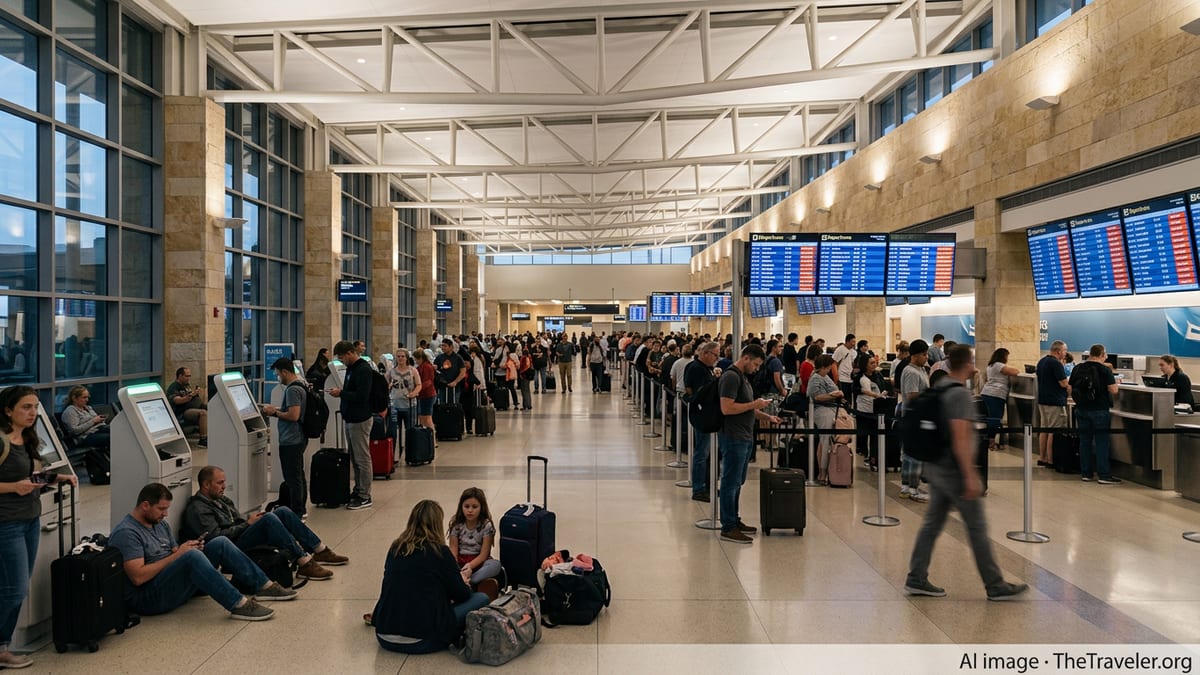
Runway Construction Triggers Systemwide Slowdown
According to published operational data and media coverage, the ground delay program at Austin-Bergstrom International Airport (AUS) began shortly before 11 a.m. local time on September 11, 2026, as air traffic managers reduced the rate of arriving flights to match available runway and taxiway capacity. Affected flights were held at their departure airports across the country, creating a cascading effect that pushed many arrivals into later time slots.
Coverage from travel industry outlets indicates that more than 100 inbound flights experienced delays of varying lengths as a result of the program. While some departures from Austin continued with relatively minor gate and taxi delays, the main impact fell on aircraft waiting to depart for Central Texas, where constrained airfield access and active work zones limited how many planes could safely land per hour.
FAA system summaries show that ground delay programs are typically used when an airport’s arrival capacity is temporarily reduced below demand, whether due to severe weather, equipment outages, or infrastructure work. In Austin’s case, the primary driver was ongoing runway and taxiway construction that narrowed portions of the airfield and required careful management of arriving traffic.
Real-time status information for AUS around the same period reflected modest gate hold and taxi delays under 15 minutes during normal conditions, highlighting how the more intense construction-related program on September 11 represented a sharper, time-limited constraint than the airport’s usual operations.
Part of a Larger Airfield Expansion Effort
The construction that prompted the ground delay is part of Austin’s multiyear airfield expansion, known locally as the Journey With AUS program. Publicly available planning documents describe a once-in-a-generation buildout of the airport, including new midfield taxiways designed to connect future concourses, expand aircraft parking areas, and streamline movements between the runway system and terminal gates.
City procurement records and program overviews outline a capital improvement effort that covers taxiway construction, pavement rehabilitation, and related airfield infrastructure, with work scheduled across 2025 and 2026. FAA construction impact reports list Austin among airports undertaking multi-month rehabilitation of concrete panels and taxiway surfaces, work that can temporarily reduce capacity and increase the likelihood of delay programs during busy periods.
Officials have emphasized in public documents that the new taxiways are intended to reduce runway occupancy times and improve long-term efficiency by allowing arriving aircraft to exit more quickly and by creating additional routing options on the ground. In the short term, however, closing sections of pavement for reconstruction requires complex choreography between construction crews and air traffic management, particularly when runway-adjacent areas are involved.
The September 11 ground delay reflects this tradeoff. By slowing arrivals while key sections of taxiway and airfield pavement are under construction, the system balances the need for safety and work progress against the immediate goal of minimizing disruption for airlines and passengers.
Passengers Encounter Longer Waits but Limited Cancellations
Travel reports from the day of the program describe a busy but largely orderly scene in Austin’s terminal, with passengers facing extended waits for inbound flights yet relatively few outright cancellations. Because ground delay programs meter flights before they depart, many travelers experienced the disruption not in Austin itself but at origin airports, where aircraft were held at gates or on ramps until their updated departure slots were cleared.
Publicly available guidance from the FAA notes that this approach is designed to prevent airborne holding near the destination airport, which can lead to fuel concerns and congestion in the skies. Instead, the delays occur while planes are still parked on the ground, allowing airlines to adjust boarding, staffing, and turnaround schedules more predictably.
For passengers, the practical effect was longer connection times, missed tight layovers, and schedule reshuffles throughout the day. Airlines responded with rebooking options and rolling updates through apps and airport information displays, while the airport’s own traveler alerts continued to highlight ongoing construction and encourage early arrival and close monitoring of flight status.
Despite the large number of delayed flights, available reports suggest that traffic continued to move steadily, and by later in the day, the most acute constraints had eased as construction windows closed and the metered backlog of arrivals gradually worked through the system.
Construction Disruptions Likely to Continue in the Near Term
Airport construction updates published by Austin-Bergstrom show that significant work is scheduled on and around the airfield through at least late September 2026. Notices covering the September 10 to 30 window point to nighttime and early-morning activity with potential noise and access impacts, while broader expansion documents forecast additional phases of taxiway and pavement work as the new concourse and related projects progress.
FAA construction impact reporting for the 2026 calendar year characterizes Austin’s airfield rehabilitation as a recurring program involving select taxiways and concrete panels. The agency’s system capacity analysis notes that such projects can create “reduced capacity and potential delay impact,” particularly when multiple surfaces are affected at once and when traffic demand remains high.
Regionally, the situation at AUS fits into a larger pattern of U.S. airports modernizing runways and taxiways to accommodate rising passenger volumes. Federal funding announcements this year have highlighted hundreds of millions of dollars in new grants nationwide for runway rehabilitation, taxiway work, and airfield safety improvements, signaling that travelers may see similar construction-related constraints at other hubs over the coming months.
For Central Texas travelers, publicly available airport guidance continues to stress the importance of checking flight status before leaving for the airport, allowing extra time for parking and security, and preparing for possible schedule changes on days when airfield construction windows overlap with peak traffic.
Balancing Short-Term Delays With Long-Term Capacity Gains
Planning documents and the airport’s master plan underscore that Austin-Bergstrom’s expansion is driven by rapid growth in passenger traffic over the past decade and projections for continued increases in the years ahead. Analyses of airfield performance show that, without new taxiway connections and other infrastructure upgrades, average delays per operation would trend upward as traffic rises, inching closer to levels that airlines and passengers would find increasingly disruptive.
The current taxiway and runway-adjacent projects, while temporarily constraining capacity, are intended to keep that long-term delay curve in check. By adding parallel taxiways, high-speed exits, and more flexible routing options, the airfield is expected to handle additional daily operations with shorter runway occupancy times and fewer bottlenecks at critical intersections.
For now, events such as the September 11 ground delay illustrate the friction that can arise when an already busy airport undertakes major airfield work while maintaining daily schedules. Industry observers note that similar construction periods at other large hubs have produced episodic ground delay programs, especially when work coincides with peak travel days or weather-related disruptions.
As Austin’s expansion advances, system data and future FAA traffic reports will provide a clearer picture of how the completed taxiway network affects overall reliability. In the interim, passengers flying to or from AUS during active construction windows are likely to continue encountering occasional ground delays and schedule adjustments tied directly to the ongoing runway and taxiway improvements.
FAA AUS real-time airport status