


More news on this day
Primary inspection kiosks used for customs processing at Toronto Pearson International Airport are back in service after a lengthy outage this week that left thousands of arriving passengers facing hours-long waits at Canada’s busiest airport.
Get the latest news straight to your inbox!
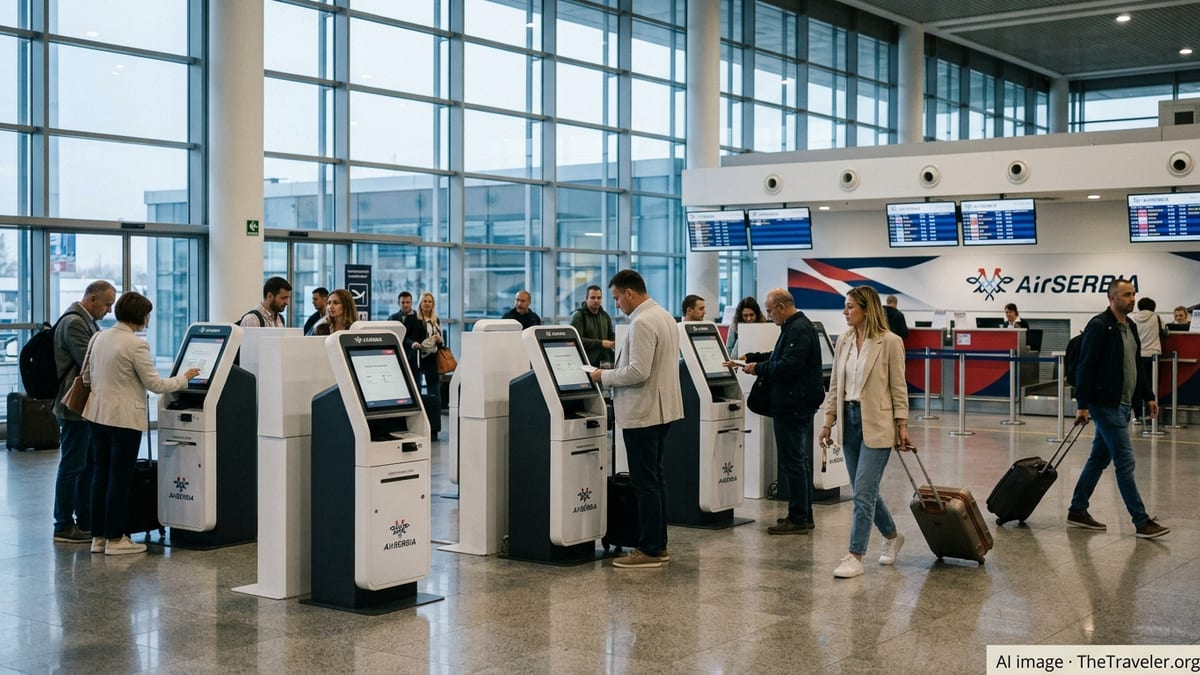
Outage caused significant delays for international arrivals
The failure of the Canada Border Services Agency’s (CBSA) primary inspection kiosks at Toronto Pearson affected both Terminals 1 and 3, where most international flights arrive. Advisories on the airport’s official website warned that a systems outage at the kiosks was leading to longer than usual processing times in the customs hall for arriving travelers.
Online reports from passengers described long queues in the arrivals area as all travelers were redirected to manual primary inspection lines. With kiosks and eGates offline, CBSA personnel were required to process declarations and identity checks one by one, significantly slowing throughput and prompting the airport to meter the flow of passengers off arriving aircraft to prevent overcrowding in the customs hall.
Experiences shared on traveler forums and social media indicated that some passengers waited more than three hours from landing to clearing customs during peak periods of the disruption. Observers noted that aircraft were periodically held at gates or on remote stands while customs areas cleared, turning planes into temporary holding spaces while border processing capacity remained constrained.
Published CBSA material on contingency planning notes that when kiosk outages occur, travelers are redirected to staffed primary inspection lines while the agency maintains normal security standards and manual processing. The recent outage at Pearson broadly followed those procedures, but the volume of international traffic meant delays quickly compounded during busy arrival waves.
Kiosks and eGates again processing declarations
By early Saturday, inspection kiosks were reported to be back online at Toronto Pearson, with travelers noting that they were once again able to scan passports, complete on-screen customs declarations and receive printed receipts before proceeding to a border services officer. Community reports describing the return of service suggested that both primary inspection kiosks and related eGate technology were functioning normally.
Toronto Pearson and CBSA documentation explain that the kiosks are designed to streamline the first stage of the customs process by capturing biographic data, verifying travel documents and collecting declarations electronically. Once the system is operating normally, travelers present a kiosk or eGate receipt to an officer, who can then focus on brief verification and any necessary follow-up questions, significantly increasing the number of passengers processed per hour compared with fully manual screening.
Government publications on the kiosk program describe it as a core element of CBSA’s strategy to manage growing passenger volumes at major Canadian airports, including Toronto Pearson, Vancouver, Montreal and Calgary. The technology is intended to reduce face-to-face document handling, improve detection of fraudulent documents and support faster processing while maintaining border-security standards. The disruption at Pearson highlighted how dependent large hubs have become on this automated infrastructure.
Information released in recent years on border technology projects at Pearson has also emphasized efforts to improve resilience, including monitoring tools and the ability for some systems to operate in limited offline modes during CBSA outages. Despite those upgrades, the most recent incident shows that when critical components such as the primary inspection kiosks are unavailable, the effects on passenger flow can still be immediate and visible.
Multi-day disruption follows earlier national kiosk issues
The outage at Toronto Pearson occurred against the backdrop of a series of CBSA technology incidents over the past two years that have periodically affected primary inspection kiosks and other traveler-processing systems across Canada’s major airports. A joint public report by CBSA and Shared Services Canada on earlier IT outages detailed how database corruption during a system change triggered failures in kiosk networks and other border processing tools nationwide, forcing officers to revert to manual procedures.
In those earlier cases, the investigation noted that kiosks at large hubs such as Toronto Pearson, along with primary and secondary inspection systems at airports and land crossings, were temporarily unable to communicate with central databases. Airlines were also required to seek manual clearance recommendations for some passengers, adding another layer of delays to the travel experience. The report highlighted the operational stress such outages place on front-line staff and infrastructure when automated systems are unavailable.
More recent government updates have stated that CBSA has worked with its federal IT service partners to strengthen monitoring, refine change-management processes and improve contingency plans. Measures include enhanced incident reporting, better communication protocols with airports and airlines, and updates to crisis and emergency management procedures based on lessons learned from previous outages.
Nonetheless, the latest multi-day disruption at Pearson underscores that the scale and complexity of the airport’s international operation leave little margin when critical digital tools fail. Even when contingency plans are activated quickly, backlogs can build rapidly at peak times, and it can take hours or longer for queues to normalize after systems are restored.
Travelers advised to expect residual delays
With kiosks back in service, passenger flow through customs at Toronto Pearson has begun to improve, but travelers are still being advised via airport communications and traveler reports to plan extra time on arrival. Residual delays may persist as the airport and CBSA work through remaining backlogs and adjust staffing to match current demand.
Travel advice shared through official guidance and public communications on past outages suggests that passengers arriving in the days after a major disruption should allow additional time for connections, especially when transferring from international to domestic flights. At Pearson, dedicated connection facilities, including a satellite primary inspection area in Terminal 3, are equipped with kiosks and security lanes intended to speed those transfers when fully operational.
Information on CBSA’s website describing the use of primary inspection kiosks recommends that travelers have passports and travel documents ready, complete any eligible pre-arrival declarations where available and follow signage in the arrivals hall to the appropriate lanes. For those with trusted-traveler memberships or special processing needs, separate lanes and procedures may help mitigate wait times, though these can also be affected when system-wide issues occur.
While the immediate technical fault has been resolved, publicly available reports on past outages indicate that CBSA and its partners typically conduct follow-up reviews after such incidents. These reviews often focus on root causes, system resiliency and whether outage procedures functioned as intended. For travelers, the most tangible outcome is whether future disruptions can be shorter and less disruptive than those experienced during this week’s extended kiosk failure at Toronto Pearson.
Key role of kiosks in Canada’s border strategy
Primary inspection kiosks have become a central feature of Canada’s airport border strategy since their introduction at major hubs in the past decade. Government program documents describe the kiosks as part of a broader modernization effort aimed at handling rising passenger numbers without a proportional increase in staffing, while still maintaining required security and immigration checks.
At Toronto Pearson, the country’s largest international gateway, the kiosk network spans both main terminals and serves not only terminating passengers but also many international-to-domestic connections. Annual reports and planning documents from airport and federal agencies emphasize that improvements in automated border processing are closely tied to broader goals such as reducing overall connection times, smoothing arrival peaks and supporting the airport’s role as a global hub.
The recent outage has drawn renewed attention to the balance between efficiency and resilience in that strategy. While automation significantly accelerates processing when systems function normally, the backlog experienced during the outage illustrates the risk of bottlenecks when manual processes must suddenly absorb the full volume of international arrivals. Planning documents from CBSA and its partners note that future technology upgrades are being designed with a greater focus on redundancy and failover capacity.
For travelers using Toronto Pearson in the coming days, the restoration of inspection kiosks should translate into shorter lines and a return to more typical arrival times. However, the incident serves as a reminder that even as airports adopt increasingly sophisticated digital tools, the reliability of those systems remains as critical to the travel experience as the physical infrastructure of runways and terminals.
Toronto Pearson Airport customs and immigration advisory