


More news on this day
Saudi Arabia’s top-end hotels are moving quickly to embed guest-intelligence platforms and AI-driven personalisation into day-to-day operations in 2025 and 2026, as the Kingdom’s Vision 2030 strategy pushes luxury hospitality providers to use detailed visitor data and tailored services to attract higher-spend international travellers and keep them coming back.
Get the latest news straight to your inbox!
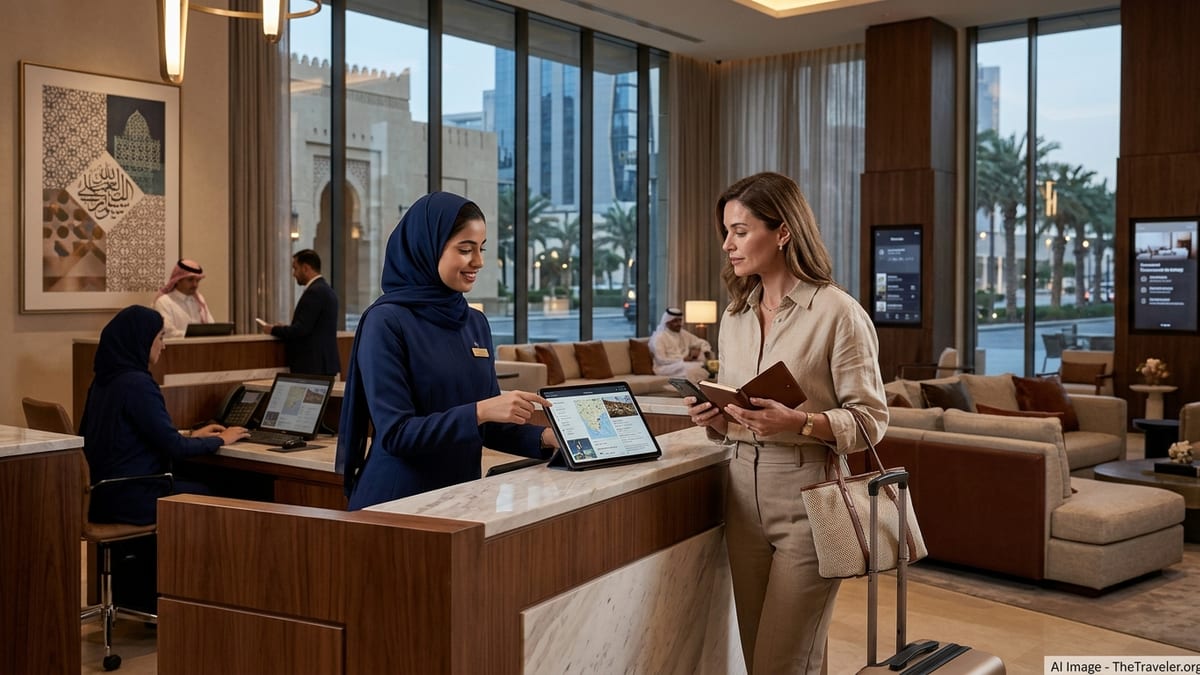
Vision 2030 puts personalised, high-spend tourism at the center
Tourism is a pillar of Saudi Arabia’s Vision 2030 economic diversification plan, with the National Tourism Strategy aiming for tens of millions of international visitors a year and a higher share of GDP from travel-related spending. An OECD tourism review published in 2026 notes that this strategy is being backed by large-scale investment and new regulatory programs designed to lift quality, particularly at the upper end of the market, and to position the country as a global luxury destination.
A key enabler is the Hospitality Enablers Program launched by the Ministry of Tourism in March 2024, which targets investment into hotel and resort projects in priority destinations and links support to upgraded service standards. While the program focuses on bricks-and-mortar capacity, officials frame it as part of a broader move to raise service levels and guest satisfaction, creating commercial pressure on operators to use technology and data to deepen personalisation in order to justify premium rates.
Consulting and industry reports focused on the Middle East hospitality sector underline that Saudi Arabia’s new-build projects, from the Red Sea coast to heritage cities, have an advantage in that they can install integrated, data-ready systems from the ground up rather than retrofitting older properties. Analysts argue that this technical clean slate makes it easier for Saudi luxury hotels to connect reservations, loyalty data, on-property spending and feedback into a single guest view that can support tailored experiences at scale.
Guest-intelligence platforms move from concept to operational reality
The most concrete sign that guest intelligence is moving beyond marketing language in Saudi Arabia’s luxury sector is the way large developments are hard-wiring data-driven service models into their design. A published case study on the NEOM giga-project describes how a “dynamic quality management” platform has been prototyped to aggregate information from travel consultants, service providers and guests into evolving profiles, allowing staff and partners to anticipate needs and adjust services in real time rather than waiting for complaints or requests.
Specialist firms working on NEOM’s tourism experience say this framework includes detailed visitor segmentation, with personas ranging from high-net-worth leisure travellers to culture-focused families, and an operating model in which providers agree to share data and follow unified service protocols in exchange for access to the destination. The aim is for a guest’s preferences, such as privacy levels, dining habits or activity interests, to be recognised consistently across hotels, clubs and excursions within the development.
Other flagship destinations are also being planned around tightly choreographed guest journeys. Design material for projects such as Diriyah’s luxury hotels and branded residences shows a strong emphasis on “arrival moments” and curated experiences that depend on staff having accurate information about who is arriving, why they are visiting and what will make the stay feel distinctive. While the underlying software stacks are not fully disclosed, these projects are being sold to investors and brands on the basis that digitally enabled, insight-led service will allow them to command premium room rates in the coming decade.
AI adoption in Middle East hotels accelerates personalised service
Regional data on technology adoption helps explain the pace of change. A 2025 study by PwC on AI in tourism and hospitality, based on operators across the Middle East including Saudi Arabia, reports that more than nine in ten surveyed organisations have adopted some form of AI tool and that 97 percent cite “enhancing the customer experience” as the primary driver. The report highlights that hotels are prioritising AI-powered personalisation, contactless check-in and mobile-first services to deliver what it describes as more “immersive and frictionless” guest journeys.
Industry coverage of the same research emphasises that Saudi Arabia sees AI as central to meeting its long-term visitor and revenue targets under Vision 2030, with hotel executives increasingly treating algorithms and data platforms as ways to support staff rather than replace them. For luxury properties, this can include recommendation engines that surface customised spa or dining options, predictive maintenance that reduces visible service failures, or tools that flag returning high-value guests so that room assignments, amenities and recognition are aligned with past stays.
Advisory firms tracking Gulf Cooperation Council luxury tourism note that Saudi Arabia’s pipeline of new luxury hotels and resorts allows developers to specify integrated, cloud-based hospitality technology from day one, stitching together property management systems, customer relationship tools and experience-booking platforms. By contrast, operators in some more mature markets are still grappling with fragmented legacy systems that make it harder to use guest data in a coherent way across touchpoints.
Service standards and luxury classifications reinforce tailored attention
Alongside technology, Saudi regulations now codify many of the human elements that underlie guest intelligence and tailored service. The Ministry of Tourism’s detailed hotel classification criteria specify additional requirements for five-star and “five-star luxury” properties, such as dedicated concierge and guest relations functions, luggage assistance, secure storage facilities and heightened attention to design and cultural details, including a presence of Saudi-made artwork in higher-rated hotels.
These rules effectively set a baseline for the level of personal attention guests can expect in luxury properties, independent of any individual brand’s promises. To achieve or keep a top rating, hotels must demonstrate that staff are trained to provide special services, coordinate bespoke transport and experiences and maintain accurate, readily available information about local offerings. For international brands entering the market, meeting these standards typically involves formalising guest-preference recording and handover processes so that information captured at booking or check-in is actually used by front-line teams.
At destination level, government-related developers are positioning hospitality districts such as Diriyah as places where traditional Najdi hospitality is expressed through contemporary luxury service. Official material for the first operating luxury hotel in Diriyah, Bab Samhan, and for properties under development such as Raffles and Capella, highlights “enriching experiences” and opportunities for guests to create personalised itineraries rooted in local history, architecture and cuisine. Delivering on those promises at scale is likely to depend heavily on how well hotels capture, share and act on guest information over time.
What the shift means in practice for luxury travelers
For travelers booking high-end stays in Saudi Arabia over the next few years, the rapid build-out of guest-intelligence and AI capabilities means that hotels are increasingly able to tailor services before arrival and throughout the stay, as long as guests are willing to share some data. In practical terms, this can translate into room allocations that match expressed preferences for views or privacy, more relevant activity suggestions aligned with cultural interests or family needs, and more proactive recognition of special occasions.
Because many of the most ambitious systems, such as those planned for NEOM’s resorts and mixed-use districts, are still under development or in pilot phases, not every announced capability is yet available on the ground. Travelers should treat references to hyper-personalisation or fully integrated destination-wide profiles as forward-looking aims rather than guaranteed current features, and should check directly with hotels about which services are already in place at the time of booking.
One important caveat is data use and privacy. Saudi authorities and destination developers promoting personalised tourism stress that visitors will be able to choose how much information they share, and that opt-outs are expected to be part of the model. However, detailed regulatory frameworks for data protection in hospitality-specific contexts are still evolving. High-spend guests who value discretion may therefore wish to ask how their information is stored, how long it is kept and whether it is shared across multiple properties or partners within a destination.
Next steps: pipeline openings and expanding brand portfolios
The technology and regulatory shifts are unfolding alongside a rapid expansion of luxury hotel supply, which will give travelers more choice of brands applying guest-intelligence models. In June 2026, IHG Hotels & Resorts announced plans to have all six of its luxury and lifestyle brands present in Saudi Arabia by 2028, through a mix of existing properties and signed pipeline projects. Other global groups, including Marriott International and independent operators, are also opening or planning resorts tied to large-scale projects such as the Red Sea, AlUla and Diriyah.
As new properties open between 2026 and 2028, guests can expect significant variation in how fully each hotel has integrated its data and personalisation tools into front-line service, especially in the first months of operation. Early adopters that combine robust guest-intelligence platforms with well-trained staff are likely to set the benchmark for what luxury in Saudi Arabia feels like in practice, while laggards may offer more conventional five-star experiences even if they sit within highly marketed mega-projects.
For now, travelers considering a luxury trip to the Kingdom should focus on concrete, verifiable features when choosing where to stay, such as service inclusions, language support, cultural programming and the ability to pre-arrange experiences, while treating broader claims about AI-powered or hyper-personalised stays as indicators of strategic direction rather than a guarantee of a particular level of tailoring on any given night.