


More news on this day
Hours after a rare nationwide halt to U.S. flight departures brought air travel to a standstill on Friday, Bay Area airports spent much of Saturday untangling the fallout, with stranded passengers describing the uncertainty as unnerving and in some cases “a bit scary.”
Get the latest news straight to your inbox!
Nationwide Ground Stop Follows FAA Communication Outage
Publicly available federal aviation data shows that the Federal Aviation Administration ordered a nationwide ground stop on November 13, 2026, after a communication outage affected multiple air route traffic control centers. The stop, issued in the late afternoon Eastern time, temporarily halted nearly all U.S. departures, an action observers noted has been taken only a handful of times in modern aviation history.
According to live trackers that compile FAA command center advisories, the halt began as problems were first reported in the Chicago airspace region, then expanded as communication issues between en route control facilities spread. An advisory cited “extraordinary circumstances” and the need to maintain safety as the reason for the sweeping order, which applied across the national airspace system.
Transport and aviation coverage indicates that the outage was linked to failures in communication channels used to coordinate traffic between high altitude control centers, rather than to radar or airport tower systems. Analysts have connected the disruption to the ongoing modernization of FAA technology, including new routing and communications tools that have been rolling out across the network over the past year.
By early Saturday, the formal nationwide ground stop had been lifted, but the knock-on effects of hours of suspended departures were still rippling across airline schedules. Delayed aircraft and displaced crews left carriers struggling to reassemble normal operations, particularly at major hubs and coastal gateways.
Bay Area Airports Become Flashpoints of Frustration
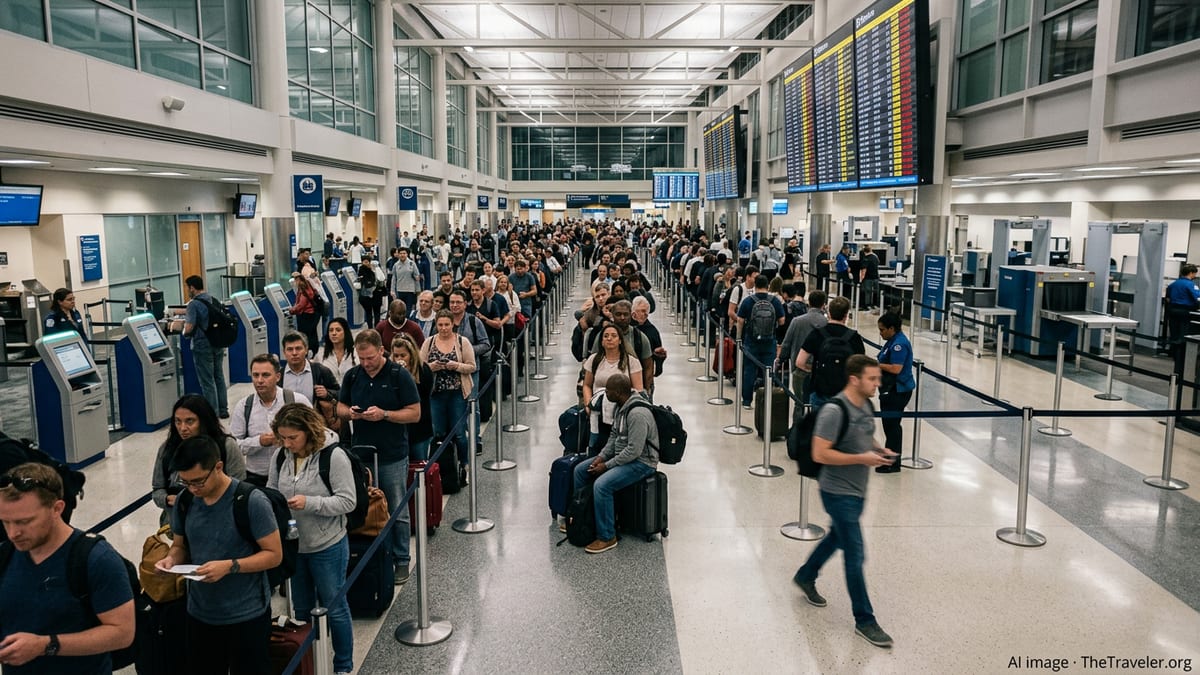
San Francisco International Airport, the region’s largest hub, quickly emerged as a visible symbol of the disruption. Local coverage from San Francisco based outlets described packed departure halls and snaking customer service lines on Friday evening as passengers realized that flights were unable to depart and that onward connections across the country had unraveled.
Social media posts and community forums focused on the Bay Area show travelers at SFO reporting hourslong waits on board aircraft, at gates and at check in counters. Some passengers landing on inbound flights late Friday said they were held on tarmacs while crews waited for open gates or updated instructions, and others reported being rebooked for early morning Saturday departures once the national halt was relaxed.
At Oakland International Airport and Mineta San Jose International Airport, passengers recounted similar scenes of confusion as departure boards shifted from on time to delayed or canceled in rapid succession. Regional transport trackers that monitor FAA feeds indicated that both airports were affected as part of the national order, even though local weather at the time in the Bay Area was not the primary driver of the stoppage.
Bay Area travelers on online discussion boards described missed weddings, sports events and international connections because of the cascading delays. While some were able to switch to early morning flights after the grounding lifted, others reported being offered hotel vouchers or told to return home and rebook once airline systems caught up with the backlog.
‘A Bit Scary’ for Nervous Flyers and Families
For passengers already uneasy about flying, the sudden halt and limited information about its cause added an emotional layer to the disruption. In forums dedicated to fear of flying, several Bay Area based travelers posted that learning every departure in the country had been stopped “for safety reasons” was, in their words, “a bit scary,” even as they acknowledged that grounding traffic is designed to prevent accidents during system failures.
Parents waiting at SFO and San Jose for children arriving on delayed flights shared accounts of refreshing flight status pages for hours while aircraft hovered in holding patterns or diverted to other airports. Some described monitoring national aviation trackers and noting how few planes appeared over California compared with a typical Friday evening, a visual reminder of the unusual scale of the shutdown.
At the same time, aviation specialists writing for national outlets emphasized that the decision to halt departures is a sign that fail safe procedures functioned as intended. When communications between key facilities become unreliable, pausing traffic is one of the few tools available to keep aircraft separated until controllers can be confident that instructions will be transmitted clearly.
For many Bay Area travelers, however, the technical explanations did little to ease the immediate stress of being stranded. The experience reinforced a sense that long distance trips in and out of Northern California remain vulnerable not only to local fog and runway constraints but also to systemic shocks elsewhere in the national network.
After the Halt, a Slow and Uneven Recovery
Once the nationwide order was lifted, airlines began restarting departures from SFO, OAK and SJC, but recovery was far from instant. Public flight status boards and third party delay trackers on Saturday morning showed continued disruptions across all three airports, with rolling delays as aircraft and crews repositioned into place.
Because the ground stop lasted several hours and struck during one of the busiest travel periods of the week, aircraft and crews ended up out of position for subsequent departures. Industry data from previous large scale disruptions indicates that such imbalances can take at least a full day to absorb, especially when aircraft are committed to tightly timed cross country rotations that pass through multiple hubs.
Travel reporting from San Francisco outlets noted that some airlines focused first on restoring long haul and transcontinental departures from SFO, pushing shorter regional flights later into the day. At Oakland and San Jose, where schedules are more heavily weighted toward domestic routes, many passengers described being offered same day but much later departures or routing through alternate hubs as carriers tried to reconnect fragmented itineraries.
For those looking ahead to travel in the coming days, aviation analysts recommended building extra buffer time into connections at major hubs and monitoring flights closely through airline apps. Although the immediate safety issue has been addressed and the ground stop formally lifted, the systemwide shock has temporarily reduced slack in schedules, increasing the risk that fresh local weather or technical problems will trigger additional delays.
Renewed Scrutiny of FAA Technology and Resilience
The incident has intensified attention on the resilience of the systems that underpin U.S. air travel. Technology publications and policy focused outlets have recently documented the FAA’s effort to retire aging infrastructure and replace legacy systems, including components that for years relied on outdated hardware. The nationwide halt has raised new questions about how those modernization projects are being managed and what safeguards are in place when new tools interact with older equipment.
Analysts have pointed out that this is not the first major disruption tied to information and communication systems. A high profile outage in early 2023 involving a critical safety database led to a separate nationwide pause in departures, and the latest episode has revived debate over whether funding and oversight for aviation technology have kept pace with demand.
In the Bay Area, where SFO serves as a major international gateway and tech sector hub, business groups and frequent fliers are closely watching how both airlines and regulators respond. There is renewed discussion around diversifying travel options, including improved long distance rail and intercity bus links, so that travelers are less dependent on a single mode of transport during nationwide aviation disruptions.
For now, passengers at SFO, OAK and SJC are confronting the immediate practicalities of rebooking and reaching delayed destinations. The memory of departure boards filled with red and the unusual quiet of Bay Area skies on a Friday evening has already entered local travel lore as a reminder of how quickly national aviation can grind to a halt, and how unsettling that silence can feel from the departure lounge.