


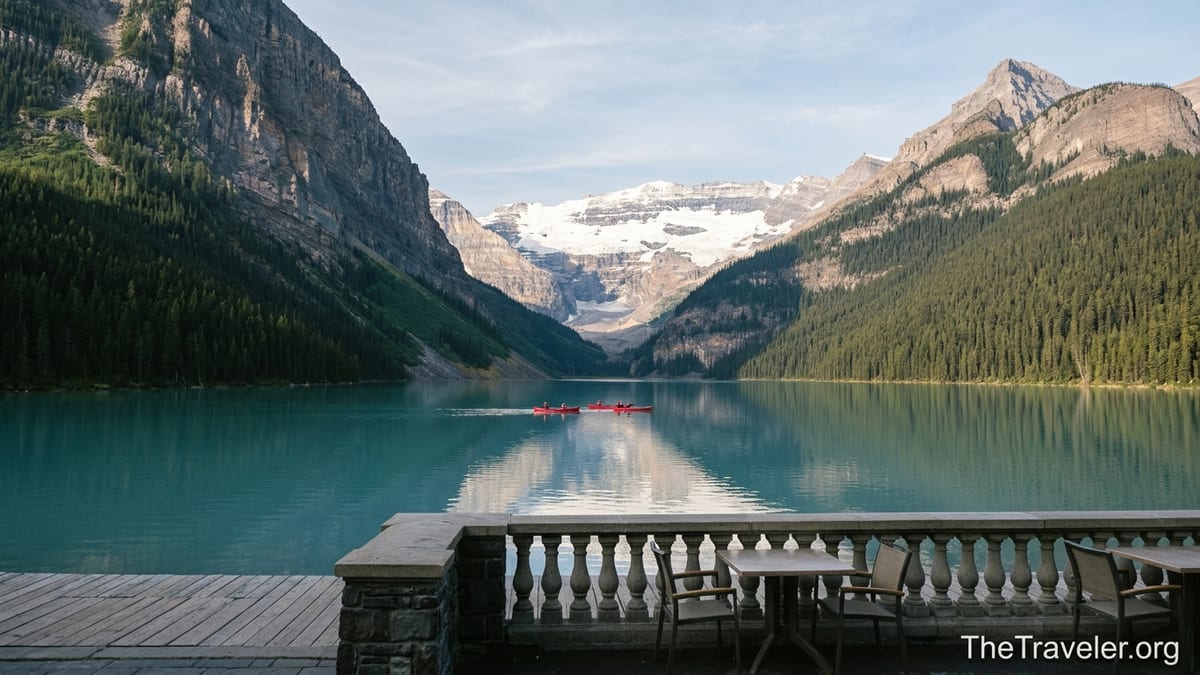
Stand at the windows of Fairmont Chateau Lake Louise and you understand, instantly, why this Canadian icon appears in coffee-table books, glossy travel magazines and countless social media feeds. The hotel faces one of the most photographed vistas on Earth: the turquoise sweep of Lake Louise, framed by dark spruce forest and crowned by the jagged white wall of Victoria Glacier. It is a view that has come to define the Canadian Rockies themselves, and one that many travelers plan entire trips around seeing from this very hotel.
Get the latest updates straight to your inbox!
Why This View Became World Famous
Lake Louise sits deep within Banff National Park in Alberta, a UNESCO World Heritage Site where the Rockies reach their most dramatic form. From the hotel’s lakeside terrace, the scene is almost impossibly composed: the emerald lake in the foreground, steep mountains on either side, and the glacier-draped peaks at the far end. Travel publications from National Geographic to major newspapers routinely use this angle when illustrating Canada’s mountain landscapes, turning the hotel’s front yard into a global postcard.
The Fairmont itself has been here in one form or another since the late 19th century, when the Canadian Pacific Railway built grand hotels to entice luxury travelers into the wilderness. Over time, images of its creamy façade reflected in the lake have been reproduced in brochures, rail posters and now online galleries, cementing the property as one of the most recognizable resorts in North America. Tour companies today still sell itineraries whose hero image is the exact perspective guests enjoy at breakfast in the Lakeview Lounge.
What sets this view apart from other famous hotel panoramas is its permanence. City skylines change and beach resorts come and go, but Lake Louise’s scene is dictated by geology and ice. The Victoria Glacier and surrounding peaks are part of a protected national park, which means the hotel’s sightline remains focused on nature rather than development. For travelers, that means the scene they see in person closely matches the iconic photographs that inspired their trip in the first place.
Ask repeat visitors why they return, and many will simply say “for the view.” Guests who have stayed in other Fairmont properties or alpine resorts often describe Lake Louise as the one place where they feel compelled to set an alarm just to watch dawn unfold from their window, even if they are not normally early risers. It is not just another pretty outlook, but a natural stage where light, snow, water and weather constantly rewrite the performance.
Experiencing the View From Inside the Hotel
One of the reasons Fairmont Chateau Lake Louise is so celebrated is that you do not need to be an experienced hiker or photographer to enjoy the scenery. Some of the best vantage points are built directly into the hotel itself. The Lakeview Lounge, with its wall of windows, frames the lake and glacier from comfortable armchairs. Many guests linger over a cappuccino or a glass of Canadian wine here, watching the colors change across the water throughout the day.
Guest rooms on the lake-facing side of the building are in especially high demand. Entry-level Fairmont Lakeview rooms and the more exclusive Fairmont Gold Lakeview categories are positioned to look straight out over the lake and Victoria Glacier, a feature emphasized in the hotel’s own room descriptions and by luxury agencies that book the property. Travelers report that these rooms often feel like private viewing boxes, where you can watch sunrise light creep down the mountains without leaving your bed.
Dining also becomes part of the viewing experience. In summer, the Lakeview Lounge patio and outdoor seating near the hotel’s boathouse allow you to eat or sip cocktails just meters from the shoreline, with canoes gliding across the water in front of you. In winter, large windows in the hotel’s restaurants frame a different but equally compelling scene: an ice-skating rink on the frozen lake, sometimes complete with an ice castle and softly lit snowbanks.
Even interior public spaces are designed to pull your gaze outside. Hallway windows, quiet sitting rooms and the fitness center’s glass walls all reveal different angles on the mountains. Many guests first encounter the view in the lobby, where doors open toward the lakeside promenade. On busy afternoons, you can watch people pile out of shuttle buses, pause just beyond the threshold and audibly gasp as the full panorama comes into sight.
The Lakeview Rooms: What To Expect (and What They Cost)
For travelers dreaming of waking up to the classic postcard view, booking a lake-facing room is crucial. Standard Fairmont rooms and mountain-view categories look toward the forested slopes behind the hotel, which are pleasant but lack the signature scenery. To secure a direct line of sight to the lake, you will need to select a Fairmont Lakeview room or a lakeview suite when reserving. These rooms generally occupy the more coveted sides and upper floors, positioning windows to look down the length of Lake Louise toward the glacier.
Pricing reflects this premium. In peak summer months such as July and August, base rates for a room with a lake view can climb into the upper hundreds of dollars per night and, on high-demand weekends, edge toward four figures before taxes and resort fees, according to recent listings on major booking platforms. Winter can be slightly more forgiving outside holiday periods, when some travelers report paying mid-to-high hundreds for lakeview rooms, particularly in February or March when ski conditions are strong but demand is more balanced.
Suites and Fairmont Gold accommodations, which place guests on dedicated floors with lounge access, climb higher still. Travelers booking through luxury travel advisors or premium credit card programs sometimes secure added perks such as room upgrades, resort credits or early check-in, which can meaningfully enhance the value of a splurge stay. However, even those who stick with the more basic lakeview categories often feel the price is justified by the ability to experience the view privately at dawn, dusk and in changing weather, rather than only during one busy midday visit.
For visitors on a tighter budget, it is worth noting that the hotel’s public spaces offer excellent vistas without requiring an overnight stay. Afternoon tea in a lakeside restaurant, for example, is a way to access floor-to-ceiling windows and a slow-paced viewing experience, though recent menus price this as a premium experience. Guests who skip formal tea often opt for a lighter snack or a drink instead, using the Lakeview Lounge or casual eateries to enjoy the panorama for the price of a sandwich or coffee rather than a full tasting menu.
How the View Changes With the Seasons
Part of the magic of Fairmont Chateau Lake Louise is that the same window can reveal four entirely different worlds over the course of a year. In high summer, typically from late June through early September, the lake shows off its famous glacier-fed turquoise color. Under clear skies, the water acts as a mirror for the encircling peaks, and the red canoes that launch from the Fairmont boathouse become a visual signature of the season. Guests on lakeside balconies often watch paddlers trace small arcs of color across the still surface.
Autumn is brief but spectacular. By late September and early October, larch trees turn golden on nearby slopes while early-season snow dusts the higher peaks. The lake often remains unfrozen, so you still see water in the foreground, but the mountains take on a sharper, more wintry character. Photographers often favor this shoulder season because crowds thin slightly compared with midsummer, yet the light is softer and sunsets more vivid.
Winter transforms the scene completely. As temperatures drop, Lake Louise freezes and becomes an outdoor playground. By mid-winter, the hotel and local outfitters maintain an ice-skating rink on the lake’s surface, frequently bordered by snow walls and occasionally an ice castle. Guests watching from their rooms or the lounge see skaters gliding where canoes floated just months earlier. Heavy snowfall muffles sound, and the slopes behind the hotel glow under floodlights from the nearby ski resort.
Spring is the most unpredictable but can be especially rewarding for those willing to accept a mix of conditions. Some years, the lake remains frozen well into May, with visitors able to walk out on the ice in cold snaps. In others, melt begins earlier, revealing shifting patterns of deep blue water, floating ice and exposed shoreline. From the vantage points inside the hotel, you can literally watch the transition from winter to summer unfold day by day, as the lake slowly returns to the shade of turquoise that has made it famous.
Best Spots Around the Hotel for Iconic Photos
While the view from a lake-facing room feels exclusive, some of the most photographable angles are accessible to everyone. Just outside the hotel’s main doors, a short path leads to the lakeshore promenade, where visitors cluster at a natural viewpoint for that classic shot: the lake stretching out in front, mountains funneling the scene, and the glacier rising at the far end. This is the angle that appears on countless postcards and tourism posters, and it can be captured within minutes of arriving at the hotel.
Another popular perspective comes from slightly elevating your viewpoint. A well-trodden trail climbs above the lake toward a lookout where photographers can frame the water, glacier and hotel all in a single wide shot. This overhead angle emphasizes how the Chateau sits snugly between forest and shoreline, emphasizing its role as a gateway between civilization and wilderness. In winter, when the lake is frozen white, the same trail reveals patterns of cleared skating rinks, snowshoe tracks and horse-drawn sleigh routes etched across the ice.
Closer to the hotel, patios and terraces along the lakeside facade provide opportunities for more relaxed images. Guests often snap photos of breakfast tables set beside the railing, with coffee cups in the foreground and the glacier in the distance. In the evening, the scene changes again as the hotel’s lights reflect softly in the darkening water or on the sheen of ice. On clear days, alpenglow paints the peaks rosy pink, a phenomenon particularly striking in late autumn and winter when the sun stays low on the horizon.
Inside, the Lakeview Lounge’s tall windows create natural frames for portraits. Families pose on sofas with the lake filling the background, while couples mark special occasions with a photo taken from their dinner table. For those seeking solitude, quieter corridors and stairwells often contain small windows that reveal surprising slices of the landscape, such as a close-up of a glacier-clad ridge or an oblique view down the valley. Many guests leave with memory cards full of images taken without ever stepping more than a few hundred meters from the lobby.
Making the Most of Your Stay: Timing, Crowds and Practical Tips
Because Fairmont Chateau Lake Louise sits beside one of Canada’s most visited natural attractions, timing matters if you want to fully appreciate the view. During peak summer days and popular winter weekends, the lakefront promenade can feel busy from mid-morning through mid-afternoon. Tour buses arrive, day visitors stream along the shoreline, and the atmosphere shifts from serene to festive. Guests who wish to experience the iconic view in quieter moments routinely set alarms for sunrise or step outside after dinner, when day-trippers have departed.
Sunrise has particular advantages. Early light typically hits the upper slopes first, then slides slowly down into the valley, revealing every crease and cornice on the mountain faces. On calm mornings, the lake can be glassy, reflecting the peaks almost perfectly. Travelers who have watched the scene from their room balconies describe it as one of the most peaceful moments of their trip, especially in contrast to the midday crowds. In winter, the combination of pastel sky, crisp air and the occasional sound of skate blades on ice creates an atmosphere that feels far removed from daily life.
Weather is another important consideration. While many photos show Lake Louise under cerulean skies, conditions in the Rockies change quickly. Cloudy or even stormy days can be compelling in their own right, as mist drifts between peaks and low clouds frame the glacier in moody tones. Some guests prefer these less conventional scenes, finding them more atmospheric and, importantly, less crowded. Having at least two nights at the hotel improves your chances of seeing the view under a variety of conditions, from clear sun to snow or dramatic cloud cover.
Transportation and logistics also shape the experience. The hotel sits a short drive above the small Lake Louise village and approximately a two-hour drive from Calgary International Airport in normal conditions. Parking fills early on busy days, but overnight guests typically have priority access. Shuttles operate between the lake, nearby ski areas and other attractions, allowing visitors to explore without moving their car. Many travelers plan day trips to nearby Moraine Lake or the Icefields Parkway but still return to the Chateau by late afternoon so they can watch the evening light play across their home base panorama.
The View as a Gateway to Outdoor Adventure
Part of what makes the view from Fairmont Chateau Lake Louise so compelling is that it is not just something to look at. It is also an invitation. In summer, the canoes you see from your window can be rented from the hotel’s boathouse, giving you a chance to paddle directly beneath the cliffs and toward the glacier. Trails that appear as thin lines on the hillsides lead to teahouses, alpine meadows and higher lookouts, including routes such as the Plain of Six Glaciers or Lake Agnes, both popular with visitors who can manage moderate elevation gain.
In winter, the wide expanse of white you see from the lounge transforms into a playground for skaters, cross-country skiers and snowshoers. The hotel and local operators often maintain groomed trails starting near the front door, allowing beginners to try these activities in full view of the mountain amphitheater. Guests returning from a morning on nearby downhill slopes frequently recount how surreal it feels to glide across the frozen lake in the late afternoon, with the Chateau glowing warmly behind them and the glacier looming ahead.
The view also shapes the character of special events hosted at the property. Weddings held at the hotel often center their ceremonies or portraits around the lakeshore, taking advantage of the unobstructed mountain backdrop. In winter, the ice castle built on the lake becomes a focal point for holiday gatherings, with families posing for photos against carved arches and frosted turrets while the Chateau and glacier complete the frame. Corporate retreats and wellness workshops likewise use picture windows as informal stages, letting the scenery lend a sense of scale and calm to indoor sessions.
For many guests, the highlight of their stay comes when they step beyond the obvious vantage points and explore side paths or slightly longer hikes. A short walk along the shoreline reveals how the color of the water shifts with depth and angle, while higher trails grant wide-angle panoramas where you can see the hotel itself set against the valley. Returning to your room afterward, the familiar view from your window can feel newly dimensional, enriched by the knowledge of what lies within that blue expanse and beyond those white ridges.
The Takeaway
Fairmont Chateau Lake Louise has earned its reputation as home to one of the world’s most famous hotel views because it delivers exactly what travelers hope for when they imagine the Canadian Rockies. From its windows, terraces and lakeside paths, guests look out on a scene that is both iconic and ever changing: turquoise waters in summer, burnished peaks in autumn, a frozen playground in winter and a shifting mosaic of ice and meltwater in spring. The hotel’s design, history and location are all oriented toward this single, unforgettable outlook.
Whether you splurge on a lakeview room, book a leisurely afternoon tea by the windows or simply step onto the promenade for a few stolen minutes at dawn, the experience feels personal and immediate. It is not just a checklist photo, but a series of moments: watching first light catch the glacier, seeing mist drift across the water, or noticing how quiet the world becomes when snow is falling on the frozen lake. For many travelers, those moments are what linger long after the journey home, confirming that the view from Fairmont Chateau Lake Louise is not only famous, but genuinely worthy of the legend.
FAQ
Q1. Do I need a lakeview room at Fairmont Chateau Lake Louise to enjoy the famous view?
While a lakeview room provides the most private and immersive experience, you can still enjoy excellent views from public areas, including the lakeside promenade, the Lakeview Lounge and several restaurants that face Lake Louise and Victoria Glacier.
Q2. When is the best time of year to see Lake Louise in its classic turquoise color?
The lake typically shows its strongest turquoise hue in summer, often from late June through early September, when glacial meltwater is at its peak and the surface is fully thawed.
Q3. Are winter views from the hotel as impressive as summer views?
Yes, winter offers a different but equally striking scene. The lake usually freezes, turning into a snow-covered expanse with an ice-skating rink, while the surrounding peaks and glacier stand out sharply against the snow and low-angle sunlight.
Q4. How expensive are lakeview rooms at Fairmont Chateau Lake Louise?
Rates vary by season and demand, but in peak summer and popular winter periods, lakeview rooms often price in the upper hundreds of dollars per night, with some dates reaching around four figures before taxes and fees. Shoulder seasons can offer somewhat lower rates.
Q5. Can non-guests access the hotel’s famous viewpoints?
Yes, day visitors can walk the lakeshore in front of the hotel and often access cafes, lounges and restaurants with large windows. However, certain facilities and upper-floor lounges are reserved for overnight guests or specific room categories.
Q6. Is sunrise or sunset better for viewing Lake Louise from the hotel?
Sunrise is often preferred because the light gradually illuminates the glacier and peaks, and crowds are lighter. Sunset can be beautiful as well, especially when alpenglow colors the mountains, but the sun sets behind surrounding ridges, which can limit direct light on the lake itself.
Q7. Do I need hiking experience to enjoy the scenery around the hotel?
No, some of the most iconic views are accessible via flat, well-maintained paths directly from the hotel. However, guests with hiking experience can access trails to higher lookouts for broader panoramas that include both the lake and the Chateau.
Q8. What outdoor activities can I see or join directly in front of the hotel?
In summer, canoeing and lakeside walks start steps from the lobby, while in winter you can usually watch or join ice skating, snowshoeing and cross-country skiing on or around the frozen lake, all within sight of the hotel.
Q9. How many nights should I stay to fully appreciate the view?
Many travelers find that two or three nights allow them to see the view in different lights and weather conditions, from sunrise to evening and from clear skies to mist or snowfall, without feeling rushed.
Q10. Is Fairmont Chateau Lake Louise suitable for travelers who are not staying in luxury hotels often?
Yes, although it is a premium property, some guests treat a stay as a once-in-a-lifetime experience, opting for one or two nights in a lakeview room while keeping the rest of their trip more modest. Others visit as day guests to enjoy the views without the full cost of an overnight stay.