


Cades Cove is one of the signature experiences in Great Smoky Mountains National Park, with its 11 mile loop road, historic cabins and near-guaranteed wildlife sightings. Just beyond the cove, however, Abrams Creek flows quietly toward Chilhowee Lake, passing a small campground, backcountry trailheads and some of the park’s most peaceful corners. If you are already exploring Cades Cove, is it worth carving out time to visit Abrams Creek as well, or should you focus your limited hours inside the loop road itself? The answer depends on how long you have, what kind of traveler you are, and whether you are chasing waterfalls, solitude, or simply the easiest photo stops.
Get the latest updates straight to your inbox!
Understanding the Difference: Abrams Falls vs Abrams Creek
The first thing to untangle is terminology. Many visitors hear “Abrams” and assume Abrams Falls, the popular 25 foot waterfall reached by a 5 mile round trip hike from the western side of Cades Cove, is the same as Abrams Creek. In reality, Abrams Creek is the waterway that drains Cades Cove and continues west to meet the Little Tennessee River, while Abrams Falls is just one dramatic drop along that creek. The trail to Abrams Falls starts partway around Cades Cove Loop Road, between signposts 10 and 11, and is clearly marked at the parking area.
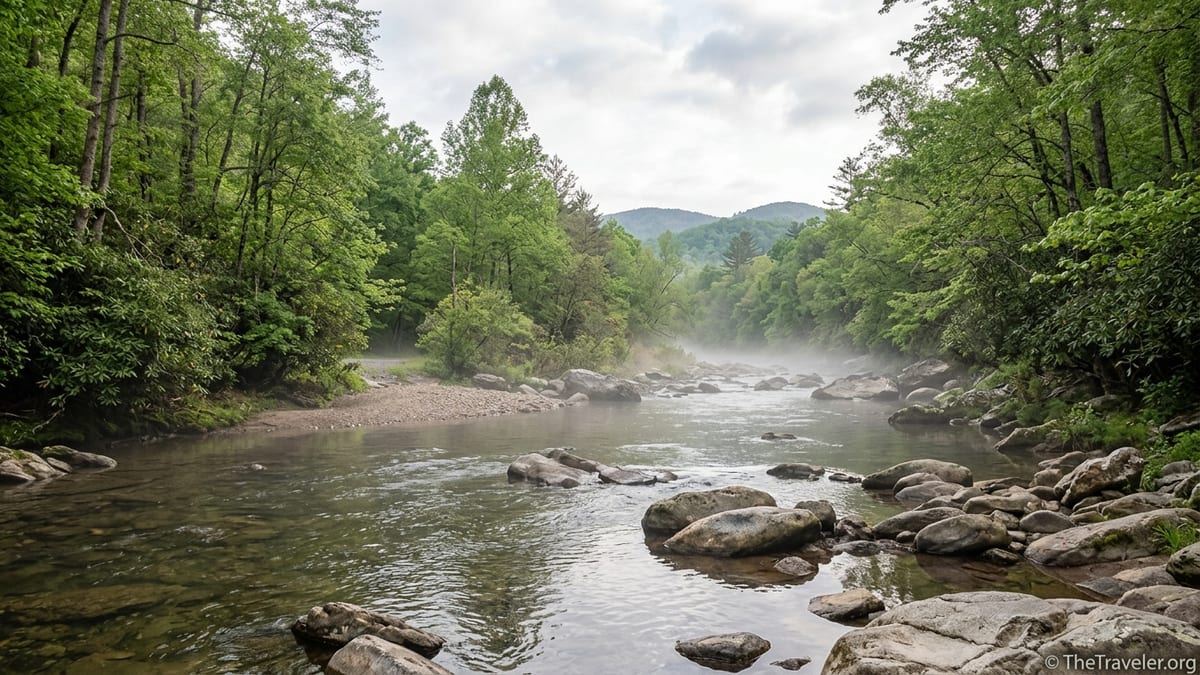
Downstream, away from the loop, the lower portion of Abrams Creek near Chilhowee Lake feels like a different world. Instead of the stop and go traffic of Cades Cove, you will find a small developed campground, a ranger station and access to long backcountry trails that connect back toward the cove. Here, the creek widens and slows, with deep pools that attract anglers and swimmers in warm weather, surrounded by steep wooded slopes and, in places, the cliffs that border US 129.
For most first time visitors, the classic “Abrams” experience linked to Cades Cove is the hike to Abrams Falls. The question of whether Abrams Creek itself is worth seeking out usually comes up for people who have a full day or more in the area, are comfortable with additional driving on curvy mountain roads, or are looking for quiet camping or fishing beyond the main sights of the park.
Put simply, Abrams Falls is a signature sightseeing hike directly off the Cades Cove loop, while Abrams Creek, especially around the separate Abrams Creek Campground outside the loop, is a lower key destination better suited to hikers, anglers and repeat visitors who want to see a less trafficked side of the Smokies.
How Far Is Abrams Creek From Cades Cove, Really?
On the map, Abrams Creek does not look far from Cades Cove. The creek actually begins in the cove itself, near the junction of Anthony Creek and Left Prong Anthony Creek, then flows west out of the valley. That geographic closeness can be misleading. By road, getting from the Cades Cove Loop to the developed Abrams Creek area near Chilhowee Lake requires leaving the loop, driving back toward Townsend, and then looping south on TN 73 and US 129, or using a combination of Foothills Parkway and local roads.
In practice, most visitors base in Townsend, Pigeon Forge or Gatlinburg. From Townsend, it is roughly 10 miles to the Cades Cove entrance along Laurel Creek Road, and then another 5 miles or so partway around the loop to reach the Abrams Falls trailhead. To then visit Abrams Creek Campground area the same day, you would need to exit Cades Cove, drive back toward Townsend and then continue west; depending on route and traffic on mountain roads like US 129, the drive can easily add an hour or more of round trip time.
For a concrete example, a couple staying in Townsend who spend the morning driving Cades Cove and hiking to Abrams Falls might already invest 4 to 6 hours, especially in peak season when wildlife jams slow traffic. Adding a side trip to Abrams Creek Campground afterward can push the total outing close to a full 10 hour day once you factor in the extra driving, photo stops and possible delays. For families with younger kids or anyone prone to motion sickness, that added drive on curvy roads is an important consideration.
On the other hand, if you are approaching the Smokies from the west along US 129, sometimes called the Tail of the Dragon further south, Abrams Creek can make a logical first or last stop before or after Cades Cove. In that scenario, a backpacker might camp at Abrams Creek, hike across the backcountry toward Cades Cove over one or two days, and then get a shuttle back. For most casual motorists, however, Abrams Creek is not a quick or effortless add-on in the way that another overlook along the Foothills Parkway might be.
When Abrams Creek Is Worth the Detour
Abrams Creek starts to make sense as a side trip from Cades Cove when you have more than one day in the area and specific interests that go beyond the standard loop drive. One clear case is anglers. Abrams Creek is known among local trout fishers for its mix of wild rainbow and brown trout in both the upper reaches near Cades Cove and the lower stretches near the campground. A visitor with a valid Tennessee fishing license and a day set aside for wading could reasonably drive the loop early, then spend a late afternoon working pools along the creek away from the crowds.
Another situation is for hikers who have already done the Abrams Falls out and back and want something more remote. Long trails such as Cooper Road, Rabbit Creek and Hannah Mountain connect the Cades Cove area to the Abrams Creek drainage, forming loops and point to point backpacking routes that pass historic sites and quieter forest. For example, a strong hiker might arrange a shuttle, start at Abrams Creek Campground, follow the trail system up toward Abrams Falls and exit at Cades Cove, using the day to experience both the secluded lower creek and the better known waterfall without retracing steps.
Campers looking for a quieter alternative to the large and often full Cades Cove Campground might also find Abrams Creek worthwhile. The area’s car campground, when open in the main season, is small compared with the hundreds of sites at Elkmont or Smokemont. That lower capacity, along with its position away from the park’s main corridors, can translate into darker night skies, less generator noise and more chances to hear owls and the sound of the creek at night. For visitors who prioritize that kind of atmosphere over being walking distance to the loop’s historic cabins, Abrams Creek often earns the extra driving time.
Finally, repeat visitors who have already photographed Cades Cove in different seasons sometimes seek out Abrams Creek simply to experience a different mood of the Smokies. The narrow valley, stretches of rhododendron along the banks, and occasional mist drifting off Chilhowee Lake on cool mornings can feel worlds away from the open fields and wide skies of the cove, even though they are part of the same watershed.
When You Can Skip Abrams Creek and Stay in Cades Cove
For many travelers, especially first timers with only a day or two in Great Smoky Mountains National Park, sticking with Cades Cove and the immediate surroundings is the better choice. The loop itself offers more than enough to fill a full day: historic homesteads like the John Oliver Cabin, churches and graveyards, side roads such as Sparks Lane and Hyatt Lane when open, and of course the Abrams Falls hike. Wildlife enthusiasts who hope to see black bears, deer, turkeys and coyotes are also more likely to spend quality time watching animals from the loop road or adjoining fields than along the narrower confines of lower Abrams Creek.
Time pressure is a major factor. On busy weekends or in peak fall foliage season, driving the loop can easily take 3 hours with stops, even without hiking. Adding the 5 mile Abrams Falls hike often brings the outing to 6 hours or more. If you are coming from Gatlinburg or Pigeon Forge, add another 1.5 to 2 hours of round trip driving just to reach and return from Cades Cove. In that context, trying to tack on Abrams Creek may mean you arrive there late in the day, have limited daylight left for exploration, and then face additional curvy miles in the dark on your return.
Another reason to skip Abrams Creek if time is tight is that some of what it offers can be experienced closer to Cades Cove. If your goal is a rushing mountain stream for photos or a picnic, the section of Abrams Creek that runs near the Cades Cove Campground and picnic area provides easy access without the extra drive. For solitude, early morning or late afternoon walks on lesser used trails off the loop, such as Rich Mountain Road area when open to hiking, can deliver quieter experiences while keeping you based in or near the cove.
In short, if this is your first or only visit to the Smokies, and you have fewer than three full days, you will likely come away more satisfied focusing on Cades Cove, nearby stream access and perhaps another major area like Clingmans Dome or Newfound Gap, rather than stretching to include Abrams Creek purely for the sake of checking it off a list.
What to Expect at Abrams Creek: Atmosphere, Activities and Practicalities
If you decide Abrams Creek aligns with your interests, it helps to know what you will find once you get there. The lower Abrams Creek area around the campground is more modest than Cades Cove: a small ranger station, a limited number of campsites, a bridge over the creek and trailheads leading into the backcountry. Do not expect a visitor center, large store or extensive exhibits. Services are basic, and you should arrive with food, water and any fishing or camping gear already purchased in nearby towns such as Maryville or Townsend.
The atmosphere is quieter and more contained than at Cades Cove. Instead of open meadows, you will hike through mixed hardwood and pine forest, with stretches where rhododendron forms green tunnels over the path. Sound travels differently here. On a midweek morning in shoulder season, it is common to hear little more than the water moving over rocks and the occasional bird call. Even in summer, visitor density is far lower than on the Cades Cove loop, so expectations should be set around seclusion rather than facilities or social energy.
Activities revolve around hiking, fishing and, for those who secure reservations when required, camping. Trails heading upstream toward Cades Cove are longer and more demanding than the family friendly Abrams Falls hike, involving greater elevation change and more remote sections where you must be self sufficient. This is an area where a detailed topographic map or a modern GPS hiking app with offline maps is strongly recommended. Cell service is limited, and weather can shift quickly in the mountains, so layers and rain gear are important even on seemingly clear days.
Because the creek is such a focal point, water safety comes into play as well. Just as at Abrams Falls, where the National Park Service strongly discourages swimming near the waterfall due to powerful currents and hidden hazards, pools along Abrams Creek can be deceptively deep or have slick rock ledges. Wading anglers typically use felt soled boots or rubber soles with wading staffs to maintain balance. Families who allow kids to play at the water’s edge do so most safely in shallow gravel bars away from faster current and only with close supervision.
Seasonal Timing, Road Conditions and Crowds
Both Cades Cove and Abrams Creek sit in the lower elevation west side of Great Smoky Mountains National Park, which means they generally have milder winters than places like Newfound Gap. Nevertheless, seasonal considerations can shape whether adding Abrams Creek to a Cades Cove itinerary is realistic. In late fall and winter, some smaller campgrounds and services in the park close for the season, while Cades Cove Campground remains one of the few open year round. Before planning a camping night at Abrams Creek in shoulder seasons, it is wise to confirm current opening and closing dates with the National Park Service, as these can shift slightly from year to year.
Road conditions are another key factor. The main approach to Cades Cove from Townsend uses Laurel Creek Road, which can occasionally see temporary closures or lane restrictions for maintenance. Separate projects can affect other nearby roads. For example, sections of Little River Road and the park’s spur routes have seen periodic closures to complete essential maintenance, and other high demand areas like Laurel Falls Trail are undergoing long term rehabilitation. While these particular closures may not block access to Cades Cove or Abrams Creek, they can change traffic patterns and travel times around the park, making same day detours more tiring than they may look on a map.
Crowd patterns differ between the two destinations. Cades Cove draws heavy visitation most weekends from late spring through late fall, especially on days with clear weather and during peak leaf color. On those days, the loop can feel congested, with bear jams bringing traffic to a standstill. Abrams Creek, in contrast, sees a fraction of that use. Even during busy periods, the campground may have sites available when Cades Cove has been fully reserved for weeks, and the trails are more likely to offer sustained stretches of solitude. That contrast is part of the appeal for visitors who dislike crowds and are willing to drive farther for quiet.
If you are balancing these factors, one practical strategy is to build a flexible plan. Schedule your main Cades Cove day early in your trip and monitor current conditions from park information sources. If you find the loop so compelling that you want a second visit at sunrise for photography or wildlife, fill your remaining time near the cove. If, on the other hand, you leave feeling ready for something wilder and quieter, reserve a day to explore Abrams Creek afterward as a complementary experience.
Matching Abrams Creek to Your Travel Style
Beyond logistics, the decision to include Abrams Creek with Cades Cove comes down to travel style. If your idea of a satisfying Smokies trip involves scenic drives, short walks to historic structures, abundant photo stops and a campsite or cabin with nearby amenities, Cades Cove, Elkmont and the nearby gateway towns will likely provide more than enough variety. In that framework, the Abrams Falls hike itself serves as the “Abrams” experience, and lower Abrams Creek can remain a destination for a future, more hiking focused trip.
However, if you identify as an outdoors enthusiast who seeks quieter trails and is comfortable piecing together longer routes, Abrams Creek aligns closely with that mindset. Backpackers frequently use the Abrams Creek area as a starting or ending point for multi day circuits that traverse the western Smokies, staying at backcountry campsites alongside the creek or on adjacent ridges. Trail runners also sometimes tackle long point to point routes involving Abrams Creek and the Cades Cove side, again highlighting how the creek serves as a gateway to more remote terrain rather than a standalone roadside attraction.
Families fall somewhere in the middle. With school aged children who can handle a moderate day hike, it could make sense to treat Cades Cove and Abrams Falls as the primary day, then, if energy remains on a longer trip, drive to Abrams Creek for a half day of stream play, picnicking and easy exploring around the campground bridge area. Parents of toddlers, by contrast, often report that the stop and go rhythm of the Cades Cove loop plus even a short walk can be plenty, and that additional hours on mountain roads feel like more work than reward.
Photographers may also have specific preferences. Those looking for classic Smokies imagery of mist over meadows, split rail fences and grazing horses will find their best subjects in and around Cades Cove. Those drawn to intimate stream compositions, mossed rocks and deep forest scenes may appreciate the opportunities along Abrams Creek. In that sense, the two destinations are complementary: one wide and open, the other narrow and enclosed.
The Takeaway
So is Abrams Creek worth visiting if you are already exploring Cades Cove? For many first time travelers with limited days in Great Smoky Mountains National Park, the honest answer is that Cades Cove and its immediate surroundings will more than fill the available time, and adding Abrams Creek may create more driving than enjoyment. In that common scenario, focus on the loop, plan a morning or afternoon on the Abrams Falls Trail, spend time by the creek near the Cades Cove picnic area, and end your day content that you have experienced the essential “Abrams” element of the cove.
Abrams Creek comes into its own for a different audience: anglers seeking quieter trout water, hikers and backpackers comfortable with longer, less trafficked routes, campers who prefer smaller and more secluded campgrounds, and repeat visitors who want to get beyond the park’s most famous viewpoints. For them, the creek is not just worth adding to a Cades Cove trip; it can become a central focus of a western Smokies itinerary.
Ultimately, both places express different sides of the same landscape. Cades Cove celebrates open fields, human history and high profile wildlife viewing, while Abrams Creek highlights the quieter, more continuous flow of water and forest that gave the cove life in the first place. Knowing your own priorities and energy level is the key to deciding whether to keep your day centered on the loop or to follow the creek farther downstream in search of silence and space.
FAQ
Q1. Is Abrams Creek the same as Abrams Falls in Cades Cove?
No. Abrams Creek is the stream that drains Cades Cove and flows west toward Chilhowee Lake, while Abrams Falls is a 25 foot waterfall along that creek reached by a 5 mile round trip hike from the Cades Cove Loop Road.
Q2. How long does it take to visit Cades Cove and hike Abrams Falls?
On a typical busy day, expect 3 hours to drive the 11 mile loop with stops, plus 3 hours for the Abrams Falls hike and breaks, for a total of about 6 hours, not counting travel time to and from the cove.
Q3. How much extra time should I plan if I want to add Abrams Creek after Cades Cove?
From the Cades Cove area, driving out and looping to the Abrams Creek Campground region can add at least an hour of round trip driving, often more when you factor in mountain curves, photo stops and seasonal traffic.
Q4. Is Abrams Creek a good place for families with young children?
It can be, but it suits families who are comfortable with extra driving and who prioritize quieter creekside play and picnicking over amenities. For most first time family visitors with young kids, Cades Cove plus the Abrams Falls hike and picnic areas closer to the loop feel more manageable.
Q5. Can I camp at Abrams Creek instead of Cades Cove?
Yes, when it is open for the season, the Abrams Creek area offers a smaller campground that appeals to visitors who prefer a quieter, less crowded setting than the larger Cades Cove Campground. Always confirm current operating dates and reservation requirements before you go.
Q6. Is Abrams Creek better for fishing than Cades Cove?
Anglers often seek out stretches of Abrams Creek, both near the cove and farther downstream, for trout fishing in a more secluded setting. Whether it is “better” depends on your skills, the season and water conditions, but it can provide attractive options if you already hold the required Tennessee fishing license and are prepared for wading.
Q7. Do I need a four wheel drive vehicle to reach Abrams Creek from Cades Cove?
No. The main approaches use paved mountain roads that are suitable for standard passenger vehicles in normal conditions. What you do need is comfort with narrow, curvy roads and the extra time they require.
Q8. Is Abrams Creek less crowded than Cades Cove?
Yes. Cades Cove is one of the busiest areas in Great Smoky Mountains National Park, while Abrams Creek, especially near its campground and backcountry trailheads, receives far fewer visitors. That relative quiet is one of its main attractions.
Q9. Can I hike from Abrams Creek to Cades Cove?
Experienced hikers and backpackers can link trails between the Abrams Creek area and Cades Cove, sometimes as part of multi day trips. These routes are longer and more remote than the Abrams Falls day hike, so they require careful planning, a backcountry permit if camping overnight, and solid navigation skills.
Q10. If I only have one day, should I choose Cades Cove or Abrams Creek?
With just one day, most visitors will get more out of focusing on Cades Cove, driving the loop, exploring historic sites and hiking to Abrams Falls. Abrams Creek is best saved for a longer stay or a return visit when you can dedicate more time to its quieter trails and creekside atmosphere.