


More news on this day
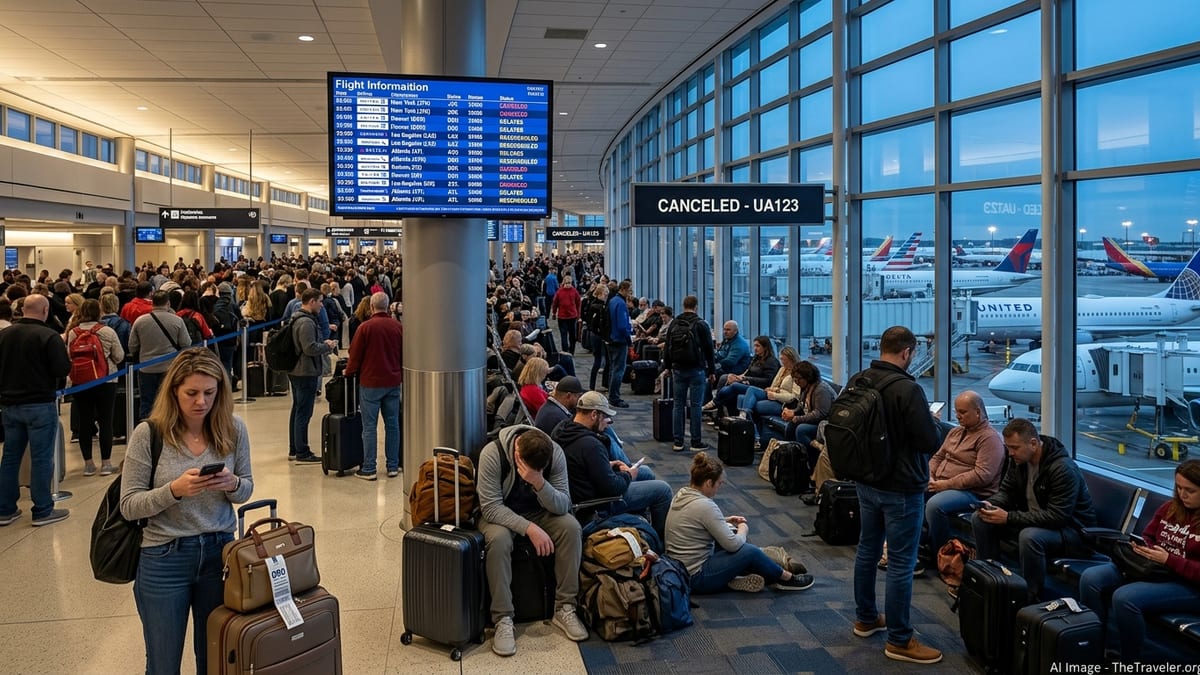
Millions of Americans heading to the skies for Thanksgiving this week are doing so in the wake of a rare nationwide Federal Aviation Administration ground stop and separate technology outages at major airlines, prompting fresh questions about how resilient the U.S. aviation system is during one of the busiest travel periods of the year and what individual travelers can do to reduce the risk of being stranded.
Get the latest news straight to your inbox!
What has gone wrong in the run-up to Thanksgiving
The current concern about Thanksgiving air travel reliability stems from a cluster of significant disruptions between November 13 and November 22, 2026. The most far-reaching was on Friday, November 13, when the FAA ordered a nationwide ground stop after a telecommunications failure destabilized a key part of its communications network. According to an FAA question-and-answer briefing, the legacy equipment became unstable when it was hit by a surge of connection attempts, leading regulators to halt most departures for several hours while the system was stabilized and checked. The agency says thousands of flights were canceled or delayed before normal operations were restored later that day.
Major airlines then faced their own, separate problems. On Monday, November 16, United Airlines experienced a widespread technology outage that affected systems used to calculate final aircraft weights and other data needed for safe departures. United temporarily paused many departing flights while crews reverted to backup procedures. The airline and federal officials have said there is no indication of a cybersecurity issue, and flights already in the air were not affected, but the pause contributed to a spike in delays nationwide as operations were gradually restored.
On Sunday, November 22, Delta Air Lines reported a problem with its automated weight-and-balance system, the software used to ensure that aircraft are loaded within safe limits. The malfunction led to more than 1,000 reported delays that day as the airline worked through manual and backup processes. Delta stated that the majority of its disruptions were linked to the automation issue, with weather accounting for additional problems, and that it was providing assistance such as hotel rooms and meal vouchers for travelers stuck overnight where needed.
These issues have come on top of routine weather and congestion challenges that accompany late November travel. Forecasts point to storms affecting both coasts around the core Thanksgiving period, which may trigger traditional weather-related delays even if technology systems remain stable. Aviation data analyzed from recent holiday seasons also shows that delays can cascade across the network: a problem at one airline or hub can quickly ripple to others because aircraft, crews and airport capacity are tightly interconnected.
How regulators and airlines are responding
In response to the November 13 nationwide ground stop, the U.S. Department of Transportation and the FAA have launched a focused review of the agency’s telecommunications and air traffic control infrastructure. Transportation officials say a cross-agency team that includes the FAA, the Department of Defense and elements of the intelligence community has been meeting regularly to examine how data moves through the FAA’s network, to identify single points of failure and to accelerate upgrades to older equipment. The FAA has described the ground stop as an extraordinary measure and emphasized that keeping the system safe takes priority over keeping flights on schedule when anomalies appear.
Although the United and Delta incidents did not involve FAA-owned systems, they have highlighted how dependent modern airline operations are on complex software. Both airlines say the specific technical faults behind their recent outages have been corrected. United has indicated that its problem centered on software that provides aircraft weight data and other performance information to pilots before departure, while Delta has described its issue as a malfunction in its automated aircraft weight-and-balance tools. Industry data compiled in recent years shows that airline-caused delays, including those from maintenance, crew and internal technology problems, account for a substantial share of all delay minutes reported to regulators, underscoring why carriers face pressure to harden their in-house systems.
Separately, the FAA continues to manage structural strains in parts of the air traffic control system, including staffing constraints at some facilities. At Chicago O’Hare, for example, the agency has previously used operational caps and schedule management tools during high-demand periods to reduce the risk of chronic congestion and to match flight volumes to available staffing and runway capacity. Temporary flow restrictions into busy hubs are one reason that flights can be held or slowed even when local weather appears clear to passengers waiting at the gate.
While these measures and reviews are aimed at reducing the likelihood and impact of future outages, officials have stopped short of promising that there will be no further disruptions this holiday season. Instead, they stress that the system is designed with layers of redundancy to ensure safety, but that redundancy can mean operations slow down or pause when something looks abnormal. For travelers planning near-term trips, that reality makes personal contingency planning especially important.
Practical steps travelers can take before leaving home
For passengers, the most effective ways to reduce the risk of serious disruption involve preparation well before arriving at the airport. Travel specialists recommend that anyone flying over the Thanksgiving period or in the weeks that follow download their airline’s mobile app, create an online account and enable push notifications. These apps generally receive schedule changes, gate updates and rebooking options several minutes before information is posted on public screens in the terminal, giving connected travelers a head start when a problem emerges.
Independent flight-tracking tools can add another layer of situational awareness. Services such as FlightAware and Flightradar24 can be used to track the aircraft scheduled to operate a given flight, showing where it is arriving from and whether that inbound segment is running late. Watching the upstream tail can help travelers spot trouble early, especially for tight connections. If an inbound aircraft is substantially delayed, it is often clear that the onward flight will depart late even before the airline formally updates the schedule.
Researching backup options is also critical in the current environment. Before leaving home, travelers can use airline websites and booking tools to identify realistic alternative flights to their destination, including options on other carriers if their plans are flexible. Some passenger advocates suggest, for high-stakes trips, purchasing a fully refundable ticket on another airline for roughly the same time as a primary, nonrefundable itinerary. If the original flight operates as planned, the traveler can cancel the backup without penalty and recover the fare. This strategy requires carefully reading the fare rules to confirm that the second ticket is truly refundable and being prepared to advance funds for two bookings until travel is completed.
Building more time into the schedule is another way to reduce risk, especially around Thanksgiving when national traffic volumes are high. Passengers with flexibility can consider traveling a day earlier than strictly necessary or choosing early-morning departures, which tend to have more recovery options later in the day if something goes wrong. Selecting nonstop routes where possible eliminates the possibility of missing a connection, which is often where short delays become missed events or overnight disruptions.
Understanding your rights and sources of financial protection
Under U.S. Department of Transportation rules, travelers whose flights are canceled or significantly changed by the airline are generally entitled to a cash refund if they choose not to travel, regardless of the reason for the disruption. Current DOT guidance treats a significant delay as arriving three hours or more late on a domestic itinerary or six hours or more late on an international trip when the passenger decides not to accept alternative transportation. Accepting a replacement flight and ultimately reaching the destination typically means the fare itself is not refundable, though separate forms of compensation may be available depending on the cause of the delay.
Additional assistance such as meal vouchers or hotel accommodation depends heavily on whether the disruption is within the airline’s control. Many U.S. airlines have published customer service commitments that spell out what they will provide when delays stem from their own operations, including certain mechanical problems and some staffing or technology failures. In those cases, travelers may be entitled to hotel rooms if they are stranded overnight away from home, as well as meal credits or ground transportation. By contrast, when delays are driven primarily by weather or by air traffic control restrictions originating from the FAA, most carriers do not promise the same level of accommodation, even though they may still choose to offer limited assistance as a goodwill gesture.
The Transportation Department hosts a public dashboard that compares what each airline pledges to do for customers during controllable delays and cancellations. Although the dashboard does not change the underlying contracts of carriage, it provides a concise summary of promised benefits, from meal vouchers at set delay thresholds to overnight hotel policies. Reviewing this information before travel can help passengers decide which airline to book and what to request if something goes wrong.
Beyond airline obligations, some travelers may have additional protection through travel insurance or certain credit cards. Many standalone travel insurance policies include coverage for trip interruption, missed connections or lengthy delays, reimbursing reasonable expenses such as meals, lodging and alternative transportation when specified conditions are met. However, coverage details, exclusions and required delay lengths vary widely, and policies must typically be purchased before a disruption becomes public knowledge. Several premium credit cards also include built-in trip delay or trip interruption coverage for tickets purchased with that card, again subject to detailed terms and documentation requirements.
Avoiding scams and preparing for an unexpected overnight stay
As disruption-related rebookings have increased, so have reports of scams targeting anxious passengers. Consumer advocates warn that fraudsters sometimes create fake customer service numbers or sponsored search results that appear above official airline contacts online. Travelers who call these numbers may be asked for payment card details or told they must pay additional “rebooking fees” to secure seats that either do not exist or could be changed for free directly with the carrier. Using only phone numbers and chat tools listed on an airline’s own website or mobile app, or those printed on the back of a frequent flyer card, is the safest way to reach legitimate support channels.
Keeping thorough records during a disruption can also make a significant difference when seeking reimbursement later. Passengers are advised to save screenshots of cancellation notices or major schedule changes, keep boarding passes, and retain itemized receipts for out-of-pocket expenses such as hotel stays, airport meals or rideshare trips to and from alternative airports. These documents can be required when filing a claim with an airline, an insurer or a credit card provider. Without contemporaneous proof, recovering costs after the fact can be difficult even when a policy appears to cover the situation on paper.
Finally, packing with the possibility of an unplanned overnight stay in mind can reduce the immediate stress of extended delays. Medications, chargers, essential travel documents and at least one change of clothes should ideally be kept in a carry-on rather than checked baggage, particularly during peak periods like Thanksgiving when retrieving checked bags from disrupted flights may take additional time. Having these essentials on hand at the airport or in an unexpected hotel can make it easier to adapt if a connection is missed or a late-night flight is canceled.
What travelers should watch in the days ahead
Industry forecasts suggest that air traffic volumes over the nine-day Thanksgiving travel window from November 23 to December 1 will reach their highest level in more than a decade, with hundreds of thousands of flights scheduled across U.S. airlines. The FAA and the Department of Transportation have signaled that they will continue close monitoring of both federal infrastructure and airline operations through the holiday period, including the follow-up work arising from the November 13 ground stop. Officials have also indicated that lessons from this month’s disruptions are feeding directly into modernization efforts for key communications and data networks.
For individual travelers, the practical implications are straightforward. Anyone with flights booked in the coming days should confirm their itineraries directly with airlines before leaving for the airport, keep contact information in their reservations up to date and arrive earlier than they might during quieter times of year. Those with complex connections or time-sensitive commitments may want to pre-identify alternative routings and review their eligibility for refunds, travel credits or insurance coverage so they can act quickly if a disruption occurs.
Once this Thanksgiving period passes, regulators and airlines are expected to provide more detailed post-incident analyses of the ground stop and the airline-specific outages, including any system changes or new safeguards adopted as a result. Travelers planning trips later in the winter or for future holiday seasons should watch for these updates, as they may influence both the relative reliability of different carriers and the broader resilience of the U.S. air traffic system during the next period of peak demand.