


More news on this day
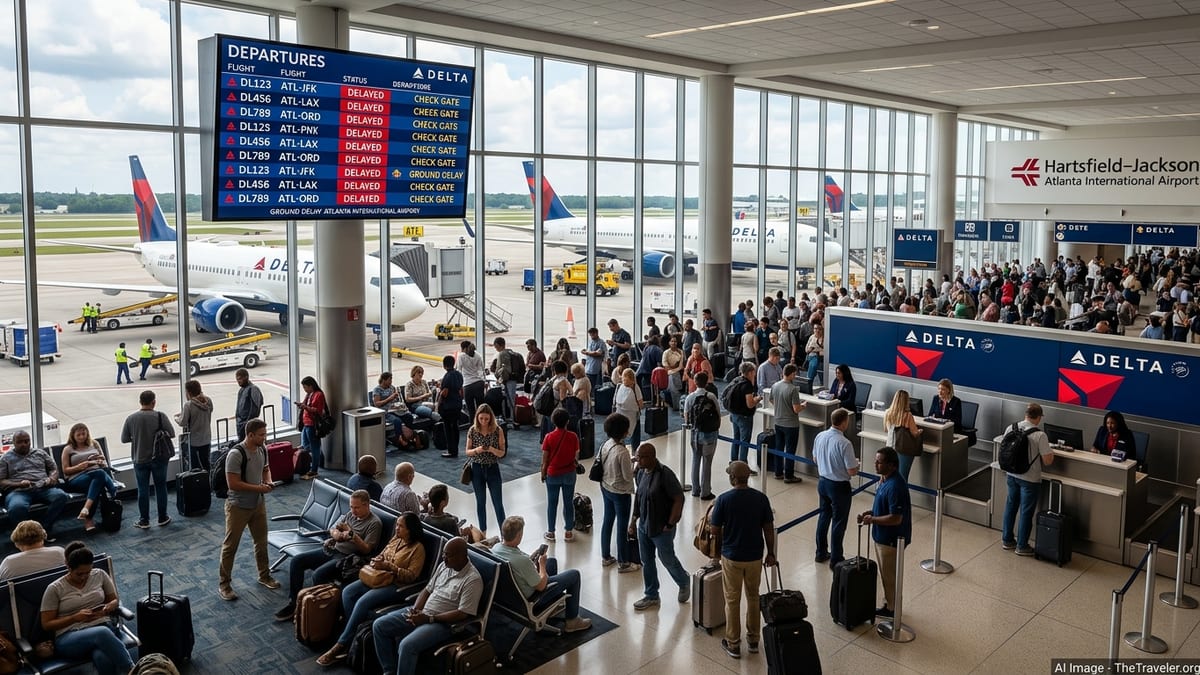
Delta Air Lines says it has restored an automated system used to calculate aircraft weight and balance after a technical failure on Sunday, November 22, 2026, triggered extensive delays at its Atlanta hub and disrupted Thanksgiving-week travel across the United States.
Get the latest news straight to your inbox!
What happened to Delta’s system in Atlanta
According to statements from Delta and the Federal Aviation Administration (FAA), the problem began on the morning of Sunday, November 22, when the airline’s automated tool for calculating departing aircraft weight and balance stopped functioning reliably. The software, which helps ensure each flight is within strict weight and center-of-gravity limits before takeoff, supports Delta operations across its domestic network but is especially critical at Hartsfield–Jackson Atlanta International Airport, the carrier’s main hub.
With the automation offline, Delta temporarily halted some departures while it investigated the issue and put alternative procedures in place. The FAA first issued a ground stop for certain Delta flights bound for Atlanta, meaning affected aircraft were held at their departure airports before takeoff. As the airline began dispatching flights again using workarounds, that ground stop was converted to a ground delay program, which allows flights to operate but assigns later departure times to manage congestion at the hub.
Delta has not detailed the precise technical cause of the outage but consistently linked the disruption to its weight-and-balance automation, rather than to air traffic control or airport infrastructure. The airline emphasized that no safety limits were bypassed and that flights only departed once required performance and balance checks were complete, whether calculated automatically or manually.
Scope of the disruption for travelers
Data from flight-tracking service FlightAware and multiple airport and media reports show that the disruption was significant, particularly at Atlanta. On Sunday, November 22, more than 1,600 Delta flights were reported delayed systemwide, with roughly half of all Delta-operated services that day arriving or departing more than 15 minutes behind schedule. At Hartsfield–Jackson specifically, around 58 percent of all flights departing Atlanta and approximately half of inbound flights experienced delays, affecting both Delta and other airlines that rely on shared facilities.
Delta has said that about 70 percent of the delays and cancellations recorded for its operation on Sunday were directly tied to the automation issue, with the remaining disruptions attributed mainly to weather. The system outage coincided with periods of low cloud and rain across parts of the eastern United States, which required additional spacing between flights at some airports and slowed the overall flow of traffic into busy hubs such as New York and Atlanta.
The effect for passengers varied sharply depending on route and timing. Some flights experienced relatively minor gate holds of 20 to 40 minutes while dispatchers completed manual calculations and performance checks. Others saw multi-hour delays as aircraft, flight crews and airport gates slipped out of their planned sequence, creating knock-on effects late into Sunday evening and into the early hours of Monday. A smaller number of flights were ultimately canceled when delays grew too long to operate legally within crew duty limits or when aircraft could not be repositioned in time.
How Delta restored operations and handled the backlog
By Sunday afternoon, Delta said its automated weight-and-balance system had been restored and that new departures were again using the normal digital process. The airline described its operation as stabilizing on Sunday night and reported that by Monday, November 23, flights were operating on a normal schedule even as crews continued to work passengers through residual delays and rebookings.
During the outage itself, Delta teams relied on established manual procedures for weight, balance and performance calculations. These processes, routinely used during system tests and at smaller stations, involve cross-checking passenger counts, baggage and cargo weights and fuel loads against aircraft performance tables to ensure takeoff and landing limits are met. While safe and compliant, this manual approach is slower than using specialized software, which is why delays accumulated as Sunday’s busy holiday schedule progressed.
To manage the knock-on effects into Monday, Delta added staff at key customer service points in Atlanta and other large hubs to help with rebookings, standby lists and disrupted itineraries. The airline also made use of larger aircraft on selected routes where possible to absorb passengers from canceled services, and it rerouted some travelers through other hubs in an effort to reduce pressure on Atlanta during the recovery period. Delta has said it offered hotel, meal or ground-transportation vouchers to eligible customers whose trips were significantly delayed or extended overnight because of the disruption.
Regulatory rights and practical options for affected passengers
The weekend weight-and-balance outage came less than a week after a separate nationwide air traffic ground stop related to an equipment issue in the U.S. air traffic control system, as well as a more limited IT disruption at United Airlines. Although the causes of these events were unrelated, their close timing has prompted renewed attention to how passengers are protected when technical problems lead to large numbers of delays and cancellations.
In the United States, the Department of Transportation (DOT) requires airlines to provide a cash refund, not just a credit or voucher, when a flight is canceled and the passenger chooses not to travel. That obligation applies regardless of whether the cancellation is caused by weather, a technical issue within the airline, or broader system problems, as long as the airline canceled the flight and the customer declines any rebooking option offered. Delta has acknowledged this framework in past disruptions and indicated in its customer communications that passengers whose flights were canceled because of Sunday’s system failure may request refunds if they do not accept alternative travel arrangements.
There is less regulatory clarity for significant delays that fall short of cancellation. The DOT has historically assessed compensation in these situations case by case, but airlines have increasingly published their own customer service commitments outlining what they will provide when delays are within the carrier’s control. For this event, Delta has said that the automation problem was internal to its own systems. In practice, that means that while passengers are not automatically entitled to specific payouts beyond refunds for canceled flights, they can ask Delta to review their case for vouchers, bonus miles or reimbursement of out-of-pocket expenses where the delay caused missed connections, extra hotel nights or other documented costs.
What travelers should check for upcoming and future trips
As of Tuesday, November 24, Delta and the FAA report that the airline’s automation for weight and balance calculations is functioning normally and that no special ground stops or delay programs remain in effect for Delta flights in Atlanta beyond routine traffic management. Regular holiday-season congestion and weather remain the main sources of risk for further disruption, particularly around peak travel days at Thanksgiving.
Travelers flying with Delta over the coming days should still plan for heavier-than-usual crowds at Atlanta and other major hubs, given that some aircraft and crews may be operating slightly off their usual rotations after Sunday’s disruption. Passengers connecting through Atlanta might see isolated schedule changes as Delta fine-tunes its operation, especially on routes with multiple daily frequencies where the airline has flexibility to reshuffle aircraft.
Before heading to the airport, passengers are advised to recheck their flight status using Delta’s website or mobile app and to monitor any text or email alerts from the airline, particularly if they were originally scheduled to travel on November 22 or 23. For those whose trips were directly affected by the system issue, it can be helpful to keep boarding passes, receipts for hotels, meals and alternative transport and any written communications from Delta, in case they choose to file a request for reimbursement or additional goodwill compensation. Looking further ahead, this event is likely to prompt both Delta and regulators to review how critical operational software is tested and backed up, but those assessments will take place in the background while holiday-season flying continues on normal schedules.