


Galata Tower has watched over Istanbul for nearly seven centuries, from Genoese merchants and Ottoman sultans to today’s café-hopping travelers. For first-time visitors, it is both a postcard landmark and a very real, lived-in neighborhood landmark, surrounded by steep cobbled streets, busy tram lines and some of the city’s most atmospheric views. This guide walks you through exactly how to visit: what Galata Tower is, how to get there, current opening hours and ticket information, plus where to walk, eat and explore nearby so your first day in Istanbul feels confident rather than overwhelming.
Get the latest updates straight to your inbox!
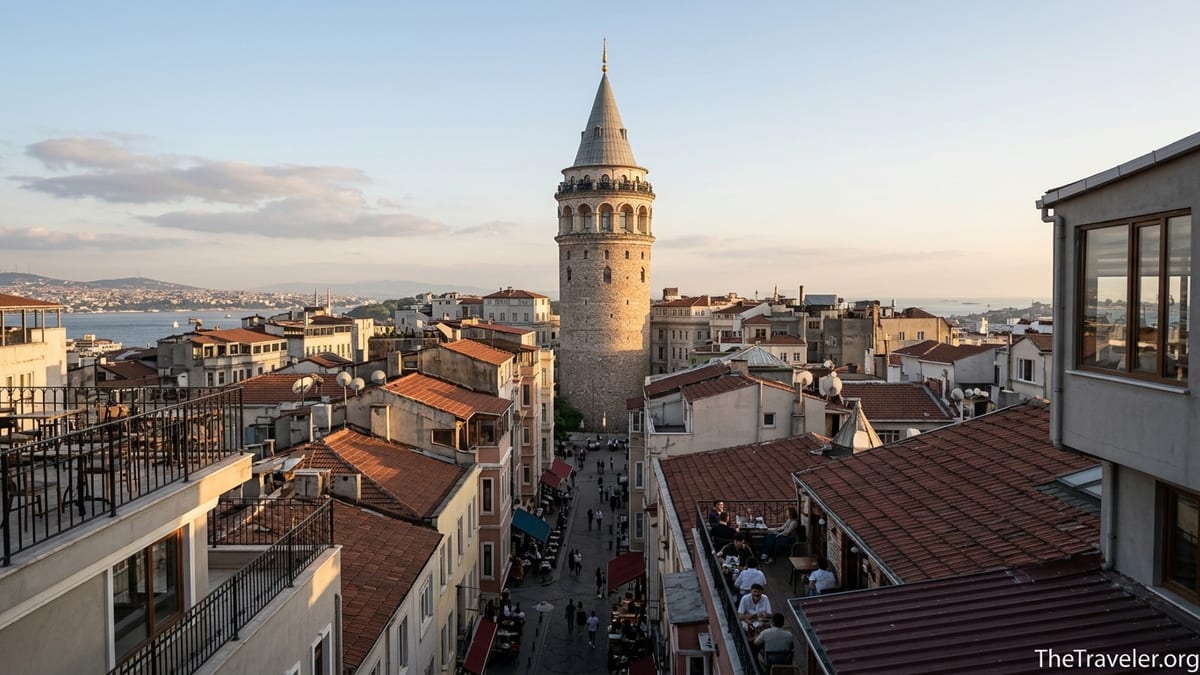
What Galata Tower Is and Why It Matters
Galata Tower, officially the Galata Tower Museum, is a medieval stone tower rising over the Galata quarter of Beyoğlu on the European side of Istanbul. Originally built in the 14th century by the Genoese colony that controlled this side of the Golden Horn, it was part of their defensive walls and a lookout over the harbor. Today it is one of Istanbul’s most recognizable silhouettes and a protected heritage site run by Turkey’s Ministry of Culture and Tourism.
Inside, the tower has been converted into a compact museum. Exhibits move through different eras of the city, from Byzantine Constantinople to the Ottoman centuries and the modern republic. You will see models, historical maps and multimedia displays that help first-time visitors place the tower within the broader story of Istanbul. Even if your main goal is the view from the top, plan at least some time to walk through the exhibition floors so that your photos have context.
The top terrace is the main draw. A narrow outdoor balcony circles the tower and gives a 360-degree panorama: the domes and minarets of Sultanahmet across the water, the sprawl of the Golden Horn, the Bosphorus bridges in the distance and the crowded roofs of Beyoğlu below. When the weather is clear, it is one of the best introductions a newcomer can have to the layout of Istanbul, making it easier to understand where neighborhoods sit in relation to each other.
Because the Galata Tower Museum is managed as a cultural site rather than a simple viewpoint, access is controlled and capacity-limited. Expect a more structured visit than a casual rooftop bar: ticket checks, security screening and timed elevator access up the shaft. For many first-time visitors this is a positive thing, keeping numbers in check and the top terrace from becoming dangerously overcrowded.
Location, Getting There and Walking Routes
Galata Tower stands in the Galata quarter of the Beyoğlu district, on a hill just north of the Golden Horn. The official address is on Galata Kulesi Sokak in Bereketzade neighborhood, but for practical purposes you only need to remember that it is a short uphill walk from Karaköy tram and ferry stops and a downhill stroll from the busy İstiklal Caddesi pedestrian avenue.
From the historic core in Sultanahmet, a typical first-time route is to take the T1 tram toward Kabataş and get off at Karaköy. Both locals and travelers usually tap an Istanbulkart, the city’s reusable public transport card, on the tram turnstile. From Karaköy square you can walk up one of several steep streets toward the tower, passing cafés, small hardware shops and mural-covered walls. The climb only takes around 10 to 15 minutes, but the cobblestones can be slick in winter or after rain, so wear shoes with grip.
If you are staying near Taksim Square, the easiest route is to walk down İstiklal Caddesi, the city’s most famous pedestrian shopping street. After passing brands like Mango, Vakko and the historic Çiçek Pasajı arcade, you keep heading downhill until the crowds thin slightly and the side streets open up toward the right. Following signs for Galata Kulesi will lead you through narrower lanes of independent boutiques, antique shops and coffee roasters, before the tower suddenly appears in front of you in its small plaza.
For a more relaxed arrival, many visitors like to combine Galata Tower with a ferry ride. Ferries from Kadıköy or Üsküdar on the Asian side arrive at Karaköy or Eminönü. From Kadıköy to Karaköy the ride takes about 20 minutes and costs roughly the price of a standard public transport fare with Istanbulkart, giving you skyline views of the tower and old city before you land and walk uphill. This is a good first-morning ritual in Istanbul: start with the water, then climb up to Galata Tower to see the city from above.
Tickets, Opening Hours and Practical Logistics
As of mid 2026, Galata Tower operates as a museum with ticketed entry. Prices for foreign visitors increase periodically due to inflation, so you should expect the adult ticket to cost several hundred Turkish lira. Exact rates are published on the official Turkish Museums portal and displayed at the entrance. Turkish citizens usually pay a lower price, and holders of the Museum Pass Turkey or similar products often enjoy included or discounted entry, though conditions can change year to year.
Opening hours can also be adjusted seasonally. In recent years, standard visiting times have typically started in the morning and run into the evening, with last entry roughly an hour before closing time. During peak summer months and public holidays, hours may be extended or, occasionally, restricted for maintenance or restoration work. For example, in some past seasons last entry has fallen around early evening in winter while staying later in summer. When you are planning a first visit, it is safest to check the official museum listing a day or two before you go and avoid cutting it too close to closing time.
Tickets can usually be purchased on-site at the booth beneath the tower, with card payment accepted. However, on busy days the on-site queue may mean a wait before you even reach security. There are also official online sales channels tied to the museum administration, along with numerous third-party resellers that bundle skip-the-line access or guided tours. If a tour company is offering entry at significantly above the official listed price, you are likely paying for guidance, transfers or time-slot convenience more than the ticket itself. For most independent travelers who are comfortable reading basic signage, buying directly on the day remains straightforward.
Expect a short security check similar to other major attractions in Turkey, with bags scanned or visually inspected. Tripods are often restricted because of space constraints on the terrace, and commercial-looking camera setups may attract additional questions. Standard smartphones and small cameras are fine. If in doubt, travel light: a compact daypack, water bottle and weather-appropriate clothing are enough for a comfortable visit.
Inside the Tower and Making the Most of the Views
Once your ticket is scanned, you will enter the base level of the tower and take an elevator most of the way up, followed by a flight or two of stairs to reach the viewing terrace. The interior floors include exhibition spaces that trace the history of Galata and Istanbul. Editions of historic city panoramas, early maps and models give context to the skyline you are about to see, and short text panels in Turkish and English outline how the tower served as a watchtower, fire lookout and symbol of the district over the centuries.
The observation terrace is a narrow ring around the crown of the tower. It is fully exposed to the elements, which is part of the appeal. To one side you see the domes of the Süleymaniye Mosque and the ribbon of the Golden Horn. To another you look straight toward the Blue Mosque and Hagia Sophia across the water, with ferries crossing like white streaks. Looking north, you see the dense grid of Beyoğlu’s streets, the high-rises of Şişli and beyond. On a clear day, a first-time visitor can mentally map the entire central city in a single slow turn.
Crowds are managed by letting people circulate continuously rather than stand in one spot for long photo shoots. At busy times, staff may encourage visitors to keep moving to prevent gridlock. If you want a calmer experience, plan to arrive soon after opening or in the last hour before closing. Early morning light can be soft and hazy, while late afternoon gives warm golden tones and long shadows across the mosques. Midday offers clear views but harsher light for photography.
You do not need professional gear to capture good images from Galata Tower. A modern smartphone with a wide and standard lens mode is enough, though bringing a small cloth to wipe sea spray or pollution from your lens can make a visible difference. For those who carry a camera, something like a 24 to 70 millimeter equivalent lens works well, allowing you to shoot both wide panoramas and tighter frames of landmarks like the Galata Bridge or Topkapı Palace. Remember that the terrace can feel cramped, so bulky backpacks and large zoom lenses are usually more trouble than they are worth.
Streets, Cafés and Restaurants Around Galata
Part of Galata Tower’s appeal is what surrounds it. The small plaza at its base is ringed with cafés, dessert shops and souvenir stands. Prices here can be higher than a few streets away, which is normal in any tourist-heavy square. If you want to soak up the view of the tower itself rather than climb it, sitting at an outdoor table with a Turkish tea or a glass of freshly squeezed pomegranate juice is a pleasant option, but do not feel obliged to eat every meal right on the square.
Step a little further into the neighborhood and you find a more local atmosphere. Streets like Büyük Hendek Caddesi and Galip Dede Caddesi are dotted with small eateries serving simit (sesame bread rings), gözleme (stuffed flatbreads), döner wraps and meze plates. Along Galip Dede Caddesi in particular, which runs down from İstiklal Caddesi to the tower, you pass instrument shops selling ouds and saz lutes, vintage record stores and family-run baklava bakeries. Many travelers enjoy grabbing a quick lahmacun or pide from a simple shop for well under what they might pay in a sit-down restaurant on the main square.
Karaköy, at the foot of the hill below Galata, has become one of Istanbul’s trendiest dining areas. After visiting the tower, walking down to Karaköy brings you to streets filled with specialty coffee bars, brunch cafés and seafood restaurants along the waterfront. It is common for visitors to pair a late afternoon tower visit with dinner in Karaköy, perhaps starting with Turkish coffee and a slice of San Sebastian cheesecake at a modern café, then moving to a meyhane-style restaurant for grilled fish, cold meze and raki. You can then stroll back along the tram line or catch a ferry as the evening call to prayer rolls over the water.
If your budget is tighter, you will still eat well. Many small lokantas, or home-style canteens, serve plates of beans, rice, eggplant stews and meat dishes priced for local office workers rather than only tourists. Look for places where the menu is in Turkish and dishes are displayed behind glass, and do not be shy about pointing to what looks good. Around Galata you will also find mid-range rooftop terraces offering views back toward the tower and bridge. These can be a good compromise if you want city views without queueing to enter the tower itself.
Dealing With Crowds, Scams and First-Time Visitor Tips
Galata Tower is a headline attraction, so crowds are normal. Tour buses stop nearby, cruise ship passengers cross over from Karaköy and independent travelers walk down from İstiklal. The busiest times are typically late morning to late afternoon in peak season, especially on weekends and public holidays. If you want to avoid congestion on the terrace, aim for a weekday morning soon after opening, or a shoulder season visit in spring or autumn when overall numbers are lower.
Ticket touts and aggressive sales tactics are much less of an issue than they are in some markets, but you may still encounter people outside the central square offering “special tickets,” unofficial tours or taxi rides. A simple rule is to buy your Galata Tower ticket only from the official booth or the recognized museum portal and to ignore anyone pressuring you for immediate payment in cash. Yellow city taxis line up at the bottom of the hill and around Karaköy, but if you use them, check that the meter is running from the start of the ride.
For your first days in Istanbul, the steepness of Galata’s streets can come as a surprise. Cobblestones, occasional broken paving stones and rainwater trickling down slopes make flimsy sandals a bad idea. Closed shoes with decent soles will make your uphill walks far more comfortable, especially if you are combining Galata Tower with longer walks along İstiklal Caddesi or down to the Galata Bridge. In hot summer months, carry water and take breaks in shaded side streets or small mosques’ courtyards where visitors are welcome.
Using public transport around Galata is fairly straightforward once you have an Istanbulkart. Machines throughout central districts sell and top up these contactless cards, usually accepting cash and sometimes bank cards. You tap your card on the reader when entering the tram, metro, bus or ferry. For first-time visitors, the combination of the T1 tram, cross-Bosphorus ferries and short walks to Galata Tower covers most needs, with no requirement to understand the entire metro grid on day one. If you do get lost, most younger Istanbulites speak at least some English and are used to pointing visitors in the right direction.
Combining Galata Tower With a First-Day Istanbul Itinerary
Many travelers use Galata Tower as an anchor point for their first or second day in Istanbul because it naturally connects multiple classic experiences. One simple loop starts in Sultanahmet, where you visit Hagia Sophia and the Blue Mosque in the morning. Around midday you walk down to the Eminönü waterfront, grab a balik ekmek (grilled fish sandwich) from a vendor or a nearby café, then cross the Galata Bridge on foot, watching locals fish off the railings. From there you climb up through Karaköy to Galata Tower in the afternoon and finish with a sunset drink on a Beyoğlu terrace.
Another beginner-friendly route is to start at Taksim Square, stroll down İstiklal Caddesi past the nostalgic red tram and side passages, then veer off into the side streets around Şişhane and Galata. You can dip into independent art galleries, stop at a third-wave coffee shop and browse small boutiques, then time your Galata Tower visit for late afternoon when the light is softer. Afterward, you continue down to Karaköy for dinner or catch a ferry back across to Kadıköy to experience the Asian-side nightlife and food markets.
If you have limited time on a layover, Galata Tower can still fit into a compact schedule. For example, a traveler with an eight-hour daytime stop at Istanbul Airport might take the airport metro into the city, transfer to reach Şişhane or Taksim, walk down to Galata for the tower and nearby streets, then ride the tram or metro back in time for their onward flight. In this case, checking live transit times and leaving a generous buffer for airport security is essential, but it shows how central Galata is to the city’s transport network.
First-time visitors often underestimate how much simple walking they will do in Istanbul, especially in hilly districts like Galata. Even if you only officially plan to “go up the tower and have lunch,” the distance from your hotel to the tram, from the tram to the tower, and then exploring the streets afterward quickly adds up. Building in gentle pacing, café breaks and an early night on your first day will help you enjoy both Galata Tower and the rest of the city more deeply.
FAQ
Q1. Is Galata Tower worth visiting for a first-time traveler to Istanbul?
Yes, Galata Tower is a strong choice for a first visit because it combines a panoramic orientation of the city with a compact museum and lively surrounding streets, helping you understand Istanbul’s layout and atmosphere within a single stop.
Q2. How much time should I plan for a visit to Galata Tower?
Most visitors spend about one to one and a half hours including entry, the museum floors and time on the terrace, but if you also linger in the surrounding streets, sit for coffee or shop nearby, your total time in the area can easily stretch to half a day.
Q3. What are the usual opening hours for Galata Tower?
Typical visiting hours start in the morning and run into the evening, with last entry around an hour before closing, but exact times change with the season, so it is best to check current hours shortly before your visit and avoid arriving right at closing time.
Q4. How much does a Galata Tower ticket cost?
Ticket prices for foreign visitors are set in Turkish lira and adjusted regularly, so you should expect to pay several hundred lira for an adult ticket, with lower rates for citizens and some passes, and check the latest official price just before your trip rather than relying on outdated figures.
Q5. Can I buy Galata Tower tickets online in advance?
Yes, the museum is usually included on official online ticket platforms, and some tour companies sell time-slotted or skip-the-line packages, but for many independent travelers arriving outside peak hours, buying a ticket at the on-site booth on the day remains perfectly manageable.
Q6. What is the easiest way to reach Galata Tower using public transport?
For most first-time visitors, the simplest route is to take the T1 tram to Karaköy or the metro to Şişhane, then walk uphill or downhill respectively to the tower, with an Istanbulkart used to tap into trams, metros and ferries that connect these points.
Q7. Is the Galata Tower terrace suitable for people with mobility issues or vertigo?
The elevator removes the need for long climbs, but there are still some stairs and the terrace is narrow and exposed, which may feel uncomfortable for those with vertigo or mobility challenges, so it is wise to assess your own limits and consider enjoying views from nearby cafés or lower viewpoints instead.
Q8. Are there good restaurants and cafés near Galata Tower?
Yes, the immediate square has tourist-friendly cafés, while the surrounding Galata streets and nearby Karaköy offer everything from budget lokantas and simit bakeries to mid-range rooftop terraces and modern coffee shops, making it easy to find a meal or drink that fits your style and budget.
Q9. When is the best time of day to visit to avoid crowds?
The quietest times are usually early on weekday mornings or in the final hour before closing, while late morning to late afternoon on weekends and peak summer days tend to be busiest, so timing your visit outside these peak windows can make the experience more relaxed.
Q10. Is Galata Tower safe for solo travelers and families?
The area around Galata Tower is generally busy and feels safe for solo travelers and families, especially during the day, though as in any major city you should keep normal awareness of your belongings, avoid unlicensed ticket sellers and be cautious on steep or slippery streets when walking with children or strollers.