


More news on this day
Glacier Bay National Park is emerging as the focal point of Alaska’s 2026 cruise season, as luxury lines ramp up premium itineraries and global travelers lock in scarce glacier-viewing space months in advance.
Get the latest news straight to your inbox!
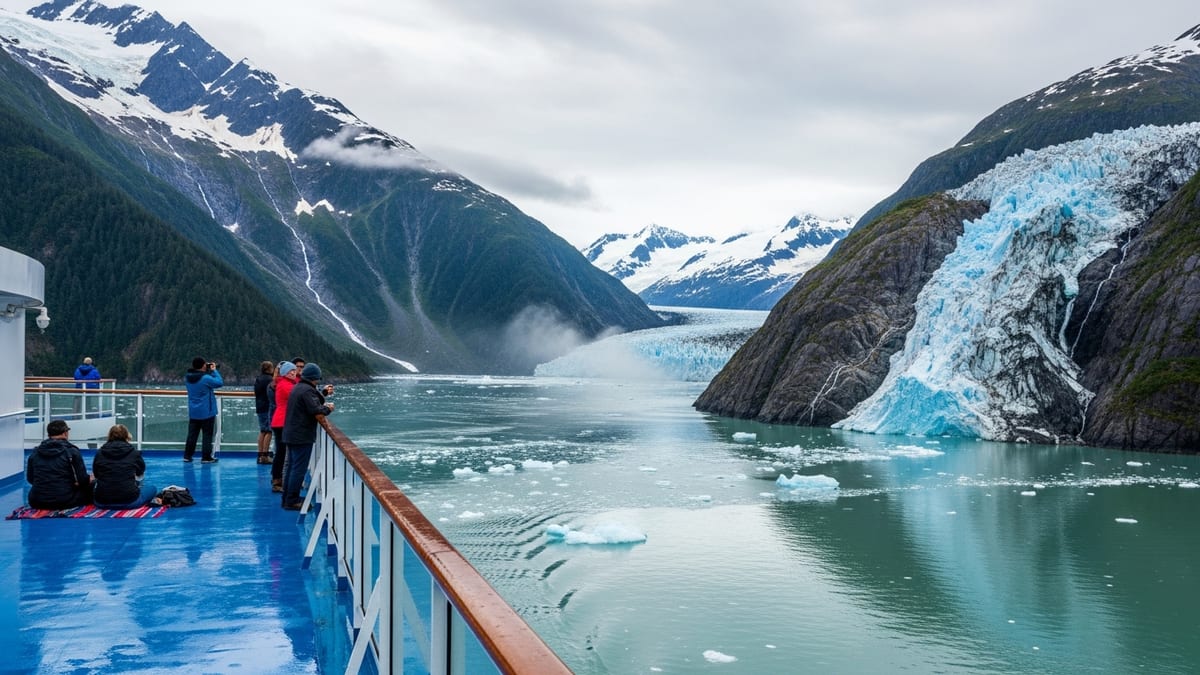
Glacier Bay’s Limited Access Fuels High-End Demand
Glacier Bay has long been one of Alaska’s most tightly controlled cruise destinations, and that scarcity is now a key driver of the 2026 luxury boom. Federal regulations cap large cruise ship entries into the national park at two per day in summer, with a seasonal limit that has remained largely unchanged for years. Public environmental monitoring summaries note that these quotas are intended to protect wildlife, air quality and visitor experience while still allowing cruise-based access to some of the state’s most dramatic tidewater glaciers.
Business opportunity documents released by the National Park Service show just how dependent Glacier Bay has become on cruise visitation, indicating that roughly 95 percent of recent visitor counts arrive on large ships. That dynamic has made each cruise line’s allocation of Glacier Bay calls a premium commodity, particularly for itineraries marketed to travelers willing to pay more for balcony cabins and small-ship experiences with unobstructed glacier views.
As pandemic-era disruptions recede in the historical data, recent park visitation reports indicate a sharp recovery in cruise traffic to Glacier Bay after the 2020 collapse. Cruise-focused travel advisors and consumer coverage now routinely highlight Glacier Bay as a critical differentiator among Alaska sailings, pushing demand toward voyages that can guarantee a day of slow scenic cruising inside the park.
Because entry slots are fixed, the surge in global appetite for Alaska has not translated into more ships inside Glacier Bay itself. Instead, the competition for existing permits has encouraged cruise brands to up-gauge amenities, add more expedition-style options and push premium pricing on departures that feature the national park on their route maps.
Luxury Lines Stack 2026 Itineraries Around Glacier Bay
Several high-end cruise operators have already positioned Glacier Bay as the centerpiece of their 2026 Alaska programs. Seabourn, which targets the upper end of the small-ship market, publicly highlights that it will offer more Glacier Bay sailings than any other luxury brand in 2026, pairing park calls with extended Inside Passage routes and expedition-style outings guided by onboard experts. Marketing materials emphasize that many itineraries include Zodiac and kayak excursions in other glacial fjords, designed to complement the marquee day in Glacier Bay rather than replace it.
Premium mass-market lines are also leaning heavily on Glacier Bay to distinguish their 2026 schedules. Princess Cruises promotes combinations that include scenic cruising in both Glacier Bay National Park and either Hubbard Glacier or College Fjord on selected voyages, underscoring the value of seeing more than one major ice field in a single trip. For repeat Alaska guests, these overlapping glacier encounters are becoming an important selling point as lines compete for travelers returning to the region for a second or third time.
Holland America Line, historically one of the strongest players in Glacier Bay, continues to market multiple voyages featuring the park alongside Inside Passage scenery and coastal towns. Online planning tools and consumer reports show 2025 and 2026 departures selling briskly, particularly on itineraries that clearly label “Glacier Bay National Park” as a full scenic cruising day instead of a distant sail-by.
At the same time, newer entrants and yacht-style operators are adding ultra-luxury capacity to Alaska for 2026, with some itineraries pairing Glacier Bay with smaller ports or extended land extensions into Denali and the Interior. Industry coverage describes this as part of a broader trend toward longer, more immersive Alaska journeys at the high end of the market.
Seattle and Vancouver Homeports Power a Record Season
The West Coast homeports that feed Glacier Bay cruises are also expanding sharply in 2026, adding to the sense of a breakout year for Alaska. The Port of Seattle’s preliminary 2026 schedule points to more than 300 cruise calls across the season, including weekly round-trip Alaska sailings by major brands that frequently feature Glacier Bay on selected departures. Port overviews describe Seattle as the largest cruise homeport on the U.S. West Coast, with most itineraries running seven-day loops to Southeast Alaska.
Public statements from Seattle’s port authorities describe how shore power has been rolled out to all cruise berths in advance of the 2025 season, setting the stage for environmental performance improvements as more and larger ships berth in 2026. Cruise schedules and industry reports indicate that 2026 will also mark the first full Alaska season homeporting in Seattle for MSC Cruises and Virgin Voyages, bringing additional global brands into the market and broadening the range of premium offerings available to long-haul travelers.
Neighboring Vancouver continues to serve as a key gateway for one-way and Inside Passage sailings that either include Glacier Bay directly or connect to it through broader itineraries extending north to Whittier and south to Seattle. Cruise line brochures and online booking engines highlight Vancouver departures as a strategic choice for travelers prioritizing slower, more sheltered scenic days en route to or from the major glacier destinations.
With both Seattle and Vancouver drawing increasing numbers of international visitors who choose to add city stays before or after their cruises, industry observers point to the combined region as a magnet for long-haul markets in Europe, Asia and Latin America that are helping to fuel the 2026 boom.
Global Travelers Chase Balcony Views and Experiential Add-Ons
Consumer-facing travel content focused on Alaska shows strong interest from international travelers in sailings that guarantee a full day in Glacier Bay, often paired with a balcony cabin and bundled excursions. Online guides and video explainers released over the past year consistently advise travelers not to delay booking if Glacier Bay is a priority, noting that early 2026 sailings and premium cabins with direct glacier views are already limited on popular routes.
Discussion threads on cruise forums and social platforms echo this sense of urgency. Prospective guests planning for 2026 frequently compare itineraries that alternate between Glacier Bay and Hubbard Glacier, weighing trade-offs between ice conditions, wildlife viewing, and crowd levels at different points in the season. Contributors often single out Glacier Bay permits as a scarce asset, recommending Princess, Holland America and selected Norwegian Cruise Line departures for travelers intent on visiting the national park specifically.
Alongside balcony cabins, experiential add-ons are proving particularly popular among long-haul visitors who may view an Alaska cruise as a once-in-a-lifetime trip. Adventure-focused shore programs, flightseeing over additional ice fields, small-boat wildlife safaris and post-cruise rail tours to Denali are commonly marketed as ways to expand on the glacier day in Glacier Bay itself. For luxury and ultra-luxury guests, this often includes private or small-group versions of the same experiences at premium price points.
As a result, the per-guest economic impact of Glacier Bay sailings is rising, with cruise lines increasingly packaging multiple high-value experiences around a fixed number of park entry slots. Travel analysts describe this as a logical response to constrained supply: since the number of Glacier Bay cruise days cannot easily increase, the industry is focused on adding value to each one.
Environmental Safeguards Shape the Glacier Bay Experience
The mechanics of visiting Glacier Bay by cruise ship are defined by environmental safeguards that directly influence the guest experience. Regulatory documents specify maximum daily and seasonal quotas for large vessels in the park, and National Park Service guidance indicates that authorizations for commercial operators are allocated through competitive, transparent processes. Cruise ships typically enter Glacier Bay from Icy Strait in the morning, spend several hours transiting up the fjord to marquee glaciers, and exit in the afternoon, all while adhering to speed limits, route guidance and emissions rules.
Recent cruise environmental monitoring reports for Glacier Bay emphasize measures designed to minimize impacts from engine emissions, underwater noise, and waste discharge. These include requirements for advanced wastewater treatment systems, strict air emissions standards and route planning intended to reduce disturbance to marine mammals and seabirds. Lines that promote Glacier Bay-intensive itineraries in 2026 often foreground these compliance efforts in their sustainability messaging.
For travelers, these safeguards manifest in practical ways. Ships frequently lower speeds in key wildlife areas, adjust timing to reduce congestion in narrow channels and coordinate closely with park rangers and pilots who join vessels for the day. While the policies restrict how many ships can enter the park, they also help preserve the atmosphere that draws global visitors in the first place: long, quiet periods of glacier viewing punctuated by calving ice, bird colonies and occasional whale sightings.
With demand rising and access carefully managed, Glacier Bay’s role at the center of Alaska’s 2026 cruise surge appears secure. Limited permits, expanding luxury capacity and a growing international audience are converging to turn a single day of scenic cruising into one of the most coveted experiences in the global cruise calendar.
Seabourn 2026 Alaska and Glacier Bay sailings overview
Port of Seattle cruise season and shore power information
Glacier Bay National Park boating and commercial vessel guidance