


More news on this day
United Airlines flight UA1505, operating from Denver to Newark, diverted to Chicago O’Hare after encountering operational disruptions en route, underscoring how weather and congestion continue to complicate traffic across major U.S. hubs at the height of the summer travel season.
Get the latest news straight to your inbox!
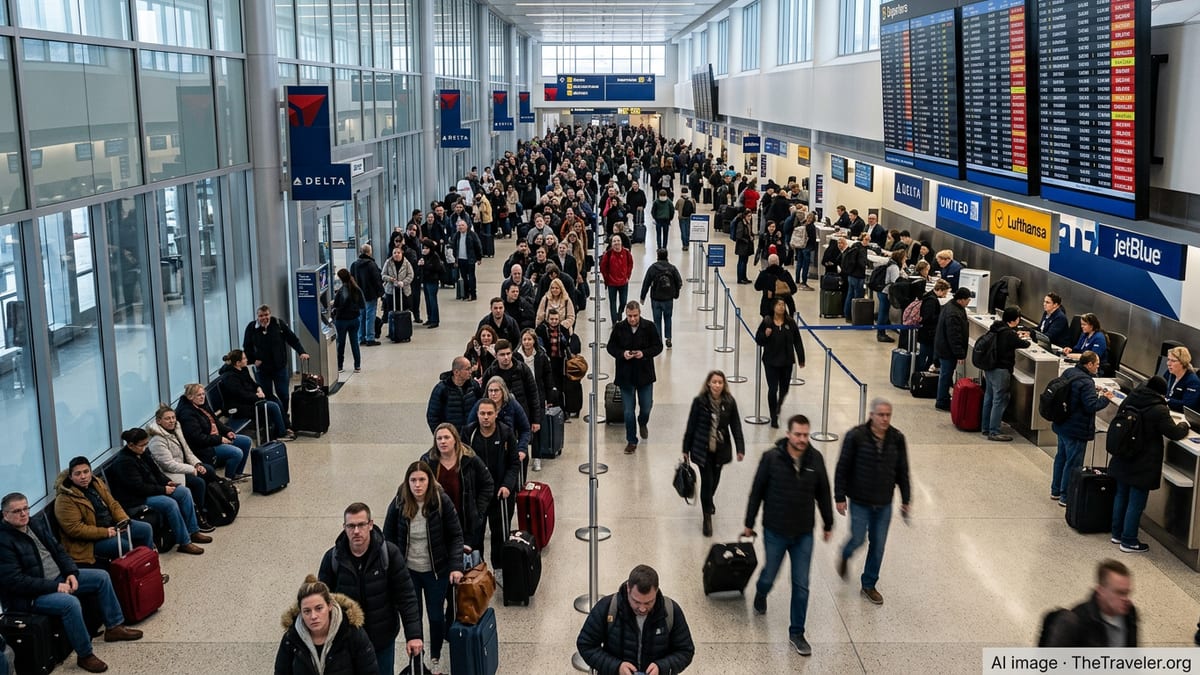
Denver–Newark Service Interrupted En Route
Publicly available flight-tracking information shows that United Airlines flight UA1505 departed Denver International Airport on a scheduled afternoon run to Newark Liberty International Airport before diverting to Chicago O’Hare instead of continuing to the New York area. Data indicates the aircraft followed its planned eastbound route out of Colorado before the change in flight plan was filed and executed midjourney.
The diversion effectively turned what is normally a straightforward transcontinental link into an unplanned hub stop in Chicago. Passengers bound for Newark faced additional time on the ground while the aircraft repositioned and airline operations reassessed routing options amid broader disruptions in the region’s airspace.
Available schedule data for UA1505 indicates that the flight typically connects two of United’s key hubs, Denver and Newark, providing links for both local travelers and connecting passengers heading onward to domestic and international destinations. A diversion of this type can therefore ripple beyond a single planeload, affecting onward connections and aircraft rotations later in the day.
Weather, Airspace Congestion and Hub Pressures
Reports from recent days point to unsettled weather patterns and periods of traffic-management initiatives in and around major Midwestern and East Coast airports, including Chicago O’Hare and the New York area. These conditions frequently prompt en route holding, ground stops, or reroutes that can ultimately make diversion the safest and most practical option when fuel reserves and timing are taken into account.
Chicago O’Hare is one of United’s largest hubs, handling a dense schedule of domestic and international flights each day. When storms, reduced visibility, or airspace flow restrictions affect arrival rates, inbound aircraft often face extended holding patterns. In some cases, airlines elect to divert to an alternate airport where runway acceptance rates and gate availability offer a better prospect for timely arrival.
For a flight such as UA1505, operational considerations can include not only immediate weather along the route but also conditions at the original destination, the status of connecting banks of flights, and the need to keep aircraft within United’s hub network where crews, maintenance, and passenger services are available.
Impact on Passengers and Connections
When a diversion occurs, passengers typically experience a mix of delays, gate changes, and rebooked itineraries. In the case of UA1505, travelers headed to Newark or onward destinations would likely have been offered connections from Chicago O’Hare once the aircraft arrived and ground handling could be arranged. Depending on timing, this can range from relatively short additional waits to overnight stays if onward flights are heavily booked.
Reports from recent hub disruptions across the United network show that diversions can create complex logistical challenges, especially when multiple flights are affected on the same day. Baggage must be tracked and, when possible, retagged to new flights, while customer service teams work to secure hotel rooms, meal vouchers, and alternate routings subject to availability.
Travelers on diverted flights often rely on mobile apps and airport departure boards to monitor rapidly changing rebooking options. Airline guidance generally encourages passengers to verify updated departure times, gates, and connection status through official digital channels once a diversion is announced, as schedules can be adjusted repeatedly in response to evolving weather and air traffic conditions.
Why Airlines Choose Chicago O’Hare as an Alternate
Chicago O’Hare’s role as a major hub makes it a logical alternate for United flights operating across the central and eastern United States. The airport offers extensive gate space, substantial maintenance capabilities, and a large pool of flight and cabin crews, which can help an airline recover schedules more quickly after a disruption.
Routing a diverted Denver to Newark service into O’Hare keeps the aircraft within United’s core network. Once on the ground, operations planners can decide whether to continue the flight to its original destination, retime it for a later departure, or reassign the aircraft to another route to alleviate knock-on delays elsewhere in the system.
Industry analyses of hub operations note that such decisions are often made in a fast-changing environment where the goal is to minimize total disruption across hundreds of flights, rather than focusing solely on one individual service. As a result, a diversion like that of UA1505 can become one piece of a larger effort to balance safety, regulatory requirements, and connection integrity during periods of strain on the air traffic system.
Continuing Uncertainty for Summer Travelers
The diversion of UA1505 from Denver to Chicago O’Hare illustrates the broader volatility facing travelers during peak summer months. Thunderstorms, high passenger volumes, and tight crew and aircraft schedules have all contributed to intermittent waves of delays and cancellations across U.S. airports this season.
Aviation data from recent years highlights how quickly minor slowdowns at a single hub can cascade through the network, creating missed connections and unexpected overnight stays far from a traveler’s original destination. Diversions, while disruptive, are a routine part of airline operations and are often used to ensure flights can land promptly and safely rather than circling for extended periods near congested airports.
For passengers, the experience emphasizes the value of building buffer time into tight itineraries, especially when connecting through weather-prone hubs such as Chicago or the New York region. Travel planners often recommend monitoring forecast conditions, enabling mobile notifications from airlines, and keeping essential items in carry-on baggage in case a diversion, like that experienced by UA1505, turns a straightforward domestic hop into a far more complicated journey.