


More news on this day
International visitors are reclaiming their place as a vital economic engine for the United States, helping to drive tourism growth, support jobs and extend America’s global influence despite rising competition and policy headwinds.
Get the latest news straight to your inbox!
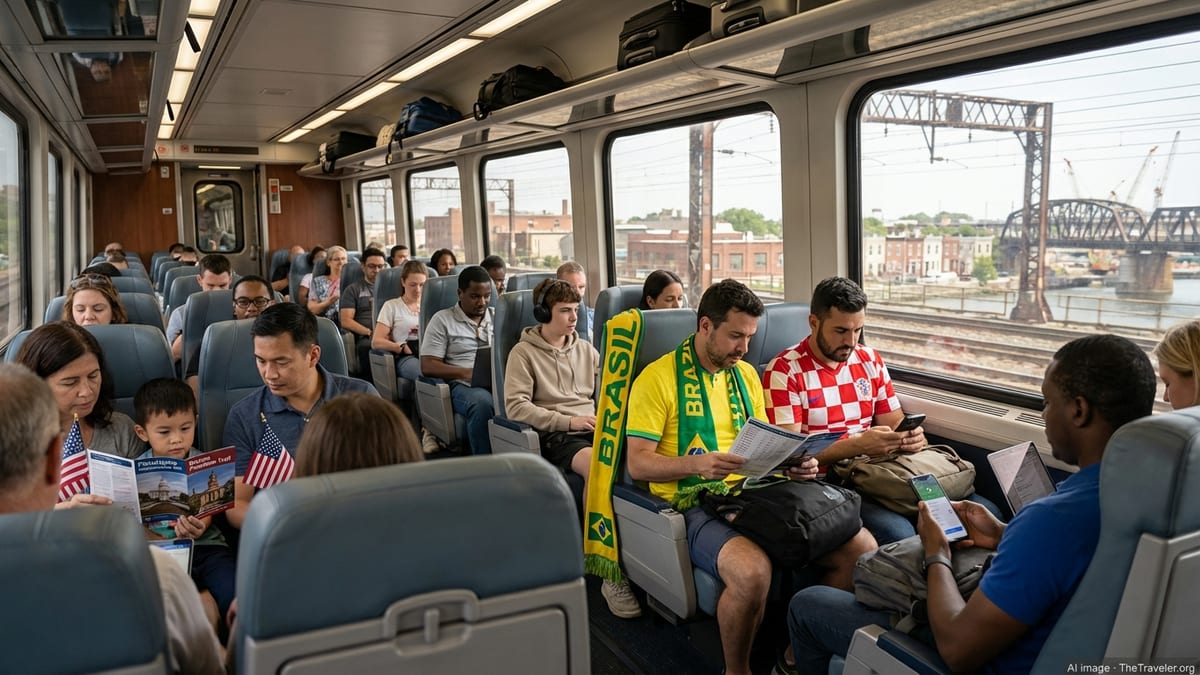
Inbound Travel Rebounds as a High-Value Export
Recent national data indicates that international inbound travel has re-emerged as one of the most valuable segments of the U.S. visitor economy. The U.S. Travel Association estimates that in 2024, international inbound travel generated roughly 181 billion dollars in spending as part of 1.3 trillion dollars in total travel outlays, contributing to 2.9 trillion dollars in overall economic output and about 2.5 percent of national gross domestic product. Publicly available figures from the International Trade Administration show that spending by overseas visitors alone supported more than 900,000 U.S. jobs in 2024, underscoring the labor-intensive nature of tourism and hospitality.
International tourism is also a major export for the United States, since spending by foreign visitors is counted as an export of services. Trade and tourism analysts note that travel-related exports now rival or exceed traditional goods categories such as steel or aircraft in value. This export dynamic gives inbound tourism an outsized role in narrowing trade deficits, particularly because visitor spending flows directly into local businesses ranging from hotels and guides to restaurants, retailers and transportation providers.
Global travel benchmarks highlight how pivotal the United States remains. Worldwide, international tourist arrivals reached an estimated 1.45 billion in 2024, according to recent tourism rankings, with the United States consistently among the top destinations by both arrivals and tourism receipts. Despite short-term fluctuations in specific source markets, forecasts published by federal agencies and industry partners indicate that the country is still on track to welcome tens of millions more visitors annually over the next several years.
Behind these national totals are millions of individual travelers who, through their itineraries and spending patterns, amplify economic activity in cities, small towns and rural gateways. Each long-haul visitor typically stays longer and spends more per trip than a domestic traveler, which magnifies the impact on lodging demand, food and beverage sales, attraction revenue and local tax collections.
States and Cities Compete for Overseas Visitors
State and local tourism offices are increasingly focused on attracting international guests, recognizing that their spending can stabilize destinations that are already strong among U.S. travelers. A 2024 report from the International Trade Administration on overseas visitor impact by state found that roughly 35 million overseas travelers visited the United States that year, supporting hundreds of thousands of jobs and billions in visitor spending spread across every region. Larger gateway states such as Florida, California, New York and Nevada captured significant shares of these arrivals, but the report also highlighted gains in interior destinations that have invested in air connectivity and international marketing.
Tourism boards in cities such as New York, Los Angeles, Miami, Orlando and Las Vegas continue to treat overseas travelers as a core growth segment. These destinations are working with airlines and travel trade partners to add long-haul capacity, bundle experiences, and extend visitors’ length of stay. Many are also targeting repeat international guests who are increasingly interested in lesser-known neighborhoods, cultural districts and nearby secondary cities, spreading economic benefits beyond traditional tourist corridors.
Second-tier and emerging destinations are leveraging this trend. States including Colorado, Oregon, Tennessee and the Carolinas have promoted national parks, music heritage, food and outdoor recreation in overseas campaigns run jointly with national partners. Economic impact studies published in several of these states point to record or near-record tourism spending in 2024 and early 2025, with international markets providing some of the highest per-visitor returns.
Local officials and tourism advocates emphasize that global visitors often serve as catalysts for infrastructure upgrades and product development. Investments in airports, convention centers, waterfronts and cultural institutions are frequently justified in part by expected gains in international visitation, but they also improve quality of life for residents and domestic travelers, creating a reinforcing cycle of growth.
Marketing America Abroad and Measuring the Payoff
At the national level, Brand USA, the public-private destination marketing organization for the country, plays a central role in attracting overseas visitors and converting interest into booked trips. According to its recent economic impact and return-on-investment reporting, Brand USA’s promotional efforts in fiscal year 2024 helped generate approximately 1.6 million incremental visits and 5.9 billion dollars in additional visitor spending, delivering more than 23 dollars in economic impact for every marketing dollar invested. A subsequent analysis of fiscal year 2025 activity indicates that the program continued to stimulate hundreds of thousands of extra international visitors.
These results are achieved through a mix of consumer campaigns, trade partnerships and digital content tailored to key source markets. Recent initiatives have focused on reengaging travelers in markets such as China, India and Western Europe, where outbound travel continues to recover and where travelers demonstrate strong interest in multi-destination itineraries. Campaigns emphasize the diversity of experiences across the United States, from large coastal cities to small communities in the interior, positioning global visitors as temporary locals who engage with American culture beyond the postcard landmarks.
Industry analysts note that coordinated national marketing also helps smaller destinations that lack the resources to run large-scale campaigns on their own. By featuring a broad range of places and themes, Brand USA and its partners effectively turn visitors into ambassadors for lesser-known communities, encouraging road trips, regional rail travel and extended stays that distribute spending more evenly.
Evaluation has become increasingly sophisticated, combining surveys, credit card data and mobile location information to trace how marketing exposure influences actual travel behavior. Public summaries of these studies show that visitors reached through national campaigns tend to spend more, stay longer and explore multiple regions, reinforcing the narrative that international guests are among the most valuable segments for the tourism industry.
Visa Policies, Connectivity and Competitive Pressures
While the economic potential of global visitors is clear, recent trends underline the importance of policy and access in sustaining growth. The U.S. Department of State reported that consular sections worldwide issued a record volume of nonimmigrant visas in the 2023 fiscal year, surpassing 10 million visas and signaling progress in clearing backlogs that had weighed on travel during and after the pandemic. Expanded authorities to waive in-person interviews for certain repeat applicants have also helped ease bottlenecks and shorten wait times in several key markets.
At the same time, shifts in visa rules and entry policies can affect how attractive and accessible the United States appears relative to competing destinations. Updates in 2024 and 2025 have tightened or suspended entry for some categories of foreign nationals, while new security measures and discussions of additional fees have drawn scrutiny from travel industry observers. Public analyses point out that long processing times, complex requirements and perceptions of unwelcome treatment can discourage potential visitors who have abundant alternatives in Europe, Asia and other parts of the Americas.
Air connectivity is another critical factor. Airlines have restored or expanded long-haul routes to major U.S. hubs, but capacity constraints and higher fares in some markets may be limiting the pace of recovery. Carriers are weighing demand for both business and leisure travel, including group tours, study programs and large events that historically filled transatlantic and transpacific flights. Decisions about future route networks will influence which U.S. regions capture more of the growing global travel pie.
Competition from other countries is intensifying as well. European and Asian destinations are promoting streamlined digital visas, simplified border controls and aggressive marketing to attract long-haul travelers. Analysts observing global tourism rankings argue that for the United States to sustain and grow its share of international travel, policy decisions must align with the economic value of welcoming more high-spending visitors.
Visitors as Informal Ambassadors for American Communities
Beyond the immediate economic benefits, international visitors play a less easily measured but increasingly important role as informal ambassadors. Tourism and public diplomacy experts note that travelers who have positive experiences in U.S. communities often share stories and images that shape perceptions of the country far more effectively than formal campaigns. Social media posts, word-of-mouth recommendations and repeat visits help counter stereotypes and present a more nuanced view of everyday life in the United States.
Community-based tourism initiatives are tapping into this potential by inviting global visitors to engage with local culture, history and nature in more meaningful ways. Examples include heritage trails curated by tribal nations, neighborhood arts districts in major cities, and rural agritourism experiences that connect travelers with family farms and small-town main streets. These programs position visitors not only as consumers but also as participants who support preservation efforts, cultural exchange and environmental stewardship.
Universities, convention centers and cultural institutions are similarly leveraging international arrivals. International students, academic delegations and conference attendees contribute substantial off-campus spending while also building long-term ties between U.S. communities and institutions abroad. Business events and incentive travel bring corporate decision-makers into contact with local suppliers, potentially seeding future investment, trade and innovation partnerships.
As policymakers and industry leaders look toward the latter half of this decade, many see global visitors as central to a broader strategy for economic growth, community revitalization and international engagement. With targeted marketing, thoughtful visa and entry policies, and investments that make travel more seamless and sustainable, the United States is positioned to convert more travelers into repeat guests and lasting advocates for destinations across the country.