


More news on this day
Rail travel to Heathrow Airport was severely disrupted on Saturday after a grass fire near Scrubs Lane in North Kensington cut power to overhead lines and halted trains between London Paddington, the UK’s busiest rail terminus for the airport, and the terminals.
Get the latest news straight to your inbox!
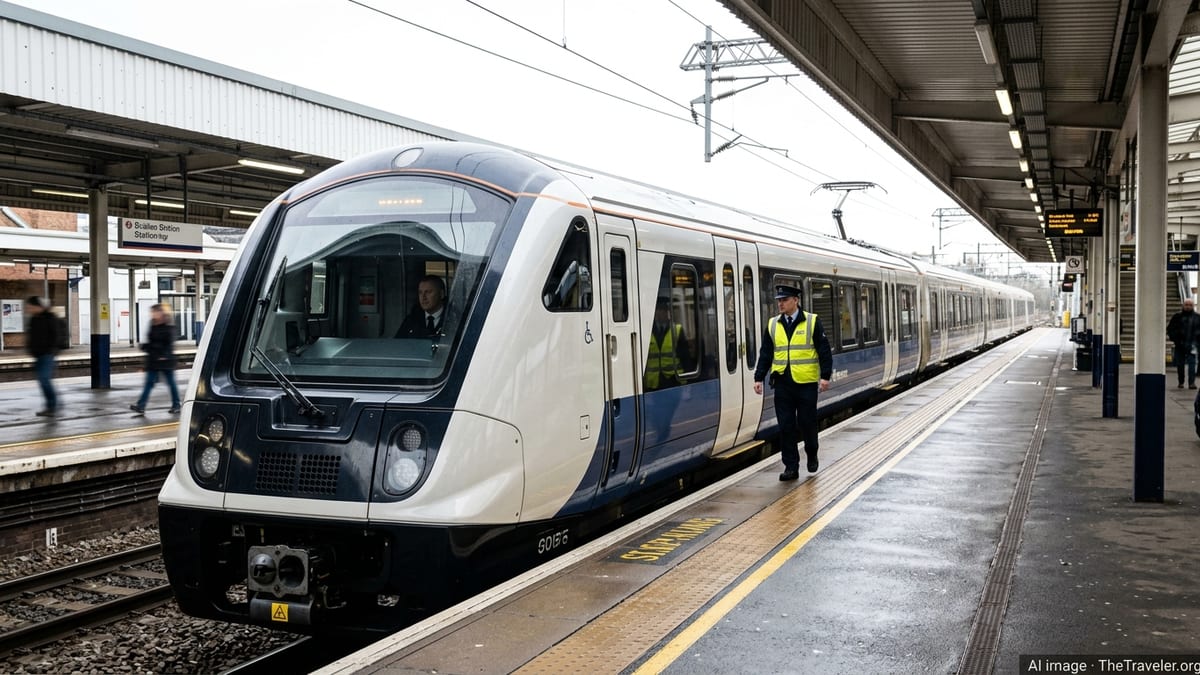
Fire near Scrubs Lane triggers power failure on Heathrow corridor
Published reports indicate that the incident began shortly after 16:00 BST on Saturday 5 September, when a grass fire broke out near Scrubs Lane in North Kensington, close to the Great Western Main Line into London Paddington. The blaze affected lines used by Elizabeth line, Great Western Railway and Heathrow Express services, which together provide the primary heavy rail connection between central London and Heathrow Airport.
Information from London Fire Brigade describes firefighters tackling a grass fire in the Scrubs Lane area, with around six fire engines and approximately 40 firefighters mobilised to bring the incident under control. The fire was located close enough to the railway to affect railway infrastructure supporting services into Paddington.
According to disruption updates from National Rail, the fire led to a failure of the electricity supply serving the overhead lines near London Paddington, blocking all routes between the terminus and Heathrow Airport as well as Paddington and Reading. Departure boards at Paddington were reported to be heavily affected, with many services cancelled or significantly delayed as the situation unfolded.
Transport status pages indicated that, as the afternoon progressed, the Elizabeth line section between Paddington and Heathrow terminals and between Paddington and Reading was effectively suspended, with remaining parts of the line experiencing severe delays. Services on the nearby Piccadilly line, another key Heathrow route, were also reported to be running with severe delays between Acton Town and the airport, compounding difficulties for travellers.
Elizabeth line, Heathrow Express and GWR services brought to a standstill
National Rail’s live incident page for the Paddington to Heathrow and Reading corridor reported “major disruption” for much of Saturday evening, with all lines between London Paddington and Heathrow Terminals or Reading blocked following the power failure caused by the trackside fire. Trains were described as subject to cancellation, delays of up to 60 minutes or short-notice alterations as controllers attempted to manage the reduced capacity.
The disruption affected three key operators: the Elizabeth line, which runs stopping and semi-fast services between central London and Heathrow; Heathrow Express, the dedicated non-stop airport rail link; and Great Western Railway, which operates long-distance and suburban services into Paddington. With all sharing the same core route, the loss of the overhead power supply immediately cascaded across the timetable, leaving limited options to divert or reroute services.
Updates published on Transport for London’s network status pages described the Elizabeth line as part-suspended between Paddington and Heathrow, with severe delays on the rest of the line while trains and staff were displaced. Great Western Railway’s own communications highlighted widespread disruption on intercity and suburban routes, while Heathrow Express announced a reduced or suspended service pattern as a result of the blocked lines.
While some services were able to operate on unaffected sections of the network, the key airport corridor between Paddington and Heathrow remained effectively closed through the main part of the evening, leaving many air passengers and airport workers searching for alternative ways to travel.
Passengers urged to use alternative routes to and from Heathrow
With the primary heavy rail route to the airport unavailable, publicly available guidance from National Rail and Transport for London directed passengers towards alternative transport options. Advice highlighted the use of London Underground services, particularly the Piccadilly line, which links central London directly with all Heathrow terminals, although this route was itself under pressure from high demand and reported delays.
Disruption updates indicated that Elizabeth line tickets were being accepted on a range of other services via any reasonable route. These included London Underground lines, London Buses between Paddington and Heathrow terminals or West Drayton, South Western Railway services between London Waterloo and Reading, Chiltern Railways between London Marylebone and High Wycombe, as well as Docklands Light Railway, Southeastern and Thameslink services on specific sections of the wider London rail network.
Passengers heading for flights were advised in news reports to allow significantly more time to reach the airport, to check live travel planners before setting out, and to be prepared to switch between multiple modes of transport. Those already at Heathrow and looking to reach central London were encouraged to consider the Piccadilly line, local bus routes and dedicated airport coach services while rail links from Paddington remained unavailable.
National Rail and individual train operators also reminded travellers that they may be entitled to compensation if significantly delayed, advising passengers to keep tickets and record details of their journeys in order to support any subsequent claim under delay-repay schemes.
Ongoing vulnerability of airport rail access highlighted
The incident is the latest in a series of recent disruptions affecting rail access to Heathrow, following earlier issues in June and August that also led to temporary suspensions of Elizabeth line and Heathrow Express services. Earlier National Rail incident reports from the summer documented separate problems including signalling faults, points failures and overhead line damage in the corridor between Hayes & Harlington and Heathrow, all of which briefly disrupted airport links.
Recent weeks have also seen a number of high-profile lineside fires elsewhere on the rail network during periods of warm, dry weather, adding to concerns over the vulnerability of overhead power systems and trackside vegetation. Commentary from rail users has frequently pointed to the role of dry grass and scrub near tracks in allowing small ignitions to escalate into larger fires that can affect signalling and power equipment.
Heathrow’s reliance on the Great Western Main Line for its premium Heathrow Express service, and on shared infrastructure for Elizabeth line trains, means that any incident on the corridor into Paddington can quickly ripple out to affect thousands of air passengers. Operators typically promote the rail links as the fastest and most reliable way to reach the airport from central London, but Saturday’s events underline that even high-frequency, high-investment routes remain exposed to external factors such as weather-driven fires.
Travel industry observers note that the combination of airport operations and complex rail infrastructure leaves relatively little slack in the system when sudden incidents occur, particularly at peak holiday times. When mainline services are suspended, pressure rapidly shifts to the Underground, buses and road network, often creating congestion well beyond the immediate incident area.
What travellers should watch for in the coming days
While the grass fire itself was brought under control within a relatively short period, reports suggest that residual disruption to services can linger after such incidents as operators reposition trains and crews and assess any damage to overhead lines or signalling equipment. Travellers heading to or from Heathrow over the next 24 hours are therefore being encouraged by public information channels to keep monitoring live updates rather than assuming a full and immediate return to normal.
Heathrow’s own traffic and travel update pages direct passengers to National Rail and Heathrow Express for the latest rail status, as well as to Transport for London for real-time information on the Elizabeth line, Underground and bus network. These resources are likely to be particularly important for early-morning departures and late-evening arrivals, when rail service patterns can be more limited even under normal conditions.
For visitors planning trips through London in the coming days, travel planners recommend building additional time into itineraries where connections rely on Paddington or the Heathrow corridor, and considering contingency routes such as the Piccadilly line or airport coach services. As climate-related incidents like grass and lineside fires become more common during dry spells, transport authorities and operators are expected to face continued pressure to strengthen resilience measures along critical airport access routes.
For the latest operational detail, passengers are advised to consult official journey planners and operator websites close to the time of travel, as published estimates for disruption can change as repairs progress and services are gradually reinstated.
National Rail live incident: London Paddington – Heathrow / Reading
London Fire Brigade: Grass fire – North Kensington
Transport for London: Network status including Elizabeth line
Heathrow Airport: Traffic and travel updates
The Independent: Trains between Paddington and Heathrow blocked by grass fire