


More news on this day
Travelers heading to and from Thailand are facing a new wave of disruption as Gulf Air, Qatar Airways and other Middle Eastern carriers cancel and consolidate services, cutting more than a dozen flights across key routes linking Bangkok, Phuket and other Thai hubs with Doha, Tel Aviv and onward global destinations.
Get the latest news straight to your inbox!
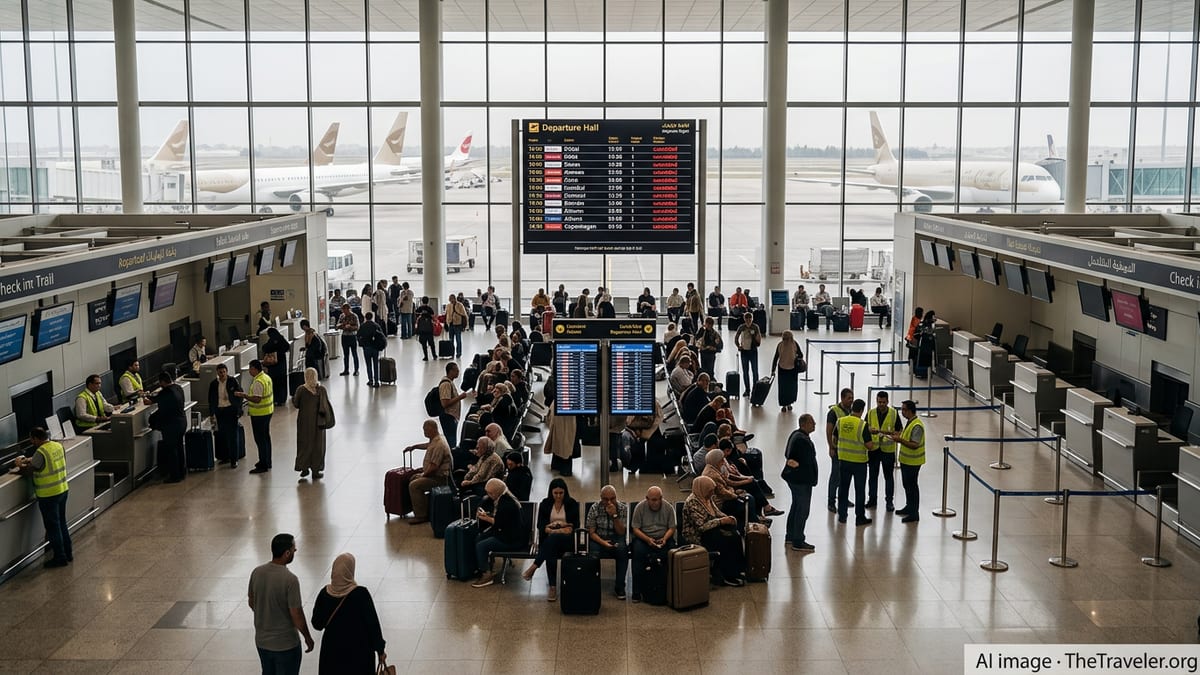
Fresh Cancellations Add to Thailand–Middle East Travel Turmoil
Published coverage in Thailand and the wider region indicates that airlines based in the Gulf have again trimmed services as the fallout from airspace closures around Iran and Qatar continues to ripple through schedules. Routes connecting Thailand with major hubs such as Doha, Dubai, Abu Dhabi and Bahrain remain under pressure, with some services suspended outright and others operating at sharply reduced frequencies.
Reports from aviation data providers show Qatar Airways cancelling selected Doha to Bangkok flights, including departures originally scheduled to operate in late May 2026, while maintaining others on the same route. Industry trackers also highlight that flights linking Doha with Phuket and Samui have been consolidated or rerouted on certain days, adding uncertainty for travelers booked on multi‑stop itineraries.
Earlier disruption at Phuket International Airport, where Middle East tensions previously forced schedule changes to and from Qatar and the United Arab Emirates, has largely eased, yet capacity on many links remains below pre‑crisis levels. Analysts monitoring airline timetables say the pattern now is one of rolling adjustments rather than a single blanket suspension, which can make cancellation risk harder for passengers to anticipate.
Gulf Air, based in Bahrain, is among carriers that have quietly reduced or reshuffled services touching Thailand as they navigate volatile fuel prices and longer routings around restricted airspace. Travel industry briefings suggest that more than a dozen flights involving Thailand and Gulf hubs were removed from timetables over the past several days alone, affecting itineraries that would normally feed connections to Europe, North America and Africa.
Regional Conflict and Fuel Costs Drive Route Cuts
The immediate backdrop to the latest disruption is the conflict that led to temporary closure or restriction of Qatari and neighboring airspace from late February, prompting widespread cancellations and diversions across the Middle East. Aviation analysts note that even after core corridors reopened, airlines have been forced to plan around potential flare‑ups, often scheduling with extra margin and then trimming frequencies when demand or operating conditions shift.
Thailand’s own vulnerability to the shock has been amplified by an oil supply squeeze linked to the same regional tensions. Local business coverage has documented how rising jet fuel prices have already pushed Thai carriers to cut domestic and regional services. When those pressures are combined with longer Gulf routings and higher insurance and overflight costs, foreign airlines face strong incentives to pare back Thailand capacity, even on previously high‑yield routes.
Seat capacity data compiled for May 2026 indicates that the number of available airline seats between the Middle East and Thailand has fallen by more than a third compared with levels before the current Gulf crisis. Bangkok’s Suvarnabhumi Airport, a key Southeast Asian gateway, has seen some of the steepest reductions on links to Doha and other Gulf hubs as airlines prioritize aircraft for routes considered more resilient or strategically vital.
For passengers, one notable feature of this phase of the disruption is that many changes are being announced close to departure. Online discussion forums and travel community posts describe travelers receiving cancellation notices for May and early June flights only days or weeks before travel, even where routes had appeared to be resuming. This pattern reflects what airline specialists describe as a “rebuilding” phase, in which carriers restore networks gradually while retaining flexibility to pull flights when operational risks rise.
Key Routes Impacted: Doha, Tel Aviv, Bangkok and Beyond
Thailand’s deep reliance on Gulf hubs for long‑haul connectivity means that disruptions on a handful of trunk routes quickly cascade across multiple markets. Flights between Doha and Bangkok, one of the busiest corridors linking Southeast Asia with the Middle East, have been especially affected as Qatar Airways adjusts frequencies. Real‑time status services show selected Doha to Bangkok departures cancelled outright on certain days, while others operate normally or with schedule tweaks.
Bangkok’s role as a staging point for journeys to Israel has added further complexity. With airspace restrictions and security concerns hitting flights to Tel Aviv from several Gulf hubs, itineraries that once relied on smooth connections via Doha, Abu Dhabi or Dubai have become vulnerable to last‑minute changes. Industry observers point out that when a feeder leg such as Phuket or Bangkok to Doha is cancelled, onward flights to Tel Aviv or European cities may remain technically “active,” leaving passengers to piece together disrupted connections.
Phuket and other Thai leisure destinations are also caught up in the turmoil. Local tourism and airport reports note that while some Middle Eastern carriers have kept Phuket services relatively stable, others have cut frequencies or merged flights to concentrate demand onto fewer departures. This has created sporadic bottlenecks, with some days seeing limited or no direct capacity between key Gulf hubs and southern Thailand.
The knock‑on effects extend beyond Israel and the Gulf. Many European and North American travelers use Qatar Airways, Gulf Air and other regional carriers to reach Thailand via Doha and neighboring hubs, attracted by competitive fares and convenient schedules. When a single sector, such as Bangkok to Doha, drops out of the plan, entire long‑haul itineraries can unravel, forcing travelers to seek last‑minute alternatives on Asian or European airlines at higher prices.
What Travelers to and from Thailand Need to Know Now
For travelers with upcoming trips involving Thailand and any Gulf carrier, the latest wave of cancellations underlines the importance of close monitoring and contingency planning. Publicly available information from airlines and aviation trackers shows that schedules are in flux, with some flights reinstated and others removed with limited advance warning. Relying solely on original booking confirmations or printed itineraries can leave passengers exposed to rapid changes.
Passenger advocacy groups and travel industry commentators consistently advise checking flight status directly through airline websites or mobile applications in the days and hours before departure, and again after any schedule change notification. Because many of the affected services sit within multi‑leg journeys, it is particularly important to verify each segment individually, rather than assuming that an intact long‑haul leg guarantees a functioning feeder flight.
Travel insurance is another crucial factor. Legal and consumer‑rights resources note that policies vary widely on what constitutes a covered cancellation, especially in situations involving conflict‑related airspace restrictions or airline schedule restructuring. Travelers are encouraged to review policy wording carefully, paying close attention to clauses on war or terrorism exclusions, schedule changes versus outright cancellations, and the documentation required to support any claim.
Flexible booking options can offer a buffer where available. Many carriers serving Thailand, including Gulf airlines, have published rebooking and refund policies allowing date changes or route alterations when flights are cancelled or significantly rescheduled. However, these programs often come with conditions and time limits. Passengers who wait to see whether a disrupted flight will be reinstated risk losing access to the most generous options as departure dates approach and alternative services fill up.
Prospects for Recovery Remain Uncertain
Looking ahead, aviation analysts remain cautious about predicting a rapid normalization of services between Thailand and the Middle East. While some Gulf airlines are publicly signaling intentions to restore broader networks by mid‑year, the pace of recovery on specific Thailand routes appears uneven. Capacity data for late May and early June suggest that Bangkok links are returning more slowly than certain other Asian destinations, reflecting both operational constraints and demand considerations.
Tourism stakeholders in Thailand are watching developments closely. Industry statements emphasize that the country remains open to visitors, with a wide array of alternatives via East Asian and European hubs for those wary of routing through the Gulf. Nonetheless, the loss of a significant slice of capacity from Qatar Airways, Gulf Air and peers has immediate implications for visitor numbers from the Middle East and for Thai travelers heading west.
Specialists in air transport economics point out that airlines will be weighing the cost of maintaining lightly booked or operationally complex routes against long‑term strategic goals in Asia. If regional tensions ease and jet fuel prices stabilize, carriers may move quickly to rebuild frequencies on high‑yield corridors such as Doha to Bangkok. Conversely, any renewed escalation or further airspace restrictions could trigger another round of cancellations, deepening the disruption to Thailand’s connectivity.
For now, the clearest message from current data is that volatility remains the defining feature of Thailand’s air links to Doha, Tel Aviv and other Gulf‑connected destinations. Travelers planning journeys over the coming weeks are likely to face a patchwork of restored, reduced and newly cancelled flights, reinforcing the need for flexibility, up‑to‑date information and careful itinerary planning.