


If you are planning a Gulf of Alaska cruise between Seward or Whittier and Vancouver, the calendar will shape almost everything you experience: sea conditions in the open Gulf, how close your ship can approach Hubbard Glacier, how much daylight you have for scenic cruising, and even whether Denali tour buses are running when you step off the ship. There is no magic month that guarantees calm seas, blue-sky glacier views or specific wildlife sightings, but for most travelers the strongest all-around sweet spot runs from early June to about mid-August, when daylight is longest, most excursions and Alaska Railroad services are operating, and historical storminess in the Gulf is relatively low compared with spring and early autumn. The tradeoff is higher prices and heavier crowds, and some travelers may prefer May or September for lower fares, snowier mountain scenery or a better chance at fall colors despite more volatile weather.
Get the latest updates straight to your inbox!
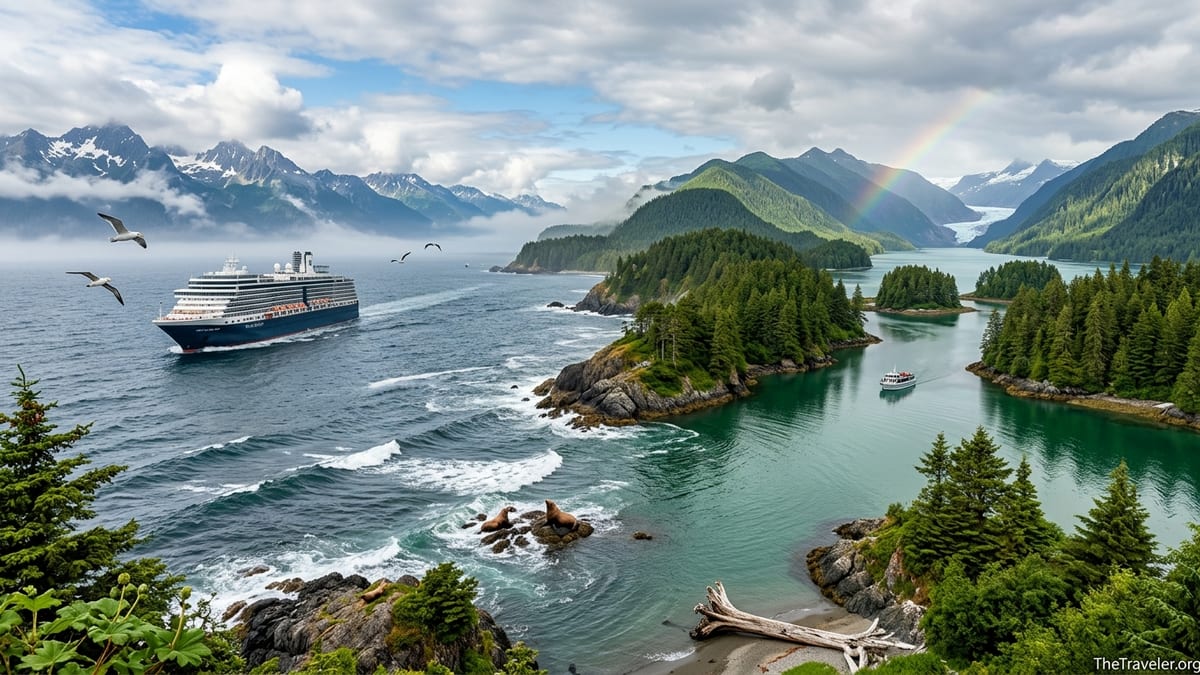
How the Gulf of Alaska Differs from the Inside Passage
Gulf of Alaska cruises are not the same as classic roundtrip Inside Passage routes. A typical one-way southbound itinerary in 2027, such as a 7-night Seward to Vancouver sailing that calls at Hubbard Glacier, Juneau, Skagway, Icy Strait Point and Ketchikan, spends about one full day and night crossing exposed Gulf waters between the Kenai Peninsula and Southeast Alaska. The rest of the week is in protected channels and fjords similar to Inside Passage voyages. That single Gulf crossing is where the biggest weather and sea-state uncertainty lies, regardless of month.
U.S. Coast Pilot guidance for the northern Gulf notes that conditions are often roughest in waters south of Seward and east of Kodiak, an area many cruise routes transit. Gales in early-season months can occur around 15 percent of the time in this zone, and the dominant summer hazard described for the Gulf is fog associated with southerly flows over cooler water rather than winter-style storm systems. By comparison, the Inside Passage is shielded by islands and headlands, so even when the Gulf is choppy, channels near Juneau or Ketchikan may remain much calmer. This is why two travelers on the same departure can report a bumpy overnight crossing yet easy-going conditions during glacier and port days.
It is important to understand that on-board conditions rarely match climate statistics from land stations exactly. Air temperatures recorded at the Seward or Juneau airports are influenced by valley topography and land heating that differ from the open Gulf. At sea you may feel cooler temperatures due to wind over the water, or slightly steadier conditions when the ship remains offshore of localized down-valley gusts. Treat climate normals as broad guidance rather than precise forecasts for any given cruise.
Seasonal patterns matter too. By late spring, the North Pacific High typically strengthens and pushes the primary North Pacific storm track northward, which generally softens average summer winds and seas in the Gulf. In late August and September, the Aleutian Low begins to re‑establish itself, bringing more frequent and deeper low-pressure systems into the region. That shift is why mariners often treat late summer and early autumn Gulf passages as more prone to strong wind events than midsummer crossings, even if many individual September sailings still enjoy calm weather.
Climate, Daylight and Fog: May through September
Along the Gulf coast, average May high temperatures for key cruise gateways such as Seward, Whittier and Juneau tend to be in the low to mid 50s Fahrenheit, warming into the low to mid 60s by July before easing slightly in August and September. Climate normals for Seward show average highs around the low 50s in May and low 60s by July, while Juneau’s airport follows a very similar pattern. Yakutat, which lies near Hubbard Glacier’s approach, stays cooler and wetter overall. It is reasonable for cruise travelers to expect daytime temperatures on deck to run roughly 5 to 10 degrees cooler than these land readings on windy days at sea.
Rainfall also shifts through the season. Coastal data for Yakutat show annual precipitation near the top of Alaska’s charts, with a marked rainy season peak in September and October, when monthly averages exceed 18 inches. Whittier is even wetter over the year, with around 197 inches of annual precipitation and frequent rain across all summer months. In practical terms, that means a statistically drier window from late May through July along much of the route, followed by a tendency toward more frequent rainy systems by late August and especially September. However, any given week can defy the averages. Travelers routinely report sunny spells in September and rain-soaked weeks in June.
Daylight is where the differences are starkest. Around the June solstice, Anchorage and Seward see roughly 19 hours of usable daylight, and even Juneau sits near 18 hours between sunrise and sunset. In late May you already have very long evenings, often with twilight deep into the night. By mid-July daylight is still ample, but by mid-September Anchorage is closer to 12 to 13 hours and continues falling quickly. Long June and early July days support extended port calls, late-evening glacier sail-bys and the ability to take a morning whale-watching trip and an afternoon hike in the same day.
Fog is a consistent wildcard. NOAA coastal guidance notes that sea fog is a common navigational hazard in the Gulf during summer, especially when warm, moist air overruns colder surface waters. In the Inside Passage, advection fog can form where glacial melt keeps sea surface temperatures in the upper 40s to mid 50s Fahrenheit. In practice, that can mean clear skies in port but hazy or foggy conditions as your ship approaches Hubbard Glacier or crosses the Gulf, particularly in June, July and early August. Captains may slow down or adjust timing to maintain safety and visibility, which can subtly alter scenic viewing hours.
Glaciers: Hubbard, Glacier Bay and College Fjord Across the Season
Glacier experiences are a major reason travelers choose a Gulf of Alaska route instead of a simple Inside Passage loop. Hubbard Glacier near Yakutat, Glacier Bay National Park and College Fjord north of Whittier all feature prominently on one-way cruises. Each behaves differently as the season progresses, and none offers guaranteed calving displays or crystal-clear weather in any month. Heavy snow cover in May can make surrounding peaks look dramatically white and pristine, but lingering sea ice or thick brash ice sometimes limits how close ships can safely approach, especially at Hubbard and College Fjord.
NOAA Fisheries has issued voluntary harbor seal approach guidelines for Alaska’s glacial fjords, including specific recommendations for Disenchantment Bay near Hubbard Glacier between May 15 and June 30. During this period, seals are pupping on the ice and the agency strongly encourages all vessel operators, from kayaks to cruise ships, to remain farther from dense ice fields and to avoid the western side of the bay closest to the glacier face. Some large-ship lines note in their briefings that early-season Hubbard visits may involve viewing the glacier from a somewhat greater distance compared with late-season calls. The result can still be spectacular but may subtly change the balance between wildlife protection and dramatic close-up photography.
In Glacier Bay, the National Park Service controls daily ship permits rather than specific calendar-based distance rules for seals, but early season often features more snow on the surrounding mountains and potentially more floating ice near tidewater glaciers such as Margerie. As air and water warm into July and August, snowlines retreat upslope, leaving darker rock faces visible. That can produce high-contrast landscapes that many photographers love, though some travelers feel the scenery looks more “wintry and wild” in May and early June. Calving events are influenced by a mix of ice dynamics and weather and do not reliably increase in warmer months, so it would be misleading to treat July or August as inherently better for big ice falls.
College Fjord in Prince William Sound, visited by some Whittier-based itineraries, is partly sheltered from the open Gulf, so access is less affected by offshore waves than by local ice and visibility. In early May, several hanging glaciers and high ridges can still be draped in fresh snow. By July, the same scene may feature clear blue glacial ice highlighted against dark ridges under long evening light. In all months, fog, low cloud ceilings or rain can mute colors and limit how much of the glacier face and surrounding peaks you can see, a reminder that even midsummer cruises can experience compromised viewing days.
Wildlife by Month: From Migrating Whales to Puffins and Bears
Wildlife is another area where Gulf of Alaska itineraries differ from pure Inside Passage cruises, but timing, exact routes and excursions matter at least as much as the calendar. Gray whales migrate through the Gulf in spring, with many passing the region in April and May on their way to the Bering and Chukchi seas. Travelers on early May itineraries sometimes spot grays during the open-water Gulf crossing or on Kenai Fjords National Park day cruises out of Seward. By June, most gray whale activity has moved farther north, and humpback whales, orcas and Dall’s porpoises become the primary large marine mammals encountered along the cruise route.
Humpback whales feed throughout Southeast Alaska’s nutrient-rich channels from roughly late spring through early autumn. Many June and July cruises report humpback sightings either from the ship or on dedicated whale-watching excursions out of Juneau, Icy Strait Point or Sitka. Orcas can appear in any month of the cruise season but are less predictable and depend heavily on prey availability. Sea otters, harbor seals and Steller sea lions are commonly seen throughout the season, especially in Prince William Sound, Resurrection Bay and Kenai Fjords near Seward, as well as in Glacier Bay and around rocky headlands along the route.
Puffins are a highlight specific to coastal colonies near the Gulf. In the Kenai Fjords region, nesting usually ramps up around late May, with horned and tufted puffins occupying cliff burrows and rocky islands while feeding at sea through much of the summer. Early May departures may find that some colonies are not yet fully active, whereas mid-June through early August typically aligns with strong nesting activity. Viewing usually requires a smaller boat tour out of Seward, Whittier or Homer rather than relying on glimpses from a large cruise ship, which generally passes farther offshore of key rookeries.
Bears and salmon tend to be associated with shore excursions more than open-water cruising. In many Southeast ports, salmon runs and associated bear-viewing opportunities peak from mid-July into August, varying by river and species. For example, a fly-out bear-viewing trip to Katmai from Anchorage or a day tour to Brooks Falls is usually marketed most heavily in July and August, while bear-focused floatplane trips from Ketchikan or Juneau are also concentrated in midsummer. In May, you may see bears foraging along shorelines or on early-season hikes, but classic images of bears pulling salmon from streams are more likely on late-July or August visits. Wildlife encounters are inherently uncertain in every month, and location, local guides and daily conditions make at least as much difference as the week on the calendar.
Month-by-Month Tradeoffs: May to September
May is the shoulder season start for most Gulf of Alaska routes. In 2027, major lines such as Celebrity, Royal Caribbean, Princess, Norwegian and Viking are offering Seward or Whittier one-way sailings beginning around mid-May. Sample pricing for a mid-May 2027 7-night Seward to Vancouver sailing shows entry-level inside cabins advertised around the mid-700-dollar range per person, with oceanview or balcony cabins several hundred dollars higher. That can be several hundred dollars less per person than peak July or early August departures on the same ship and itinerary. On board, travelers often enjoy snow-capped scenery down to low elevations and fewer crowds in ports, though some inland lodges and Denali-area services may still be ramping up for the season.
June is where many travelers find the best compromise. Daytime highs around the Gulf ports generally reach the high 50s to low 60s Fahrenheit, daylight reaches its annual maximum, and a wide roster of excursions are operating at full capacity. Cruise fares usually rise relative to May but can still be lower than mid-July peaks, especially for early-June departures. In 2027, some upscale lines list late May and early June Seward voyages in the low 4,000-dollar range per person for veranda suites, compared with higher rates later in the summer. Open-water conditions in the Gulf are statistically calmer in June than in shoulder months, though individual storms can still produce a rough crossing.
July is peak Alaska cruise season. CabinSaver tracking of 2027 departures from Seward shows July as the busiest month, with more sailings scheduled than in May or September. By this point, virtually all Alaska Railroad summer schedules are running between Anchorage, Seward, Whittier, Talkeetna, Denali and Fairbanks, and coastal tour operators from Kenai Fjords to Glacier Bay are in full swing. Air temperatures are often at their mildest, with Seward and Juneau averaging highs in the low to mid 60s Fahrenheit. This is also when you may see the most families with school-age children, particularly around the U.S. July 4 holiday and into early August, creating busier port days and more competition for popular excursions.
August bridges late summer and the onset of autumn patterns. Early August often feels similar to July, especially in the first two weeks, but by late August weather systems become more frequent and average rainfall begins to climb, particularly in Southeast Alaska and the Yakutat area. Many experienced Alaska cruisers favor late July or early August as a strong balance of active wildlife, relatively warm temperatures and long but not extreme daylight, with the bonus that salmon runs and associated bear-viewing tours are often at their peak. Fares for the first half of August can be as high or higher than July, then sometimes ease slightly for late-August sailings as family demand softens after the start of the school year.
September marks the end of the Gulf cruise season, with many lines concluding Seward and Whittier departures by mid to late month. Average high temperatures fall back into the low to mid 50s Fahrenheit, rain becomes more frequent with autumn storm systems and daylight shortens quickly. On the plus side, some of the most dramatic fall colors in the interior occur in early to mid-September, which can be a major draw for travelers combining a cruise with a land tour to Denali or Fairbanks. Cruises in this period are often priced lower than midsummer; for example, late-September roundtrip Alaska sailings from Seattle or Vancouver sometimes advertise balcony cabins near or below 1,300 dollars per person with value-added packages included. Gulf one-way itineraries in early September can also be several hundred dollars cheaper per person than July equivalents, even if not as deeply discounted as early May sailings.
Prices, Crowds and Sample Budget Comparisons
To understand how the choice of month affects the bottom line, it helps to look at concrete examples from 2027. A southbound 7-night Seward to Vancouver cruise on a large mainstream line in mid-May currently lists starting inside-cabin fares in the 750 to 800 dollar per person range for double occupancy, before taxes and port fees. The same ship on a similar itinerary in mid-July often prices inside cabins closer to 1,100 to 1,300 dollars per person, with balconies commonly ranging from about 1,800 to 2,300 dollars per person depending on promotions and cabin location. Upscale and luxury lines can be substantially higher, with some options out of Seward in May listing veranda accommodations around 4,000 dollars per person, including more inclusive onboard amenities.
Airfare and land costs amplify these differences. Flights into Anchorage or out of Vancouver in late May and early June are usually cheaper than in mid-July, when fishing travel and family vacations push demand higher. Travelers considering a one-way cruise often find that peak-season flights can add several hundred dollars per person compared with shoulder-season dates. Meanwhile, a land extension that includes a two- or three-night Denali package plus Alaska Railroad segments can easily add 1,500 to 2,500 dollars per person in lodging, transportation and tours, whether booked through a cruise line as a cruisetour or pieced together independently.
Consider two sample budgets for a couple. In Scenario One, they select a mid-May 2027 southbound cruise from Seward with an advertised starting balcony fare of about 1,500 dollars per person. Adding economy flights into Anchorage and home from Vancouver in late May might cost roughly 700 to 900 dollars per person based on current published ranges, plus around 300 to 500 dollars per person for a basic two-day land package that includes a day cruise in Kenai Fjords and one night in Anchorage. Their total could fall near 5,000 to 6,000 dollars for two people before excursions in the ports.
In Scenario Two, the same couple books a mid-July 2027 departure with balcony fares closer to 2,100 dollars per person and peak-season airfares that could easily run 900 to 1,200 dollars per person. Adding a fuller Denali-oriented land tour with multiple Alaska Railroad legs and two or three nights near the park might push the add-on cost to 2,000 dollars or more per person. Their total trip for two could then approach or exceed 8,000 to 9,000 dollars before excursions, even though the cruise itself lasts the same seven nights. These examples underscore how the month you sail can shift your overall spend by thousands of dollars even on similar itineraries.
Rail, Denali and Excursion Availability at Season Edges
The operational calendar for inland Alaska strongly influences whether early- or late-season Gulf cruises make sense for travelers planning land extensions. The Alaska Railroad typically begins full daily summer schedules between Anchorage, Seward, Whittier, Talkeetna, Denali and Fairbanks around mid-May, with some routes operating reduced frequencies earlier in the month and winding down again in mid to late September. This means that a cruise ending in Seward around the third week of May will usually connect smoothly with same-day rail service back to Anchorage, while very early May sailings might require a motor coach or private transfer instead of the scenic rail option some travelers expect.
Similarly, Denali National Park services build up through late May and June. Tour buses on the Denali Park Road, operated through concessionaires, typically expand their reach and frequency as snow melts and road maintenance progresses. By early June, most standard tour products are underway; by mid-September, some services may begin reducing operations or shortening daily routes if weather dictates. Lodges in gateway communities such as Denali Park and Talkeetna often open in May and close in late September, but exact dates vary by operator. Travelers pairing a Whittier or Seward cruise with Denali should check that their target tours and lodges are actually operating on their specific early- or late-season dates.
On the coast, Kenai Fjords National Park day-cruise operators from Seward may start running longer trips into Aialik Bay or Northwestern Fjord in May but build to full schedules by June. Those longer cruises are prime opportunities for puffin, sea otter and humpback whale viewing in addition to glacier scenery. Shoulder-season sailings in early May or late September might offer fewer daily departures or shorter itineraries focused on Resurrection Bay rather than distant tidewater glaciers. Farther south, some wildlife excursions in ports like Icy Strait Point or Sitka may scale back schedules at the very start or end of the cruise season, even while large ships continue to call.
These operational realities argue against treating May and September purely as bargain months. A discounted Gulf cruise that docks in Seward on a date when your preferred Kenai Fjords tour is not yet running, or arrives in Whittier just after Alaska Railroad frequencies have tapered, may deliver less value than a costlier June itinerary that aligns with your must-do activities. Conversely, travelers uninterested in Denali or extended wildlife tours might happily trade slightly reduced excursion menus for quieter ports and lower fares in shoulder months.
Comparative Month-by-Month Summary
Looking across weather, seas, glaciers, wildlife, prices and crowds, a pattern emerges. May tends to offer lower cruise fares, less crowded ports and strikingly snowy mountain backdrops, but with cooler temperatures, some risk of choppier Gulf crossings, more limited land services early in the month and somewhat fewer wildlife viewing opportunities for salmon-focused bear trips or peak puffin colonies. June combines long daylight, moderate temperatures, improving wildlife variety and a fuller menu of inland tours, with cruise fares that sit between May bargains and July peaks.
July delivers the most complete Alaska tourism machine. Nearly every tour, railroad route and lodge is open, and wildlife activity from humpback feeding to salmon runs is robust. Daytime temperatures are often mildest, and while rain can and does occur, especially in Southeast ports, statistical rainfall tends to be lower than in September. The price is literal and figurative: higher cruise and flight costs, busier trails and sightseeing decks, and more children and families on board, which some travelers welcome and others prefer to avoid.
August, especially its first half, continues many July benefits while gently tilting toward more frequent rain systems and slightly shorter days. Wildlife enthusiasts may find late July and early August particularly rich, as whales feed actively, puffins are still nesting and bears gather at salmon streams in many areas. By late August, fares sometimes dip relative to high-season July, but autumn-style storms and heavier rains become more plausible, particularly for Gulf crossings and Southeast ports from Yakutat to Ketchikan.
September closes the season with potentially attractive pricing, fewer crowds and, on land tours, the possibility of fall colors and even early snow on the peaks around Denali. At the same time, daylight shrinks to near mid-latitude levels, temperatures drop back to spring-like values and the North Pacific storm track reasserts itself over the Gulf. This does not guarantee rough seas, but statistically raises the chance of strong winds and rain impacting crossings, port arrivals or glacier viewing. For some travelers, the moodier atmosphere and shoulder-season calm outweigh the risks; others will find that June through early August better match their comfort tolerance and activity wish list.
Who Should Sail When: Tailored Recommendations
Different traveler profiles naturally gravitate to different parts of the season. First-time cruisers who are nervous about seasickness often find early June to mid-August the safest window, with an emphasis on itineraries that minimize time in the open Gulf, such as Vancouver roundtrips or one-way Gulf routes on large, modern ships equipped with stabilizers. While no month can promise calm water, the heart of summer statistically coincides with a more stable North Pacific pattern than early May or late September, when stronger low-pressure systems are more common.
Families with school-age children are largely constrained by the North American school calendar, which pushes them toward late June, July and early August. Within that range, late June and early July usually offer a good balance of long daylight, active wildlife and access to family-friendly activities such as sled dog kennel visits, zip lines in ports like Icy Strait Point and junior ranger programs in Glacier Bay. Prices will be higher, but many mainstream lines respond with expanded children’s programming and more family cabin options on these peak dates.
Photographers often favor the bookends of the season. Late May and early June provide low-angle light that lasts late into the evening, snowy ridges around College Fjord and Glacier Bay, and potentially clearer skies before the height of summer convection. Early September can be just as rewarding, with golden tundra around Denali, fresh snow dustings on peaks and richer, lower sunlight angles throughout the day. Wildlife photographers focused on bears at salmon streams or seabird colonies might instead target late July and early August, accepting more variable weather in exchange for peak biological activity.
Wildlife enthusiasts whose priority is a mix of whales, puffins and bears typically see the heart of the season as their best bet. Early June through mid-August spans active humpback feeding, established puffin colonies near Kenai Fjords and Prince William Sound, and many of the prime salmon runs and bear-viewing tours in both coastal and interior Alaska. Budget travelers and those willing to gamble a bit with weather can find real value in early May and early September, where cruise fares and sometimes airfare dip while much of the infrastructure remains available. Glacier-focused visitors who primarily care about towering ice faces and snowy mountains may gravitate toward May or early June, when snowlines are lowest and mountains can look more dramatic even if harbor seal guidelines or ice conditions keep their ship a bit farther from Hubbard’s face.
Travelers highly prone to motion sickness, or who know from past experience that open-ocean swell makes them miserable, should think carefully before committing to a Gulf of Alaska itinerary in shoulder months. While many May and September crossings are perfectly manageable, the statistical risk of encountering stronger systems is somewhat higher than in mid-summer. Choosing June through early August, favoring larger ships, selecting midship lower-deck cabins and carrying physician-recommended remedies are more reliable mitigation strategies than hoping a rougher time of year will happen to be calm.
Limitations of Averages and Anecdotes, and a Final Verdict
Planning a Gulf of Alaska cruise by month requires humility about what climate data and personal stories can and cannot tell you. Thirty-year temperature normals for Seward, Yakutat or Juneau average out cold springs, heat waves, dry summers and soaking storms into a single “typical” line that no individual cruise will match exactly. NOAA coastal pilot descriptions of Gulf storm frequency highlight tendencies, not certainties; a year with an unusually strong summer storm track or a persistent blocking high can make one season’s experience feel very different from another’s, even in the same month.
Anecdotes from fellow travelers are equally double-edged. One cruiser might describe a glassy-calm September Gulf crossing with Northern Lights overhead, while another recalls a May sailing that was smooth and sunny enough for shirt-sleeve afternoons on deck. Online forums include glowing trip reports for every month from May through September, as well as stories of fog-obscured glacier visits and cancelled whale-watching tours in the middle of July. The safest way to use such reports is as a reminder that any month can deliver a memorable trip, but none is immune to disappointment on individual days.
Balancing all the evidence, early June through about mid-August stands out as the strongest overall travel window for most visitors to the Gulf of Alaska. In these weeks, daylight is abundant, most rail and tour operations are in full swing, wildlife opportunities are broad and long-term climatology points to a lower risk of severe Gulf storms than in the shoulder months. Within that range, travelers can fine-tune their choice based on cost, crowds and personal priorities: early June for slightly lower fares and more snow on the peaks, July for maximum activity and family energy, or late July and early August for peak wildlife and salmon runs.
At the same time, May and September remain very worthwhile for travelers who prize savings, quieter ships and perhaps a moodier, more dramatic Alaska. A May sailing past snow-draped mountains and freshly calving glaciers, or a September voyage framed by turning tundra and the first hints of winter, can be every bit as powerful as a sun-drenched July cruise. The key is to embrace the Gulf of Alaska as a dynamic environment rather than a controlled theme park: pack flexible layers and rain gear, budget realistically for excursions and land tours, and choose the month whose tradeoffs align most closely with your tolerance for weather, crowds, cost and motion at sea.