


For Gulf of Alaska cruises in 2027, most travelers will reach their ship through one of two ports south of Anchorage: Seward or Whittier. Both sit amid spectacular scenery, both serve major cruise lines, and both are reachable from Anchorage in half a day or less. Yet they feel very different, and the choice between them can shape your travel day, your budget and how much you see of coastal Alaska before or after your voyage.
Get the latest updates straight to your inbox!
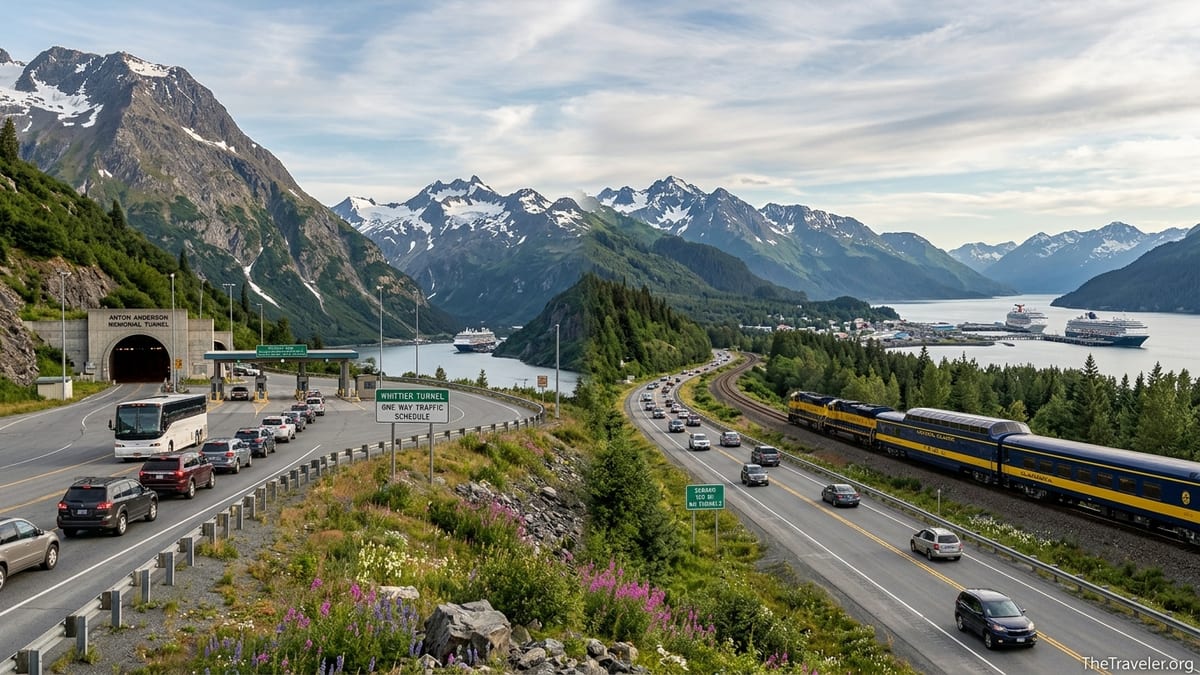
Anchorage to the Ports: Distance, Time and the Tunnel Factor
The key geographical distinction for cruise travelers is straightforward. Whittier lies roughly 60 miles southeast of Anchorage by road, while Seward is about 120 miles away along the Seward Highway. Under suitable conditions, that typically translates to around 90 minutes by road to Whittier and roughly two and a half to three hours to Seward. At first glance, Whittier’s shorter distance looks like the obvious choice for convenience.
The reality is more nuanced because road access to Whittier depends on the Anton Anderson Memorial Tunnel. This 2.5 mile tunnel is shared by vehicles and trains, with strictly controlled one-way traffic. Vehicles travel in timed windows that alternate direction, generally in 15 minute blocks each way, separated by periods reserved for trains and maintenance. Drivers who arrive just after their direction closes must wait until the next opening, which can add 20 to 40 minutes of idle time to a journey that otherwise takes about an hour and a half from Anchorage.
In practical terms, that means the shorter mileage to Whittier does not automatically produce a faster or more flexible transfer. For example, a late morning flight into Anchorage that lands after a key tunnel window may force a family to sit at the Portage staging area until the next outbound slot. Tour buses and cruise-line coaches are scheduled around the tunnel timetable, so they still run efficiently, but independent travelers in rental cars need to study the day’s schedule and build in a buffer, especially in peak summer when queues can form.
By contrast, the drive to Seward follows the Seward Highway along Turnagain Arm and into the Kenai Peninsula without tunnels or directional controls. The route is longer but continuous, so delays are more likely to come from construction zones, wildlife on the roadway or sightseeing stops than from set closures. Many visitors find it easier to time a self-drive or private transfer to Seward because they can simply depart when they are ready, without planning around a specific tunnel window.
Which Cruise Lines Use Whittier and Which Use Seward in 2027
For 2027 Gulf of Alaska itineraries, the division of cruise lines between Whittier and Seward remains broadly consistent with recent seasons. Schedules published for 2027 show Princess Cruises, Holland America Line and Norwegian Cruise Line operating one way Gulf of Alaska voyages that embark or disembark in Whittier. Examples include Princess sailings on Island Princess and similar ships, Holland America departures on vessels such as Westerdam and Nieuw Amsterdam, and Norwegian Cruise Line’s Norwegian Jade using Whittier as a turnaround port for northbound or southbound cruises.
On the Seward side, Celebrity Cruises and Royal Caribbean Group use Seward as their primary Gulf of Alaska gateway in 2027. Celebrity’s published schedules include multiple seven night southbound cruises on Celebrity Solstice, sailing from Seward to Vancouver with calls at Hubbard Glacier, Juneau, Skagway, Icy Strait Point and Ketchikan. Royal Caribbean’s 2027 deployment material shows Seward listed alongside Vancouver as a turnaround port for Anthem of the Seas, with cruise tours that link ship departures in Seward to overland trips in interior Alaska.
There can be ship specific nuances. Some smaller or luxury lines occasionally charter berths or operate niche itineraries out of Seward or Whittier, but the dominant pattern for mainstream one way Gulf of Alaska routes in 2027 is clear. Travelers targeting Princess, Holland America or Norwegian for their one way voyage should expect Whittier. Those focused on Celebrity or Royal Caribbean should expect Seward as the Alaska end of the route. Any exceptions tend to be clearly labeled in individual sailings, so it is still important to confirm your exact embarkation or disembarkation port before you lock in flights or hotel reservations.
This split has practical consequences for pre and post cruise planning. A traveler flying into Anchorage for a Celebrity Solstice cruise has almost complete certainty that they will start or end in Seward, while a Holland America guest will almost always work with Whittier. Because ship assignments generally repeat week to week through the May to September season, once you identify your ship and itinerary you can safely treat either Seward or Whittier as your fixed gateway and plan transfers and sightseeing around it.
Rail and Road: Transfers, Fares and Luggage to Each Port
Anchorage based travelers in 2027 have several ways to reach both Whittier and Seward. On the rail side, the Alaska Railroad’s Glacier Discovery service connects Anchorage with Whittier during the summer timetable, while its Coastal Classic train runs between Anchorage and Seward. Public information and 2027 rate sheets show one way Adventure Class fares in the approximate range of 122 dollars per adult for Anchorage to Whittier on the Glacier Discovery and about 133 dollars per adult for Anchorage to Seward on the Coastal Classic, with discounted child fares and higher prices for GoldStar dome service.
The important distinction is that these are public trains with their own boarding procedures, luggage rules and schedules that may not perfectly match cruise embarkation times. On the Coastal Classic, Anchorage and Seward are staffed depots with checked baggage service, so passengers can typically check suitcases in Anchorage and retrieve them in Seward a short walk from the cruise terminal. In Whittier, the Glacier Discovery uses a simple stop next to the cruise facilities rather than a full station building. Alaska Railroad representatives have noted that baggage services there can be limited, and some travelers have reported that not all departures permit through checked luggage to Whittier, especially on dates when the focus is on day excursion traffic rather than cruise transfers.
Because of this, cruise lines often charter their own rail equipment that operates as a dedicated cruise train. Princess and Holland America, for example, regularly run cruise chartered trains between the Anchorage area and Whittier that are timed specifically to their ship schedules and handle checked luggage directly between train and ship. These charter trains do not follow the exact Glacier Discovery public schedule, and they are typically sold as part of cruise line transfer packages or bundled with overland cruise tours. For Seward, some cruise lines similarly arrange chartered cars or special sections on the Coastal Classic to create a near seamless ship to train transfer, while independent travelers rely on the regular public departures.
Beyond rail, both ports are served by a mix of coach transfers, private shuttles and rental cars. For Seward, several Anchorage based operators sell one way shuttle service with luggage handling for prices commonly in the low to mid 80 dollars per person range in recent seasons, with private vans costing more but offering door to door flexibility. Whittier transfers by road, whether by shared coach or private vehicle, are typically slightly cheaper per person because of the shorter distance, but tunnel tolls are factored into pricing. Rental cars from Anchorage are available at major brands and can be cost effective for families, but renters must factor in per day rates, one way drop fees if they do not return to Anchorage, fuel and parking charges at the port.
Cruise Terminals, Facilities and Airport Timing
Seward and Whittier offer very different port environments even though both are fully capable of handling large cruise ships. In Seward, ships berth at a dedicated cruise dock north of town. The terminal area typically provides covered check in, baggage drop, security screening and staging areas for buses and shuttles. Luggage handling is straightforward: bags are checked either at the terminal entrance or via porters at the curb, then delivered directly to cabins. On disembarkation mornings, guests collect color coded tags and either walk off with their luggage or retrieve it from organized halls before boarding their onward transport.
Whittier’s cruise infrastructure includes separate facilities for Princess and Holland America, as well as a newer dock developed in partnership with Norwegian and local entities. While the footprint is smaller than Seward’s, it is designed specifically around the cruise schedule. Baggage handling is similarly organized, and because the town itself is extremely compact, transfer coaches, cruise trains and day boats are lined up very close to the ship. The town’s small size means that there are fewer distractions at the pier, which some travelers appreciate when they prefer a simple disembarkation day focused purely on getting to Anchorage and the airport.
For both ports, reaching Ted Stevens Anchorage International Airport comfortably is all about timing. From Seward, it is sensible to allow at least four and a half to five hours between the time your ship releases you and a domestic flight departure if you are traveling by coach or shuttle, and longer for international departures. A mid afternoon or evening flight pairs more safely with a morning disembarkation in Seward. From Whittier, the shorter road distance sometimes tempts travelers into booking midday flights, but the tunnel adds unpredictability. A cautious approach is to treat Whittier as requiring at least three and a half to four hours between ship clearance and a flight, including tunnel timing, coach loading and airport check in.
Common mistakes include booking flights before noon on disembarkation day from either port, especially during busy July and August weekends. Weather, congestion or minor port delays can easily shrink transfer buffers. Families with checked luggage and travelers connecting to a separate international ticket are generally best served by flights after mid afternoon or by planning an overnight in Anchorage followed by a relaxed departure the next morning.
Seward as a Destination: Kenai Fjords, Wildlife and Overnight Stays
Seward appeals strongly to travelers who want their cruise port to feel like part of the vacation rather than a pure transfer hub. The town sits on Resurrection Bay at the gateway to Kenai Fjords National Park, and a cluster of day cruise operators run wildlife and glacier trips ranging from about four hours to full day sailings. Typical six hour Kenai Fjords cruises depart late morning, return in the late afternoon and cost in the range of 180 to 250 dollars per adult in recent seasons, with on board commentary and meals included on many departures. Passengers routinely report sightings of humpback whales, orcas, puffins and sea lions, along with close but responsible viewing of tidewater glaciers.
On land, the Alaska SeaLife Center anchors Seward’s small waterfront and provides an indoor way to explore Alaska’s marine ecosystems. Visitors can easily spend two to three hours there, making it an ideal activity on a variable weather day or as a complement to a shorter bay cruise. Just outside town, Exit Glacier offers a relatively accessible way to experience glacier terrain. The road to the glacier terminus and the main trails are typically open from late spring into fall, with hiking options ranging from short, mostly level walks to overlook viewpoints to more strenuous climbs such as the Harding Icefield Trail that can occupy most of a day for fit hikers.
Hotel supply in Seward is modest but varied. In peak summer, standard rooms in mid range hotels and well rated lodges often run from roughly 250 to 400 dollars per night including taxes, with some waterfront options higher and simpler motels or hostels at the lower end. Many properties require two night minimum stays over certain weekends. As a result, staying in Seward is usually more expensive than a midrange night in Anchorage, where a similar quality chain hotel near the airport might price closer to 200 to 275 dollars per night in midseason. Travelers willing to book early and accept simpler accommodations can still find Seward rooms under 200 dollars on some May or September dates.
Because there is enough to do in and around Seward to fill at least a full day, travelers with an extra pre or post cruise night often gain more overall by basing themselves here rather than in Anchorage. A realistic one day Seward pre cruise plan could include the morning Coastal Classic train or shuttle from Anchorage, an afternoon visit to the SeaLife Center and a harborfront dinner, followed the next day by a six hour Kenai Fjords cruise that returns in time for afternoon ship boarding. Post cruise, passengers can disembark, join a morning wildlife cruise and then take the evening Coastal Classic back to Anchorage, using the train’s checked baggage service to keep logistics straightforward.
Whittier and Prince William Sound: Glaciers, Day Cruises and Transfer Stops
Whittier presents a very different atmosphere. Tucked into a narrow fjord on Prince William Sound, it is functionally a harbor first and a town second, with most services clustered around the small boat marina and cruise docks. Yet its location is exceptional for glacier and wildlife viewing. Popular day cruises from Whittier, such as those marketed as 26 glacier or similar itineraries, typically last around five to five and a half hours and explore the surrounding fjords and tidewater glaciers with onboard narration and meals. Recent seasons have seen adult day cruise fares in the low to mid 200 dollar range, with packaged options that combine Anchorage transfers and boat tickets for higher bundled prices.
For travelers who prefer to keep their overnight base in Anchorage or Girdwood, Whittier can work well as a day trip rather than a place to stay. The Portage Valley along the access road offers its own attractions, including viewpoints of Portage Glacier area landscapes and a visitor center that interprets the local glacial environment. Coupled with stops at the Alaska Wildlife Conservation Center near the junction of the Seward Highway and the Portage access road, it is common for coach operators and self drivers to turn a simple transfer between Anchorage and Whittier into a loosely structured sightseeing day.
Hotel choices in Whittier itself are limited to a small number of properties, and high demand on cruise days can push nightly rates into the 250 to 350 dollar range for standard rooms in summer, with fewer budget friendly alternatives than in Seward or Anchorage. Restaurant options are similarly constrained, with a handful of cafes and seafood focused establishments that operate seasonally. Parking is available but concentrated near the harbor, and the compact layout means that most visitors either walk everywhere in town or use short transfers organized by their cruise line or tour operator rather than relying on public transit, which is minimal.
For many travelers, that makes Whittier better suited to a simple overnight before or after a cruise, or as part of a combined transfer and day cruise, rather than as a multiday base. Someone arriving in Anchorage two nights before embarkation, for instance, might spend the first night in Anchorage, take a morning coach or rental car through Portage Valley with stops at the Alaska Wildlife Conservation Center and Girdwood, and then continue through the tunnel to overnight in Whittier before boarding the ship the next day. Others skip the overnight entirely and go straight from Anchorage to Whittier on embarkation morning using a cruise line coach, preserving hotel budget for inland touring.
Costs, Accommodation Comparisons and Example Budgets
When comparing Seward and Whittier purely on cost, Anchorage often emerges as the least expensive overnight base, with Seward typically a bit higher and Whittier sometimes the highest on a per night basis due to its smaller inventory. For 2027 peak summer dates, a realistic mid range Anchorage airport or downtown hotel might price around 220 to 280 dollars per night including taxes when booked in advance. Seward mid range properties often start closer to 260 to 350 dollars per night in July and August, while comparable rooms in Whittier can fall in a similar or slightly higher band with fewer choices at the lower end.
Consider a simple pre cruise overnight scenario for two adults sailing from Seward. One night in Anchorage at 250 dollars, shared shuttle from Anchorage to Seward at about 85 dollars per person, and a moderate dinner and breakfast might bring the total to around 470 to 500 dollars for the hotel and transfers, excluding excursions. If the same couple instead spends the night in Seward at 320 dollars, plus about 133 dollars per person for the Coastal Classic train in Adventure Class, their rail and hotel total might approach 586 dollars before meals, but they gain the scenic train experience and a morning or afternoon in Seward itself.
For a family of four traveling to Whittier, budget math looks somewhat different. One night in Anchorage at 260 dollars, shared coach transfer in the 60 to 70 dollar per person range plus tunnel tolls for independent drivers, and modest meals might produce a transfer and hotel total around 520 to 560 dollars, though actual figures depend on the ages of children and available family rates. An overnight directly in Whittier could raise lodging costs into the 300 to 350 dollar range but lower same day transfer stress and allow a relaxed morning walk to the ship.
All of these figures are examples based on currently visible 2027 hotel rates and Alaska Railroad fare tables for summer Adventure Class seats, and they do not include major excursions, gratuities or car rentals. Cruise line organized transfer packages, which often bundle coach or rail service between the Anchorage area and the port, can simplify planning and may be more cost effective for couples or small groups who prefer door to door service and a single point of contact, though they may be more expensive than assembling public train tickets and hotel nights independently.
Sample One Day Pre and Post Cruise Itineraries
A Seward focused pre cruise day for a first time Alaska visitor might start with an early morning departure from Anchorage on the Coastal Classic. After enjoying the rail journey along Turnagain Arm and into the Kenai Peninsula, the traveler arrives in Seward late morning, drops luggage at a harbor area hotel and walks to the Alaska SeaLife Center for a relaxed visit. After lunch at a waterfront restaurant, the remainder of the afternoon could be spent strolling the small boat harbor or taking a short hike on a nearby coastal trail, followed by an early night in preparation for boarding the ship the next day. A post cruise day in Seward could instead combine morning disembarkation with a six hour Kenai Fjords wildlife cruise that returns in time for the evening Coastal Classic to Anchorage.
In Whittier, a realistic pre cruise itinerary aligned with transfer simplicity might keep lodging in Anchorage and treat the port as a day excursion on embarkation day. Guests could stay near the airport, join a mid morning cruise line coach that includes a photo stop at the Alaska Wildlife Conservation Center and scenic pauses in Portage Valley, then pass through the Anton Anderson Memorial Tunnel and arrive at the Whittier cruise terminal in the early afternoon for boarding. Those seeking a richer Prince William Sound experience might instead travel to Whittier a day early, take a five hour glacier cruise and overnight in town, walking to their ship the next morning.
For travelers ending their cruise in Whittier, a popular choice is to combine disembarkation with daylight sightseeing along the Seward Highway. After morning clearance, a pre booked coach or rental car route could allow for a stop in Girdwood, perhaps riding the tram at the local ski resort for broad views of Turnagain Arm, then continuing to Anchorage for an evening flight or overnight stay. Compared with Seward, post cruise options in Whittier are more oriented around transfer day stops than extended stays, which suits travelers who value a focused, logistical approach to the port.
Regardless of port, pairing cruise disembarkation with the Alaska Railroad can provide a memorable finale. A morning Kenai Fjords cruise followed by the evening Coastal Classic back to Anchorage offers hours of scenery both on water and rails, while in Whittier a combination of a Prince William Sound day cruise and a Glacier Discovery segment on a different day can create a well rounded visit when schedules align. In all cases, confirming train departure times, luggage services and check in cutoffs when booking is essential, as 2027 timetables and policies can adjust from year to year.
Choosing Between Seward and Whittier for Different Traveler Types
When deciding which port represents the more convenient and rewarding gateway for a 2027 Gulf of Alaska cruise, context matters. Visitors with a full extra day before or after their sailing generally extract more value from Seward. The combination of Kenai Fjords National Park boat tours, the Alaska SeaLife Center, Exit Glacier access and small town charm justifies the somewhat higher lodging costs and longer transfer time. Wildlife enthusiasts who prioritize time on the water and expansive coastal scenery will find Seward’s day cruise offerings especially compelling.
On the other hand, travelers whose priority is transfer simplicity and who prefer to concentrate their extra nights in Anchorage, perhaps to enjoy city restaurants, museums and a wider range of hotels, may find Whittier preferable when their cruise line uses that port. The shorter road distance, abundance of cruise line coaches and tunnel controlled but well organized access allow for efficient same day transfers. Families juggling children and luggage often appreciate being able to stay in a familiar chain hotel near Anchorage airport both before and after their cruise, using a single bus ride to bridge the gap to Whittier on embarkation or disembarkation day.
Budget travelers need to weigh the higher per night cost of coastal towns against the savings and flexibility of Anchorage. Someone trying to minimize expenses might reasonably choose Whittier with overnights only in Anchorage, using a simple coach transfer and skipping additional day cruises. In contrast, a traveler viewing the cruise as part of a once in a lifetime trip might welcome Seward’s richer local activities despite higher hotel prices. First time Alaska cruisers with a strong interest in glaciers and marine wildlife will often find either port rewarding, but Seward’s combination of Kenai Fjords and Exit Glacier makes it particularly strong for those with a full extra day.
For people who want to extend their vacation well beyond the ship, both Seward and Whittier can be stepping stones rather than endpoints. Seward pairs naturally with broader Kenai Peninsula touring to Homer, Soldotna or Cooper Landing. Whittier and the Portage Valley integrate smoothly with road trips that include Girdwood, the Turnagain Arm region and interior Alaska reached by road or by the Alaska Railroad’s other services. Whichever port your chosen cruise line assigns, approaching it not just as a logistical necessity but as a gateway to its surrounding landscapes will help transform your 2027 Gulf of Alaska voyage into a fuller Alaska journey.