


More news on this day
European travelers booking flights in 2026 are entering a transition year for air passenger rights, as the European Union moves from the long-standing EU261 regime toward a newly approved framework that promises clearer rules but also introduces fresh complexity.
Get the latest news straight to your inbox!
From EU261 to a New Generation of Passenger Protections
For two decades, Regulation 261/2004 has been the backbone of compensation rights for passengers facing cancellations, long delays and denied boarding on flights departing from the European Union or operated into the bloc by EU carriers. It set fixed compensation bands based on distance and disruption length, alongside care obligations such as meals, accommodation and rebooking. Over time, court rulings broadened its scope, but also produced a patchwork of interpretations across member states.
In June and July 2026, European legislators agreed on a far-reaching revision of this framework after more than a decade of stalled talks. According to published coverage from EU institutions and consumer groups, the deal preserves core elements such as lump-sum compensation and free cabin baggage, while clarifying when airlines can reduce payouts if they swiftly reroute passengers and limit arrival delays.
The agreement still needs to move through formal publication and a one-year implementation period before the new rules fully apply, meaning most travelers flying in 2026 will encounter a hybrid environment. Existing EU261 provisions continue to govern many disruptions, but airlines and national authorities are already adjusting procedures and information tools to align with the upcoming regime.
For passengers, the evolving system means that the basic promise of protection remains, yet the pathways to asserting those rights are changing. Understanding where the old regulation ends and the revised framework begins will be central to navigating claims over the next 18 to 24 months.
What Is Changing on Compensation, Rerouting and Hidden Fees
One of the headline changes in the new deal concerns how compensation interacts with rerouting. Publicly available information from the European Parliament indicates that on long-haul journeys, airlines will be able to reduce lump-sum compensation by half if they manage to reroute passengers so that the final delay remains within a specified threshold, such as four hours. The intention is to reward rapid problem-solving while keeping a financial deterrent in place when disruptions are not effectively addressed.
At the same time, lawmakers have pushed back against attempts to weaken core entitlements. Coverage of the negotiations shows that pressure from consumer advocates helped preserve the right to compensation for significant delays and cancellations not caused by extraordinary circumstances, resisting calls from some governments and carriers for looser standards. The result has been described by analysts as a compromise that aims to balance consumer protection with industry concerns over cost and legal uncertainty.
Beyond payouts, pricing transparency is set to become a major focus. New provisions seek to curb the proliferation of hidden charges uncovered in recent enforcement sweeps, including inconsistent cabin baggage fees and late-revealed seat allocation costs. According to official briefings, the revised rules will require that essential elements such as the ability to carry a standard cabin bag and be seated with young children are clearly displayed in the initial price, limiting surprises at the checkout page or airport gate.
Airlines are also expected to standardise access to remedy. Earlier drafts of the reform discussed mandatory pre-filled claim forms for disrupted passengers, and while some of the most ambitious ideas were diluted in negotiations, the final package still promises clearer contact points and simplified complaint channels. For travelers, that should mean fewer instances of having to navigate opaque online portals or third-party intermediaries just to initiate a claim.
Stronger Enforcement, but Persistent National Differences
Even the strongest rights can falter without consistent enforcement, and this has been a recurring criticism of EU261. Over the years, passengers with similar disruptions have sometimes received different outcomes depending on where they filed a complaint, as national enforcement bodies interpreted “extraordinary circumstances” and evidence standards in divergent ways.
The 2023 legislative proposal to tighten enforcement across all transport modes laid the groundwork for the current reforms, focusing on the powers and coordination of national authorities. Recent Council and Commission communications indicate that the updated air passenger rights package will reinforce the role of these bodies, requiring closer cooperation and data sharing so that problematic practices can be tackled across borders rather than in isolation.
Annual reporting from several enforcement agencies has highlighted trends such as a rise in complaints over voucher-only refund offers and aggressive no-show clauses, prompting coordinated actions at EU level. As the revised rules move toward application, observers expect national bodies to receive clearer mandates to order corrective measures, impose penalties for systematic breaches and require airlines to provide evidence when claiming exceptional circumstances.
Nonetheless, travelers should be prepared for a continued degree of variation during the transition. Staffing levels, case backlogs and local legal traditions all influence how quickly complaints progress. In practical terms, that makes early documentation and direct engagement with airlines especially important before escalating a case to a national body or alternative dispute resolution scheme.
Digital Claims, Third-Party Services and the Risk of Confusion
The enforcement maze has opened space for commercial claims agencies, which file compensation demands on behalf of passengers in exchange for a share of any payout. The European Commission has published guidance reminding these intermediaries that they must respect consumer and data protection rules, reflecting concern about opaque fees and aggressive marketing.
As digital tools expand, travelers in 2026 can choose between multiple options when seeking redress: airline web forms, national portals, cross-border dispute resolution platforms and private services. Each comes with trade-offs in terms of speed, transparency and cost. Official information portals urge passengers to first contact the carrier in writing, making clear whether they are seeking reimbursement, rerouting or fixed compensation, and to keep copies of boarding passes, confirmations and receipts for care expenses.
The revised framework is expected to spur further standardisation of digital complaint channels, but differences in implementation timelines mean that the user experience may vary significantly from one airline or country to another. Some large carriers have already announced upgrades to their customer-service infrastructure to reduce backlogs and automate simple claims under clearer rules, while smaller operators may take longer to adapt.
Experts caution that the growing visibility of claims services on social media and search engines can mislead passengers into assuming that external intermediaries are necessary to unlock compensation. In reality, publicly available guidance from EU consumer networks emphasises that individuals retain the right to file claims directly and at no cost, even if response times can be uneven.
New Focus on Accessibility and Cross-Border Journeys
The 2026 political agreement also places greater emphasis on accessibility for travelers with disabilities or reduced mobility, updating the interaction between air passenger rights and the dedicated regulation that protects this group. Reports from specialist EU bodies highlight persistent obstacles, from damaged mobility equipment to inadequate assistance in airports, and point to the new deal as an opportunity to strengthen redress in such cases.
Provisions under discussion include clearer responsibilities for airports and airlines when wheelchairs or other assistive devices are lost or damaged, improved training requirements for ground staff and more predictable assistance booking procedures. For affected passengers, such measures could translate into faster compensation for equipment damage and more reliable support during disruptions or rebookings.
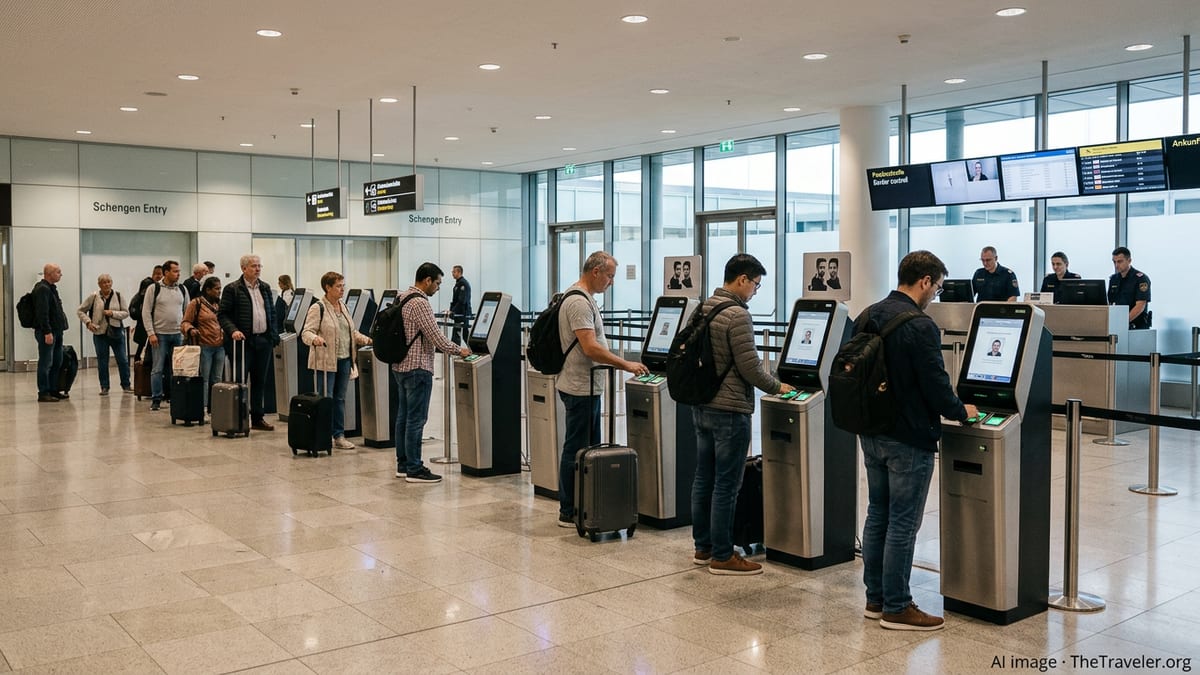
The changing rules also intersect with broader shifts in how Europeans move across borders. The roll-out of new digital border systems, such as the Entry/Exit System for non-EU nationals, has raised questions about queues, missed connections and what happens when security or border checks trigger knock-on delays. While passenger rights rules continue to draw a distinction between airline-controlled disruptions and events outside carriers’ control, legal specialists expect the new enforcement framework to generate more detailed case law on where responsibility lies.
For multi-leg itineraries involving rail or coach connections, the Commission’s wider passenger rights package aims to encourage better information and protection across modes, even when journeys are sold as separate tickets. That remains an emerging area, but cross-border travelers in 2026 are being advised by consumer organisations to pay close attention to whether their trip is booked as a single contract or a series of stand-alone segments, as this can heavily influence what remedies are available when something goes wrong.