


Historic Cairo is far more than a backdrop to the pyramids. Recognised by UNESCO as a World Heritage site since 1979, it brings together Islamic, Coptic and later monuments in a dense urban fabric that is still very much alive. From medieval mosques and caravanserais to ancient churches and a Roman fortress, this is where Egypt’s layered history unfolds at street level, among residents going about daily life.
Get the latest updates straight to your inbox!
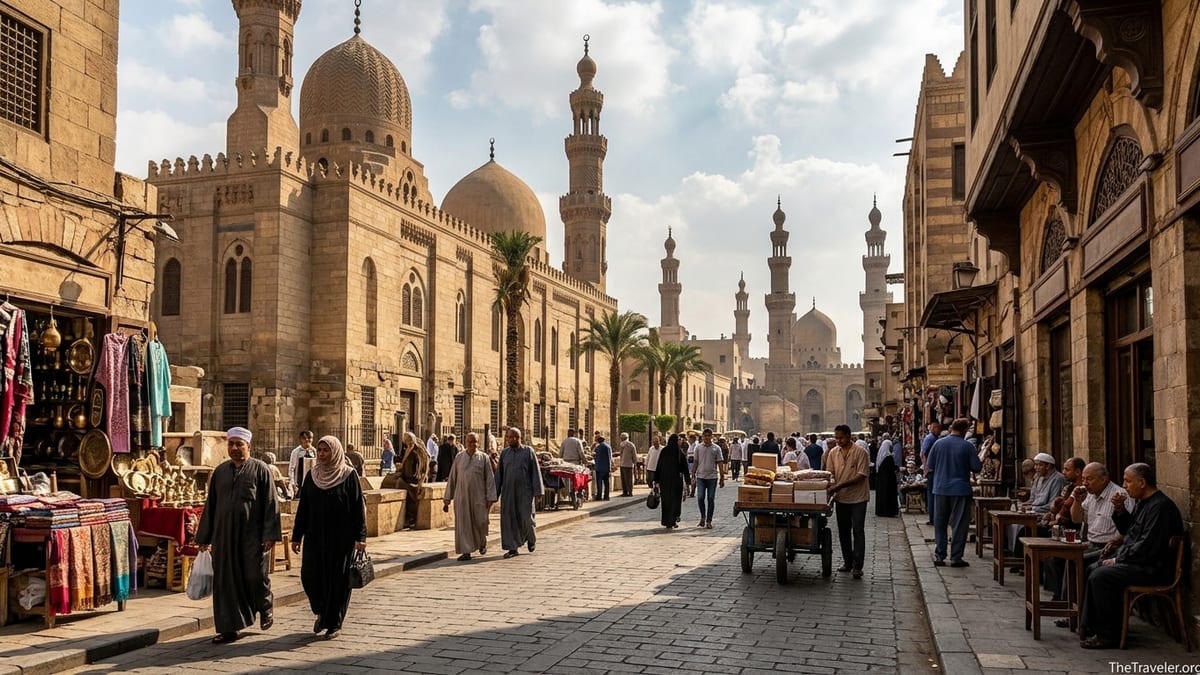
Understanding What “Historic Cairo” Really Means
UNESCO defines Historic Cairo as one of the world’s oldest Islamic cities, but the inscription covers much more than mosques. It includes the Fatimid and Mamluk core around Al-Muizz Street, the Citadel, vast cemeteries and Old Cairo, where Coptic churches and the Roman fortress of Babylon cluster near the Nile. This blend of Islamic and Coptic heritage is what makes the area unique: it is both an archaeological landscape and a lived-in city where people study, worship and work.
Egypt’s Ministry of Tourism and Antiquities describes the property as encompassing early Islamic foundations such as Fustat and the Mosque of Amr ibn al-As, the Citadel, the Fatimid walled city, major necropolises and Coptic landmarks like the Hanging Church and Ben Ezra Synagogue. As a visitor, you experience this not as a fenced archaeological park but as a patchwork of quarters linked by streets, alleys and main roads that weave through markets and modern apartment blocks.
For a culturally curious traveler already based in Cairo, it is realistic to devote one day to the Islamic core around Al-Muizz Street, Khan el-Khalili and the Citadel, and another half-day to Coptic Cairo in Old Cairo. Each area has its own rhythm and character. Planning your time with this structure in mind helps you move logically through the historic fabric instead of backtracking in Cairo’s heavy traffic.
This article reflects information checked in late November 2026, especially for ticket prices and basic visitor rules, using official or primary sources wherever possible. Prices and conditions can change frequently, so treat them as a recent snapshot and be prepared for modest variation on the ground.
Islamic Cairo on Foot: Al-Muizz Street and Khan el-Khalili
The heart of Islamic Cairo is the spine of Al-Muizz li-Din Allah Street, laid out in the Fatimid period and later lined with some of the city’s finest Mamluk architecture. Today it is a largely pedestrianised heritage corridor, especially in the stretch between Bab al-Futuh and Bab Zuweila, with restored facades, monumental mosques and sabil-kuttabs opening onto a street still used by residents and traders. It is one of the best places to sense Cairo as a living historic city.
A classic walking route starts at the northern gate of Bab al-Futuh, then heads south along Al-Muizz. Within a short distance you pass the fortified Bab al-Nasr, the restored Fatimid mosque of Al-Hakim, the Qalawun complex and the striking twin-domed complex of Sultan al-Ghuri, before eventually reaching Bab Zuweila at the southern end. Many of these monuments are part of the World Heritage property and, at the time of writing, can be entered with small separate tickets or with combination tickets that local offices periodically offer; specific prices for individual mosques and complexes are less consistently published than for the Citadel, so expect modest cash payments at on-site kiosks, typically in Egyptian pounds.
Near the midpoint of Al-Muizz, narrow alleys lead into Khan el-Khalili, Cairo’s most famous market. Historically developed as a caravanserai district, it now sells everything from brass lamps to tourist trinkets, but still houses genuine workshops and local cafés. It is crowded and intense, particularly from late afternoon into the night. For many visitors, the transition from monumental Al-Muizz to the squeezing lanes of Khan el-Khalili captures the essence of Historic Cairo as both heritage site and everyday working bazaar.
Allow at least three to four hours for this walk, more if you plan to enter monuments or linger in the market. Modest dress is advisable throughout, with shoulders and knees covered, as you will likely step inside functioning mosques or shrine spaces. Women may be asked to use headscarves in some mosques; where required, many sites provide coverings. Remove shoes before entering prayer halls and stay clear of worshippers during prayer times. Photography is generally allowed outdoors; inside, follow on-site signage and staff instructions.
Al-Azhar, Monumental Mosques and the Citadel
Across the main road from Khan el-Khalili stands Al-Azhar Mosque, founded in 970 and still a working religious university. Unlike the Citadel, Al-Azhar typically has no formal ticket gate for foreigners. Visitors enter between prayer times, subject to security checks and the mosque’s own rules. Modest clothing is required, with shoulders and knees covered and headscarves for women, and staff or volunteers may guide you on where you may walk, sit or photograph. This atmosphere of active study and worship underscores that Historic Cairo is not merely a museum.
Further south, two of Cairo’s most important Mamluk monuments, the mosques of Sultan Hassan and Al-Rifa’i, stand opposite each other below the slope of the Citadel. These vast stone complexes, with monumental portals and high iwans, are popular with visitors and sometimes charge small entry fees that vary over time and are not always listed in national ticket schedules. Expect a straightforward cash payment at the door, often with a higher rate for foreign adults and a reduced rate for students with cards.
The Citadel itself, founded by Salah al-Din in the 12th century and expanded over centuries, is one of the clearest places where ticketing has been standardised. According to Egypt’s Ministry of Tourism and Antiquities and current tourism guidance, the foreign adult area-entry ticket is approximately 550 Egyptian pounds, with a reduced rate around 275 pounds for foreign students, as confirmed against the ministry’s price list in October 2026 and rechecked in November 2026. This ticket covers the Citadel enclosure and its main mosques and museums, including the Mosque of Muhammad Ali, Al-Nasir Muhammad Mosque, the Military Museum and other exhibition spaces. Vehicle and cart entry carry separate small fees, relevant mainly for group coaches and taxis entering the complex.
The Citadel usually opens daily in the morning and operates into late afternoon. Current official hours are widely cited as starting around 8 or 9 in the morning and ending around 5 or 6 in the evening, but you should confirm exact times locally, especially during Ramadan or public holidays when hours can shift. Plan two to three hours for a relaxed visit, including time for skyline views over the old city and exploration of at least one museum. As in other mosques, dress modestly, remove shoes before entering prayer spaces and avoid intrusive photography during prayers.
Coptic Cairo: Churches, Fortress and Museum
South of the medieval core, in Old Cairo, lies the district widely known as Coptic Cairo. This compact area includes part of the Roman fortress of Babylon, several of Egypt’s most important Coptic churches, the Coptic Museum and the Ben Ezra Synagogue. It forms a key Coptic component of the Historic Cairo World Heritage property, showing how Christian and Jewish communities have shaped the city alongside Islamic dynasties.
The best-known church is the Hanging Church, officially the Saint Virgin Mary’s Coptic Orthodox Church, which sits partly over a Roman gate. As of October 2026, visitor information derived from ministry-linked sources and specialist guides indicates that the Hanging Church is open roughly from 9:00 to 16:00 daily and does not charge a separate ticket to enter, though donations are appreciated. Nearby, the Church of Saints Sergius and Bacchus (Abu Serga), associated with the Holy Family’s flight into Egypt in Christian tradition, and the Greek Orthodox Church of St George are also typically free to enter, functioning as active places of worship rather than ticketed monuments.
The Coptic Museum, by contrast, is formally ticketed. According to recent summaries of the Ministry of Tourism and Antiquities price list, checked in October and November 2026, the foreign-adult ticket is about 280 Egyptian pounds, with a reduced student rate. The museum’s collection traces Egyptian Christian art from the late Roman to the Islamic periods, providing historical context for the churches outside. Allocate at least one hour, and more if you are particularly interested in religious art and manuscripts.
Ben Ezra Synagogue, another key site within Coptic Cairo and associated with the discovery of the Cairo Geniza documents, has had varying visitor arrangements over recent years. At the time of writing, up-to-date official pricing for foreign visitors is less clearly published than for the Coptic Museum or the Citadel, and some recent guides describe access as free but controlled for security and preservation reasons. Expect possible guard checks and be prepared for evolving rules on interior photography or access to certain areas.
Planning Logical Routes and How to Get Around
To experience the Islamic core on foot, start your day at Bab al-Futuh in the north, reached by taxi or ride-hailing services from central Cairo. From there, walk south along Al-Muizz Street, visiting a few key monuments that interest you most rather than attempting to enter every site. Break for tea or a light meal near Khan el-Khalili, then continue to Al-Azhar Mosque and, if you wish, take a short taxi ride to the Sultan Hassan and Al-Rifa’i mosques and onward up the hill to the Citadel. This sequence respects the historic layout while limiting the need to cross major roads on foot.
For Coptic Cairo, most visitors arrive either by taxi or by metro to Mar Girgis station, which is directly adjacent to the historic quarter. Metro fares were adjusted in March 2026, with prices varying by distance bands, but remain modest, making this one of the most convenient ways to reach Old Cairo if you are comfortable with urban transit. Once at Mar Girgis, nearly all major sites are within a few minutes’ walk through pedestrian passages: you can move from the Hanging Church to Abu Serga, the Coptic Museum and Ben Ezra in a compact loop.
A practical approach is to dedicate one full day to the Islamic core plus the Citadel, and a separate half-day, morning or afternoon, to Coptic Cairo. This leaves space for rest, meals and the inevitable delays that come with Cairo traffic and crowds. If you have an extra day in the city, you might return to Al-Muizz Street in the evening or explore additional quarters within Historic Cairo, such as the northern cemeteries or less-visited mosques, with a guide who knows the area well.
Given the constant movement of cars, microbuses and motorbikes, avoid long road crossings where possible. Use pedestrian underpasses and controlled crossings, and follow local pedestrians when they move together. If a road feels too chaotic, it is entirely acceptable to ask a nearby shopkeeper or family to help you cross. In Historic Cairo, your safety depends as much on how you navigate traffic and crowds as on the sites you choose to visit.
Etiquette, Dress and the Character of Each Quarter
Islamic Cairo’s core is a blend of heritage and commerce. Along Al-Muizz Street you will find restored stone facades and lighting schemes, but also delivery carts, children walking to school and residents hanging laundry from mashrabiya balconies. In Khan el-Khalili, shopkeepers can be persistent in inviting you into their stalls, though a firm, polite “no, thank you” usually suffices. Keep in mind that this is a historic trading district as well as a tourist zone, so you are moving through someone else’s workplace.
Modest clothing helps you blend in and respects the religious nature of many sites. For both men and women, covered shoulders and at least knee-length trousers or skirts are strongly recommended. Women entering mosques or churches may be asked to cover their hair; carrying a light scarf makes this easy. Inside mosques, remove shoes and place them on shelves or in plastic bags you carry with you. Avoid loud conversation, do not photograph worshippers at close range, and never walk in front of someone who is praying.
Coptic Cairo feels quieter and more introspective than the crowded market streets of Islamic Cairo. Once you step inside the church compounds, you are in active parish spaces where weddings, funerals and liturgies take place. If a service is in progress, stand unobtrusively at the back unless invited forward. In churches, hats should be removed, and flash photography is often discouraged. Dress codes are broadly similar to mosques, though you may notice more variation among local visitors.
Both quarters reward travelers who slow down and observe daily rhythms. Early morning tends to be calmer in the markets and on Al-Muizz Street, while late afternoon light can be spectacular for photography around the Citadel or from higher terraces in Coptic Cairo. Fridays and major Christian feast days can bring heavier crowds and restricted access to some religious buildings, so be flexible if a particular church or mosque is temporarily closed for worship.
Safety, Comfort and Accessibility in a Living City
Historic Cairo is generally welcoming, but it is busy, noisy and physically demanding in ways that surprise some visitors. Petty theft is not rampant, but it is wise to carry bags zipped and in front of you in crowded alleys, keep phones secure when photographing and avoid displaying large amounts of cash. Street vendors and informal guides may approach you frequently; if you decline an offer, do so clearly and move on rather than entering long negotiations you do not want.
Uneven pavements, stone steps and occasional excavation works make the historic streets challenging for travelers with limited mobility. Many mosques and churches have flights of stairs at their entrances, and minaret climbs at monuments such as Bab Zuweila involve steep, narrow steps without modern handrails. Wheelchair access is variable and often partial, confined to courtyards or outer areas, and shade can be limited along Al-Muizz Street and around the Citadel during midday. Carry water, sunscreen and a hat, and plan rest breaks in cafés or shaded courtyards.
Traffic is an ever-present concern on the boundaries of the historic quarters. Major roads frame Khan el-Khalili, Al-Azhar and the approach to the Citadel, and crossing them can be stressful. Use official crossings where they exist, cross with groups of locals and avoid distractions such as headphones. At night, some alleys are less well lit away from main tourist routes; if you wish to photograph after dark, keep to busier streets and consider returning to your hotel by taxi rather than walking long distances.
Remember that this is not an open-air museum but a living city. Residents are commuting, shopping, attending school and worshipping while you explore. Asking permission before photographing people, stepping aside for handcarts and giving way to funeral or wedding processions in churches and mosques all show respect for that reality. Small courtesies go a long way to making your visit smoother and more rewarding.
Evening Atmosphere and Night Visits
Al-Muizz Street and parts of Islamic Cairo benefit from architectural lighting schemes that highlight domes, minarets and restored facades in the evening. In practice, lights are usually on after sunset into the late evening, though the exact timing and consistency can vary with power-saving measures and maintenance. Night visits along Al-Muizz can be memorable, with cooler temperatures and a theatrical glow on stonework, but you will find that the interior of many monuments closes in the late afternoon, so plan to explore inside by day and return after dark mainly for atmosphere and photography.
The Citadel has periodically hosted evening events and special openings, but as of late 2026, routine night opening hours for independent visitors are not consistently advertised by official channels. Most travelers should expect standard daytime visiting and, where special night events exist, consider them a bonus rather than a core plan. Ask locally or through your accommodation if any evening cultural performances are scheduled during your stay.
Coptic Cairo is generally quiet at night, and its churches and the Coptic Museum close by late afternoon. The lanes around Mar Girgis are not designed as night-time promenades in the way Al-Muizz has become, and public transport options taper later in the evening. For most visitors, Coptic Cairo works best as a morning or early afternoon destination, with time to return to central Cairo or continue to another neighborhood by daylight.
When deciding whether to explore after dark, balance the appeal of cooler temperatures and illuminated architecture with practical considerations: reduced public transport, changing crowd profiles and your own comfort level with navigating busy urban spaces at night. If you do go out, keep valuables discreet and stick to familiar or well-trafficked routes, returning by licensed taxi or ride-hailing service.
How Historic Cairo Complements Giza and Luxor
Many travelers arrive in Egypt focused on the pyramids of Giza and the temples and tombs of Luxor. Historic Cairo offers a different time horizon, revealing what happened long after the pharaohs. Here you encounter Fatimid palaces refashioned as Mamluk madrasas, Ottoman mosques perched inside a fortress and Coptic churches built into a Roman wall. This layering shows Egypt as a crossroads of Mediterranean, African and Middle Eastern histories over more than a millennium.
Rather than duplicating what you see at Saqqara or Karnak, Historic Cairo helps explain how Cairo became a center of Islamic scholarship and Coptic Christianity. The Citadel speaks to Ayyubid and Mamluk military power, while Al-Azhar reflects Cairo’s role as a seat of religious learning. Coptic Cairo reveals how Christian communities endured and adapted under successive regimes, preserving languages and liturgies that connect present-day worship to late antiquity.
For photographers, the dense urban scenes of Al-Muizz Street, the silhouettes of minarets around the Citadel and the icon-lined interiors of Coptic churches provide an entirely different palette from desert pyramids and Nile-side temples. Architecture enthusiasts can trace evolving styles in stone carving, wooden mashrabiya screens and church iconostases, while travelers interested in religious history can move in a single day from major Islamic institutions to some of Africa’s oldest Christian churches.
Because Historic Cairo is embedded in the contemporary metropolis, you also see how Egyptians today live with this heritage: shopkeepers using centuries-old khans as storehouses, families picnicking on Citadel lawns, parishioners lighting candles beneath medieval icons. It is this coexistence of past and present that makes time in Historic Cairo an essential complement to the more obviously ancient landscapes of Giza and Luxor.
How Many Days to Spend and Who Will Benefit Most
If your time in Cairo is tight, a single intensive day can give you a taste of Historic Cairo: a morning walk along Al-Muizz Street and through Khan el-Khalili, followed by an afternoon at the Citadel. Even this brief visit will leave you with a sense of the city’s medieval heart. However, two days are preferable for travelers who want to understand more deeply how the Islamic and Coptic quarters fit together.
With two days, you can devote one full day to the Islamic core and Citadel and at least a half-day to Coptic Cairo, leaving a spare half-day for additional mosques, a return visit at sunset or unstructured wandering. Photographers and architecture enthusiasts in particular will find that slower exploration reveals shifting light on stone facades, decorative details on wooden doors and quiet interior spaces that rushed itineraries often miss.
Travelers with a strong interest in religious history, interfaith dynamics or Christian pilgrimage will benefit especially from time in Coptic Cairo, combining its churches and museum with visits to major mosques such as Al-Azhar and Sultan Hassan. Those whose priorities are shopping and atmosphere will enjoy Khan el-Khalili and the pedestrian sections of Al-Muizz, but even they should consider stepping into at least one monument and one church to anchor the experience in its historic context.
Ultimately, Historic Cairo rewards the same curiosity and patience that make places like Luxor compelling. Give it at least a full day, ideally nearer two, walk when you can, and remember that you are exploring not only a World Heritage site but a living city that continues to shape Egypt’s story.