


More news on this day
A powerful Thanksgiving storm system brought damaging winds, heavy rain, coastal flooding and mountain snow to large parts of the United States on Thursday 26 November 2026, cutting power to hundreds of thousands of customers, disrupting holiday travel and forcing the first-ever postponement of New York City’s Macy’s Thanksgiving Day Parade to Saturday.
Get the latest news straight to your inbox!
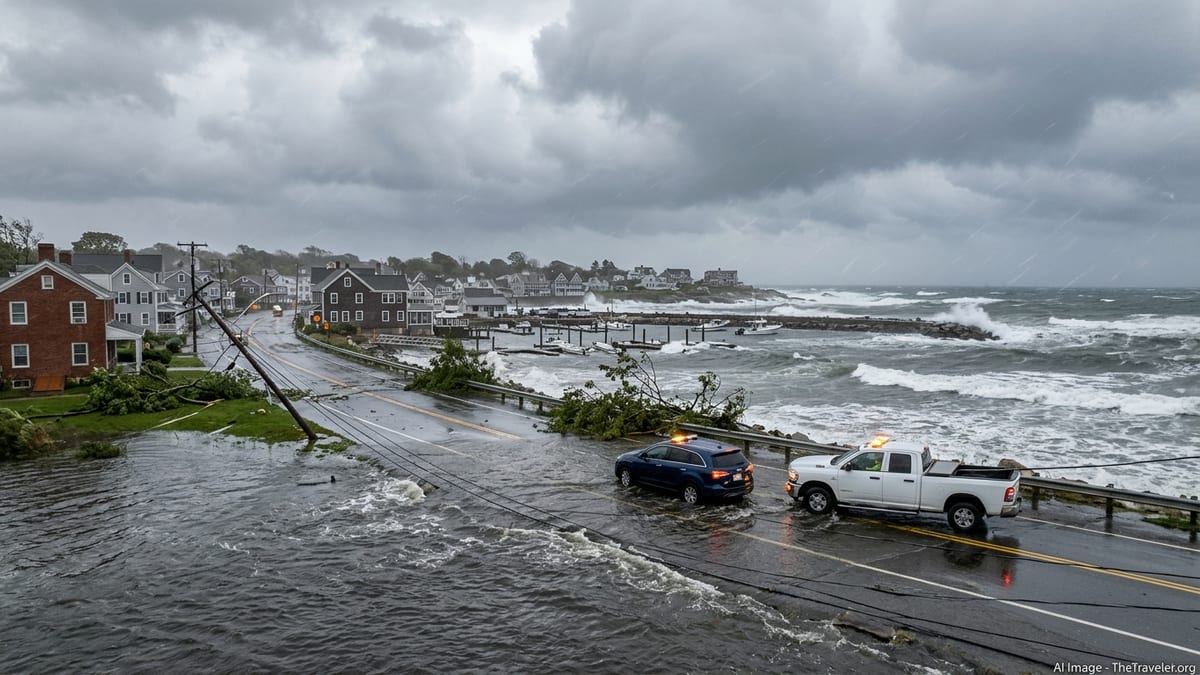
Widespread outages, coastal flooding and emergency measures
By Thursday evening, outage tracker PowerOutage.us reported that close to 900,000 homes and businesses across the Midwest and Northeast had lost electricity at some point during the day, as winds gusting up to around 70 mph downed trees and power lines in multiple states. Pennsylvania, New Jersey and North Carolina were among the hardest hit, each recording tens of thousands of customers without power at the evening peak, while additional outages were reported from Virginia northward into New England.
In New Jersey and parts of New York, governors and local officials declared states of emergency as the storm intensified along the coast. A federal situation briefing from the Federal Emergency Management Agency and National Weather Service highlighted moderate to major coastal flooding risks for central and southern New Jersey and portions of Long Island, with coastal flood watches and warnings, storm warnings over adjacent waters and high wind warnings remaining in effect into Friday afternoon.
Farther south in the mid-Atlantic, heavy rain combined with high tides to flood low-lying communities and strand vehicles. In Maryland, authorities asked nearly two million water customers in Montgomery and Prince George’s counties to conserve water because intermittent power disruptions at treatment facilities were affecting system capacity, underscoring how the storm’s impacts extended beyond transportation and electricity supply.
Macy’s parade postponed and air travel reshuffled
New York City’s 100th Macy’s Thanksgiving Day Parade, one of the country’s most-watched holiday events, was postponed from Thursday to Saturday 28 November on safety grounds. Organizers and city officials cited concern over how the parade’s large character balloons would behave in strong, gusty winds channeled between Manhattan’s tall buildings. Macy’s said it was the first time in the parade’s near-century history that the event had been postponed rather than canceled outright, although it did not operate for three years during the Second World War because of wartime restrictions on balloon materials.
The change has immediate implications for visitors who traveled specifically to see the live procession. Hotels in Midtown and the Upper West Side remained open and operating during the storm, but some marching bands and performance groups faced last-minute decisions on whether they could extend their stays until Saturday. One high school band that had traveled from Texas, for example, publicly described having to secure additional funding to remain in the city until the new parade date, while at least one university band chose to leave as scheduled to perform at a football game instead.
Air travel across the United States was also significantly affected on one of the busiest days of the year. By Thursday afternoon, flight-tracking services reported more than 2,000 flights to or from US airports delayed and more than 400 canceled as the system swept along the East Coast and a separate winter storm hit the Midwest. Disruptions were concentrated at large hubs exposed to the coastal storm, including New York-area airports and major facilities in the mid-Atlantic and New England, although ripple effects were felt nationwide as aircraft and crews were left out of position.
Midwest snow and a rare Pacific Northwest tornado warning
While the coastal storm battered the mid-Atlantic and New England with rain and wind, a separate winter storm produced heavy snowfall in parts of the Midwest. Sections of Missouri reported snow totals exceeding 30 centimeters on Thursday, leading to difficult driving conditions on interstates and secondary roads and prompting local authorities to warn against non-essential travel. Airline operations in the region were also affected as carriers slowed or paused departures during periods of reduced visibility and active runway clearing.
On the opposite side of the country, the National Weather Service issued a rare tornado warning for central King County in Washington State late Thursday morning, covering communities east of Seattle such as Issaquah, Snoqualmie and North Bend. The warning, which was allowed to expire after reports of a brief landspout-type tornado near Renton and rapid improvement in conditions, underscored the highly unusual Thanksgiving weather for the Pacific Northwest. Tornadoes in Washington are recorded only a handful of times per year on average, and an event near the Seattle metropolitan area in late November is considered uncommon by climatological standards.
Along the broader Pacific coast, separate high surf and high tide events also affected travel and coastal access. In California, record or near-record tides earlier in the Thanksgiving week had already forced precautionary evacuations in some low-lying communities from Humboldt County in the far north to Ventura County near Los Angeles. The National Weather Service warned of waves exceeding 6 meters in parts of Northern California, with the potential for waves to reach coastal roads and parking areas, leading local authorities to close some beaches, piers and oceanfront car parks to visitors for safety reasons.
Impact on ground transport and local holiday plans
Beyond the air network, ground transportation was heavily stressed across the affected regions. In the Northeast corridor, strong winds and track obstructions caused by fallen branches and localized flooding led to slower-than-normal operations and sporadic suspensions on some commuter rail and regional services. Road travel was hampered by ponding on highways, especially near coastal inlets and underpasses, and some bridges imposed vehicle restrictions for high-profile trucks and buses during peak wind periods.
Within New York City, emergency management officials reported that several people had to be rescued from vehicles caught in rapidly rising floodwaters. Local authorities urged residents and visitors to avoid driving or walking through flooded streets, emphasizing that fast-moving water could conceal open manholes or other hazards. Mayors and governors across the mid-Atlantic and New England stressed that travelers should not attempt to keep to rigid timetables if conditions deteriorated, advising them to prioritize safety over holiday schedules.
For many households, the storm forced rapid adjustments to Thanksgiving plans. Some coastal communities brought forward or delayed local parades and public events to avoid the worst of the weather, while others canceled outdoor activities entirely. In areas suffering extended power outages, families turned to gas stoves, grills or community centers to prepare meals, and local authorities issued reminders about safe use of generators and charcoal equipment to prevent carbon monoxide incidents.
What travelers should check next
As of late Thursday, the National Weather Service expected high winds, coastal flooding and heavy rain to persist into Friday along sections of the mid-Atlantic and southern New England coast, even as the storm gradually tracked northward into Atlantic Canada. Travelers with flights on Friday or Saturday were advised to monitor airline notifications closely, as residual delays, equipment imbalances and ongoing weather constraints could continue to disrupt schedules, particularly at airports from Washington through Boston.
Visitors intending to attend the rescheduled Macy’s Thanksgiving Day Parade on Saturday should verify updated timings, viewing guidance and street closures published by New York City authorities and the event organizer before setting out. With the parade now expected to step off in improved but still seasonally cool conditions, spectators may face large crowds on the revised date as both residents and tourists adjust their plans to fit the new schedule.
In other affected regions, road users are being urged to check state transportation department alerts for information on remaining closures, winter driving restrictions and detours, especially in areas of the Midwest that experienced heavy snowfall and along coastal stretches where high tides and surf may continue to inundate low-lying roads. Travelers planning near-shore hikes, beach visits or scenic coastal drives over the holiday weekend should confirm local access conditions, heed any beach or trail closures and remain aware that some communities are still focused on restoring power and clearing debris rather than normal tourism operations.