


Straddling the edge of Lapland in northeastern Finland, Oulanka National Park is a rare mix of wild rivers, thundering rapids and quietly beautiful pine forests. Hikers come for the Karhunkierros trail, paddlers for the free flowing Oulankajoki and Kitkajoki rivers, and road trippers for the iconic suspension bridges and mill at Myllykoski. With good planning, you can combine hiking, whitewater and scenic viewpoints in a single trip, whether you have one day or a full week.
Get the latest updates straight to your inbox!
Understanding Oulanka’s Rivers, Rapids and Seasons
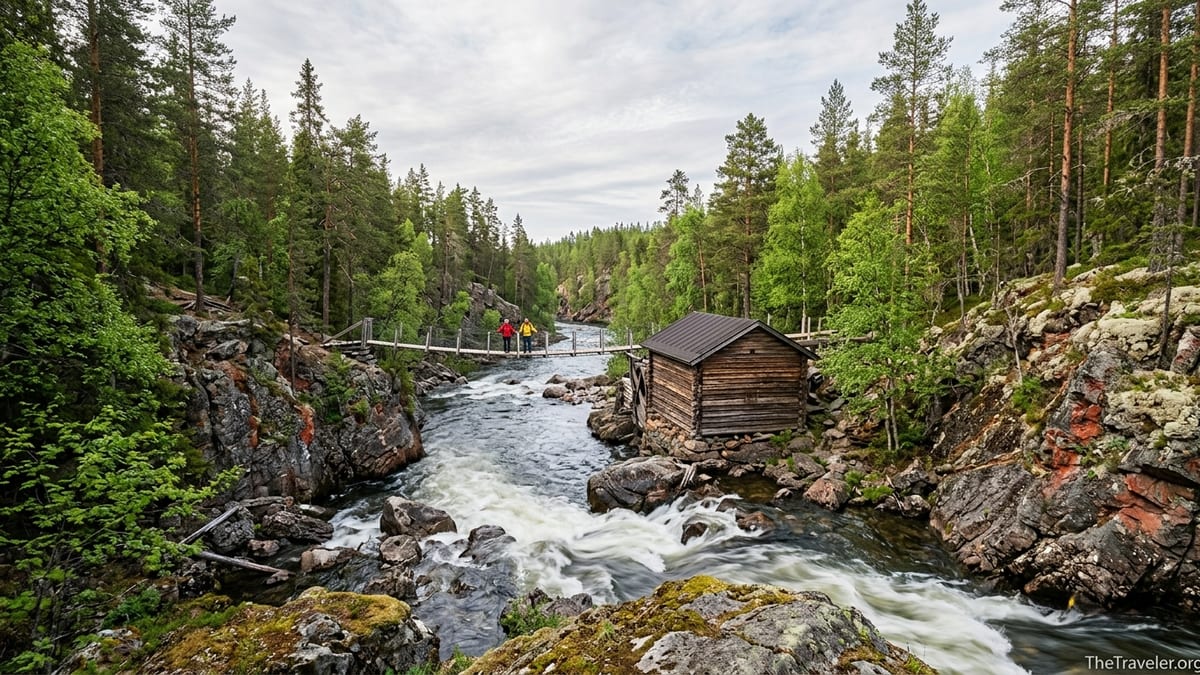
Oulanka National Park protects a river valley system shaped over thousands of years by the Oulankajoki and Kitkajoki rivers. These waterways carve through sandstone canyons, creating a chain of rapids such as Kiutaköngäs on the Oulankajoki and Jyrävä and Myllykoski on the Kitkajoki. The result is a landscape where many of the best viewpoints, hiking routes and campgrounds sit close to churning whitewater, wooden bridges and sandy river bends rather than on mountain tops.
The park is a genuine four season destination, but conditions change dramatically across the year. From late May through September, trails are mostly snow free and rafting operators run trips on the Kitkajoki, often starting near the Ruka ski area and finishing inside the park. In October the larch and birch forests turn golden, temperatures drop close to freezing at night and river levels can fluctuate after autumn rains. From roughly November to April the park becomes a winter landscape; some bridges and trail sections may be closed or only practical on snowshoes or skis, and rapids become icy but remain powerful.
For visitors focused on hiking along rivers and seeing the biggest rapids, the most reliable window is June to early October. Early summer often brings higher river levels, which make rapids like Myllykoski and Aallokkokoski particularly dramatic when viewed from the suspension bridges. By late summer, water is usually slightly lower but trail conditions are at their best, mosquitoes lessen, and long days give you more time for side trips to viewpoints and mills.
Winter trips can still be rewarding if you accept that you will experience the rivers from a distance rather than on the water. Local operators in Kuusamo and Ruka sometimes run guided snowshoe hikes to viewpoints above Kiutaköngäs and Myllykoski, where you look down on the part frozen rapids amid deep snow. This is a very different experience from summer rafting, but the contrast of white snow, dark water and ice formations is striking.
Getting There and Making Oulanka Your Base
Oulanka sits in northeastern Finland, roughly 60 kilometers from Kuusamo and about 30 kilometers from the Ruka ski resort area. For most international travelers the simplest approach is to fly into Helsinki and connect to Kuusamo Airport, then continue by rental car or bus. Kuusamo Airport has regular domestic flights, and in summer many rafting and hiking tours will meet guests either at Kuusamo or in Ruka.
If you prefer to travel overland, you can take an overnight train from Helsinki to Rovaniemi, Kemijärvi or Oulu and then connect by bus to Kuusamo. From Kuusamo and Ruka there are seasonal buses that stop near key trailheads and the Oulanka Visitor Centre, as well as taxi services that can drop you at starting points like Juuma, Hautajärvi or the Kiutaköngäs parking area. Travelers arriving in winter sometimes combine a ski holiday in Ruka with day trips into Oulanka using the same local transport network.
Having a rental car offers the most flexibility, especially if you want to visit several access points in a short time. For example, in one full day with a car you can hike along Kiutaköngäs in the morning from the Oulanka Visitor Centre, drive to Juuma for an afternoon walk to Myllykoski and Jyrävä rapids, then continue to Ruka for dinner. Roads to these trailheads are paved or well maintained gravel, but in winter and early spring you should expect snow and ice and choose a vehicle with proper winter tires, which Finnish rental companies typically provide as standard.
Accommodation options range from simple national park lean to shelters and reservable wilderness huts to holiday apartments in Ruka. Many hikers who plan longer routes on Karhunkierros arrange their logistics so that they spend a night in Kuusamo or Ruka before and after their trek, leaving any non hiking luggage in their accommodation and using local buses or pre booked taxis to reach the trailhead the next morning.
Iconic Hiking Routes for Rapids and Scenic Canyons
The most famous route in Oulanka is Karhunkierros, an approximately 80 kilometer long trail that links the northern village of Hautajärvi with Rukatunturi in the south. Much of the route follows the Oulankajoki and Kitkajoki rivers, crossing canyons on suspension bridges and passing rapids, mills and sandy river banks. Experienced hikers typically take four to six days to walk the full length, staying in free lean to shelters and basic huts provided by the Finnish parks service.
Many visitors, however, focus on shorter loops that concentrate the best rapids and views into a single day. The Pieni Karhunkierros, or Little Bear Trail, is the classic choice for this. Starting from Juuma, it forms a roughly 12 kilometer loop that takes most people 4 to 6 hours and passes Myllykoski and Jyrävä rapids, several suspension bridges and steep sided forested canyons along the Kitkajoki. Wooden duckboards help you cross boggy sections, and there are marked picnic spots and fire rings where you can cook your own lunch if you bring supplies.
Another rewarding area is around Kiutaköngäs on the Oulankajoki, close to the Oulanka Visitor Centre. Here a short marked path of only a few kilometers leads to viewpoints of the red rock canyon and the rushing falls. Because the distance is short and the path well defined, it is suitable for families and for travelers who have already spent energy on longer hikes elsewhere in the park. In high water, Kiutaköngäs is one of the most impressive sections of river in Oulanka, and photographers often time their visits for early morning or late evening light.
For hikers aiming to combine river scenery with a slightly wilder feel, the northern sections of Karhunkierros near Hautajärvi and Ristikallio are less crowded. A point to point walk between Ristikallio parking area and Taivalköngäs, for example, gives you long stretches of quiet forest trail along the Oulankajoki, with fewer suspension bridges but a stronger sense of remoteness. You will need to plan your transport carefully for these one way sections, using a second vehicle, taxi or pre arranged pickup.
On the Water: Rafting, Canoeing and Packrafting
Oulanka is as much a river destination as a hiking one, and getting on the water offers a completely different perspective on the gorges. Commercial rafting trips on the Kitkajoki are available from May to October, typically run by operators based around Ruka and Kuusamo. These companies offer a range of outings, from family friendly scenic floats on gentler sections of the river to “wild” routes that tackle a sequence of more serious rapids inside the national park.
On a typical wild rafting day, a small group might meet in Ruka, drive around 30 to 40 minutes to the put in point, warm up with safety briefings and equipment checks, then descend through several named rapids while canyon walls rise on both sides. Guests wear dry suits or thick wetsuits, helmets and buoyancy aids, and guides usually speak both Finnish and English. Scenic trips may cost roughly the same as a day of skiing at a mid range European resort, while family options tend to be slightly cheaper. Prices vary between providers and by length of trip, so checking current rates and what is included, such as transfers and snacks, is important when booking.
Canoeing and kayaking are most popular on the calmer Oulankajoki, where a well known route runs from near the Oulanka Visitor Centre downstream to Jäkälämutka. Paddlers see long sandy banks, bends lined with pines and occasional small riffles rather than big drops. Several Kuusamo outfitters rent open canoes or sit on top kayaks for this section and arrange return transport. This can be an excellent choice for visitors who want river scenery without the intensity of whitewater. In early summer the water can be cold even when the air feels warm, so proper clothing and dry bags for your gear are essential.
More experienced adventurers sometimes bring packrafts to combine hiking and paddling sections over several days. For instance, they might hike part of Karhunkierros, inflate packrafts to float a chosen stretch of the Oulankajoki beneath cliffs and camp at a riverside lean to. This style of travel demands solid self rescue skills, careful attention to weather and water levels, and respect for park regulations, but it rewards you with access to quieter corners of the river system that see far fewer day visitors.
Practical Planning: Accommodation, Gear and Costs
Oulanka caters both to independent backpackers and to travelers who prefer beds and hot showers each night. Along the main hiking routes you will find free lean to shelters, basic open huts and some reservable huts managed by Metsähallitus, the Finnish parks authority. These typically have wooden sleeping platforms and a stove but no running water; you carry your own food and collect water from nearby streams or the river, treating it according to your comfort level. In peak summer, the most accessible shelters can be busy, particularly on the Pieni Karhunkierros and central sections of Karhunkierros.
Outside the park, the Ruka area offers a concentration of hotels, cabins and apartments ranging from simple ski studios to multi bedroom chalets with saunas, many of which can be booked year round. Kuusamo itself has guesthouses, campsites and budget hotels that appeal to travelers arriving by bus or those planning to buy groceries in town before heading into the park. Around Juuma and other smaller villages near the park boundary you can also find lakeside cabins and small curated camping areas, which suit visitors focused on day hikes and evening campfires rather than multi day crossings.
Standard hiking gear is sufficient for summer and early autumn trips, but quality matters because of the park’s mix of boardwalks, roots and occasional muddy sections. Waterproof hiking boots, a breathable shell jacket and mid layer, a hat for both sun and insects, and trekking poles will make the long days on Karhunkierros more comfortable. Because weather in northeastern Finland can shift quickly, even in July, many locals hike with a thin insulated jacket and lightweight gloves in their daypack. For rafting and canoeing, operators typically supply all technical gear, but you should bring synthetic base layers, spare socks and a towel, as well as a waterproof pouch for your phone.
Oulanka is not an ultra cheap destination compared with some parts of Europe, largely because of Finland’s overall price level and the remote location. However, once you reach the park, trail access is free and camping in designated shelters does not require a nightly fee. Your main costs will be transport, lodging outside the park, groceries and any guided activities. Travelers on a budget often stay in hostel style accommodation in Kuusamo, cook their own meals using supermarket supplies and limit paid excursions to one rafting trip or a single day of guided paddling.
Staying Safe and Protecting a Fragile River Ecosystem
Oulanka’s trails are well marked and maintained, but the combination of roots, wet boardwalks and steep steps near some rapids means that slips are a real risk, especially in rain or when early season snow is melting. Simple precautions such as taking your time on stairs, using trekking poles and avoiding icy edges near viewpoints above rapids will go a long way toward preventing accidents. Mobile phone coverage is generally good along the main routes, but in canyons and more remote sections you should not rely on it completely.
On the rivers, the strongest safety measure is to honestly assess your skills and choose activities accordingly. If you have never paddled whitewater before, it is wiser to join a guided rafting trip on the Kitkajoki than to attempt a self guided run. Reputable operators maintain modern equipment, train guides thoroughly and monitor water levels, adjusting routes or cancelling departures when conditions are not suitable. If you rent a canoe for the gentler Oulankajoki, wear your life jacket at all times, secure gear to the boat and avoid standing up in moving water.
The park’s river ecosystem is sensitive, so visitors are expected to follow Leave No Trace principles. This means packing out all rubbish, using established fire rings and lean to shelters instead of building new fire sites, and respecting any seasonal restrictions in nesting or restoration areas. Fishing is allowed in some sections of the Oulankajoki and Kitkajoki with the correct permits, but certain zones near rapids are off limits to protect spawning areas. Before planning to fish, check current regulations and buy the appropriate licenses in Kuusamo or online through Finnish permit services.
Wildlife in Oulanka is generally shy, though you may see reindeer along roads and trails, and you should treat them as working animals belonging to local herding cooperatives rather than as pets. Brown bears live in the wider region but are rarely seen along the main hiking routes, and there is no tradition of hikers carrying bear spray. Basic precautions such as storing food properly at shelters, not feeding animals and observing any posted notices about wildlife activity are sufficient in most circumstances.
The Takeaway
Oulanka National Park may lack high alpine peaks, but its drama lies in the rivers. Rapids like Kiutaköngäs, Jyrävä and Myllykoski, the suspension bridges of the Pieni Karhunkierros and the winding Oulankajoki combine to create a landscape that feels both wild and accessible. With a bit of preparation, it is straightforward to weave together hiking, canyon viewpoints and time on the water.
If you have only a short visit, basing yourself in Ruka or Juuma and focusing on the Pieni Karhunkierros loop and a half day rafting or canoe trip will already give you a strong taste of the park. Travelers with more time can tackle longer sections of Karhunkierros, sleep in riverside shelters and explore quieter stretches of the Oulankajoki and Kitkajoki. Throughout, attention to weather, safety and local regulations helps keep both you and the park’s fragile river system in good shape.
Whether you are listening to rapids from your tent at a lean to shelter, watching a raft disappear around a bend from a canyon rim, or drifting past sandy banks in a canoe, Oulanka has a way of slowing you down. It is a place where the tempo is set by water, not by the clock, and where careful planning rewards you with some of the finest river and forest scenery in Finland.
FAQ
Q1. When is the best time to visit Oulanka National Park for hiking and rapids?
The most reliable months for snow free trails and active rafting operations are June to early October. Early summer usually brings higher water levels in the rapids, while late summer and early autumn offer more stable trail conditions and fewer insects.
Q2. Do I need a car to explore the main rapids and hiking routes?
A car makes it easier to link several trailheads in a short trip, but it is not essential. You can reach Oulanka by bus from Kuusamo and Ruka, then use seasonal local buses and taxis to access places such as the Oulanka Visitor Centre, Juuma and Hautajärvi.
Q3. Is the Pieni Karhunkierros loop suitable for beginners?
Pieni Karhunkierros is manageable for reasonably fit beginners who are comfortable walking 4 to 6 hours. The trail is well marked, but there are steep stairs, suspension bridges and some rocky or rooty sections, so sturdy footwear and a realistic pace are important.
Q4. Can I see the main rapids without doing long hikes?
Yes. Kiutaköngäs can be reached on a short marked path from the Oulanka Visitor Centre, and viewpoints over Myllykoski are accessible from parking areas near Juuma. These short walks give you close views of dramatic rapids without committing to a full day on the trail.
Q5. What kind of guided river trips are available?
Local outfitters based around Kuusamo and Ruka offer a range of guided trips, including family friendly scenic rafting on gentler sections of the Kitkajoki, more demanding whitewater runs through the canyon, and canoe or kayak excursions on calmer stretches of the Oulankajoki.
Q6. Do I need previous rafting experience to join a trip?
No previous rafting experience is needed for most commercial trips on the Kitkajoki. Guides provide all safety equipment, brief you on paddling techniques and choose routes that match the group’s ability and water conditions on the day.
Q7. Where can I stay if I want to hike for several days?
Multi day hikers commonly combine free lean to shelters and basic huts inside the park with nights in guesthouses or cabins in Ruka, Juuma or Kuusamo before and after their trek. Reservable wilderness huts are available on some routes for those who want a guaranteed indoor place to sleep.
Q8. Are there any permits or fees for hiking in Oulanka?
There is no entry fee for Oulanka National Park, and hiking the marked trails is free. You only need permits if you plan to fish in designated river sections or use certain reservable huts or campgrounds that require advance booking.
Q9. How challenging is the full Karhunkierros trail?
The approximately 80 kilometer Karhunkierros is considered a moderate but sustained multi day hike. The path is not technical, but repeated climbs, stairs, roots and long daily distances, often with a full pack, require good fitness and solid planning of stages and overnight stops.
Q10. What should I pack for a summer visit focused on hiking and rafting?
For summer, bring sturdy waterproof hiking boots, layered clothing for temperatures that can range from cool to warm, a waterproof jacket, insect protection, trekking poles if you use them and a headlamp even though nights are short. For rafting or canoeing, pack quick drying base layers and a small dry bag for electronics and extra clothes, as river water remains cold even in warm weather.