


Straddling the regions of Lapland and Northern Ostrobothnia in northeastern Finland, Oulanka National Park has become one of the country’s most talked about wilderness destinations. Home to the legendary Karhunkierros hiking trail, roaring rivers and deep green pine forests, it draws everyone from serious trekkers to casual day trippers based in the nearby Ruka ski resort. But is Oulanka National Park really worth visiting, especially if you are planning a once in a lifetime trip north of the Arctic Circle? Here is what the park is actually like on the ground, and why so many travelers rate it as a highlight of their Finland itinerary.
Get the latest updates straight to your inbox!
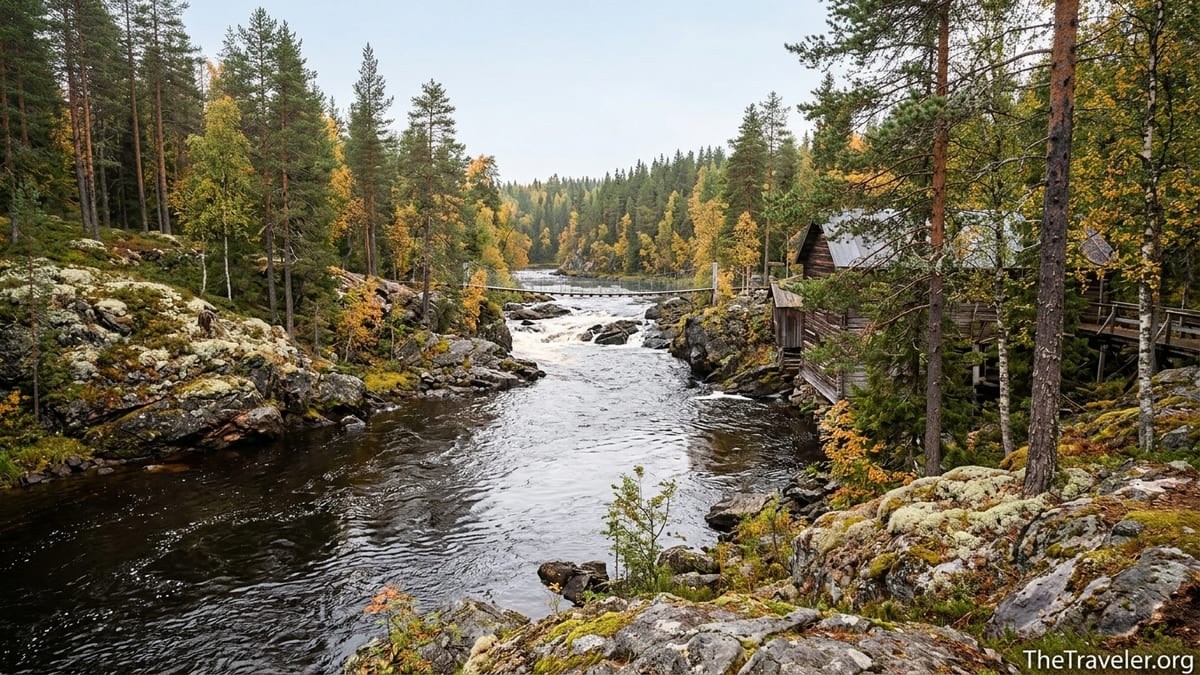
Where Oulanka Is and What Makes It Special
Oulanka National Park lies close to the Russian border in northeastern Finland, roughly between the town of Kuusamo and the small municipality of Salla. The protected area covers about 270 square kilometers, but what visitors notice first is not its size, it is the mix of landscapes. Instead of big alpine peaks, you get canyon like river valleys, sandy riverbanks, hanging marshes and old pine forest threaded by fast flowing water and wooden suspension bridges.
The park is centered around the Oulankajoki and Kitkajoki rivers, which carve through the terrain in a series of rapids and waterfalls. Well known spots like Kiutaköngäs rapid, Jyrävä fall and Myllykoski mill area appear often in Finnish travel photos, and in person they feel surprisingly wild, especially in shoulder seasons when there are fewer hikers around. The scenery changes sharply with the seasons, from snow loaded trees and frozen falls in winter to luminous green in June and blazing orange and red in September.
Oulanka also has a long history as one of Finland’s flagship hiking destinations. The Karhunkierros, or Bear’s Trail, has grown into the country’s most famous long distance hiking route, with sections running through the park for more than 70 kilometers. For many visitors, walking at least part of this trail is the main reason to come, and it is the backbone of the park’s trail network.
At the same time, Oulanka is relatively easy to combine with other attractions. Ruka ski resort sits just to the south, with hotels, rental apartments and restaurants, while Kuusamo town provides supermarkets and an airport with regular flights from Helsinki. That mix of wilderness atmosphere and reasonable access is one of the key reasons travelers end up saying that Oulanka was worth the journey.
Getting There and Getting Around Without Stress
Most international travelers reach Oulanka via Kuusamo. In practice this usually means flying from Helsinki to Kuusamo Airport and then continuing by rental car or prearranged transfer. Driving time from Kuusamo to the main Oulanka visitor center is roughly one hour in good conditions. The road is paved and maintained in winter, but in January or February you should expect snow packed surfaces and occasional ice, so many visitors deliberately choose a car with winter tires and, if they are not used to snow driving, automatic transmission for less stress.
If you are already in Lapland, you can also approach Oulanka from Rovaniemi, about a three hour drive depending on the route and road conditions. Some travelers base themselves in Rovaniemi for Santa Claus Village and Arctic activities, then rent a car for a couple of nights in the Oulanka and Ruka area. Public transport options between Rovaniemi and Kuusamo exist but schedules are limited and often involve early morning departures, so relying on buses can make your days quite long.
From Kuusamo or Ruka to the actual trailheads, many visitors find that a rental car gives the most flexibility. For example, getting to the Pieni Karhunkierros (Little Bear Trail) loop at Juuma village, or to the northern Karhunkierros trailhead at Hautajärvi, is straightforward by car but more complicated by bus. There are seasonal buses that serve popular hiking spots, and local taxi companies can do trailhead transfers, which is how solo hikers often arrange point to point walks on the full Karhunkierros.
Once inside the park you do not need a vehicle. The main sights around Kiutaköngäs, the Oulanka Visitor Centre and several day trails start right from parking areas. On the multi day routes, you simply follow the well marked paths between huts and campgrounds. Bridges and duckboards keep your feet dry over rivers and bogs in most conditions, and navigation is generally straightforward even for less experienced hikers, especially in summer when days are long.
What Travelers Love Most: Hiking for Every Level
Oulanka’s biggest draw is the quality and variety of its trails. Visitors who are not serious hikers can still experience headline scenery on short, well built paths, while those looking for a proper adventure can spend four to six days crossing the park on the full Karhunkierros.
For many, the Pieni Karhunkierros loop near Juuma is the standout. This roughly 12 kilometer circuit packs in several of the park’s classic sights: suspension bridges swaying over rapids, the Jyrävä waterfall and the picture perfect Myllykoski bend in the river with its old wooden mill. Fit hikers cover it in three to four hours, but many people take most of the day, stopping for repeated photo breaks and a campfire lunch at one of the maintained fire pits.
Those with more time often tackle sections of the main Karhunkierros trail. The full route runs for around 80 kilometers between Hautajärvi in the north and Ruka in the south, much of it inside Oulanka. It is typically walked in four to six stages, with overnights in free wilderness huts, tent sites or private accommodation just outside the park. Travelers who have done well known European treks often comment that Karhunkierros feels surprisingly wild, with long stretches of forest and riverbank walking where you may not see many other people outside the peak summer weeks.
Even if you are not up for a 4 day hike, easy day walks like the Kiutaköngäs Rapids trail near the visitor centre, or the Hiidenlampi and Rytisuo nature trails, offer quieter corners of the park. Families appreciate that many paths are clearly graded and signposted, with estimated walking times. This makes it easy to choose something realistic for mixed ability groups, and is one of the reasons Oulanka often gets positive mentions from parents traveling with older children or teens.
Rivers, Rapids and Paddling Adventures
Alongside hiking, Oulanka is known for water based activities on the Kitkajoki and Oulankajoki rivers. In summer, several local operators based around Juuma and the Ruka area run guided rafting, canoe and packraft trips that weave through the national park’s rapids and calmer reaches. These range from gentle family friendly floats on quieter stretches to half day white water adventures that run class III style rapids in stable rafts with a guide at the back.
One example that many visitors mention is a guided rafting trip starting near the Basecamp Oulanka eco lodge on the Kitkajoki. Participants get basic gear like a dry jacket, helmet and buoyancy aid, then float past pine clad cliffs and sandbanks while a guide points out wildlife and explains local history. Prices for such half day tours are often similar to other Nordic rafting trips, typically in the range that international visitors expect to pay for adventure activities in Finland, and they can be booked through accommodation providers in Ruka and Kuusamo.
Independent travelers with more experience sometimes rent canoes or packrafts for overnight journeys along the Oulankajoki, using riverside lean to shelters and campfire sites maintained by the park authority. This kind of trip requires comfort with moving water and some logistics planning, but it lets you see quieter sections where only a handful of paddlers pass each day. In late summer and early autumn, when the rivers run clearer and the birch trees begin to turn yellow, these overnight paddling journeys can be among the most memorable experiences the park offers.
For those visiting in winter or early spring, water based adventures shift focus. Rafting usually pauses when the rivers are choked with ice, but some operators offer wintertime photography visits to frozen waterfalls such as Kiutaköngäs, where the river roars between sculpted ice formations. These are typically reached on snowshoes or by following packed winter trails from the nearest parking area.
Season by Season: When Oulanka Is At Its Best
Because Oulanka sits close to the Arctic Circle, seasons are pronounced and your experience can be completely different depending on when you visit. For many hikers, the prime window is from late June to early September, when trails are largely snow free, river levels have usually settled after spring melt and long hours of daylight make it easy to cover distance without rushing.
July and early August are the busiest weeks, especially around easily accessed circuits like Pieni Karhunkierros. Trails can feel social rather than solitary, and parking areas fill up quickly on sunny days. In exchange, services are fully open, from cafes and equipment rental outfits to visitor centres with staffed information desks. This is also berry and mushroom season, and it is common to see Finnish families filling small containers with blueberries along the paths.
For travelers who prefer quieter conditions and cooler temperatures, early autumn is often ideal. In September, the larch and birch trees turn vivid gold and orange, and evenings grow dark enough to make campfires feel especially welcoming. Multi day hikers walking Karhunkierros in this period often remark that they saw only a handful of people between huts each day, particularly midweek. The trade off is that nights can already drop close to freezing, so a proper three season sleeping bag and layered clothing system are essential.
Winter in Oulanka is beautiful but best suited to those who are comfortable in sub zero conditions. From December through March, snowshoe and cross country skiing routes replace most summer hiking paths, and river valleys can be extremely cold on still mornings. Many international visitors in winter stay in heated cabins or hotels around Ruka and Kuusamo, joining guided day trips into the park rather than camping. With the right gear and guidance, though, walking across silent snowy forests to a frozen rapid or spotting the northern lights above dark pines can be unforgettable.
Facilities, Huts and How Wild It Really Feels
One of the reasons Oulanka works for a wide range of visitors is the balance between maintained facilities and a genuine sense of wilderness. The park has a main visitor centre where you can get trail advice, check current conditions, and view small exhibitions about local nature and culture. Toilets and simple picnic facilities are available at the centre and at many main trailheads.
Out on the trails, you find a network of free wilderness huts, lean to shelters and designated camping areas. Some huts are intended for overnight stays with bunk platforms and a wood stove, while others are day huts used for rest and meal breaks. Firewood supplies, saws and axes are typically provided at official campfire sites, and in many places there are dry toilets nearby. This infrastructure means that even on a multi day hike, you can often cook over a fire or in a hut rather than carrying a full gas setup, although many experienced hikers still bring a lightweight stove as backup.
Despite this support, Oulanka does not feel manicured. Trails can be rocky, with roots, steps and sometimes steep, stair like climbs up from river level to viewpoints such as Kallioportti on the Little Bear Trail. In wet weather, wooden duckboards and rocks can be slippery, and during spring melt some paths may be muddy or temporarily closed. Compared to urban parks or short nature trails near major cities, visitors should be prepared for real outdoor conditions, especially if they aim to leave the most popular loops.
Accommodation just outside the park ranges from eco lodges like Basecamp Oulanka on the Kitkajoki river to cabins and apartments around Ruka and Kuusamo. Many hikers like the combination of a few nights under canvas or in huts followed by a night in a comfortable room with a hot shower and sauna, an arrangement that is easy to organize given the number of tourism businesses serving the area.
Who Will Love Oulanka (and Who Might Not)
Oulanka National Park is especially rewarding for travelers who genuinely enjoy being outdoors and are willing to walk. If your idea of a good day is covering 10 to 15 kilometers on foot with regular stops for photography and snacks, the park’s trail network will feel like a playground. Photographers in particular appreciate the combination of fast water, deep forest and seasonal light, with classic compositions at locations such as Myllykoski mill, Jyrävä fall and the orange rock walls at Kiutaköngäs.
Families with school age children often find Oulanka manageable because many of the most scenic loops are half day outings that can be broken up with fireside lunch stops and suspension bridge crossings. Teenagers who might roll their eyes at a city museum sometimes light up when crossing a narrow bridge over roaring rapids or scrambling down to the edge of a waterfall.
On the other hand, Oulanka may not be the best fit for visitors who dislike hiking or who expect dramatic mountain summits. The scenery is more about river canyons, forests and details like lichen covered rocks and wildflowers than about sweeping high alpine ridges. Those with very limited mobility may find that even the shortest trails involve uneven ground, roots and steps that are not friendly to wheelchairs or strollers.
Weather tolerance is another factor. Even in July, temperatures can be cool and rain showers frequent, and in May or September nights on the trail can feel cold to those used to milder climates. Travelers who come prepared with realistic expectations, layered clothing, waterproof footwear and a willingness to adapt plans to conditions tend to rate their visit highly. Those who arrive expecting urban level comfort in a wild setting sometimes feel frustrated.
The Takeaway
So, is Oulanka National Park worth visiting? For most travelers who make the effort to reach northeastern Finland, the answer is yes, often emphatically. The combination of well maintained trails, free huts and campfire sites, and easily accessible yet genuinely wild feeling river landscapes is rare. Whether you only have a single day for the Pieni Karhunkierros loop or can commit to four or five days on the full Karhunkierros, it is easy to see why the park is regularly mentioned among Finland’s top outdoor destinations.
At the same time, it is important to understand what Oulanka is and is not. You will not find towering alpine peaks or a dense network of cafes and roadside viewpoints. Instead, you get long forest paths, swirling tea colored rivers, modest but comfortable huts and evenings where the main entertainment is the sound of water and the crackle of a campfire. If that sounds like your idea of a good time, Oulanka will almost certainly feel worth the journey.
With realistic expectations, proper clothing and enough days to slow down and explore at least a couple of different areas, Oulanka can be the quiet, nature focused counterbalance to busier stops like Helsinki, Rovaniemi or the more developed ski resorts of Lapland. For many visitors, it ends up being the place they remember most clearly years after the trip is over.
FAQ
Q1. How long should I plan to stay in Oulanka National Park?
Most travelers find that two to three full days in the area is a good minimum. This allows one full day for the Pieni Karhunkierros loop or similar hike, plus another day for a second trail or a river activity such as rafting, with some buffer time in case of bad weather.
Q2. Do I need a car to visit Oulanka?
You can reach the region by public transport and use occasional buses and taxis to access specific trailheads, but having a rental car makes logistics much easier. It gives you flexibility to start hikes early, move between areas like Juuma and the visitor centre, and adapt plans if weather or trail conditions change.
Q3. Is Oulanka suitable for beginners or families with children?
Yes, many of the park’s most popular routes are clearly marked and designed as day hikes, which suits reasonably fit beginners and families with older children. Trails still involve roots, rocks and stairs, so basic outdoor footwear and realistic expectations about walking distances are important.
Q4. When is the best time of year to visit Oulanka?
For hiking, late June to early September usually offers the most reliable conditions, with long days and mostly snow free trails. Early autumn brings beautiful colors and fewer people, while winter from December to March is best for those interested in snowshoeing, skiing and frozen river scenery.
Q5. Can I hike the full Karhunkierros trail without a guide?
Many people hike the roughly 80 kilometer Karhunkierros trail independently, using marked paths, free huts and campsites. You should be comfortable with multi day trekking, carrying a backpack and dealing with variable weather, but technical mountaineering skills are not required in normal summer conditions.
Q6. Are there entrance fees for Oulanka National Park?
Like other Finnish national parks, entry to Oulanka and access to marked trails is generally free. You pay only for optional services such as guided tours, equipment rental, paid campsites, parking in some privately operated lots, and accommodation outside the park.
Q7. What kind of wildlife might I see?
Common sightings include forest birds, various waterfowl, squirrels and occasionally reindeer wandering near trails. Large predators such as bears and wolves live in the wider region but are rarely seen by casual visitors, and encounters are usually limited to indirect signs like tracks or scat.
Q8. Do I need special equipment to hike in Oulanka?
For day hikes in summer, sturdy walking shoes or light hiking boots, a waterproof jacket, warm layers and a small backpack with water and snacks are usually sufficient. For multi day treks you will need a proper backpack, sleeping bag, sleeping pad and either a tent or plan to use wilderness huts, as well as a simple stove or readiness to cook at official campfire sites.
Q9. Is Oulanka crowded?
Certain routes, especially Pieni Karhunkierros and short paths near main parking areas, can feel busy on sunny days in July and early August. Outside this peak period and away from the most famous loops, many sections of trail are relatively quiet, particularly in early summer, early autumn and on weekdays.
Q10. Can I visit Oulanka as a day trip from Rovaniemi or Helsinki?
From Rovaniemi it is technically possible but challenging as a same day return by road, and most visitors prefer to stay at least one night closer to the park. From Helsinki, you would typically fly to Kuusamo and stay in Kuusamo or Ruka, then visit Oulanka over one or more days rather than trying to fit it into a single rushed excursion.