


More news on this day
Thick plumes of wildfire smoke drifting across North America are increasingly affecting commercial aviation, with reduced visibility and shifting air quality forcing airports and airlines to slow traffic, reroute aircraft, and in some cases halt flights altogether.
Get the latest news straight to your inbox!
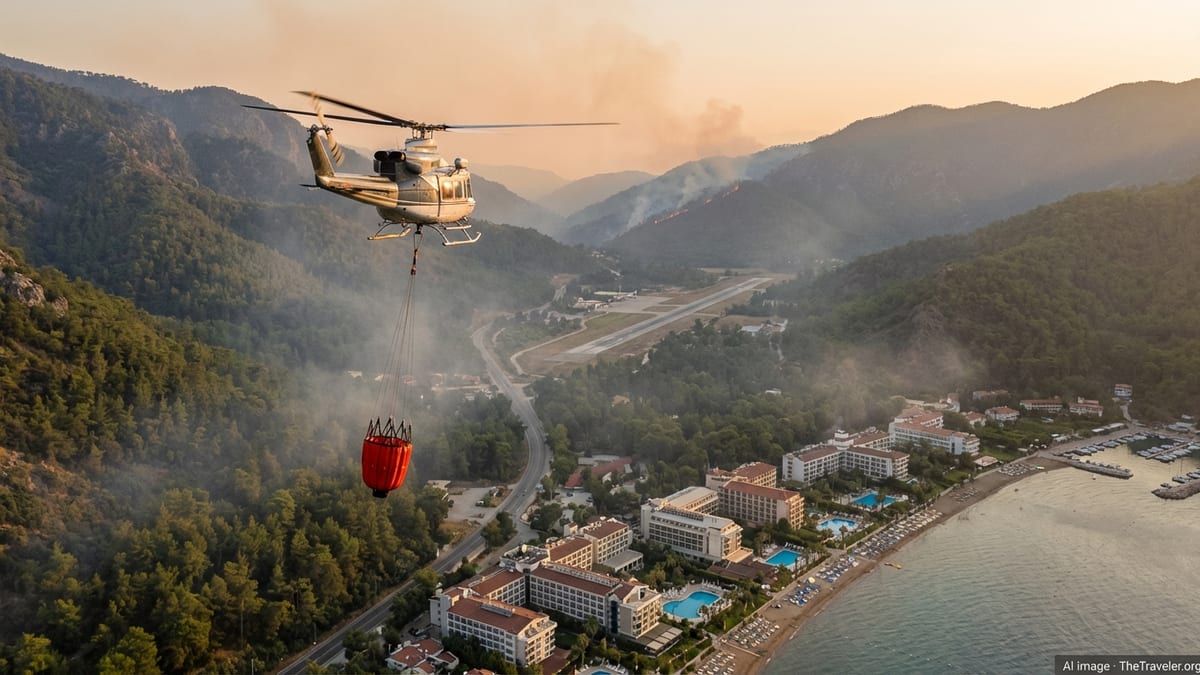
When Smoke Turns Into an Aviation Weather Hazard
Wildfire smoke behaves differently from typical fog or low clouds, but for aviation it often shows up in the same way: a rapid drop in visibility that can fall below the minimums required for safe takeoffs and landings. Aviation weather reports classify smoke as a visibility restriction just like haze or dust, and when surface visibility deteriorates, air traffic managers begin spacing out arrivals and departures or imposing ground delays.
In June 2023, heavy smoke from record Canadian wildfires drifted into major US hubs such as New York and Philadelphia. Published coverage at the time described extended arrival holds and airborne delays as controllers slowed traffic to match what pilots could safely see on approach. Publicly available information from that period indicates that flights bound for New York’s LaGuardia Airport were temporarily halted when visibility dropped near the runway, illustrating how quickly smoke can trigger large-scale disruption.
Recent wildfire seasons in Canada and the western United States have again sent smoke over busy corridors in the Midwest and Northeast. Reports indicate that on days when air quality alerts are issued across multiple states, airports often face a combination of reduced visibility and strong winds aloft transporting smoke plumes, both of which complicate traffic flows. Even when runways remain open, these conditions can result in cascading delays through the national network.
Unlike thunderstorms, which tend to be localized and short lived, smoke can linger for days and stretch across hundreds of miles. That broad footprint means multiple airports may be affected at once, limiting options for rerouting traffic and raising the risk of rolling delays and cancellations as airlines adjust schedules.
How Smoke Affects Flight Operations and Safety Margins
Pilots rely on strict visibility and cloud ceiling thresholds to begin or complete an instrument approach. When smoke cuts horizontal visibility below those thresholds, crews may be unable to see runway lights or markings in time to land, even with modern navigation aids. In such cases, aircraft may divert to clearer airports or enter holding patterns while conditions are reassessed, both of which contribute to schedule disruptions.
Guidance documents used in pilot training note that wildfire smoke can reduce slant range visibility, the pilot’s ability to see the runway environment at an angle during descent. This can be especially challenging at airports surrounded by terrain or urban obstacles, where precise visual cues are essential in the final stages of landing. To preserve safety margins, traffic managers often reduce arrival rates and increase spacing between aircraft, which quickly translates into delays for passengers on the ground.
Smoke can also interfere with airport ground operations. On the ramp, low visibility makes it harder for ground crews to marshal aircraft, tow equipment, and move vehicles safely. To limit the risk of collisions, some airports slow or temporarily suspend certain ramp activities during periods of dense smoke. That can delay boarding, pushback, and baggage handling, further extending turnaround times and contributing to missed connections.
At cruise altitude, wildfire smoke typically has less direct impact on flight safety, but thick layers can still prompt rerouting to avoid the most concentrated plumes. Airlines may choose longer flight paths to minimize exposure for passengers and crew or to avoid turbulence sometimes associated with large fire complexes, adding flight time and fuel burn.
Air Quality Concerns for Passengers and Crew
Health agencies describe wildfire smoke as a mix of fine particulate matter, gases, and other pollutants that can irritate the lungs and cardiovascular system. Government health fact sheets highlight that particles small enough to reach deep into the lungs are linked to increased emergency visits for asthma, chronic obstructive pulmonary disease, and heart problems, particularly among older adults, children, and people with preexisting conditions.
Commercial aircraft are designed to filter and refresh cabin air frequently, and technical material from aviation regulators and industry groups notes that most modern jets use high efficiency filters to remove fine particles from recirculated air. However, if an aircraft operates directly through a dense smoke plume during climb or descent, there is potential for some smoke odor and particulates to enter the cabin before being filtered out, especially during phases when outside air intake is high.
Public health guidance on wildfire smoke increasingly addresses travelers as well as residents. Advisories recommend that people with respiratory or heart conditions pay close attention to air quality forecasts at both departure and destination airports, and consider carrying medications and, if advised by their clinician, well-fitting respirators for use in terminals or at the gate. These recommendations reflect growing recognition that severe smoke episodes can affect not just local communities but also those passing through major hubs.
For flight crews who spend extended periods in smoky regions, occupational health resources stress monitoring symptoms such as persistent cough, shortness of breath, or chest discomfort, and seeking medical evaluation if they occur. Aviation regulators in the United States have also highlighted ongoing research into cabin air quality and exposure risks, as wildfire smoke becomes a more regular seasonal concern.
Why Delays and Cancellations Spike During Major Smoke Events
When smoke blankets a large area, the impact on aviation is compounded by the interconnected nature of airline networks. A visibility-driven ground stop at one hub can quickly ripple across the system, stranding aircraft and crews out of position. Data-driven analyses of extreme weather events show that even a few hours of restricted arrivals at a major airport can generate delays and missed connections that last well into the following day.
During the 2023 Canadian wildfire smoke episode over the US East Coast, publicly available flight-tracking data and media coverage documented hundreds of delays and cancellations at New York and New Jersey airports. Arriving flights were slowed or held, departures were pushed back, and some services were canceled outright as carriers tried to prevent aircraft from being trapped in the most affected areas. Similar patterns have emerged during more recent smoke incursions into the Midwest and Great Lakes, where regional airports sometimes restrict operations in tandem.
Airlines also weigh the health implications of prolonged exposure for ground staff and passengers when deciding whether to operate in smoky conditions. Worker protection guidance from federal agencies encourages employers to monitor air quality indices and adjust outdoor activities when particulate levels are high. In practice, that can mean rescheduling flights to cooler or less smoky parts of the day, consolidating services, or temporarily suspending some operations when air quality deteriorates rapidly.
For travelers, the result is often a mix of rolling delays, last minute gate changes, and unexpected overnight stays. Industry analysts note that as wildfire seasons lengthen, smoke-related disruptions are becoming a recurring feature of summer and early autumn travel in parts of North America, prompting airlines and airports to fold smoke scenarios into their seasonal planning.
What Travelers Can Expect as Smoke Seasons Intensify
Climate and wildfire researchers report that warmer, drier conditions are contributing to longer fire seasons and more frequent episodes of long range smoke transport. Environmental agencies in both the United States and Canada now routinely issue smoke and air quality forecasts alongside traditional weather updates, and these are increasingly factored into aviation planning during peak fire months.
Airports and air navigation providers are responding by refining contingency plans for smoke events, including updated procedures for low visibility operations and closer coordination with meteorologists who specialize in fire weather. Industry publications describe efforts to improve modeling of smoke plumes, helping traffic managers anticipate when and where visibility might decline below safe operating thresholds.
For passengers, this evolving risk environment means that smoke related delays and cancellations are likely to remain a part of peak season travel, particularly for routes that pass near major fire-prone regions or rely on large hubs vulnerable to drifting plumes. Travel experts suggest allowing more connection time during active fire periods and staying attuned to airline notifications, which may arrive earlier as forecasting tools improve.
As wildfire smoke continues to intersect with aviation on a seasonal basis, the combination of stricter visibility limits, evolving health guidance, and increasingly complex fire behavior points to a future in which managing smoke will be as central to air travel reliability as managing thunderstorms or winter storms.