


More news on this day
A prominent immigrant rights group has issued a rare nationwide travel warning for noncitizens using United States airports, citing a rise in immigration detentions at security checkpoints and arrival gates and growing concern over how traveler data is being shared between federal agencies.
Get the latest news straight to your inbox!
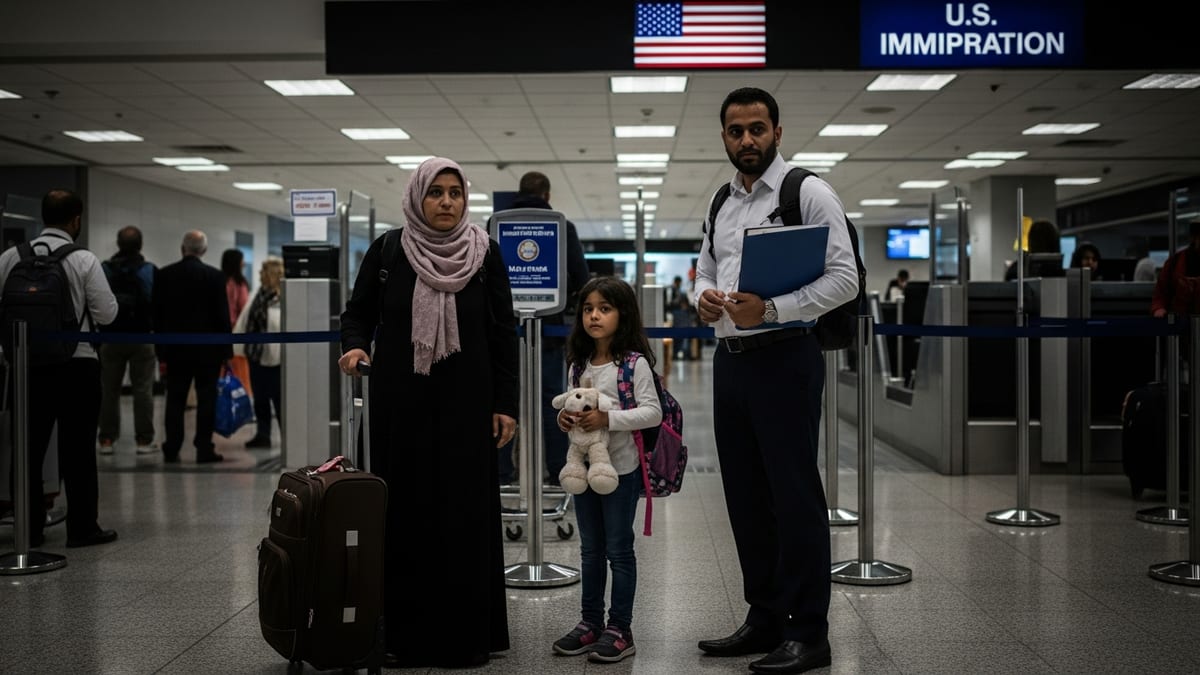
Warning Highlights Growing Concern Over Airport Detentions
The new advisory urges immigrants, including those with pending legal status applications, to carefully assess the risks of air travel within and to the United States. The warning focuses on increased encounters with immigration officers at airport security lines, boarding gates and arrival corridors, as documented in recent advocacy reports and legal guidance materials.
Publicly available reports describe cases in which travelers with expired visas, pending green card applications or unresolved status issues have been detained after routine trips. While such interventions were previously more common at land borders or during targeted enforcement actions, recent accounts suggest that airport checkpoints are playing a more central role in immigration enforcement.
Advocacy organizations also point to the psychological impact on immigrant communities. Even travelers who are not directly affected may change or cancel trips out of fear that documentation questions or minor discrepancies could escalate into detention, family separation or prolonged legal uncertainty.
Data-Sharing Deals Turn Airports Into Enforcement Hubs
The warning draws particular attention to expanded data-sharing between immigration enforcement agencies and aviation security systems. Documents and monitoring reports released over the past year describe formal arrangements under which immigration authorities can supply names to be checked against airline and security databases before a passenger reaches the airport.
According to these materials, information about travelers whose immigration records raise questions can be relayed to enforcement officers in advance, effectively transforming standard screening processes into an early alert system. Critics argue that this evolution blurs the line between aviation security and immigration policing, and risks sweeping up individuals who are actively attempting to resolve their status through legal channels.
Policy briefs produced by legal advocacy groups note that this infrastructure builds on existing watchlist and passenger screening programs, but with a broader focus on civil immigration issues rather than solely on criminal or security concerns. The result, they contend, is that airports now function as a networked enforcement environment where travel plans can trigger detention or secondary questioning.
Legal Advocates Report Shift in Who Is Being Targeted
Immigrant legal service providers have responded to the airport developments by updating their guidance to clients who are considering domestic or international flights. Recent practice advisories and checklists emphasize that even long-term residents and individuals with no criminal record may face heightened scrutiny if their paperwork is incomplete, their status has lapsed or their cases are still pending.
These materials describe an apparent shift from earlier enforcement patterns that prioritized people with final removal orders or criminal histories. Current reports instead highlight detentions involving students, workers and family-based applicants, whose cases might previously have continued without custodial action while paperwork was processed.
Attorneys and advocacy groups stress that the legal framework around airport enforcement remains complex and can differ based on whether a traveler is departing, arriving from abroad or moving between cities within the United States. The new travel warning encourages potential travelers to seek individualized legal advice before purchasing tickets, especially if they have any uncertainty about their immigration history or documentation.
Communities React With Hotlines, Know-Your-Rights Campaigns
The rare scope of the travel warning has prompted renewed organizing in immigrant communities and among local support organizations. Coalitions in several states have expanded hotlines for people experiencing immigration enforcement at airports and other transportation hubs, and have circulated multilingual know-your-rights materials tailored to air travel.
Publicly available coverage describes volunteers stationing themselves near major airports to monitor developments and to connect families with legal help when detentions occur. Community groups are also compiling incident reports in order to track patterns, such as whether particular airports, airlines or types of flights appear more likely to draw the presence of immigration officers.
Some local and state officials have called for more transparency around how federal agencies are using airport facilities and traveler data, arguing that residents should understand what to expect when they pass through security or passport control. Advocacy networks say these efforts are essential for restoring a sense of predictability for immigrant travelers who must continue flying for work, education or family reasons despite the risks.
Travelers Urged to Prepare Thoroughly Before Flying
In light of the reported uptick in airport enforcement, the immigrant rights group behind the travel warning recommends that noncitizens weigh the urgency of each trip against the possibility of detention or extended questioning. Guidance from legal organizations commonly advises travelers to carry up to date identification and immigration documents, keep copies accessible to trusted contacts and verify that any applications or filings are properly recorded before departure day.
Rights education materials also stress that different rules may apply depending on whether a person is a lawful permanent resident, a visa holder, an asylum seeker or an undocumented individual with no current pathway to status. The travel warning notes that people in especially vulnerable categories, such as those with recent enforcement encounters or pending removal proceedings, may face the greatest risk at airports.
As the summer travel season continues, the advisory underscores that for many immigrant families the decision to board a plane is no longer a routine matter of logistics and cost. Instead, it has become a calculation that must take into account an evolving enforcement landscape in which airport checkpoints occupy an increasingly central role.