


More news on this day
India has renewed its warning against travel to Iran and urged its citizens still in the country to depart, as continued missile and drone attacks linked to the 2026 Iran war create fresh turbulence for aviation, tourism and international transit routes across the Gulf, with the United Arab Emirates, Kuwait, Bahrain and Jordan monitoring potential spillover effects on their own airports and airlines.
Get the latest news straight to your inbox!
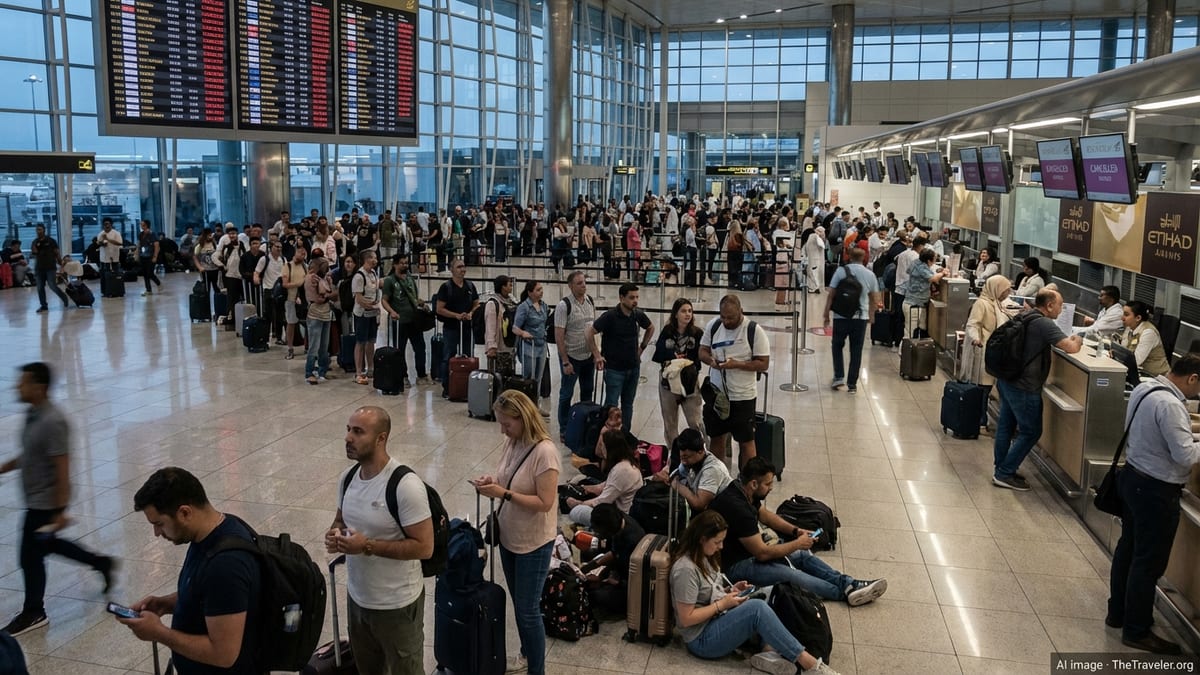
Fresh Indian Advisory Underscores Worsening Security Risks
Publicly available information from India’s Ministry of External Affairs shows that New Delhi has progressively tightened guidance for its nationals in Iran since early January, when it first advised against non essential travel. Subsequent embassy notices in Tehran urged students, pilgrims, business travelers and tourists to leave by any available commercial route as the regional conflict escalated and airspace became increasingly constrained.
Parliamentary remarks and official briefings indicate that Indian authorities framed the move as a response to a deteriorating security environment rather than a routine consular update. The advisories referenced growing tensions in and around Iran, repeated missile and drone exchanges, and the risk that civilian infrastructure, including airports and seaports, could be affected at short notice.
Government communication in June highlighted that thousands of Indians had either already departed Iran or were in the process of doing so, often via land borders or limited onward flights through Iraq and other hubs. The Indian Embassy in Tehran, along with other missions in West Asia, has been operating 24 hour helplines and coordinating departures for nationals caught by rolling flight suspensions or closures of particular air corridors.
Alongside consular messaging, Indian transport and aviation regulators have been reviewing flight safety over and around Iran. Earlier guidance from the Directorate General of Civil Aviation instructed Indian carriers to avoid parts of the Persian Gulf and West Asian airspace, contributing to a web of rerouted services and longer flight times on sectors between India and Europe or North America.
Gulf Carriers Adjust Networks as Kuwait and Bahrain Face Disruptions
The latest wave of Iranian attacks has directly hit several Gulf states, with published reporting describing strikes that damaged energy and water facilities in Kuwait and triggered air defense activity in Bahrain and Jordan. In response, airlines across the region, including major carriers based in the UAE, temporarily suspended or reduced services to Kuwaiti and Bahraini airports as airspace restrictions and security assessments were updated.
Information carried by regional media on July 20 indicates that flights to Kuwait and Bahrain have started to resume after short term suspensions, but operations remain fragile. Airports in both countries have experienced repeated disruptions over recent months due to missile alerts, drone incidents and precautionary closures of terminals or runways. Passengers have been urged to check flight status close to departure, since schedules can change with limited notice when security levels are raised.
Independent travel advisories compiled by risk consultancies suggest that Kuwait International Airport has been operating on a reduced basis, with some terminals closed and national carriers consolidating traffic through specific facilities. Bahrain International Airport has also reported periods of severely disrupted operations. These constraints have knock on effects for travelers using the two hubs for connections between India, Europe and North America, as well as for freight flows routed through Gulf logistics centers.
For Indian nationals following their government’s advice to exit Iran, Kuwait and Bahrain had served at times as potential transit points, either by air or sea. Every new attack or threat against facilities in these states narrows the range of safe and reliable options, pushing more travelers toward overland routes or limited flights via Iraq, Oman or other neighboring countries where airspace remains comparatively less affected.
UAE and Jordan Balance Transit Role With Heightened Risk
The United Arab Emirates and Jordan, long established as major gateways between Asia, Europe and North America, are facing a delicate balancing act. On the one hand, their airports and carriers are essential to keeping regional and global connectivity functioning while parts of Iranian and Gulf airspace are avoided. On the other, both have come under Iranian fire during the wider conflict, prompting periodic security alerts and reinforced defense postures.
A recent statement from the UAE’s foreign ministry strongly condemned renewed Iranian missile and drone attacks on Bahrain, Kuwait and Jordan, and reiterated its support for regional partners. The message reflected concerns not only over direct security threats but also over the stability of trade and travel networks that run through Gulf hubs such as Dubai and Abu Dhabi, which handle large volumes of Indian outbound and inbound passengers.
In Jordan, travel updates and local security alerts have warned of specific threats to facilities in Aqaba, including King Hussein International Airport and the seaport, after incidents linked to the broader confrontation between Iran and the United States. While major airports like Amman’s Queen Alia International have largely remained operational, risk assessments classify the overall environment as volatile, with the possibility of renewed attacks on short notice.
For airlines based in the UAE and Jordan, route planning has become a daily exercise in contingency management. Carriers are weighing the safety of overflying certain sectors of the Gulf, the capacity of alternative corridors through Saudi or Egyptian airspace, and the commercial viability of maintaining frequencies on routes most exposed to the conflict. Any further escalation in or around Tehran’s flight information region could force additional rerouting, schedule thinning or temporary suspensions of popular services.
Global Aviation Advisories Highlight Tehran FIR and Gulf Airspace
International aviation regulators have also been updating their risk assessments for flights traversing Iran and neighboring states. The European Union Aviation Safety Agency has extended a conflict zone information bulletin on Middle East and Persian Gulf airspace, advising operators to exercise extreme caution when planning routes through the Tehran flight information region and several Gulf FIRs, including those covering Bahrain, Kuwait, the UAE and parts of the Gulf of Oman.
The bulletin underscores that high altitude commercial traffic may be exposed to military activity, including long range missiles and air defense systems, and that miscalculation or misidentification remains a concern. Operators are recommended to conduct thorough risk assessments, consider alternative routings where practicable, and ensure that crews are briefed on current notices to airmen and potential diversion airports in the region.
These international warnings mirror national level decisions by India and other countries to reroute or suspend flights that would otherwise cross Iran or heavily militarized portions of the Gulf. Indian airlines flying to Europe and the Americas have adopted more southerly or northerly paths to avoid the highest risk airspace, at the cost of longer flight times, increased fuel burn and higher operational expenses.
Industry analysts note that as long as Iranian strikes continue to target infrastructure in Kuwait, Bahrain, Jordan and potentially other neighbors, confidence in the safety of regional airspace will remain fragile. Even when immediate hostilities temporarily subside, many carriers are expected to maintain conservative routings until there is sustained evidence of de escalation and clearer separation between military trajectories and civilian air corridors.
Tourism and Travel Planning Hit by Layered Advisories
The convergence of consular advisories, aviation risk notices and on the ground disruptions is reshaping travel planning to and through West Asia. India’s directive to avoid non essential travel to Iran, combined with similar warnings issued by Western governments for multiple Gulf countries, has sharply reduced leisure demand and complicated business itineraries that typically rely on one stop connections via hubs in the UAE, Qatar, Bahrain or Kuwait.
Travel industry reporting from the region describes a pattern of short lead time cancellations, last minute rebookings and growing interest in itineraries that route around the Gulf altogether. Some travelers are opting for connections through Central Asian, Turkish or European hubs that do not require transiting contested portions of the Tehran FIR or lower Gulf airspace, even when that entails higher costs or longer total journey times.
Tourism boards in Gulf states are meanwhile attempting to reassure potential visitors by emphasizing that major urban centers, resort areas and cultural sites remain open, even as security measures are tightened around strategic infrastructure. However, fluctuating airline schedules and the psychological impact of widely reported missile and drone incidents pose a challenge to efforts to sustain visitor numbers in the short term.
For Indian tourists in particular, the combination of their government’s strong warning on Iran and rolling disruptions in neighboring states has led many to postpone or redirect trips to alternative destinations. Until there is a clearer reduction in cross border attacks and a more stable pattern of airline operations in and around Tehran, regional planners expect the Gulf’s role as a primary bridge between South Asia and the wider world to remain under pressure.