


Capri is often painted with a single glamorous brush, but the island is really divided into two very different experiences: lively Capri Town and the quieter hilltop village of Anacapri. If you are planning a trip primarily to unwind, choosing where to base yourself can shape your entire impression of the island. This guide looks closely at how relaxing each area truly feels in real life, from hotel atmosphere and crowds to transport, beaches, and nightlife, so you can decide whether Anacapri is the better choice for your version of dolce far niente.
Get the latest updates straight to your inbox!
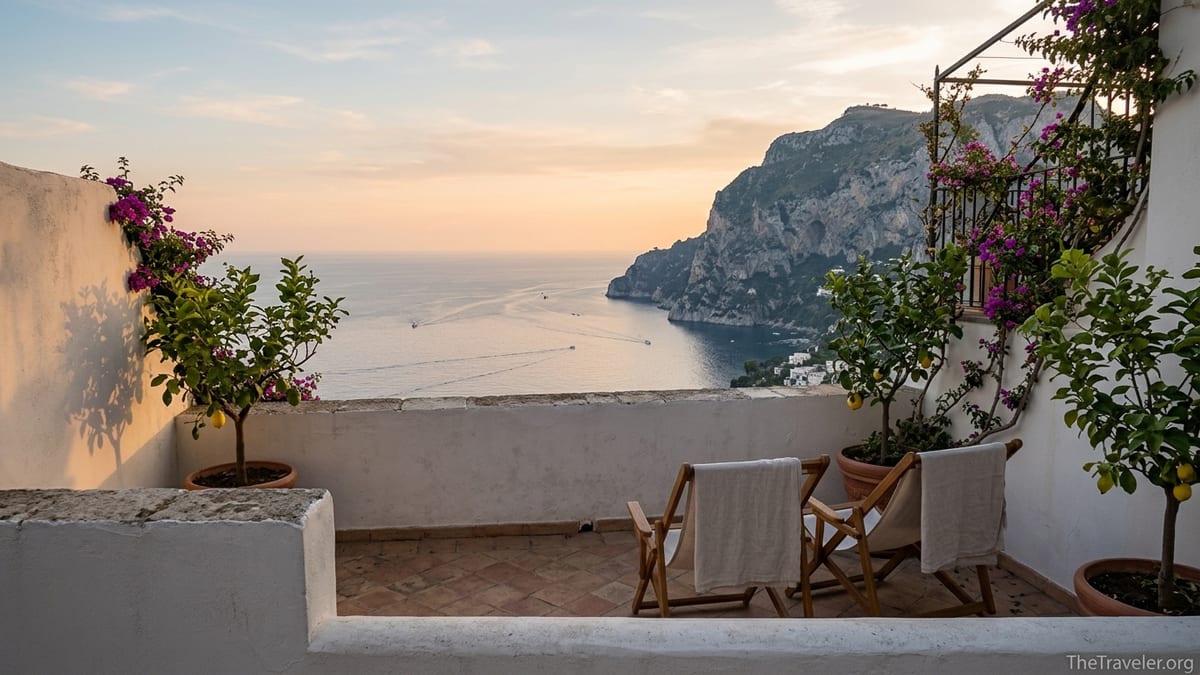
Atmosphere: Glamour vs Village Calm
Capri Town, built around the famous Piazzetta, is the Capri most visitors imagine: high-end boutiques, polished hotel terraces, and a constant flow of day trippers streaming up from Marina Grande on the funicular. By late morning in high season, streets like Via Camerelle and Via Vittorio Emanuele can feel packed with shoppers and cruise passengers. Even if you are not shopping, simply crossing the square can require a bit of weaving through tour groups with guides holding umbrellas. For some travelers this energy is part of Capri’s charm, but it is rarely described as peaceful.
Anacapri, set higher on the slopes of Monte Solaro, feels like a different island altogether. The main streets around Piazza Vittoria and Via Giuseppe Orlandi are narrower and more low-key, with ceramic shops, small churches, and family-run cafés rather than flagship fashion brands. You still see visitors, but the flow is thinner and more spread out. People often describe evenings here as quiet enough that you hear cutlery and conversation from restaurant terraces rather than music from bars. If your idea of relaxation includes wandering mostly traffic-free lanes and sitting in a simple bar where staff recognize you after a day or two, Anacapri tends to deliver that mood more consistently.
The contrast becomes especially obvious around sunset. In Capri Town, the viewpoint at the Belvedere di Tragara and the cafés above the Piazzetta attract a crowd for aperitivo. Finding a front-row table at a well-known spot can mean a wait and cocktails often start around 18 to 20 euros. In Anacapri, watching the sky change color from a simple terrace near Piazza Vittoria or a bar on the road to the lighthouse feels more low-key, and prices tend to be a bit lower. The view is more about distant sea and sky rather than seeing and being seen, which many travelers find more restful.
Where You Sleep: Hotels, Space, and Value
Capri Town is home to some of the most iconic luxury properties on the island, including long-established five-star hotels with sweeping terraces and fine-dining restaurants. These are perfect if you want polished service and to be steps from the Piazzetta. However, rooms at central addresses in high season often price well into the hundreds of euros per night, even for compact spaces. A standard double in a mid-range hotel within a few minutes’ walk of the main square in July can easily run 400 to 600 euros per night, and some upscale suites go far higher.
In Anacapri, the feel of accommodation is different. Many hotels sit in larger gardens or on the edges of town, which means more greenery and open views. Travelers frequently report getting more square footage and outdoor space for their money compared with Capri Town. Boutique properties with pools, lemon groves, and sea views are common, but instead of being surrounded by luxury shopping streets, they might be a five or ten minute walk through quiet residential lanes to the nearest restaurants. For guests who want to lounge by a pool in relative silence during the day and wake to birds rather than delivery trolleys in the morning, that can be a significant advantage.
For example, a mid-range hotel with a pool in Anacapri might start in the 250 to 350 euro range in shoulder seasons, rising in peak summer but often remaining below comparable options in Capri Town. Guesthouses and simple B&Bs in Anacapri can still offer private terraces or shared gardens with loungers, making them good choices for slow mornings with a book. Because land is more available near Anacapri, many properties feel more resort-like in layout even when they are not branded resorts, which contributes to a more relaxed overall ambiance.
Getting Around: Practicalities of a Relaxing Stay
Almost every visitor arrives to Capri at Marina Grande, the island’s port. From here a funicular runs up to Capri Town in about four minutes, and buses as well as taxis connect onward to both Capri Town and Anacapri. Public bus tickets cost a little over 2 euros per ride and services link Marina Grande with Capri Town, Anacapri, the Blue Grotto, Marina Piccola, and the lighthouse area. During peak hours, especially mid-morning in summer, queues for buses between Capri Town and Anacapri can be long and vehicles are often crowded. That can briefly chip away at the sense of serenity, whichever town you choose.
Staying in Anacapri does mean you rely on bus or taxi whenever you want to go down to Capri Town or to the port. The ride from Capri Town to Anacapri by bus is short, often around 15 to 20 minutes, but the road is narrow and winding, hugging the cliffs above the sea. Many travelers love the dramatic views; those who are nervous about heights sometimes find it a little intense. Taxis between key points like Marina Grande and Anacapri typically run in the region of 20 euros or more per trip, depending on time and luggage. For a couple splitting the fare after a long travel day, this can feel like a reasonable trade for comfort and avoiding crowded buses with suitcases.
From a relaxation perspective, the question is how often you plan to move around. If your idea of a calm holiday is to settle into a hotel with a pool in Anacapri, stroll to dinner nearby, and only head down to Capri Town or the port once a day or less, the transport routine is manageable and quickly becomes part of the rhythm of the trip. If you imagine multiple daily hops between beach clubs in Marina Piccola, long shopping sessions in Capri Town, and late nights at bars before returning up to Anacapri, the logistics start to feel less relaxing. In that scenario, staying near the Piazzetta in Capri Town may actually keep things easier.
Beaches, Sea, and Quiet Spots
Capri is a rocky island, and proper sandy beaches are limited. For most visitors, time by the sea means choosing between public pebble stretches and private beach clubs built on terraces carved into the cliffs. Many of the most famous clubs, like those around Marina Piccola or near the Faraglioni sea stacks, are easier to reach from Capri Town. A day at a top-end beach club with a reserved sunbed, umbrella, and restaurant credit in peak season can run from about 100 euros per person to around 200 euros or more at the most exclusive spots, plus extras for drinks or boat shuttles. These clubs can feel glamorous but also lively and busy in high summer.
From Anacapri, the Blue Grotto area and the coast near the Punta Carena lighthouse are the natural seaside focuses. A public bus from the center of Anacapri brings you close to both. The lighthouse area in particular is known for a more rugged, local feel. Sunbathers spread out on rocks and platforms, and there are simpler beach establishments where you can rent a lounger and swim in deep water with views of open sea rather than the crowded bay. Sunset from Punta Carena is often described as one of the most peaceful on the island, with the sun dropping directly into the Tyrrhenian Sea instead of behind cliffs.
For travelers who define relaxation as having a quieter swim and fewer people around their towel, this west-coast area near Anacapri often wins out over the glamorous but busy scene around Marina Piccola. On the other hand, if your perfect day is having lunch served to your lounger with a close-up view of the Faraglioni and a steady stream of people-watching, basing in Capri Town makes those experiences easier to access spontaneously. It is worth noting that either base will still require a short bus, taxi, or boat ride to reach most of the best swimming spots, so the difference is more about crowd level and atmosphere than raw convenience.
Things To Do at a Gentle Pace
Both Capri Town and Anacapri offer enough to fill days without rushing, but the types of activities lend themselves to slightly different moods. From Capri Town, it is easy to walk gentle promenades such as Via Tragara, which leads to a panoramic terrace with views of the Faraglioni, or to explore the Gardens of Augustus, a compact but beautifully kept garden with terraces overlooking the cliffs and the sinuous Via Krupp. These are short walks, ideal for slow sightseeing followed by a coffee in a nearby square.
In Anacapri, attractions skew a little more toward nature and traditional architecture. Villa San Michele, with its gardens and colonnades overlooking the sea, is a classic Anacapri stop that rarely feels as crowded as central Capri Town streets. The chairlift from Piazza Vittoria up Monte Solaro is another highlight, taking about 12 minutes each way over gardens and terraces to the island’s highest viewpoint. At the top, there is space to sit with a drink and look out across the Bay of Naples toward Vesuvius and the Amalfi Coast. Many visitors describe this as one of the most tranquil experiences on Capri, especially if you go early in the day or later in the afternoon.
Walking trails also contribute to Anacapri’s relaxed reputation. Paths from town toward the lighthouse or along the west coast give you a taste of the island’s natural side, passing Mediterranean scrub, stone walls, and occasional farm plots. These are not remote wilderness hikes, but outside peak times you can go several minutes without seeing another person. For travelers who unwind by combining light exercise with scenic views, basing in Anacapri makes it easier to fit a short walk into most days without having to plan a full excursion.
Evenings and Nightlife: Quiet vs Buzz
Evenings are one of the most decisive factors when comparing relaxation in Anacapri and Capri Town. Capri Town has the island’s most famous nightlife, including lively live-music venues and late-opening bars where dancing on chairs is not unusual during summer weekends. The atmosphere in and around the Piazzetta stays animated late into the night, and narrow lanes echo with conversation and music. If your goal is to wind down with a glass of wine and then sleep early, staying in the heart of this scene can feel over-stimulating, especially in July and August.
Anacapri, by contrast, becomes calm relatively early. Restaurants and wine bars open, but after dinner people tend to drift back to their hotels, and streets quieten down. The lack of big nightspots means there is less through-traffic and background noise. Many hotels here lean into this tranquil atmosphere by emphasizing their gardens and poolside lounges as evening hangouts for in-house guests. It is common to find guests reading on loungers after dark or chatting softly over limoncello rather than heading back out.
That said, staying in Anacapri does not mean you cannot dip into Capri Town’s nightlife if you wish. Buses and taxis run between the towns into the evening, though frequency drops later at night and it becomes more practical to take a taxi back after midnight. For some travelers, that balance is ideal: they can enjoy one or two nights out in Capri Town, knowing they will return to a quieter base. Others prefer to step out of their hotel door directly into the buzz without thinking about ride times or taxi queues. Your tolerance for evening noise and your interest in nightlife should weigh heavily in your decision.
Costs, Crowds, and Seasonal Nuance
For many visitors, relaxation is tied not only to noise levels but also to how crowded a place feels and whether they are constantly thinking about their budget. Capri Town, as the more famous hub, attracts the bulk of day trippers from Naples and Sorrento, particularly between late spring and early autumn. From late morning to mid-afternoon, narrow streets can feel busy, and there may be lines for the funicular and buses. Prices in central Capri Town for simple items like coffee, gelato, or a light lunch are often a few euros higher than in Anacapri, reflecting higher rents and demand.
Anacapri is not a budget destination by broader Italian standards, but many travelers note that everyday expenses feel slightly more reasonable there. You might pay a bit less for a cappuccino at a bar off Piazza Vittoria than for the same drink on or near the Piazzetta. Casual restaurants with terrace seating in Anacapri often have menus where a pasta dish sits in the mid-teens in euros rather than pushing toward the twenties. Over several days, those differences add up, which can remove some financial stress and make it easier to say yes to that extra glass of wine or dessert.
Season also matters. In April, May, late September, and early October, crowds in both towns thin compared with peak summer, and Capri Town in particular feels more manageable. During these shoulder months, someone seeking relaxation but also wanting the convenience of being near the funicular and more restaurant choices may find Capri Town perfectly pleasant. In high summer, however, the contrast sharpens and Anacapri generally retains a calmer, more residential character even on the busiest days.
The Takeaway
So, is Anacapri better for relaxation than Capri Town? For most travelers whose priority is peace and quiet, the answer is yes. Anacapri’s village atmosphere, more spacious hotels, easier access to quieter coastal spots like Punta Carena, and low-key evenings combine to create an environment where it is easier to slow down. You are more likely to wake to church bells and birds than to delivery traffic, and to end the day with a quiet drink under lemon trees rather than in a crowded square.
However, relaxation is personal. If you feel most at ease when everything is on your doorstep, you dislike relying on buses, or you want the option of spontaneous late-night bar-hopping, a central base in Capri Town may ultimately be less stressful. Capri Town also suits travelers with only one night on the island who want to minimize transfers and be close to the funicular for early ferries. In shoulder seasons, its usual bustle softens enough that many find it perfectly comfortable.
In practice, the ideal compromise for a longer stay is often to base yourself in Anacapri but plan a couple of unhurried outings to Capri Town for shopping, people-watching in the Piazzetta, or a special dinner by the Faraglioni. This way you experience the island’s famous glamour on your own terms, then retreat to a quieter home base. Think carefully about how you like to spend mornings and evenings, how much moving around you are willing to do, and whether silence or convenience matters more to your sense of rest. With that clarity, the choice between Anacapri and Capri Town becomes less about which is objectively better and more about which feels like your personal version of Capri.
FAQ
Q1. Is Anacapri really quieter than Capri Town during peak summer?
Anacapri generally feels calmer, especially in the evenings, even in July and August. Capri Town sees more day trippers and has busier nightlife, which can feel hectic if you are looking for peace.
Q2. Will I miss out on major sights if I stay in Anacapri?
No. From Anacapri you can easily reach Capri Town, Marina Grande, Marina Piccola, and the Blue Grotto by bus or taxi, while also being close to sights like Monte Solaro, Villa San Michele, and the Punta Carena lighthouse.
Q3. Is it difficult to get from Anacapri to Capri Town without a car?
Not at all. A regular bus service connects the two towns in around 15 to 20 minutes, and taxis are widely available. Many visitors happily rely on these plus walking, as private cars are restricted and not especially useful on Capri.
Q4. Are hotels in Anacapri really better value than in Capri Town?
Typically yes, especially when you compare space and outdoor areas. You can often find mid-range hotels in Anacapri with pools and gardens at prices that in Capri Town might only secure a smaller, more compact room closer to the center.
Q5. Is Anacapri a good base if I want beach club days?
Yes, but expect short transfers. You will usually take a bus or taxi to Marina Piccola or other coastal areas for beach clubs, then return to your quieter base in Anacapri afterward. Many travelers find this balance of lively days and peaceful nights ideal.
Q6. How late do buses and taxis run between Capri Town and Anacapri?
Buses run into the evening, though frequency drops later at night. After late dinners or nightlife in Capri Town, most people opt for a taxi back to Anacapri, accepting the fare as part of enjoying both scenes.
Q7. Which town is better for travelers who like to walk and hike?
Both offer good walking, but Anacapri has easier access to trails like those toward Monte Solaro and the Punta Carena lighthouse. If you enjoy light hikes with big views and fewer crowds, Anacapri tends to be a more convenient base.
Q8. Is Capri Town ever a relaxing choice?
Yes, particularly in the shoulder seasons of spring and early autumn, when day-trip crowds are thinner. Staying in a hotel a little away from the busiest lanes can feel relatively tranquil while still keeping the funicular and main square close.
Q9. I am sensitive to noise at night. Where should I stay?
If you are noise-sensitive, Anacapri is generally the safer choice. Look for accommodations slightly away from the main square with garden or sea-facing rooms to further reduce street noise.
Q10. If I only have one night on Capri, which town is better?
With just one night, Capri Town can be more convenient because it is closer to the funicular and the main port. If your priority is pure calm and you do not mind a short bus or taxi ride on arrival and departure, a single night in Anacapri can still feel wonderfully restorative.