


Banff National Park has never been busier, and the most iconic gondolas and lake experiences now sell out long before summer visitors arrive. From the Banff Gondola on Sulphur Mountain to shuttles for Moraine Lake and scenic cruises on Lake Minnewanka, some tickets are now almost essential to book in advance, especially in July and August. This guide explains which tours and lake experiences are worth securing ahead of time, roughly what they cost, how far in advance to plan, and how to avoid the most common booking mistakes.
Get the latest updates straight to your inbox!
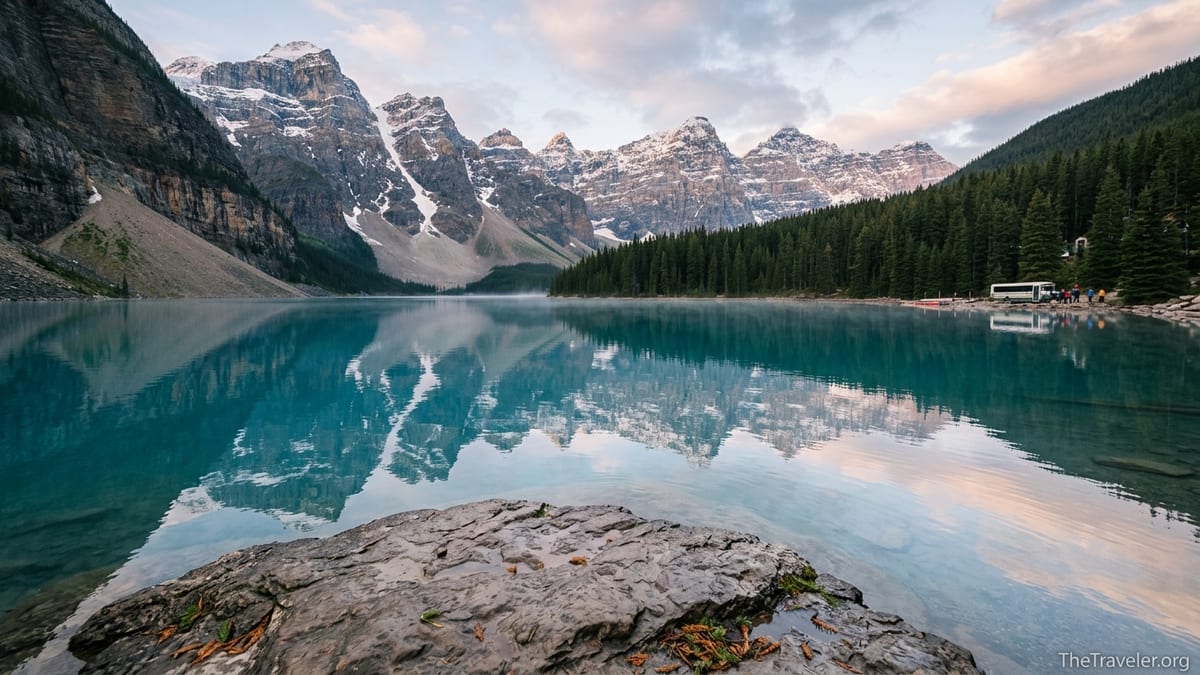
Why You Need to Plan Ahead for Banff’s Top Experiences
Banff’s most sought-after gondolas and lake tours sit at the intersection of tight capacity and surging demand. The mountain environment limits how many people can safely ride each gondola or cruise each hour, while social media has turned places like Moraine Lake into global bucket-list destinations. On peak summer days, Parks Canada has reported tens of thousands of visitors in the Lake Louise and Moraine Lake corridor alone, and that pressure is felt most strongly on bookable experiences.
In practice, this means that some experiences that were once casual, same-day decisions now require careful pre-planning. A classic example is the Banff Gondola on Sulphur Mountain. While you can still buy walk-up tickets in quieter seasons, prime sunset time slots on July and August weekends are often sold out days in advance. Similarly, the Parks Canada shuttle to Moraine Lake, the Lake Minnewanka boat cruise, and popular canoe rentals around Lake Louise all operate on limited capacity and can sell out quickly for peak dates.
The good news is that most of these experiences have clear reservation systems. Parks Canada’s shuttle platform, commercial tour operators, and attractions like Pursuit’s Banff Gondola and Lake Minnewanka Cruise all allow advance booking, often months before your trip. With a bit of date flexibility and an understanding of how their inventory is released, you can usually secure the experiences that matter most and build the rest of your itinerary around them.
For travelers visiting in shoulder seasons such as early June or late September, advance bookings still pay off. While overall visitor numbers may be lower than in mid-summer, capacity can also be reduced because of shorter operating hours or weather-related adjustments. Planning ahead ensures that if conditions are favorable during your visit, you are not left searching for last-minute availability that does not exist.
Banff Gondola on Sulphur Mountain: When and How to Book
The Banff Gondola on Sulphur Mountain is often the first paid attraction visitors consider. Operated by Pursuit, it offers a fast eight-minute ride from the edge of Banff town up to an upper terminal with boardwalks, interpretive exhibits, and panoramic views over the Bow Valley. The gondola runs year-round, but pricing and recommended booking windows vary by season and time of day.
For the 2026 summer season, typical online advance prices for adults have been in the range of about 70 to 85 Canadian dollars, with discounts for youth and dynamic pricing that makes off-peak times a little more affordable. Evening departures, particularly those that coincide with sunset, are often at the higher end of the range and are the first to sell out on popular dates. Families visiting in July have reported that Friday and Saturday evening slots were fully booked several days in advance, while mid-morning times remained available longer.
In peak season, it is sensible to book your preferred gondola time at least one week in advance if you are targeting weekends or sunsets, and several days ahead for weekdays. In shoulder seasons, such as May or late September, 48 to 72 hours’ notice is often sufficient, but even then, specific times can fill quickly during public holidays. If your dates are fixed and you are traveling in a larger group, locking in tickets two or more weeks ahead gives you the best chance of staying together in the same time slot.
Booking online directly with the operator lets you choose a specific boarding window, usually a half-hour period when you should arrive at the base station. Most travelers find that arriving about 20 to 30 minutes before their slot gives enough time for check-in and boarding, especially during busy periods when queues form at the turnstiles. Walk-up pricing at the ticket office can be higher and does not guarantee immediate boarding when time slots are sold out, so securing tickets in advance is strongly recommended in summer.
Lake Minnewanka Boat Cruise: A Classic That Sells Out on Sunny Days
Lake Minnewanka, just a short drive from the town of Banff, offers one of the most accessible and family-friendly lake experiences in the park: a guided boat cruise on a long, fjord-like reservoir backed by steep mountains. The cruises are operated by the same company that runs the Banff Gondola and typically run from mid-May to early or mid-October, depending on ice conditions. Schedules for the 2026 season indicate multiple departures daily in summer, ranging from shorter interpretive cruises to longer scenic or evening options.
Typical adult prices for standard cruises have recently been in the ballpark of 70 to 80 Canadian dollars, with discounts for youth and bundled savings when paired with other attractions like the Banff Gondola. While some early morning or late afternoon sailings may remain available on the day of travel, midday and early evening cruises on clear, warm days often sell out, especially on weekends between late June and early September.
If you are planning to be in Banff during the high season, booking your Lake Minnewanka cruise three to seven days in advance is a safe strategy. Visitors who arrive on sunny July Saturdays without a reservation frequently find themselves limited to less ideal time slots or told that the day’s departures are full. Because the cruise dates and times are published early each year, many travelers planning a one-week Rockies trip choose their first or second full day in Banff for the cruise and secure tickets as soon as their itinerary is set.
Another advantage of advance booking is that it allows you to coordinate transportation and parking. The Minnewanka lakeshore lot can fill by late morning in peak season, and overflow parking requires a longer walk. If you know exactly which departure you are taking, you can aim to arrive 45 to 60 minutes prior, giving yourself breathing room to park, pick up your boarding pass if needed, and enjoy the shoreline before you board.
Moraine Lake and Lake Louise Shuttles: The Most Critical Reservations
If there is one category of Banff experience where advance booking has become non-negotiable, it is access to Moraine Lake and, to a lesser extent, Lake Louise. In recent seasons, Parks Canada has restricted private vehicles to both lakes in order to manage congestion and protect the surrounding environment. For Moraine Lake in particular, private vehicles are now prohibited on Moraine Lake Road during the core season, so visitors must use shuttles, transit, or commercial tours.
Parks Canada operates a shuttle system from a park-and-ride lot near Lake Louise to both Lake Louise lakeshore and Moraine Lake. For the 2026 season, shuttle reservations opened on April 15 at 8:00 a.m. Mountain Time, with about 40 percent of seats for the season released that morning and the remaining inventory launched on a rolling 48-hour window closer to each travel date. On the launch day, more than twenty thousand people reportedly queued online for seats, and popular July weekends to Moraine Lake sold out within minutes.
A day pass for the Parks Canada shuttle, which covers round-trip transport to the lakeshore plus access to the Lake Connector shuttle between Lake Louise and Moraine Lake, has recently cost in the approximate range of 8 to 15 Canadian dollars per adult. Youth and children often ride free, though they still require reservations. Exact prices can change slightly year to year, so travelers should check current information shortly before booking. In addition to the regular daytime shuttles from around 6:30 a.m. to early evening, there are also early “Alpine Start” shuttles at 4:00 a.m. and 5:00 a.m. tailored to sunrise visitors at Moraine Lake, which are particularly popular with photographers.
On top of the Parks Canada system, several private operators such as Moraine Lake Bus Company, Mountain Park Transportation, and tour companies like Radventures and Banff Adventures run their own shuttle services from Banff, Canmore, or Lake Louise village. These commercial shuttles tend to be significantly more expensive, often in the 80 to 150 Canadian dollars per person range for return transport, but they offer earlier departures, guaranteed seats, and sometimes include guiding or combine both lakes in one outing. Many of these operators open their 2026 summer bookings as early as the preceding winter or early spring, and sunrise departures for July and early September weekends can sell out months ahead.
For most visitors, the smart approach is to treat Moraine Lake and Lake Louise logistics as the foundation of the entire Banff itinerary. Decide early which day you want to focus on the lakes, then attempt to secure Parks Canada shuttle seats when the reservation window opens. If you are unsuccessful for your preferred date, be prepared to either take seats on neighboring dates or pay for a private shuttle or guided tour. Waiting until you arrive in Banff often leads to disappointment, particularly if the weather happens to be perfect during your limited stay.
Canoes, Kayaks, and Lakefront Time: Reservations vs First Come
Drifting across a turquoise lake in a canoe is one of the most enduring images of Banff National Park, and for good reason. However, the details around boating and reservations vary by lake and have changed in recent seasons. At Moraine Lake, for example, Parks Canada has now permanently banned all watercraft, including rental canoes and private kayaks, as part of efforts to protect sensitive aquatic ecosystems. Visitors can enjoy the shoreline and hiking viewpoints, but they must now choose other lakes in the region if they want to get out on the water.
Lake Louise remains one of the best-known spots for canoe rentals in the Rockies. The fleet there is operated by the Fairmont Chateau Lake Louise. Recent visitor reports and past pricing suggest that a one-hour rental for hotel guests has cost in the range of about 100 to 120 Canadian dollars, with non-guests paying closer to 140 to 160 dollars per hour, plus taxes. These rentals are typically first-come, first-served at a lakeside dock that opens in the morning and runs through the afternoon, subject to weather and lake conditions.
Because advance reservations for canoes at Lake Louise are generally not offered, the practical way to “book in advance” is to organize your shuttles or parking so that you arrive early in the day. In July and August, queues for canoes can begin forming not long after opening time, and midday waits of an hour or more are common. Visitors who take an early Parks Canada shuttle or a sunrise commercial tour often report that they can walk straight onto the dock by late morning, while those arriving in early afternoon find long lines or, on very busy days, fully allocated inventory.
Other lakes, such as Emerald Lake in nearby Yoho National Park or the Bow River in Banff town, offer canoe or kayak rentals with slightly more flexibility. Some operators in Banff town allow online pre-booking for longer Bow River or Vermilion Lakes rentals, typically in the 60 to 90 Canadian dollars per hour range. These options can provide a backup if you prefer to guarantee some time on the water without relying entirely on walk-up systems at the most famous lakes.
Other Gondolas and Scenic Chairlifts Worth Pre-Booking
The Banff Gondola on Sulphur Mountain is the best-known lift experience in the region, but it is not the only one where advance tickets are worth considering. The Lake Louise Ski Resort operates a summer sightseeing gondola and chairlift that runs from the ski base up into prime wildlife-viewing terrain. This lift is popular with travelers hoping for a safe chance to see grizzly bears foraging in the alpine meadows below. Tickets can typically be booked online, and combination products such as gondola plus lunch vouchers or bundled shuttle passes to Lake Louise and Moraine Lake are sometimes offered.
Prices for the Lake Louise Summer Gondola have generally been somewhat below those of the Banff Gondola, often in the vicinity of 60 to 80 Canadian dollars per adult, though the exact cost depends on whether you book gondola-only, gondola plus breakfast, or packaged tours. Capacity is somewhat lower than Banff’s Sulphur Mountain installation, and wildlife closures or weather-related pauses occasionally affect operations, particularly in shoulder seasons and during thunderstorms.
Reserving tickets a few days in advance is advisable in mid-summer, particularly if you want a specific time for a breakfast-with-a-view package or are coordinating with Moraine Lake or Lake Louise shuttles leaving from the same parking area. Some visitors choose to book a morning gondola ride followed by an afternoon hike or lakeshore walk, using the same day’s shuttle pass to connect between the mountain and the lakes. Having your gondola and shuttle times in hand before you arrive makes this kind of multi-stop day feasible without undue stress.
Closer to Banff town, the Mount Norquay Sightseeing Chairlift and its cliffhouse bistro operate on a slightly more relaxed scale. It is often possible to secure same-day tickets in shoulder seasons, but clear weekend afternoons in July and August can still sell out. Visitors planning to combine the chairlift with a meal or via ferrata route generally find it worthwhile to reserve at least a few days ahead, ensuring that weather and other elements of their itinerary line up with their chosen time slot.
Practical Booking Timelines and Bundling Strategies
Because so many of Banff’s gondolas and lake experiences now require or strongly encourage advance booking, it helps to think in terms of layers when planning your trip. The first layer is transportation and basic access: flights, rental car or transit, and crucially, your Moraine Lake and Lake Louise shuttle reservations. For a July or August visit, try to lock in Parks Canada shuttle day passes or a private shuttle at least two to three months in advance if possible, and be ready on April 15 when the initial release opens for the season.
The second layer is your major paid attractions, particularly those with limited capacity and high demand. This includes the Banff Gondola, Lake Minnewanka boat cruise, and any summer gondolas or scenic chairlifts at Lake Louise or Mount Norquay. For peak summer, a booking window of one to three weeks is a sensible target, with the longer end for weekends and special times like sunset. In shoulder seasons or for midweek visits, three to seven days lead time often suffices, though you should adjust if your travel coincides with Canadian or American holiday weekends.
The third layer includes more flexible or weather-dependent experiences, such as canoe rentals at Lake Louise, Bow River paddling in Banff, or last-minute wildlife tours. These are harder to lock down far in advance because conditions on the day play a big role in how enjoyable they are. Instead, travelers often anchor their schedule around the fixed reservations already made and leave windows open for opportunistic bookings once the forecast becomes clearer.
Bundling can also help reduce costs and simplify planning. Combo tickets that pair the Banff Gondola with the Lake Minnewanka Cruise, or the Lake Louise Gondola with shuttle packages to the lakes, may offer modest savings compared with buying everything separately. More importantly, they reduce the risk of mismatched times by packaging compatible time slots together. When evaluating bundles, be cautious not to over-schedule yourself; it is better to enjoy a few key experiences at a relaxed pace than to rush between attractions with no time to appreciate the mountain environment.
The Takeaway
Banff’s most iconic gondolas and lake experiences are no longer the kind of activities you can reliably leave to chance, particularly in the core summer months. Access restrictions to Moraine Lake, high demand for Lake Louise and Lake Minnewanka, and limited gondola capacity all mean that travelers who book ahead are rewarded with better times, less stress, and a higher chance of seeing the Rockies at their best.
If you are planning a trip between late June and early September, treat your Moraine Lake and Lake Louise shuttle reservations as the backbone of your itinerary and secure them as soon as the season opens. Follow up by booking headline attractions like the Banff Gondola and Lake Minnewanka Cruise at least a week or two before you arrive, especially for sunset or weekend slots. For canoeing and more flexible tours, focus on arriving early in the day and using your fixed reservations as anchors around which the rest of your schedule can flow.
With a thoughtful approach to timing and reservations, it is still possible to experience quiet moments on a boardwalk high above Banff, glide across a turquoise lake, and watch first light hit the peaks around Moraine Lake. In a park where visitor numbers continue to climb, advance planning is the key that unlocks these classic Canadian Rockies experiences.
FAQ
Q1. How far in advance should I book the Banff Gondola in summer?
For July and August weekends or sunset rides, aim to book at least one to two weeks in advance. For midweek or shoulder season dates, three to seven days is often enough, but earlier is safer for fixed itineraries.
Q2. When do Parks Canada shuttle reservations for Moraine Lake and Lake Louise open?
For the 2026 season, the main release opened on April 15 at 8:00 a.m. Mountain Time, with about 40 percent of seats launched then and the rest released on a rolling 48-hour window before each travel date.
Q3. Can I drive my own car to Moraine Lake in summer?
No. Private vehicles are no longer permitted on Moraine Lake Road during the main season. Access is by Parks Canada shuttle, Roam Transit, commercial shuttle, guided tour, bike, or on foot.
Q4. Do I need to reserve the Lake Minnewanka boat cruise in advance?
Advance reservations are strongly recommended between late June and early September, especially on sunny weekends and afternoons, when popular departures often sell out several days ahead.
Q5. Can I reserve a canoe at Lake Louise before I arrive?
Generally, no. Canoe rentals at Lake Louise are normally first-come, first-served at the lakeside dock. To improve your chances, use early shuttle times or arrive at the lakeshore soon after opening.
Q6. Are any boats or canoes allowed on Moraine Lake?
No. As of recent seasons, all watercraft, including rental canoes and private kayaks or paddleboards, are banned on Moraine Lake to protect sensitive aquatic ecosystems.
Q7. Is the Lake Louise Summer Gondola worth booking in advance?
Yes, especially in mid-summer and if you want breakfast or lunch packages. Booking several days in advance helps you match gondola times with your lake shuttles and other plans.
Q8. What happens if I cannot get Parks Canada shuttle tickets for my dates?
If the official shuttle is sold out, your alternatives are commercial shuttles from operators in Banff, Canmore, or Lake Louise village, which cost more but often have additional departures such as sunrise trips.
Q9. Are there discounts for children on gondolas and shuttles?
Yes. Most gondolas and cruises offer reduced youth and child pricing, and on recent Parks Canada shuttles, youth have been able to ride free with a reservation. Exact age brackets and prices can change, so check current details before booking.
Q10. Do I need to worry about weather when booking gondolas and cruises ahead of time?
Weather in the Rockies is changeable, but most operators run in light rain and variable conditions. If strong winds, electrical storms, or poor visibility force cancellations, companies generally offer rebooking or refunds. Booking key experiences early in your trip gives you some flexibility to adjust if the forecast changes.