


Booking flights to Istanbul used to be simple. Today, most search results give you two main options: Istanbul Airport (IST) on the European side and Sabiha Gökçen Airport (SAW) on the Asian side. Both are busy international hubs with modern facilities, but they feel very different in size, atmosphere, and convenience. The better choice depends less on which airport is “best” and more on where you are staying, how you are connecting, and what kind of trip you are planning.
Get the latest updates straight to your inbox!
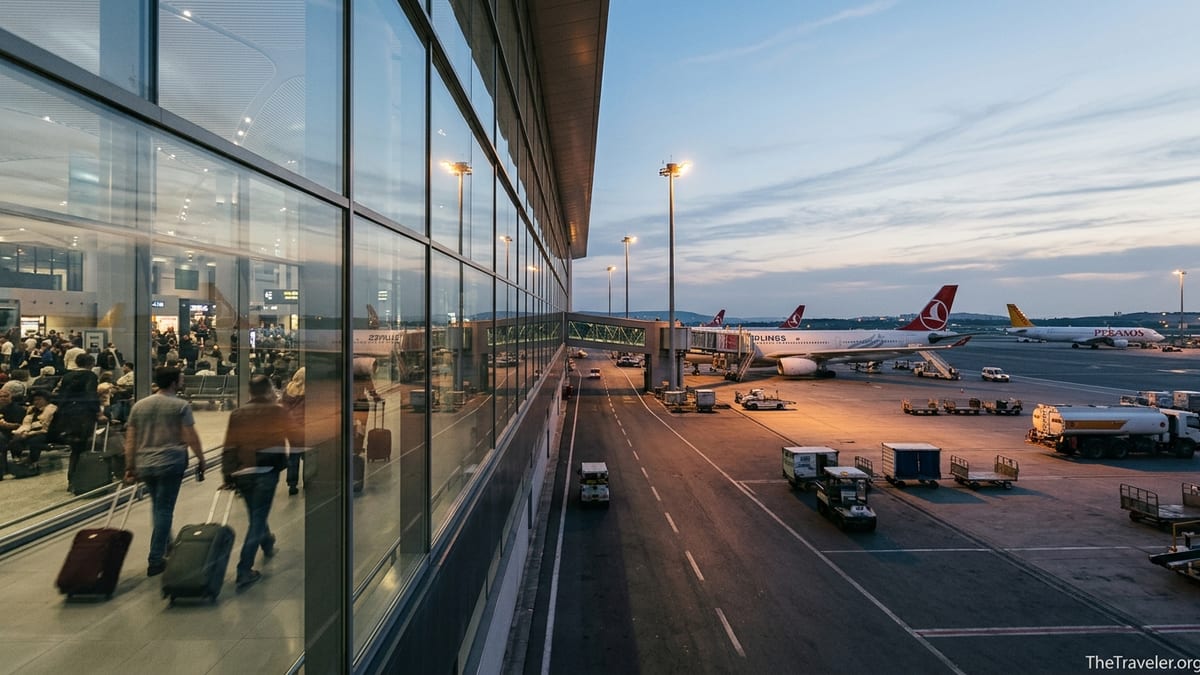
Big Picture: How the Two Airports Compare in 2026
Istanbul Airport (IST) is the city’s primary global hub and one of the busiest airports in Europe. In 2024 it handled around 80 million passengers, with the bulk of traffic coming from international routes. It is the main base of Turkish Airlines, with long haul services to North America, Asia, Africa, and almost every major European city. The terminal is vast and modern, built to absorb heavy connecting traffic with wide corridors, big duty free areas, and many gates.
Sabiha Gökçen Airport (SAW) is smaller but still very busy, handling more than 40 million passengers a year. It is on the Asian side and is especially important for low cost and regional flights. Pegasus Airlines uses SAW as its main base, and many budget travelers flying from Europe or the Middle East into Istanbul will find cheaper fares there, especially on routes like London to Istanbul or Berlin to Istanbul.
A simple rule of thumb works well for many trips. If you are flying long haul or connecting onto Turkish Airlines, IST will almost certainly be your airport. If you are traveling on Pegasus or another low cost carrier, or mainly flying domestic inside Turkey, SAW often appears with more attractive prices. The trade off is that IST usually offers more international connections and amenities, while SAW often offers cheaper tickets but can involve longer surface transfers depending on where you stay.
Passenger experience also differs in scale. IST can feel like a mega hub, with long walks and potentially long security and passport queues at peak times, but in return you get a wide choice of lounges, shops, and services. SAW feels more compact and straightforward, but at rush hour the terminal can feel crowded and seating areas fill up quickly, especially near popular gates used by Pegasus.
Location and Getting Into the City
IST lies on the European side, roughly 35 to 40 kilometers northwest of central neighborhoods like Taksim and Sultanahmet. In normal daytime traffic, a taxi or pre booked transfer takes around 40 to 60 minutes to reach central hotels. Late at night the ride can be closer to 35 minutes, while in heavy rush hour or bad weather it can extend to 75 minutes or more.
SAW sits on the Asian side, around 45 to 55 kilometers from the historic peninsula and slightly closer to Asian districts like Kadıköy and Üsküdar. If your hotel is in Kadıköy, a taxi from SAW might take 35 to 50 minutes, while getting from SAW to Sultanahmet can easily reach 60 to 90 minutes if you hit bridge traffic. For a traveler staying in Moda or along the Asian waterfront, SAW is clearly more convenient than crossing the entire city from IST.
Imagine two friends flying from Paris to Istanbul in August. One books a Turkish Airlines flight into IST and stays in Karaköy; the other finds a cheaper Pegasus fare into SAW but also stays in Karaköy. In real terms, the second traveler might save 60 to 100 euros on flights but then spend more time and money on ground transport, including a long taxi or multi stage public transport journey from SAW to the European side.
The choice becomes even more important for short breaks. If you are visiting Istanbul for just two or three nights, spending two to three hours extra in traffic getting between the airport and your hotel can eat into valuable time. Matching your arrival airport to the side of the city where you will sleep often matters more than tiny differences in airfare.
Transport Options, Time and Approximate Costs
From IST, transport options are at their best yet in 2026. The M11 metro line connects the airport to the city’s rail network, allowing travelers to reach key areas like Kağıthane and eventually transfer toward Taksim or Beşiktaş by metro. For a budget minded traveler with a small suitcase, using the metro plus one transfer can bring the total cost of getting into town to only a few dozen lira, at the price of extra stairs and walking.
Airport buses run frequently from IST to major hubs such as Taksim and Sultanahmet. The Havaist buses are comfortable coaches with luggage storage, air conditioning, and onboard Wi Fi. As of mid 2026, a ticket from IST to Taksim typically costs the equivalent of around 8 to 12 US dollars when paid in lira. Travel time is usually 60 to 90 minutes depending on traffic. Many first time visitors pick this option because the buses are direct, clearly signposted, and easy to use even if you arrive late at night.
Taxis from IST operate on a meter, with fares depending on distance and time spent in traffic. Recent guides list typical daytime taxi fares from IST to Sultanahmet in the range of roughly 900 to 1,300 Turkish lira, which corresponds to about 28 to 40 US dollars at mid 2026 exchange rates. Pre booked private transfers are usually quoted at a fixed price per car rather than per person, for example around 1,000 to 1,400 lira for a car that seats three or four passengers, which can be cheaper than two separate taxis for a small group.
From SAW, the picture is similar but with a few key differences. The Havabus shuttle remains the workhorse connection between SAW and neighborhoods like Kadıköy and Taksim. A one way ticket often costs slightly less than from IST, but the ride from SAW to Taksim can easily take 90 minutes or more because it crosses from the Asian side to the European side and depends heavily on bridge traffic. Taxi fares from SAW to central European side districts generally cost more than equivalent journeys from IST, because the route is longer. It is common to see current estimates in the range of 1,200 to 1,800 lira from SAW to Sultanahmet or Taksim, depending on the time of day and traffic conditions.
Public transport from SAW has improved, with local buses and metro connections linking the airport to Kadıköy and other Asian districts, where you can transfer to ferries or onward metro lines. For example, a budget traveler staying in Kadıköy might take a public bus or metro segment from SAW, then a short taxi ride of 10 to 15 minutes to their hotel, bringing the total cost down to only a few dollars while keeping travel time reasonable.
Airlines, Routes and When Each Airport Wins
The strongest reason to choose IST is flight choice. Turkish Airlines uses IST as its main hub, offering non stop routes from cities like New York, Los Angeles, Chicago, Toronto, Singapore, Tokyo, and many more. If you are flying from the United States or Canada, most non stop or one stop itineraries into Istanbul will route through IST. This makes IST the obvious option for complex itineraries with onward connections, especially to other Turkish cities or to neighboring countries such as Georgia, Lebanon, or Egypt on the same ticket.
IST is also served by a wide range of foreign carriers. Major European airlines like Lufthansa, Air France, British Airways, and KLM, as well as Gulf carriers such as Qatar Airways and Emirates, mainly use IST. This variety allows travelers to shop around for alliances, mileage accrual, and schedule flexibility. For example, a traveler based in Boston might choose between a direct Turkish Airlines flight to IST or a one stop route via Frankfurt or London, all arriving at Istanbul Airport.
SAW, by contrast, is dominated by Pegasus Airlines. Pegasus offers an extensive network of low cost flights throughout Turkey, as well as affordable routes to European cities like Amsterdam, Vienna, and Milan, and to parts of the Middle East. If price is your top priority, it is common to see fares into SAW that are significantly lower than equivalent flights into IST, particularly outside peak summer dates. For instance, a budget traveler from Berlin planning a weekend in Istanbul might find a return Pegasus flight to SAW for under half the price of a full service carrier into IST.
Domestic travelers often view SAW as the more practical choice for hopping around Turkey on cheaper tickets, especially if they live on the Asian side or are connecting to coastal cities like Antalya, Izmir, or Adana on Pegasus. In many cases, a traveler might land at SAW from Europe in the evening, stay one night near the airport or in Kadıköy, then take a morning Pegasus flight onward to Cappadocia or the Aegean coast.
On the Ground: Terminals, Comfort and Services
IST’s terminal feels like a modern global hub, with high ceilings, tall glass walls, and long concourses lined with duty free stores and international brands. You will find familiar coffee chains, Turkish dessert stands selling baklava and lokum, and a mix of international and Turkish restaurants. For travelers with long layovers, there is a good selection of airline lounges, including multiple Turkish Airlines lounges for business class and status passengers, and several independent lounges bookable for a fee.
Because of its size, walking distances at IST can be long. Some passengers report 15 to 20 minute walks between immigration and distant gates, especially in the international terminal. For travelers with tight connections, young children, or limited mobility, this is worth keeping in mind. However, the airport is designed with many information screens, clear English signage, and sitting areas throughout, which helps with wayfinding and waiting between flights.
SAW offers a more compact layout. With a single main terminal used for both domestic and international flights, check in and security can feel more crowded at peak times, but once you clear security the gates are relatively close together. Food and beverage options include Turkish fast food chains, simit stands, and a handful of international outlets. The duty free area is smaller than IST’s but still covers the essentials such as perfume, cosmetics, Turkish delight, spirits, and tobacco.
For overnight stays, IST has an airside airport hotel that serves connecting passengers who do not want to pass immigration, as well as landside hotels in the immediate airport area. SAW has smaller options, including capsule style sleeping pods inside the terminal and business hotels within a short taxi ride. A frequent real world example is a traveler arriving at SAW close to midnight on a delayed Pegasus flight; instead of attempting to reach Taksim or Sultanahmet at that hour, they may book an inexpensive nearby airport hotel for one night and continue into the city the next morning when traffic is lighter.
For Different Types of Trips: City Breaks, Business, and Connections
For a classic first time city break focused on the historic center and European side sights, IST usually makes more sense. If your plan is to stay near Sultanahmet or Galata, visit Hagia Sophia and the Blue Mosque, and take evening walks along İstiklal Caddesi, arriving at IST typically keeps transfers shorter and more straightforward. You can step into a taxi, Havaist bus, or metro and be at your hotel in about an hour under normal conditions.
For business travelers with meetings in the central business districts such as Levent or Maslak, IST is again often more convenient because those areas sit on the European side and link more directly to the IST transport network. Many corporate travelers will arrange private transfers to save time and arrive freshly prepared for meetings, sometimes combining the trip from the airport with a quick stop at the hotel to drop luggage.
On the other hand, if your itinerary is focused on the Asian side or coastal escapes, SAW can be the smarter choice. A digital nomad planning to base themselves in Kadıköy for a month, for example, might pair a low cost Pegasus flight into SAW with a moderate taxi ride or public transport connection and essentially avoid the European side altogether. Similarly, families heading directly to resorts in places like Bodrum or Dalaman often combine flights into SAW with cheap domestic Pegasus connections.
For connections through Istanbul, especially on one ticket, IST is generally the safer option. Turkish Airlines sells through tickets with protected connections, meaning that if your inbound flight is delayed, the airline takes responsibility for rebooking. At SAW, many connections involve self connecting on separate tickets, often between low cost flights. This can be cheaper but carries higher risk if there are delays or cancellations, especially in busy summer months or during winter storms.
Real World Scenarios Where the Choice Matters
Consider a couple from Chicago planning their first trip to Turkey. Their main goals are to explore Istanbul’s historic sites for three days, then fly on to Cappadocia. They find a direct Turkish Airlines flight from Chicago to IST that arrives mid afternoon, and a morning domestic flight from IST to Kayseri two days later, both on a single ticket. In this scenario, IST is clearly the better match: minimal surface travel, protected connection, and all flights under one airline’s umbrella.
Now imagine a group of four friends from Manchester visiting Istanbul on a tight budget for a long weekend. They find ultra low fares on Pegasus into SAW, landing late on a Thursday night and departing Monday morning. The savings on flights are substantial. They decide to book an Airbnb in Kadıköy, use the Havabus shuttle and metro, and split one or two taxis as needed. For them, SAW offers better value, because they spend almost all of their time on the Asian side and are comfortable with longer, cheaper public transport journeys.
Another common case involves mixed itineraries. A traveler from New York might fly into IST on Turkish Airlines, spend a week exploring Istanbul, then fly out of SAW on Pegasus because they found a much cheaper one way ticket from SAW to a European city like Rome. In practice, they will need to plan a cross city transfer from the European side to SAW on departure day, allowing extra time for bridge traffic. In 2026, direct Havaist buses between IST and SAW, as well as private transfer services, have made such cross airport transfers more manageable, but they still require careful timing.
Finally, weather and traffic can influence the experience. In winter, fog and storms occasionally disrupt operations at both airports, but their impact is not always the same. A traveler with an important international connection might feel more comfortable using IST, where large airlines often have more flexibility to rebook passengers and more frequent departures on key routes.
The Takeaway
Choosing between Istanbul Airport and Sabiha Gökçen is less about naming a winner and more about matching the airport to your route, budget, and itinerary. Istanbul Airport shines as a global hub, with extensive long haul connections, strong airline coverage, and better alignment with the historic center and European side business districts. It is usually the most convenient option for first time visitors, short city breaks, and complex international connections on a single ticket.
Sabiha Gökçen, meanwhile, is often the better choice for budget travelers, Asian side stays, and domestic or regional trips built around Pegasus flights. It can mean longer transfers to European side hotels and a more crowded terminal at peak times, but for many travelers the lower airfare and straightforward layout are worth that trade off.
In practical terms, start by locating your accommodation on a map and noting whether it sits on the European or Asian side. Then look at which airlines and routes serve each airport for your origin city. If both airports are options, compare not only the ticket price but also the total door to door cost in time and money, including transfers and any overnight stays or cross city airport changes.
When you understand what each airport does best, it becomes easier to turn Istanbul’s two airport system into an asset rather than a source of confusion. Used thoughtfully, IST and SAW together give you flexibility in price, route, and timing, helping you design a smoother, more efficient trip to one of the world’s most captivating cities.
FAQ
Q1. Which airport is better for first time tourists in Istanbul?
For most first time visitors staying near Sultanahmet, Galata, or Taksim on the European side, Istanbul Airport is usually more convenient because transfers are shorter and transport options like the metro and Havaist buses point directly toward those neighborhoods.
Q2. Is Sabiha Gökçen really much farther from the city center than Istanbul Airport?
Sabiha Gökçen is generally farther from the historic center and requires crossing from the Asian side to the European side, which can add time, especially in bridge traffic. However, for travelers staying in districts like Kadıköy or Ataşehir, SAW can actually be closer and faster than Istanbul Airport.
Q3. Which airport is better for budget flights and low cost airlines?
Sabiha Gökçen tends to host more low cost carriers, especially Pegasus Airlines, and often shows cheaper fares on routes from many European cities. If you are price sensitive and comfortable with longer transfers, SAW can be an excellent choice.
Q4. How much should I budget for a taxi from each airport to central Istanbul?
As a rough mid 2026 guide, a taxi from Istanbul Airport to areas like Sultanahmet or Taksim often falls in the region of 900 to 1,300 lira, while Sabiha Gökçen to the same areas can cost more, commonly around 1,200 to 1,800 lira, depending on traffic and time of day.
Q5. Are public transport options good enough to avoid taxis entirely?
Yes, many travelers now use the metro and airport buses from Istanbul Airport, and buses plus metro or ferries from Sabiha Gökçen, especially if they travel light. It may take longer and involve more transfers, but it can reduce costs to only a fraction of a taxi fare.
Q6. Which airport should I choose if I have a tight connection?
If your flights are on one ticket with an airline like Turkish Airlines, Istanbul Airport is better suited for tight connections, as it is designed as a hub with coordinated schedules and protected connections. For self connecting low cost flights, allow generous time regardless of airport.
Q7. Is there a direct shuttle between Istanbul Airport and Sabiha Gökçen?
Yes, in 2026 shuttle services such as specific Havaist routes and private transfer companies operate between the two airports. Travel time can range from about 75 minutes to well over two hours, depending on traffic, so it is important to plan conservatively if you have a same day connection.
Q8. Which airport has better lounges and facilities for long layovers?
Istanbul Airport offers a wider range of airline and independent lounges, as well as more shops and dining options, making it generally more comfortable for long international layovers. Sabiha Gökçen has basic lounges and services but on a smaller scale.
Q9. If I am staying on the Asian side, should I always choose Sabiha Gökçen?
Not always, but often. If flight prices and schedules are similar, SAW usually wins for Asian side stays. However, if you find a much cheaper or more convenient flight into Istanbul Airport, it can still be worth landing there and crossing to the Asian side by metro, bus, or ferry.
Q10. Is it safe to arrive late at night at either airport?
Both airports operate 24 hours and are used to late arrivals. Taxis and shuttles run through the night, though frequencies may be reduced. Many travelers arriving after midnight choose pre booked transfers or nearby airport hotels to keep the first night simple and avoid navigating complex public transport when tired.