


Istanbul Airport has quickly become one of the world’s biggest transit hubs, a place where hundreds of thousands of travelers every week swap flights on Turkish Airlines and dozens of other carriers. On a map it looks straightforward: one giant, modern terminal with lounges, sleep pods and a transit hotel. In reality, a layover here can feel confusing, oddly expensive in places, and full of small rules nobody explains until you are stuck in the middle of the concourse at 3 a.m. with a crumpled boarding pass and nowhere obvious to rest.
Get the latest updates straight to your inbox!
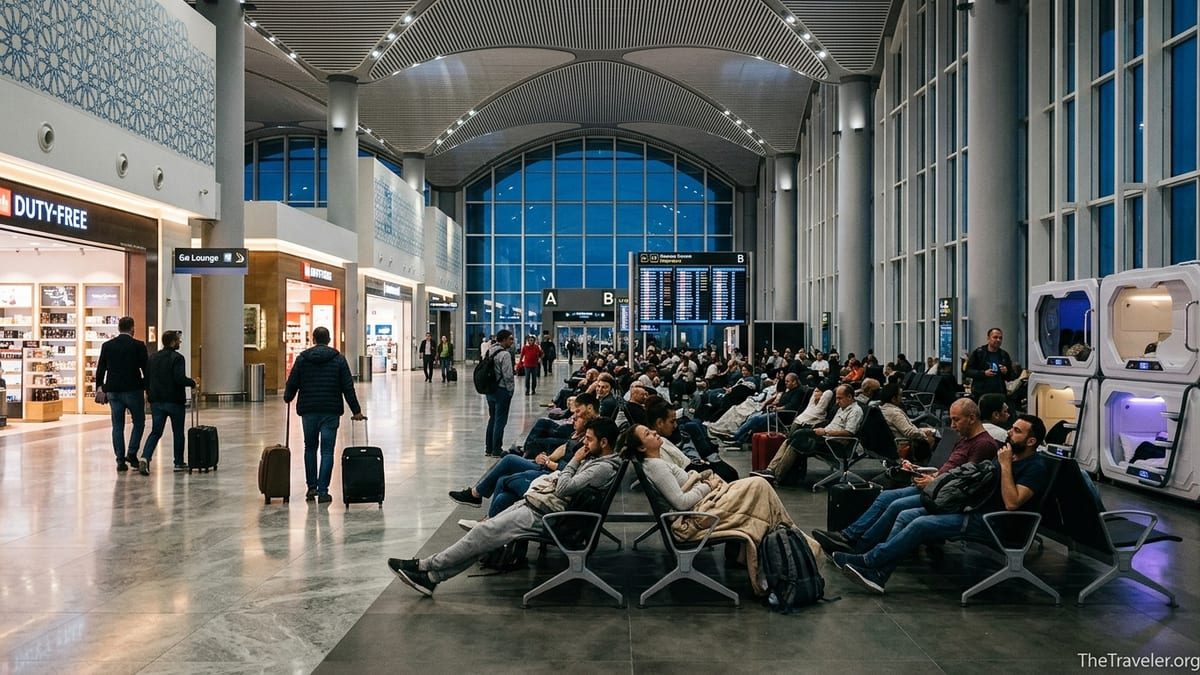
The First Surprise: One Huge Terminal That Still Takes Forever
The first thing nobody tells you about Istanbul Airport is scale. Officially it is a single terminal, but it feels like a small city with long, bright avenues and concourses that seem never to end. Walking from one end to another can easily take 20 to 30 minutes at a normal pace, and that is without stops for security checkpoints that sometimes pop up between gate areas.
For a real-world example, travelers connecting from a late-night flight arriving at the F gates to a morning departure to the United States from the A or B gates often report 15 to 20 minutes of brisk walking with carry-on bags. Add in passport checks, an extra security screening at some long-haul gates and a restroom break, and even a two-hour connection can suddenly feel tight. The airport’s design looks clean and open, but its sheer size catches many first-time visitors off guard.
There are some moving walkways, but they do not cover all of the long distances. If you have mobility issues or are traveling with small children, you should plan extra time and consider asking for wheelchair or buggy assistance in advance through your airline. Many passengers only realize how spread out everything is when they are already power-walking under departure screens, hoping their connection is not at the far end of the alphabet.
Because everything is technically one terminal, people also assume they can quickly pop between domestic and international areas. In practice, changing between them means passing through passport control and security again, which can easily add 20 to 40 minutes when lines are long. On short layovers, this can be the difference between a stress-free transit and a sprint to the gate.
Airside vs Landside: Why It Matters Much More Than You Think
An Istanbul layover is shaped by one detail that confuses many travelers: whether you stay airside in the secure transit area or go landside through passport control. The difference affects your access to hotels, lounges, food prices and even whether you can step outside for fresh air.
Inside the secure zone you will find the majority of international gates, the iGA Lounge, Turkish Airlines lounges, sleep pods and the airside branch of YOTELAIR. This is the world most transit passengers see. If your bags are checked through and your onward boarding pass is issued, you can remain here the entire time. A traveler flying from New York to Bangkok with a 7-hour overnight connection, for example, can land, clear transit security, rest in a lounge or pod, and never enter Turkey formally.
On the landside, accessible only after passport control, there is another YOTEL hotel, some additional cafes and access to the city. This option can seem attractive if you have a very long layover and want a traditional hotel stay, but it comes with trade-offs. You will need a valid visa if your nationality requires one, you must clear immigration twice, and you will go through full security screening again to re-enter the departures hall. For someone with a 9-hour daytime layover who wants a shower and real bed, that might be worth it. For a traveler with 5 or 6 hours of overnight connection, the repeated formalities can feel like a headache.
Many people accidentally book the wrong YOTEL, choosing the landside property even though they stay in transit. If your itinerary does not allow you to enter Turkey or you prefer not to deal with immigration, this becomes an expensive mistake because you cannot reach a landside hotel without crossing the border. Always double-check whether your hotel confirmation clearly states airside or landside and that your ticket allows you to reach it in reality, not just on a map.
Sleep Is Possible, But Rarely As Simple As It Looks Online
Istanbul Airport markets itself as a place where you can rest easily between flights, but the reality can be surprisingly complicated and pricey. The most advertised option is YOTELAIR, the transit hotel located in the duty-free area and bookable by the hour. Recent day-rate examples show minimum stays of four hours, and travelers report hourly prices that quickly add up for an eight-hour overnight layover. For a solo traveler, a short rest might feel worth it, but for a family of four it can start to resemble the cost of a downtown hotel.
Then there are the sleep pods scattered around the international terminal. These capsule-style chairs or mini-cabins look futuristic and convenient, but many passengers are surprised by the per-hour charges. Reports from the last year mention rates around 20 euros per hour for simple pods, with some travelers encountering higher package prices overnight. Paying that for two or three hours of nap time can make sense on a brutal red-eye connection, yet the numbers add up quickly if you are not prepared.
One detail that rarely appears in glossy airport photos is how noisy and bright the terminal stays all night. Even in the quieter corners near some D and F gates, announcements, cleaning machines and the constant glow of overhead lighting make true sleep difficult. Many experienced travelers bring earplugs, an eye mask and a light blanket or scarf. They look for reclining lounge chairs against the walls or near unused gates and create their own improvised camp rather than paying for a pod, especially on a 4–5 hour layover where it hardly seems worth checking into a room.
If you are flying in business class or have lounge access, the Turkish Airlines and iGA lounges do help. They typically offer nap rooms or semi-reclining chairs plus showers that feel lifesaving on long trips. But these areas fill up quickly during peak overnight banks of flights to Asia and Africa, and staff sometimes maintain waiting lists for the most comfortable sleeping spaces. The marketing message suggests plenty of quiet corners for everyone; the reality is that you should not rely on simply walking up and finding a free bed in the middle of the night.
Lounges: Excellent, Crowded, and Not as Accessible as People Assume
Istanbul Airport’s lounges are frequently praised in global rankings, particularly the Turkish Airlines Business and Miles&Smiles lounges and the flagship iGA Lounge. For many travelers, these are the main reason a long layover here is bearable. But what surprises people is how complicated access can be and how crowded the spaces get at peak times.
The Turkish Airlines lounges cater mainly to business class passengers and elite members of the Miles&Smiles program or Star Alliance Gold. Economy passengers without status usually cannot simply flash a Priority Pass card at the door as they might in other airports. While paid access is sometimes offered through Turkish Airlines during booking, walk-up access is limited and not guaranteed. Many first-timers arrive assuming their lounge membership card will work automatically and end up disappointed at the entrance.
The iGA Lounge, located in the international area, is the most realistic paid option for many economy travelers. Access is available through popular lounge programs and as a direct-pay pass. Recent price examples put walk-in access around the low hundreds of euros per person for a long stay, with occasional promotions or slightly lower rates booked in advance through airport channels. That price includes hot meals, drinks, shower cabins and quieter seating, but at busy times such as early morning transatlantic waves and late-night Asian departures, seating can still be hard to find and showers may have waiting lists.
Another under-the-radar option is the Revolve lounge connected with YOTELAIR, which sells walk-in access at a slightly lower price point than the iGA Lounge and tends to be less known among casual travelers. It offers food, drinks and a space to work, which can be enough to turn an uncomfortable six-hour layover into something manageable. Still, when you factor in the cost for two or three people, you might easily be spending more than a mid-range dinner in central Istanbul, a comparison many travelers only make after they have tapped their card at the reception desk.
Food, Water, and Where the Money Really Goes
A big shock for many passengers is the price of everyday basics once they arrive at Istanbul Airport. Despite Turkey’s generally more affordable cost of living, the airport operates on international hub pricing, and items like bottled water, coffee and quick meals often cost more than in the city and sometimes as much as in Western Europe.
For example, travelers report paying the equivalent of several euros for a small bottle of water from airside kiosks, with cafe coffees easily reaching common European capital prices. A very ordinary sandwich and drink from a recognizable chain can quickly approach the price of a mid-range sit-down meal in Istanbul itself. Over the course of an 8 or 10-hour layover, especially for families with children constantly asking for snacks, these costs climb fast.
On the other hand, the airport does have some food courts and more casual options that offer slightly better value if you are willing to walk a little farther from the main central areas. Some Turkish brands serve simit, pide and simple hot dishes for prices that are still higher than in the city but less shocking than the most international-looking cafes. If you have a long connection, it can be worth scouting out one of these local-style spots instead of buying everything at the first coffee chain you see under the huge departures board.
Tap water is officially not encouraged for drinking, and there are not as many free refill fountains as in some newer European airports. That means buying bottled water or relying on lounge access where drinks are included. Many seasoned travelers now bring an empty bottle and small portable filter or purification tablets so they can make tap water safer for themselves, an approach that pays off especially on repeated routes through Istanbul.
Leaving the Airport: Free Tours, Stopover Hotels, and Visa Fine Print
When a layover stretches into double digits, the idea of leaving the airport becomes attractive. Turkish Airlines has several programs that can turn a long wait into a mini-city break, but they come with conditions that many people only discover at the last minute. Reading the fine print before you travel is essential.
One of the better-known options is Touristanbul, a free city sightseeing program for eligible Turkish Airlines international transit passengers with layovers of several hours during the daytime. Guests are taken by bus into the city for a guided tour of landmarks and given a meal, then returned to the airport in time for their onward flight. The catch is that the program only operates during specific daytime arrival windows, and you must clear immigration, meet at the designated desk in the arrivals hall, and have a sufficient buffer between flights. Someone landing at 11 p.m. and departing at 7 a.m., for example, will not be able to join, no matter how long their layover feels.
Separate from the tour, Turkish Airlines also promotes a stopover hotel program for passengers with particularly long connections, usually 20 hours or more on certain ticket types and routes. Qualifying travelers can receive a free night in a partnered hotel in Istanbul, often in central districts rather than near the airport. This sounds extremely generous and can be a fantastic perk, but the application process typically has to be completed before travel, and not every origin country or ticket is eligible. Online discussions reveal plenty of travelers who assumed they would automatically be given a room on arrival, only to learn that the offer did not apply to their fare or that a schedule change canceled their originally confirmed stay.
Regardless of airline programs, you also need to consider visa rules. Citizens of some countries can enter Turkey visa-free, others can purchase an e-visa online, and some require pre-arranged visas or are not eligible to transit into the city at all. A traveler who tries to join a free tour or leave for a self-arranged hotel without the right entry permission will be turned back at passport control. Nobody at online booking screens spells this out clearly; it is up to you to check current entry requirements for your nationality and allow time for immigration lines that can be long during banked arrival periods.
Hidden Time Traps: Security, Boarding, and Last-Minute Gate Changes
On paper, Istanbul Airport’s operations look highly efficient: modern security systems, clear signage and wide gate areas. In practice, there are several time traps that consistently surprise transit passengers, especially on long-haul journeys where fatigue makes it easy to misjudge the clock.
Security screening is the first. Passengers usually pass through one main screening point on arrival in the transit zone, but there are also secondary checks at some gate clusters and nearly all flights to North America and certain other destinations. If you are used to walking straight onto the plane once boarding starts, the extra bag scans and passport checks here can catch you off guard. More than a few travelers have found themselves in a slow-moving queue at a secondary checkpoint while hearing their names called over the loudspeaker.
Boarding procedures are another source of friction. Turkish Airlines often boards large wide-body aircraft at multiple zones simultaneously, and the process can feel chaotic if ground staff are managing tight turnaround times. Monitors sometimes show “Final Call” earlier than in other hubs, which makes cautious travelers abandon plans to grab a quick snack or coffee and hurry to the gate. Combined with long walks from lounges to the farthest gates, this can make the last 60 to 90 minutes of your layover feel more stressful than relaxed.
Finally, gate changes are not uncommon, especially when weather or congestion disrupts the schedule. It is not unusual for a flight that was scheduled to depart from one central gate to be reassigned to a more distant stand, adding another 10 to 15 minutes of walking time. If you are settled into a lounge or restaurant, check the departure screens frequently and set an alarm on your phone so that a last-minute change does not sabotage carefully laid rest plans.
The Takeaway
Istanbul Airport rewards travelers who plan, even just a little, before landing. It offers high-quality lounges, a smartly designed transit hotel, sleeping pods, cultural tours and free hotel programs that genuinely can transform a layover. At the same time, its long walking distances, layered security, crowded peak hours and uneven pricing for basics like water and quick meals mean that a supposedly simple connection can feel unexpectedly draining if you just wing it.
The key is to match your layover length and budget with the right strategy. For a 3 to 4-hour connection, staying airside, stretching your legs and maybe grabbing a shower in a lounge you already have access to makes sense. For 6 to 9 hours, especially overnight, decide honestly whether a paid pod, YOTELAIR cabin or a carefully chosen quiet corner aligns with your comfort needs and wallet. For very long layovers, study your eligibility for Touristanbul or stopover hotels well before departure, and double-check any visa or entry requirements.
Nobody tells you these details when you click “confirm” on a multi-city booking that routes you through Istanbul. But with realistic expectations about walking times, costs, sleep options and border formalities, you can turn one of the world’s busiest and most bewildering hubs into a surprisingly manageable, even enjoyable, waypoint on your journey.
FAQ
Q1. Can I sleep for free inside Istanbul Airport during a long layover?
Yes, but comfort is limited. There are some semi-reclining chairs and quieter gate areas where people stretch out, especially at night, but lighting and announcements stay on. Many travelers bring an eye mask, earplugs and a light blanket to make these free spots more tolerable.
Q2. Is it worth paying for a sleep pod or YOTELAIR at Istanbul Airport?
It depends on your budget and how exhausted you are. Hourly pod rates and short YOTELAIR stays can be relatively expensive, especially overnight or for families, but for someone facing an 8-hour red-eye layover they often provide the only real chance at quality sleep and a shower without leaving the transit area.
Q3. How early should I be at my gate for a connecting flight at Istanbul Airport?
Plan to leave your lounge or restaurant at least 30 to 40 minutes before boarding time if your gate is far, and earlier for flights to destinations that require extra screening such as North America. Walking distances are long and there may be another bag and passport check just before the gate.
Q4. Can I use my Priority Pass to get into Turkish Airlines lounges at Istanbul?
Generally no. Turkish Airlines Business and Miles&Smiles lounges are mainly for business class passengers and eligible elite members. Priority Pass is more commonly accepted at the iGA Lounge and certain independent spaces, not at Turkish Airlines’ own flagship lounges.
Q5. Is it easy to leave the airport and visit Istanbul on a long layover?
It can be, but only if you meet visa requirements and your layover is long enough to allow for immigration, travel into the city and the return trip. For shorter daytime connections, Turkish Airlines’ Touristanbul program is often more practical than organizing everything yourself, provided your flights and nationality qualify.
Q6. Are food and drinks expensive at Istanbul Airport?
Compared with prices in the city, yes. Expect international-hub pricing, with bottled water, coffee and simple meals often costing as much as in major European airports. If you have time, look for local-style eateries in the food court areas, which can be slightly better value than the most obvious global chains.
Q7. Do I need a visa just to stay in the transit area at Istanbul Airport?
Most travelers who remain airside between international flights do not need a Turkish visa, as they never cross the border into the country. You only need to worry about visa rules if you plan to clear immigration, join a city tour, stay in a landside hotel or leave the airport independently.
Q8. How crowded do the lounges get at Istanbul Airport?
Very crowded at peak times. Early morning and late-night banks of long-haul departures can fill Turkish Airlines and iGA lounges to the point where finding a seat, let alone a nap room, becomes difficult. If lounge access is important to you, avoid peak times when possible or arrive early to secure a spot.
Q9. What is the difference between airside and landside YOTEL at Istanbul?
The airside YOTELAIR is inside the secure international area and is accessible only to passengers who have cleared transit security and hold an onward boarding pass. The landside YOTEL sits before security, near check-in, and is used by people arriving in or departing from Istanbul who can cross the border. Transit passengers who cannot or do not want to pass immigration cannot use the landside hotel.
Q10. Should I book Turkish Airlines stopover hotels or tours in advance?
Yes. Programs like stopover hotels and Touristanbul usually require that you check eligibility and register ahead of time, and they do not apply to every ticket or nationality. Relying on being offered a free hotel or tour on arrival is risky and often ends in disappointment at the information desk.