

More news on this day
Flight disruptions at John Wayne Airport in Orange County are triggering a wider wave of delays and cancellations across the United States, as American Airlines and Delta Air Lines struggle to stabilize schedules and reposition aircraft after a fresh bout of operational strain.
Get the latest news straight to your inbox!
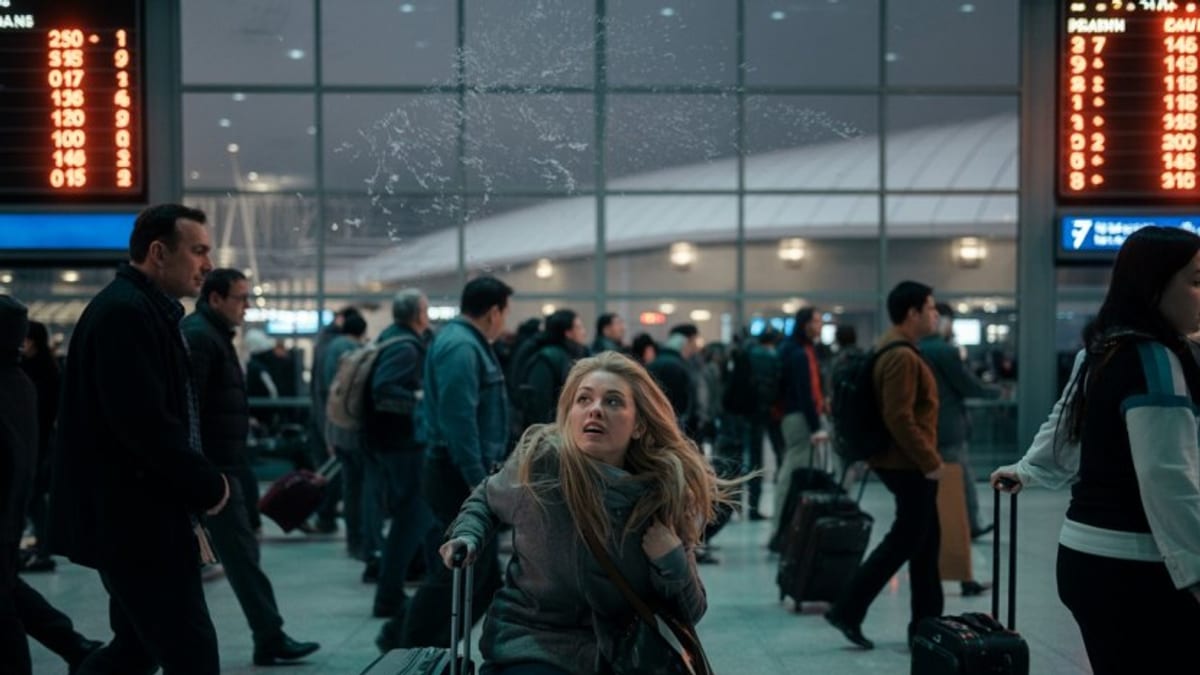
Local Disruptions at a Key Southern California Gateway
John Wayne Airport, serving Orange County and parts of the greater Los Angeles region, has once again become a pressure point in the U.S. aviation system. Recent data from flight-tracking services shows a cluster of delayed and canceled departures from the airport, particularly on routes operated by American Airlines and Delta Air Lines to major hubs such as Dallas Fort Worth, New York and Atlanta.
While individual delays are a routine feature of busy U.S. airports, the pattern at John Wayne has been notable for its concentration on hub-feeding services. These flights are critical links in airline networks, carrying a high proportion of connecting passengers whose onward journeys depend on tight scheduling. When several such services are delayed or canceled within a short window, the effects can quickly extend beyond Southern California.
Publicly available performance data and historic analyses of the airport highlight that John Wayne’s constrained runway configuration and strict noise and curfew rules can limit flexibility during periods of disruption. When weather, airspace congestion or staffing issues emerge, there is less room to absorb irregular operations, and flights are more vulnerable to rolling delays.
Recent dispersion of delays across multiple carriers at John Wayne indicates that some of the underlying strain is tied to the broader national system, including traffic management initiatives and weather-related flow control, with American and Delta among the operators most exposed on key trunk routes.
How Delays in Orange County Spread Nationwide
The current disruption underscores how closely interconnected major U.S. airline networks have become. American Airlines uses John Wayne Airport to feed domestic and transcontinental traffic through hubs such as Dallas Fort Worth and Charlotte, while Delta Air Lines connects Orange County to its core hubs in Atlanta and other cities. When outbound flights from Orange County depart late or are canceled, aircraft and crew often fail to arrive on time for subsequent legs elsewhere in the country.
This cascading effect is particularly acute for hub-focused carriers. A delayed departure from John Wayne to a central hub can cause missed connections for dozens or even hundreds of passengers, requiring rebooking on later flights that may already be near capacity. As more travelers are shifted, congestion builds at gate areas and customer service desks, increasing the strain on airport operations at connecting points far from where the disruption originated.
Industry reports and academic case studies on John Wayne Airport have long noted that departure delays at the airport can propagate across networks operated by large carriers, including American and Delta. In practice, this can translate into late-night arrivals in cities such as Chicago, New York or Atlanta, or even knock-on cancellations when crews exceed duty limits or aircraft must undergo unscheduled maintenance checks after operating extended sequences of delayed flights.
The result is that a localized operational problem in Orange County can evolve into what travelers experience as nationwide “travel chaos,” particularly during peak travel periods when airlines run near their capacity and have limited spare aircraft and crew available to recover disrupted schedules.
American Airlines and Delta Under Operational Pressure
American Airlines and Delta Air Lines are facing heightened scrutiny from travelers and consumer advocates as the current wave of disruptions unfolds. Both carriers have recently contended with large-scale operational challenges in other parts of their networks, including weather-related disruptions and, in Delta’s case, a high-profile technology outage that led to thousands of cancellations across several days.
Publicly available operational statistics from regulators and industry trackers show that, in typical months, both airlines maintain relatively strong on-time performance compared with some domestic competitors. However, during major disruption events, cancellation numbers can quickly climb into the hundreds or thousands of flights when storms, system outages or crew imbalances occur. Recent analyses of U.S. flight performance during significant weather events in 2026 indicate that American has at times recorded some of the highest cancellation counts among major carriers, while Delta has also experienced sizable disruption periods linked to technology and staffing constraints.
At John Wayne, both airlines are operating within an environment that offers limited margin for schedule recovery. With tight curfews restricting late-night departures and arrivals, carriers have fewer options to “fly out of” a backlog once delays mount. If an evening departure to a hub city pushes up against noise restrictions, the airline may be forced to cancel outright rather than operate deep into the night, compounding the impact on connections the following day.
For travelers, this can mean extended waits at the airport, last-minute rerouting via alternative hubs, and in some cases overnight stays when hotels and rebooked seats are in short supply. Social media posts and consumer forums in recent days reflect mounting frustration from passengers booked on American and Delta itineraries touching Orange County, with many reporting missed connections and long rebooking lines.
Traveler Rights and Rebooking Challenges
The disruptions centered on John Wayne Airport are also renewing attention to the rules that govern passenger rights in the United States. Federal transportation guidance makes clear that airlines are generally not required to provide compensation for delays, but must offer refunds when a flight is canceled and the traveler chooses not to be rebooked. In practice, understanding what is owed can be confusing, especially in fast-moving disruption scenarios involving multiple carriers and connection points.
Consumer advocacy groups and travel rights organizations emphasize that travelers affected by cancellations on American or Delta itineraries should check their booking conditions, monitor carrier-specific customer service dashboards, and review any publicly posted disruption waivers. During major weather or system events, airlines sometimes publish flexible travel policies that allow passengers to change flights without additional fees, subject to seat availability and fare rules.
Rebooking, however, can quickly become challenging when a localized disruption sends shockwaves through the national network. Popular routes from hubs such as Dallas Fort Worth, Atlanta, Chicago or New York can fill rapidly with displaced passengers, leaving limited options over the next 24 to 48 hours. In such periods, some travelers seek alternatives through nearby airports in Southern California, such as Los Angeles International or Long Beach, though shifting airports can introduce additional cost and logistical complications.
Travel experts generally recommend that affected passengers monitor flight status in real time, use airline mobile apps where possible to manage rebooking, and keep documentation of delays and cancellations in case future compensation or insurance claims become relevant. With disruption statistics showing that delays frequently cascade over multiple days, early action can sometimes make the difference between securing a same-day alternative and facing a prolonged stranding.
What the John Wayne Turbulence Signals for Summer Travel
The current disruption at John Wayne Airport arrives at a time when U.S. air travel demand remains strong and airlines are operating complex networks close to full capacity. Recent seasons have shown that relatively small shocks in one part of the system can trigger broader gridlock when weather, air traffic control constraints, and staffing gaps collide with tight schedules.
Operational data and case studies from past disruption events indicate that hub-and-spoke carriers such as American and Delta are especially vulnerable to cascading delays when key feeder airports experience repeated schedule interruptions. For John Wayne, where many departures function as first links in longer domestic journeys, each canceled or late flight removes a critical building block in the day’s network plan.
Analysts monitoring airline performance suggest that the disruption pattern around Orange County is an early signal of the pressures facing U.S. carriers heading into the heart of the summer season. With thunderstorms, heat-related air traffic control restrictions and periodic technology outages all posing risks, the ability of airlines to maintain resilience in the face of local shocks will be closely watched by travelers and regulators alike.
For now, the turbulence centered on John Wayne Airport serves as a reminder that even a single regional gateway can exert outsized influence on national travel flows. As American Airlines and Delta work to stabilize operations, passengers across the country are likely to continue feeling the ripple effects in the form of delayed departures, crowded rebooking queues and uncertain arrival times.